
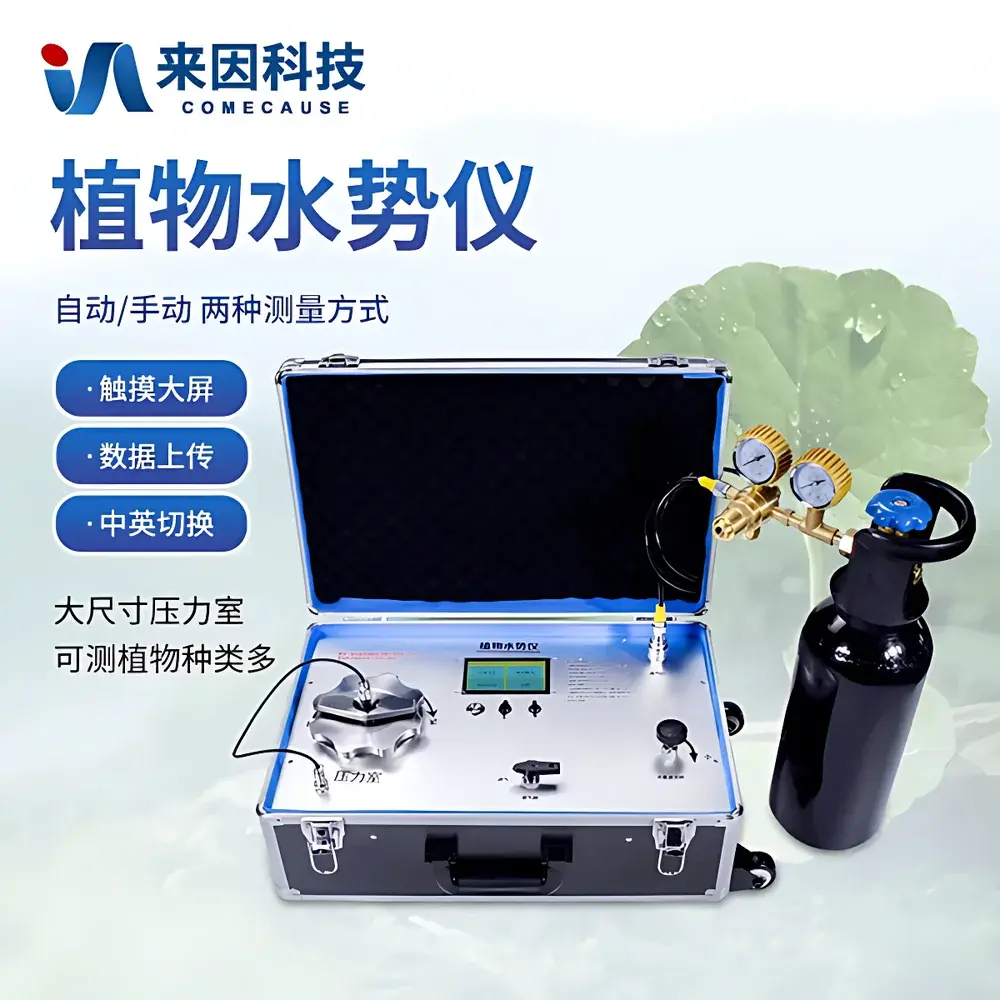
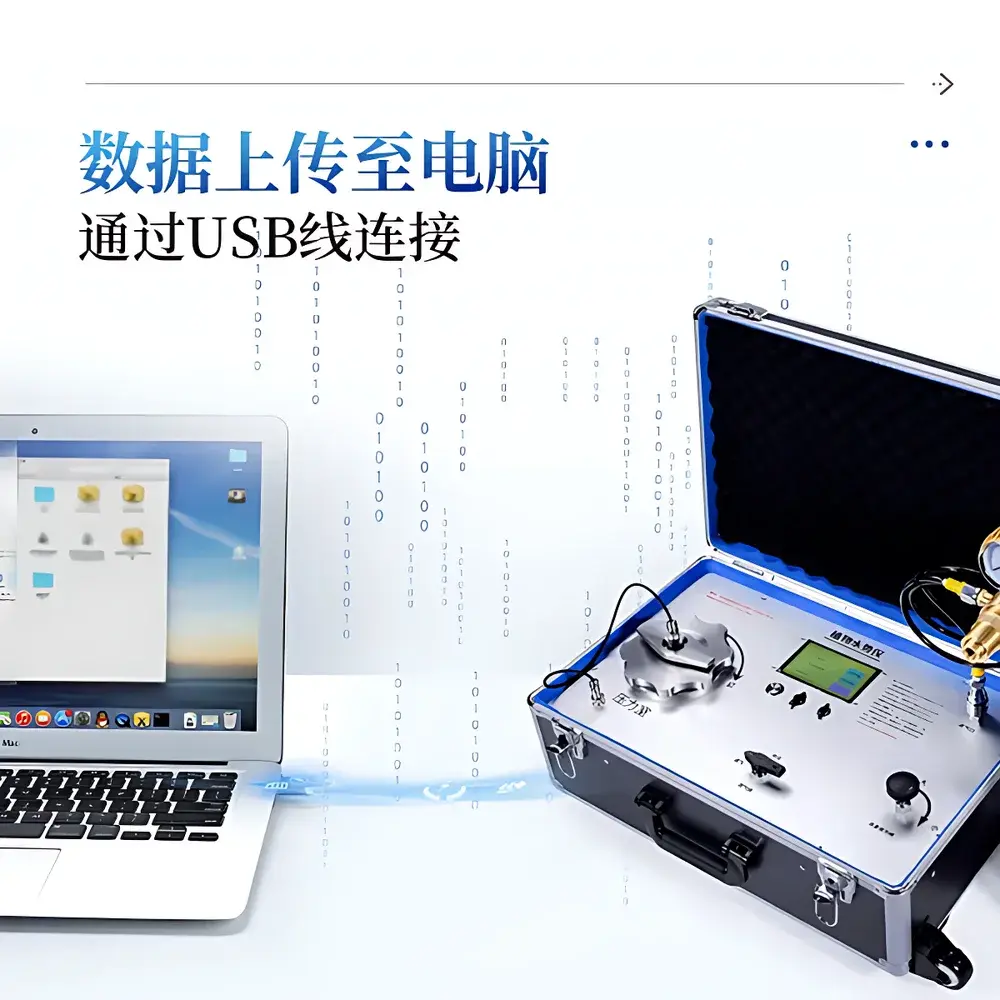
COMECAUSE IN-ZSS Plant Water Potential Analyzer
| Brand | COMECAUSE |
|---|---|
| Origin | Shandong, China |
| Manufacturer Type | Direct Manufacturer |
| Model | IN-ZSS |
| Measurement Range | 0–4.99 MPa (0–49.9 bar) |
| Display | 4.3-inch color LCD touchscreen |
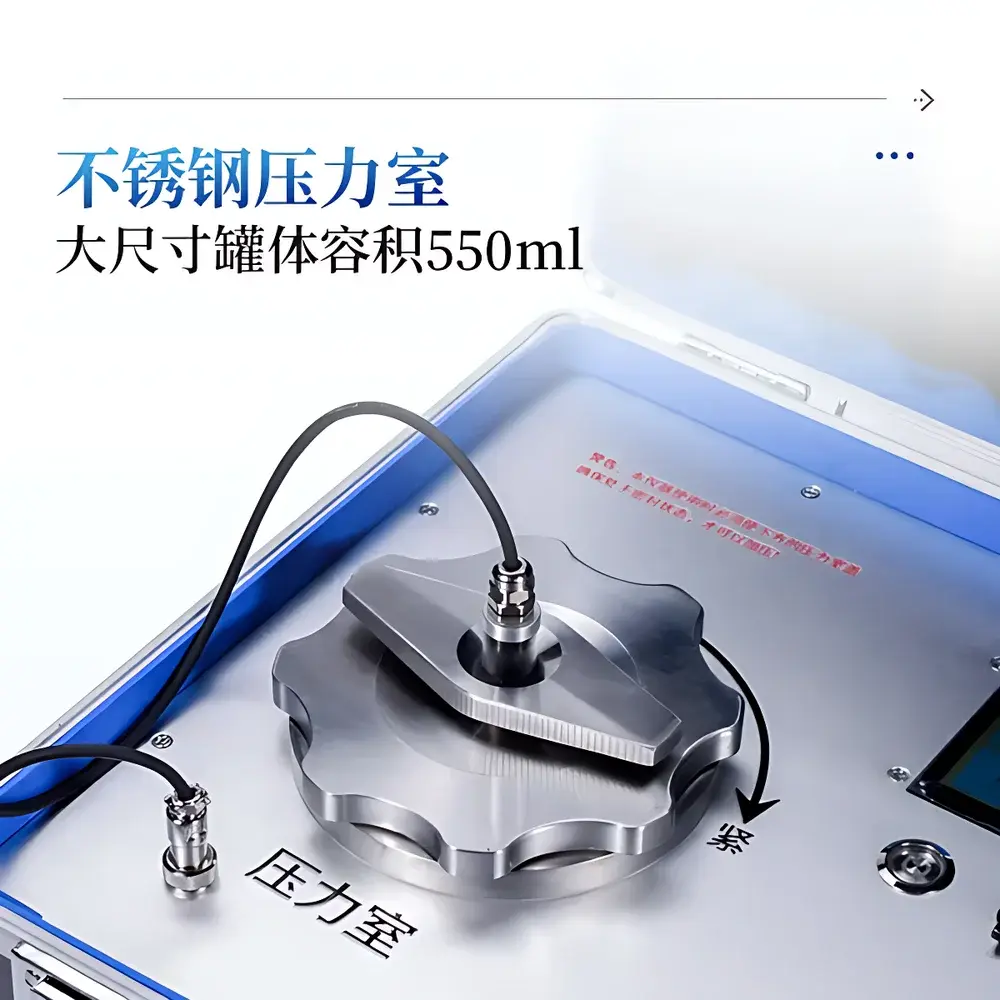
| Pressure Vessel Capacity | 4 L, rated to 12 MPa |
| Resolution | 0.01 MPa |
| Data Storage | up to 9999 records |
| Power Supply | Rechargeable lithium battery, 24 h runtime at full-brightness operation |
| Dimensions (Analyzer Box) | 520 × 330 × 206 mm |
| Dimensions (Pressure Chamber Box) | 530 × 420 × 206 mm |
| Net Weight | ~12 kg per box |
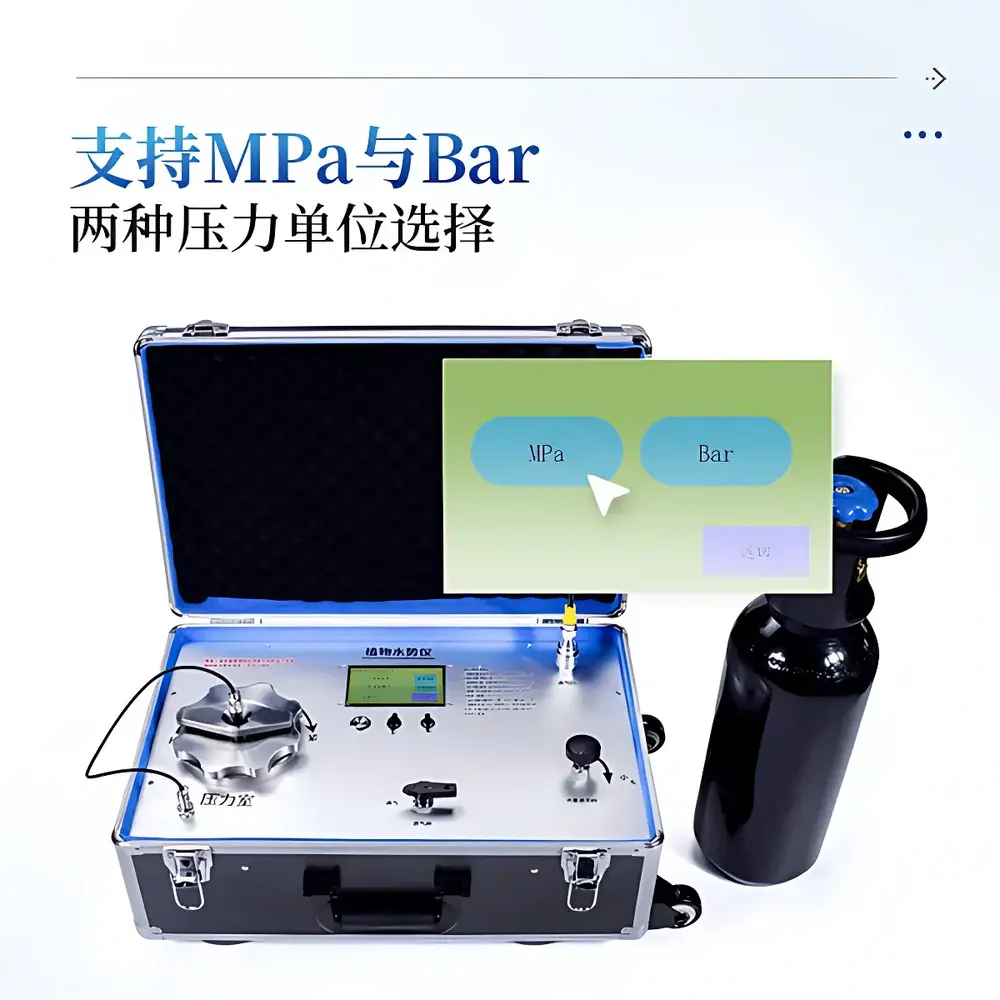
| Units | MPa or bar selectable |
| Connectivity | USB interface for data export to PC |
| Compliance | Designed for field-deployable plant water status assessment in accordance with standard plant physiology protocols (e.g., Scholander pressure chamber methodology per ASTM D7832-18 and ISO 13041:2017) |
Overview
The COMECAUSE IN-ZSS Plant Water Potential Analyzer is a field- and lab-capable pressure chamber instrument engineered for the precise, non-destructive quantification of plant water potential (Ψleaf or Ψstem) using the classical Scholander pressure chamber principle. It operates on the thermodynamic basis that water moves from regions of higher water potential to lower water potential within the soil–plant–atmosphere continuum (SPAC). When a detached leaf or stem segment is placed inside the sealed pressure chamber, nitrogen gas is incrementally applied until xylem sap is forced to the cut surface—indicating mechanical equilibrium between the external gas pressure and the original negative tension (i.e., water potential) in the xylem. The pressure at which sap first appears at the cut surface—recorded in MPa or bar—is directly equivalent to the pre-dawn or midday water potential of the sampled tissue. This method remains the internationally accepted reference standard for validating other indirect techniques (e.g., thermal dissipation probes, dendrometers, or infrared thermography), particularly in drought physiology, irrigation scheduling, and stomatal conductance modeling.
Key Features
- 4.3-inch high-contrast color LCD touchscreen with intuitive bilingual (English/Chinese) menu navigation—optimized for outdoor readability under variable lighting conditions.
- Dual operational modes: fully automated measurement with adjustable sensor sensitivity for reliable sap detection across species with differing xylem anatomy; manual mode for operator-controlled pressure ramping and endpoint validation.
- Real-time pressure readout with 0.01 MPa resolution and dual-unit display (MPa/bar), supporting seamless integration with international literature and regulatory reporting frameworks.
- Onboard acoustic feedback: sustained audible beep confirms successful sap emergence or manual data capture—critical for hands-free verification during field deployment.
- Robust local storage capacity: 9999 timestamped measurements with embedded clock and battery voltage monitoring, enabling long-term unattended monitoring campaigns without external power.
- USB-C connectivity enables direct data synchronization with Windows-based desktop software; exported datasets are natively formatted as .XLSX files compatible with statistical analysis platforms (R, Python pandas, JMP, SAS).
- Integrated contextual help system accessible via touchscreen—reducing training overhead and ensuring protocol adherence across multi-user research teams.
- Pressure vessel certified to 12 MPa working pressure with 4 L internal volume—validated for consistent performance across woody and herbaceous species, including vines, cereals, broadleaves, and conifers.
Sample Compatibility & Compliance
The IN-ZSS accommodates excised leaf, petiole, stem, or root segments up to 45 mm in diameter and 200 mm in length—compatible with standard botanical sampling protocols used in agronomy, forestry, and ecological field studies. Its design conforms to the core physical principles outlined in ASTM D7832-18 (“Standard Test Method for Determining Plant Water Potential Using a Pressure Chamber”) and ISO 13041:2017 (“Soil quality — Determination of plant-available water by pressure plate apparatus and pressure membrane apparatus”). While not an FDA-regulated device, its data output meets GLP-aligned documentation requirements—including traceable timestamps, user IDs (via optional firmware update), and immutable raw pressure logs—making it suitable for regulatory submissions related to drought-tolerant crop registration and irrigation efficiency certification programs.
Software & Data Management
The companion Windows application provides secure, audit-ready data handling: automatic port detection, batch export, columnar metadata tagging (sample ID, date/time, operator, tissue type), and export to Excel-compatible CSV or XLSX formats. All measurements retain native precision (two decimal places in MPa) without rounding artifacts. The software supports basic trend visualization (time-series plots, boxplots by treatment group) and exports publication-ready SVG/PNG graphics. No cloud upload or telemetry is performed—ensuring full data sovereignty and compliance with institutional IT security policies.
Applications
- Irrigation scheduling optimization in orchards, vineyards, and row crops via real-time plant-based water status feedback.
- Evaluation of drought resilience traits in breeding programs—quantifying genotypic variation in midday water potential under controlled stress gradients.
- Ecophysiological field surveys assessing species-specific responses to soil moisture deficits across elevation or edaphic gradients.
- Validation of remote sensing indices (e.g., NDVI, PRI, Tc-Ta) against ground-truthed water potential benchmarks.
- Teaching laboratories in plant physiology and environmental botany—demonstrating SPAC theory, cavitation thresholds, and hydraulic architecture constraints.
FAQ
What sample types can be measured with the IN-ZSS?
Leaf laminae, petioles, small-diameter stems (<45 mm), and fine roots—provided the cut surface is clean, hydrated, and free of air embolisms prior to chamber loading.
Is calibration required before each use?
No routine recalibration is needed; the pressure transducer is factory-calibrated with NIST-traceable standards. Users should perform a zero-pressure verification (open-chamber reading) before daily operation.
Can the instrument be used in high-humidity or rainy field conditions?
Yes—the analyzer enclosure meets IP54 ingress protection rating; however, the pressure chamber seal must be wiped dry before closure to prevent moisture-induced seal failure.
Does the software support multi-user access control or electronic signatures?
Not in the current release; however, all exported files include embedded timestamps and device serial numbers, enabling retrospective assignment to individual researchers during data curation.
How does the IN-ZSS compare to thermocouple psychrometers or dew-point hygrometers?
Unlike equilibrium-based psychrometric methods—which require intact tissue and longer equilibration times—the IN-ZSS delivers rapid, direct measurement of bulk tissue water potential from excised samples, with superior reproducibility for screening applications involving large sample sets.



