
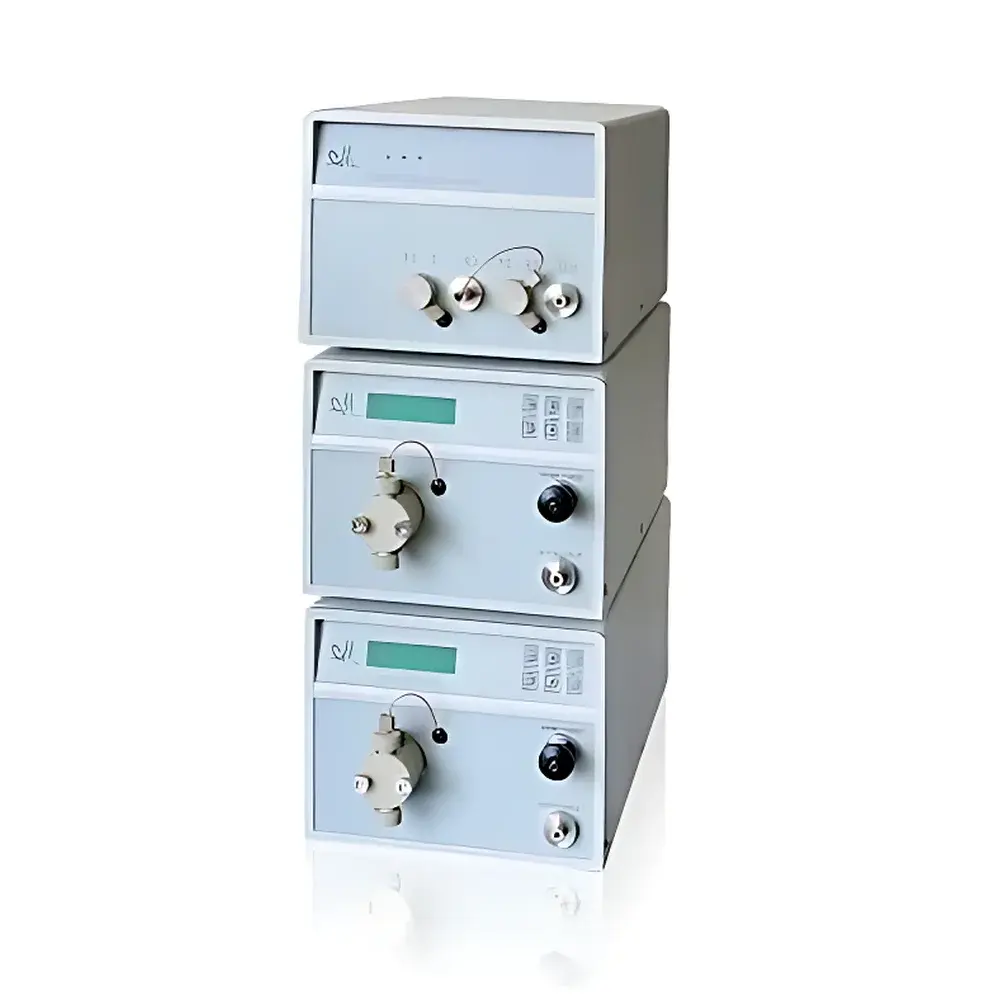
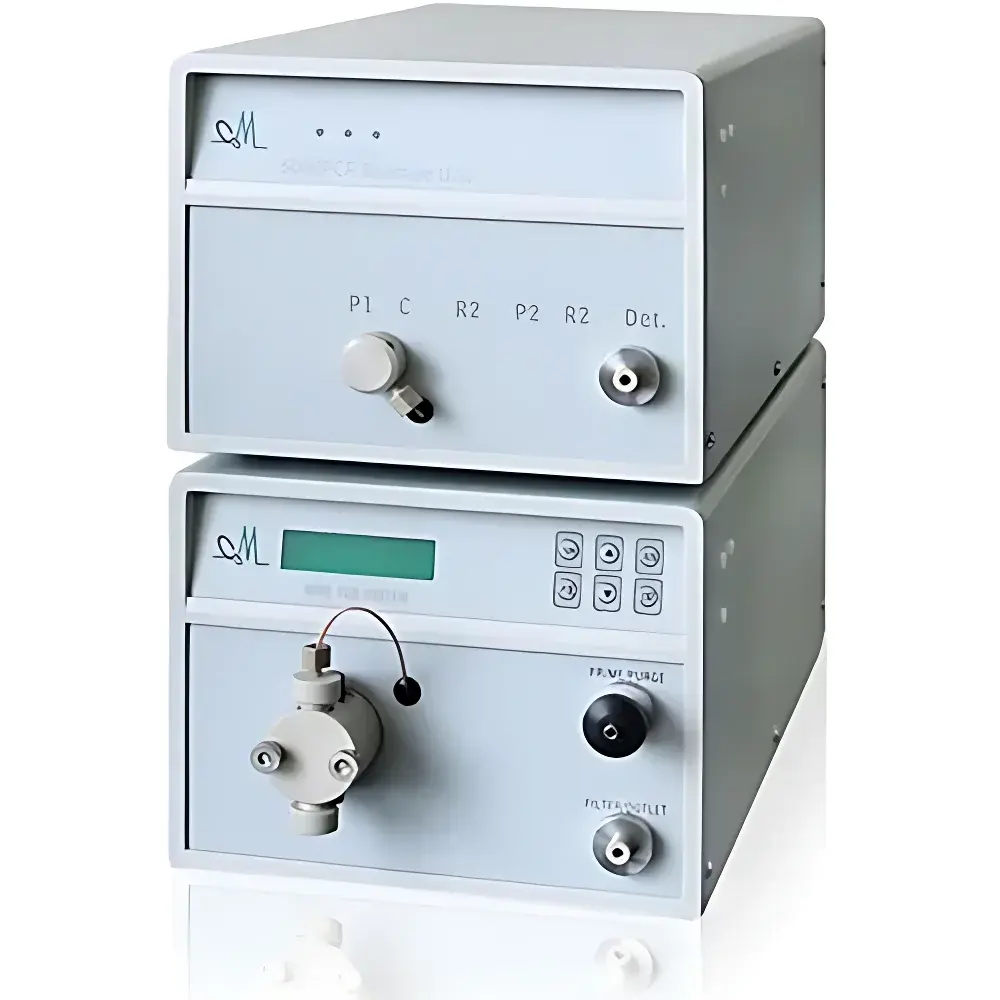
CoMetro 6000 Series Post-Column Derivatization System for Aflatoxin Analysis
| Brand | CoMetro |
|---|---|
| Model | 6000 Single PCR |
| Temperature Range | 10–150 °C |
| Derivatization Reagent Flow Rate | 0.001–10 mL/min |
| Reaction Coil Material | PEEK |
| Flow Path | Full-Peek |
| Temperature Accuracy | ±1 °C |
| Temperature Reproducibility | ±0.4 °C |
| Reaction Volume Options | 0.15 / 0.5 / 1.5 mL |
| Pressure Range | 0–4000 psi |
| Flow Accuracy | ±1% |
| Flow Precision | 0.2% RSD |
Overview
The CoMetro 6000 Series Post-Column Derivatization (PCD) System is an engineered solution designed to enhance detection sensitivity and selectivity for analytes that lack native chromophores or fluorophores—particularly critical in regulated food safety, environmental monitoring, and clinical toxicology workflows. This system operates on the principle of controlled chemical derivatization immediately after chromatographic separation but prior to detection, enabling high-efficiency conversion of target compounds (e.g., aflatoxins B₁, B₂, G₁, G₂, M₁) into highly fluorescent derivatives via thermal or catalytic reaction pathways. Integrated with HPLC or UHPLC platforms, the 6000 Series supports both single-step and sequential dual-step derivatization protocols—essential for complex matrices where orthogonal reaction conditions (e.g., heated vs. ambient) improve specificity and reduce interferences. Its architecture adheres to fundamental requirements of GLP-compliant laboratories, including traceable temperature control, pressure-monitored reagent delivery, and full-PEEK fluidic integrity to prevent metal-catalyzed degradation or adsorption of labile toxins.
Key Features
- Modular reactor design supporting single or dual reaction cores—enabling simultaneous heated and ambient derivatization for multi-analyte methods (e.g., aflatoxins + ochratoxin A).
- Front-panel digital interface with real-time display of setpoint/actual temperature per reactor zone, reagent flow rate, line pressure, and pressure limits.
- Thermally stable reaction coils (0.15 / 0.5 / 1.5 mL volume options) constructed from inert PEEK tubing, minimizing band broadening and ensuring reproducible residence time (±5% volumetric accuracy).
- Derivatization pumps with stepper-motor-driven precision metering, auto-purge function, integrated PEEK exhaust valves, and built-in pressure transducers for continuous line integrity monitoring.
- Full-PEEK fluidic path—from reagent reservoirs through mixing tees, reactors, and detector interface—eliminating metal contact and ensuring compatibility with aggressive derivatization reagents (e.g., bromine, iodine, o-phthalaldehyde, trifluoroacetic acid).
- RS232 serial interface for external control and data logging; compatible with third-party CDS software for synchronized method execution and audit-trail generation per FDA 21 CFR Part 11 requirements.
Sample Compatibility & Compliance
The CoMetro 6000 Series is validated for use in standardized methods including AOAC Official Method 2005.08 (aflatoxins in nuts and grains), ISO 16050:2003 (aflatoxin determination in animal feeding stuffs), and EU Commission Regulation (EC) No 401/2006. It accommodates diverse sample types: aqueous extracts from cereal, feed, milk, and infant formula; hydrolyzed biological fluids for clinical biomarker analysis (e.g., homocysteine, taurine); and complex environmental water extracts containing glyphosate, paraquat, or microcystins. All wetted materials comply with USP Class VI biocompatibility standards; reactor temperature control meets ASTM E29–23 criteria for calibration traceability. System validation documentation supports IQ/OQ/PQ protocols required under GMP and ISO/IEC 17025 accreditation frameworks.
Software & Data Management
While the 6000 Series operates as a standalone hardware module, its RS232 interface enables bidirectional communication with chromatography data systems (CDS) such as Thermo Chromeleon, Waters Empower, or Agilent OpenLab. Users can synchronize derivatization pump start/stop events with gradient elution programs, log real-time pressure and temperature telemetry, and embed instrument status flags (e.g., “Reactor Ready”, “Pressure Alert”) directly into raw data files. Audit trails—including parameter changes, calibration events, and error logs—are retained locally and exportable in CSV format for review during regulatory inspections. Firmware updates are delivered via secure USB interface, with version history maintained in non-volatile memory.
Applications
- Aflatoxin quantification in maize, peanuts, spices, and dairy products using photochemical or iodine-mediated derivatization prior to fluorescence detection.
- Simultaneous analysis of carbamate pesticides (e.g., carbaryl, aldicarb) and mycotoxins in feedstuffs using dual-pump, dual-reactor configurations.
- Clinical screening for phenylketonuria (PKU) and maple syrup urine disease (MSUD) via post-column o-phthalaldehyde derivatization of amino acids and branched-chain keto acids.
- Determination of glycosylated hemoglobin (HbA1c) and fructosamine in serum using nitroblue tetrazolium-based colorimetric detection.
- Environmental monitoring of bromate in drinking water and Cr(VI) in wastewater using post-column diazotization or complexation chemistry.
FAQ
What derivatization chemistries are supported by the 6000 Series?
The system is compatible with thermal, photochemical, and catalytic derivatization reactions—including iodine oxidation for aflatoxins, OPA/thiol for amino acids, and ninhydrin for primary amines.
Can the 6000 Series be integrated into existing HPLC systems from other vendors?
Yes—standard 1/16″ OD stainless steel or PEEK tubing interfaces allow seamless coupling to any HPLC/UHPLC system with standard 10–350 bar operating pressure range.
Is the reactor coil replaceable without tools?
Yes—modular reactor cartridges require only two finger-tight PEEK fittings for installation or replacement, minimizing downtime and cross-contamination risk.
Does the system support 21 CFR Part 11 compliance?
While the hardware itself does not include electronic signatures, its RS232 telemetry and parameter logging capabilities enable full Part 11 compliance when used within a validated CDS environment with appropriate user access controls and audit trail configuration.
What maintenance is required for long-term reliability?
Routine checks include verifying pump seal integrity every 6 months, replacing PEEK frits annually, and calibrating temperature sensors against NIST-traceable references at least once per year per ISO/IEC 17025 recommendations.
Related Products




