
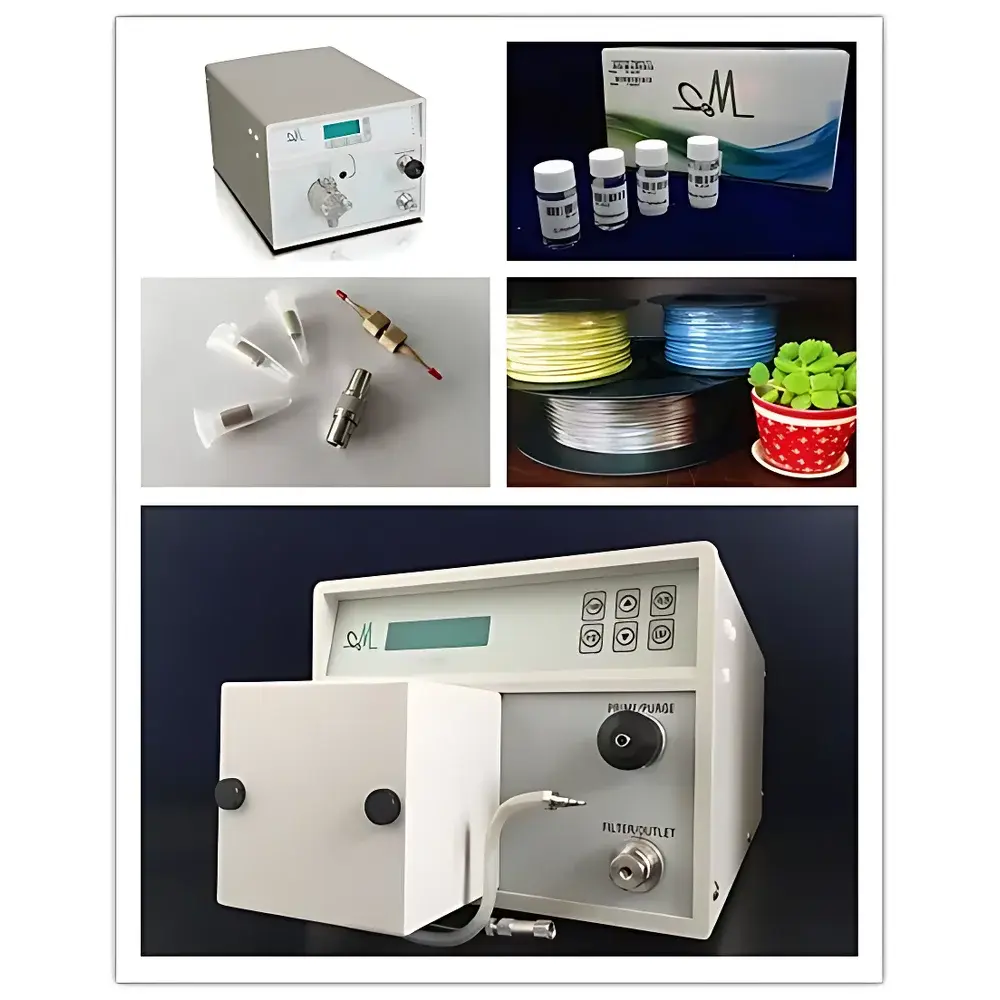
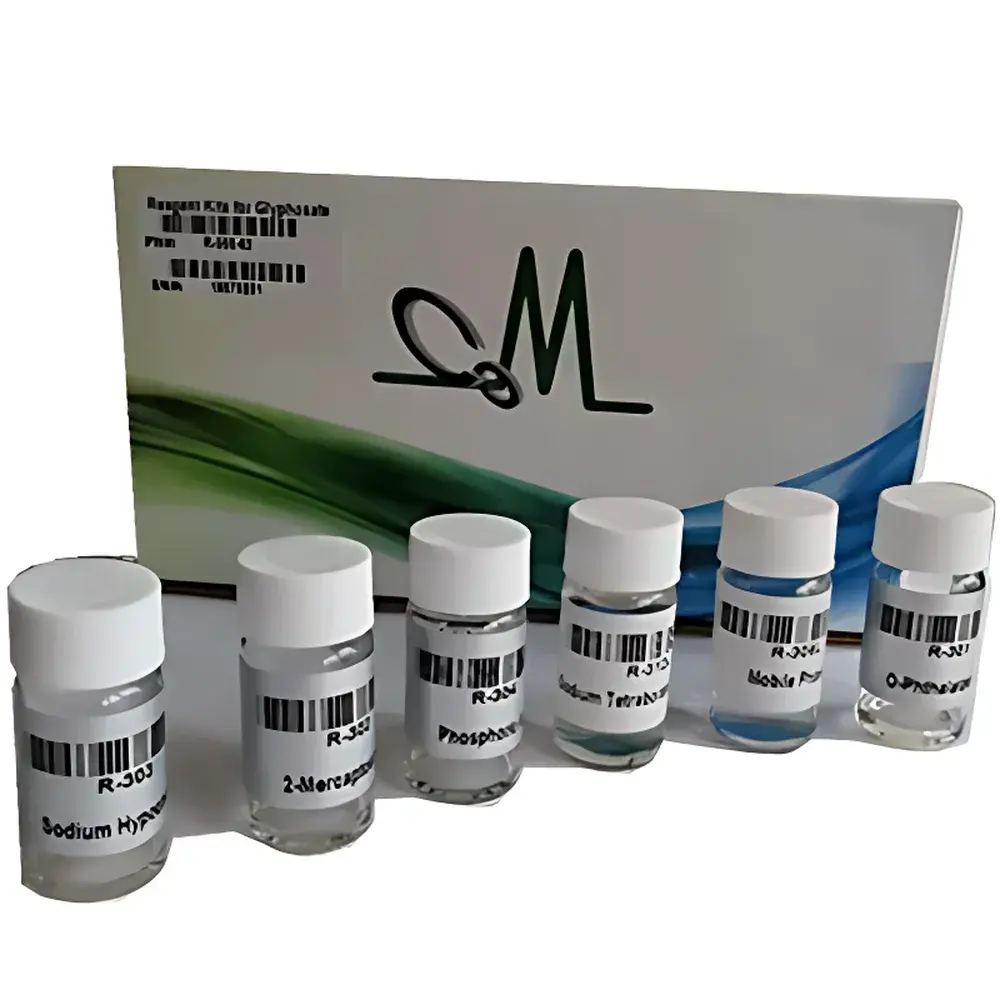
CoMetro R300-02 Post-Column Derivatization Reagent Kit for Glyphosate Residue Analysis
| Brand | CoMetro |
|---|---|
| Origin | Imported |
| Manufacturer Type | Authorized Distributor |
| Model | R300-02 (Glyphosate-Specific) |
| Chromatography System Compatibility | Conventional HPLC with Post-Column Derivatization Module |
| Flow Rate Range | 0.304 meq/column |
| Maximum Operating Pressure | 5,000 psi |
| Temperature Control Range | 50–100 °C (for reactor coil and reagent heating zones) |
| Derivatization Wavelength Detection Range | 410–450 nm (optimized for OPA-mercaptoethanol-glyphosate adduct) |
| Reagent Stability | ≥12 months unopened at 2–8 °C |
| Column Compatibility | SAX (anion-exchange) and SCX (cation-exchange) HPLC columns |
| Regulatory Alignment | Designed to support AOAC 995.12, EPA Method 547.1, and ISO 11843-2 compliant workflows |
Overview
The CoMetro R300-02 Post-Column Derivatization Reagent Kit is a rigorously formulated, application-specific chemistry package engineered for the sensitive and reproducible quantification of glyphosate and its primary metabolite, aminomethylphosphonic acid (AMPA), in complex environmental, food, and feed matrices. Unlike generic derivatization reagents, the R300-02 kit implements a two-step ortho-phthalaldehyde (OPA)-based post-column reaction protocol—first hydrolyzing glyphosate’s phosphonate bond under controlled alkaline conditions (R315), then coupling the liberated primary amine with OPA (R301) in the presence of 2-mercaptoethanol (R302) to generate a highly fluorescent isoindole derivative. This reaction occurs within a precisely temperature-regulated stainless-steel or PEEK reactor coil downstream of the analytical column, ensuring consistent residence time, thermal homogeneity, and minimal band broadening. The system operates within conventional high-performance liquid chromatography (HPLC) platforms equipped with a dedicated post-column derivatization module (e.g., CoMetro 6000PCR), and is fully compatible with both anion-exchange (SAX) and cation-exchange (SCX) separation chemistries—enabling method flexibility without sacrificing detection sensitivity (<0.5 µg/L glyphosate in water per EPA 547.1).
Key Features
- Pre-qualified, lot-controlled reagent set: Includes R306L (mobile phase buffer), R312 (OPA diluent powder), R315 (alkaline hydrolysis reagent, solid granules), R301 (OPA stock solution), R302 (2-mercaptoethanol), and R303 (oxidizing agent)—all supplied with CoMetro Certificate of Analysis (CoA) and stability data.
- Optimized for dual-column methodology: Validated with CoMetro Comatex SAX (P/N: A72545) and SCX (P/N: B72545) columns (5 µm, 250 × 4.6 mm), supporting orthogonal selectivity and matrix interference mitigation.
- Robust thermal management: Compatible with reactor modules maintaining 50–100 °C across all reagent lines and reaction coils—critical for complete hydrolysis and rapid, quantitative derivatization kinetics.
- High-pressure resilience: Formulated for seamless integration into HPLC systems operating up to 5,000 psi, with chemically inert packaging and solvent compatibility (aqueous/organic mobile phases containing ≤20% acetonitrile or methanol).
- Regulatory-ready documentation: Each kit includes batch-specific traceability, storage instructions (2–8 °C), and handling guidance aligned with GLP-compliant laboratory practices.
Sample Compatibility & Compliance
The R300-02 kit supports analysis of glyphosate in diverse sample types—including drinking water, surface water, soil extracts, cereal grains, fruits, and animal feed—following standardized extraction protocols (e.g., QuPPe, EN 15662). It meets the chemical performance criteria required for methods referenced in AOAC Official Method 995.12, U.S. EPA Method 547.1, and ISO 11843-2. All reagents are manufactured under ISO 9001-certified processes; no animal-derived components or DEA-regulated substances are present. The kit is not intended for clinical or diagnostic use and complies with REACH Annex XIV exclusion criteria for SVHCs.
Software & Data Management
While the R300-02 kit itself is hardware-agnostic, it integrates natively with CoMetro ChromaLink™ CDS v3.2+ and third-party chromatography data systems (CDS) such as Thermo Chromeleon, Agilent OpenLab CDS, and Waters Empower. Fluorescence detection (ex: 330 nm / em: 450 nm) data acquisition is synchronized via TTL trigger signals from the derivatization module. Audit trails, electronic signatures, and 21 CFR Part 11–compliant reporting are supported when deployed within validated CDS environments. Raw fluorescence peak area data may be exported in .csv or .cdf format for statistical validation per ICH Q2(R2).
Applications
- Regulatory monitoring of glyphosate residues in compliance with EU MRLs (Regulation (EC) No 396/2005) and U.S. EPA tolerances.
- Method development and validation for multi-residue screening workflows incorporating AMPA and glufosinate.
- Quality control testing in agrochemical manufacturing and formulation laboratories.
- Environmental fate studies assessing glyphosate degradation kinetics in soil and aquatic systems.
- Contract laboratory service delivery under ISO/IEC 17025-accredited test procedures.
FAQ
Is the R300-02 kit compatible with UHPLC systems?
Yes—when used with low-dead-volume derivatization manifolds and sub-2-µm column configurations, provided flow rates are adjusted to maintain optimal reaction residence time (typically 0.2–0.8 mL/min).
What is the shelf life of opened reagents?
R301 (OPA) and R302 (2-mercaptoethanol) must be used within 72 hours after opening and stored under nitrogen at 2–8 °C; R315 (hydrolysis reagent) remains stable for 30 days when sealed and refrigerated.
Can this kit quantify AMPA simultaneously with glyphosate?
Yes—the same derivatization chemistry applies to AMPA, and co-elution resolution is achieved using optimized SAX or SCX gradient methods per EPA 547.1.
Does the kit include column or instrument calibration standards?
No—certified glyphosate and AMPA reference standards (e.g., AccuStandard G-100 or Sigma-Aldrich 39737) must be procured separately for calibration curve generation.
Is technical support available for method transfer?
Yes—CoMetro Application Scientists provide documented SOPs, troubleshooting guides, and remote method optimization assistance for qualified laboratories.






