
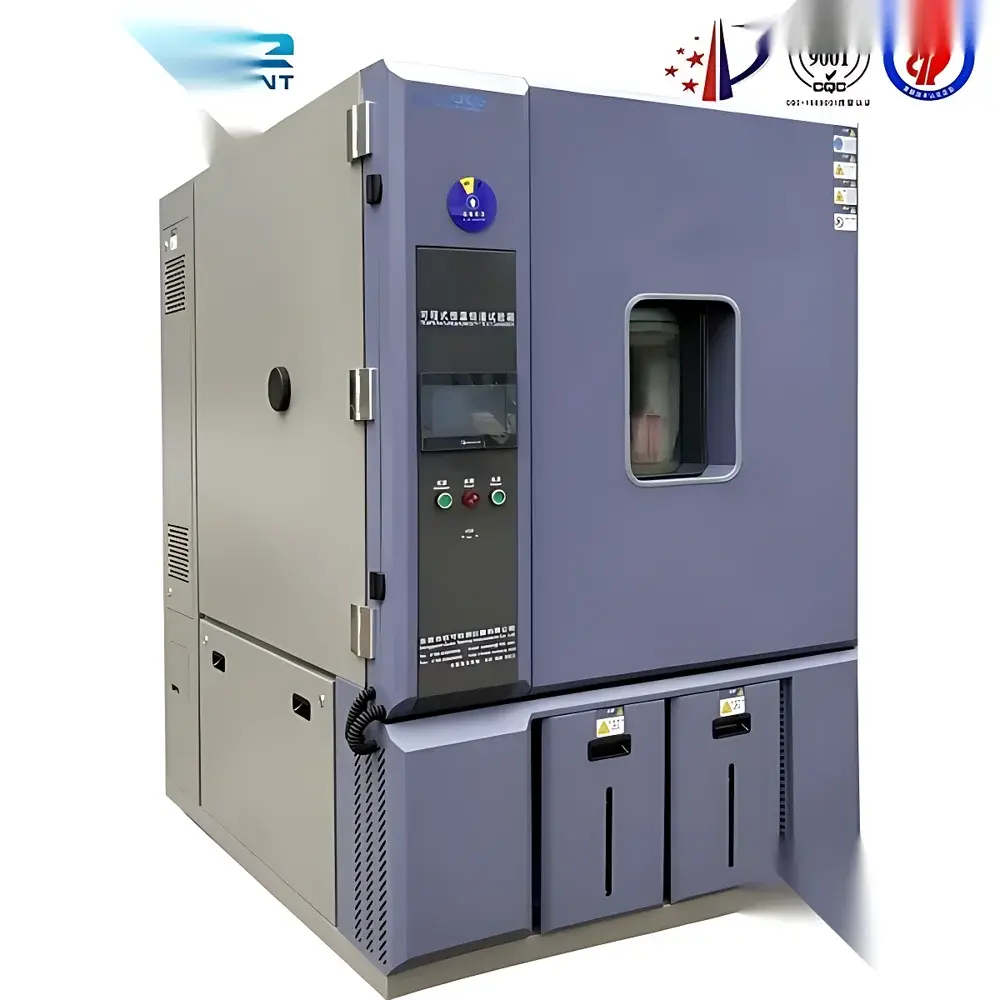
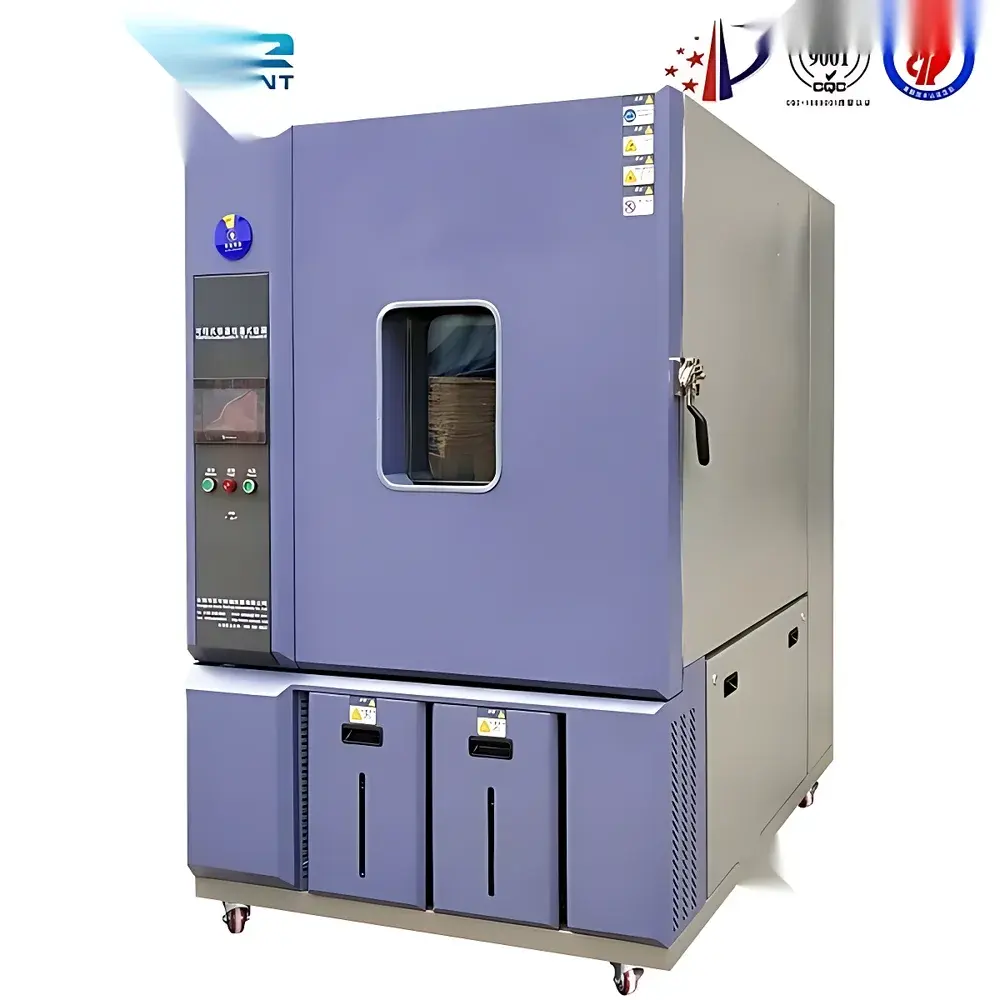
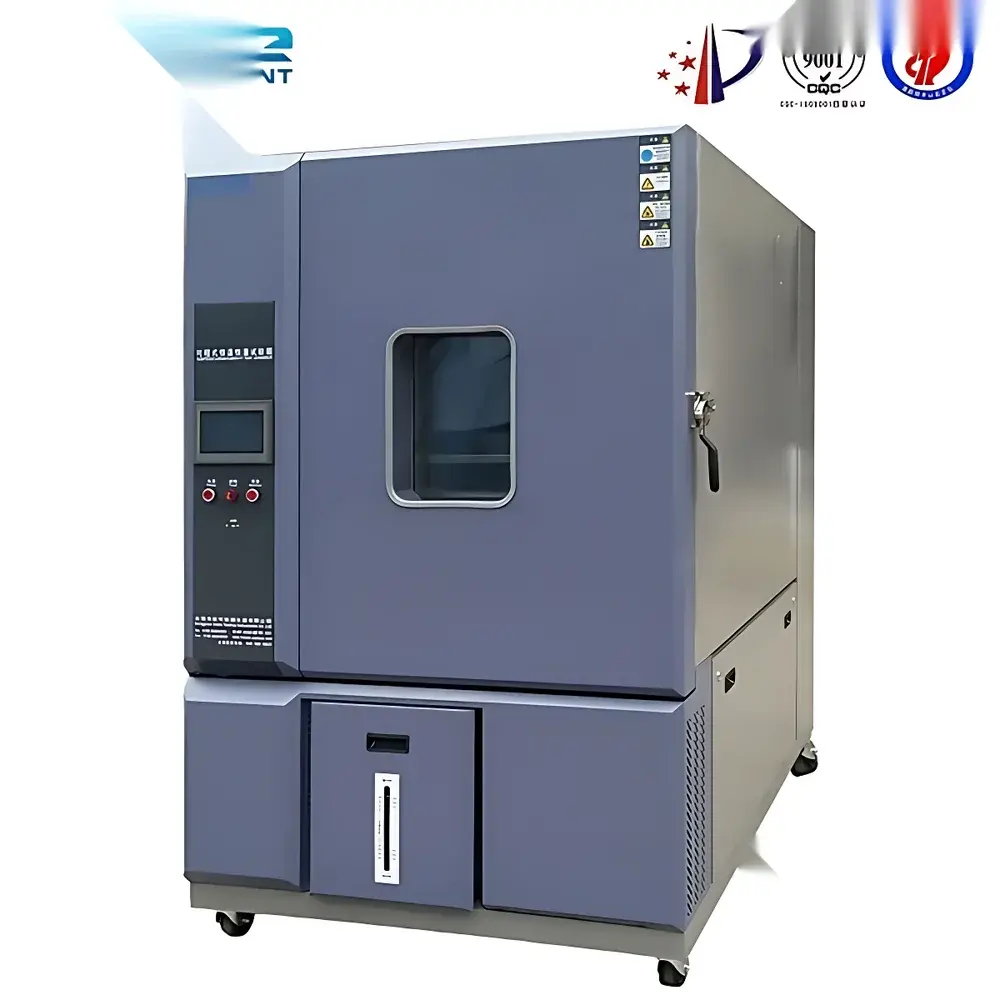
Compact High-Low Temperature Test Chamber
| Brand | Other Brands |
|---|---|
| Origin | Imported |
| Manufacturer Type | General Distributor |
| Price | USD 3,100 (approx. ¥22,000) |
Overview
The Compact High-Low Temperature Test Chamber is a precision-engineered environmental simulation system designed for laboratory-scale thermal stress testing of electronic components, materials, and small assemblies. It operates on forced-air convection principles with a fully enclosed, double-wall insulated chamber architecture to ensure uniform temperature distribution and minimal thermal leakage. The unit supports rapid transition between defined high-temperature (up to +150 °C) and low-temperature (down to –40 °C) setpoints—typical for qualification testing under IEC 60068-2-1 (cold), IEC 60068-2-2 (dry heat), and MIL-STD-810G Method 502.6/501.7 protocols. Its compact footprint (W×D×H ≈ 600 × 600 × 800 mm) makes it suitable for benchtop integration in QC labs, R&D facilities, and university testing centers where floor space is constrained but regulatory-grade thermal validation is required.
Key Features
- Smooth-radius exterior housing with matte-finish surface treatment and flush-mount, non-rebound ergonomic handles for intuitive access and operator safety.
- Hermetically sealed chamber structure with high-efficiency axial circulation motor and low-noise refrigeration module (R404A/R23 cascade system), achieving acoustic performance ≤62 dB(A) at 1 m distance.
- Integrated anti-vibration base pads compliant with ISO 10816-1 vibration severity thresholds, ensuring mechanical stability during dynamic thermal cycling.
- Electrical feedthrough ports (2 × φ10 mm, silicone-sealed) enabling powered-in-situ testing (load testing) of active devices without chamber breach.
- Double-glazed observation window with Philips LED illumination and built-in resistive heating demister, maintaining optical clarity across full operating temperature range.
- Comprehensive protection suite including over-temperature cut-off, compressor high-pressure shutdown, phase failure detection, and door interlock safety circuitry.
Sample Compatibility & Compliance
The chamber accommodates samples up to 25 L volume (max. dimensions: 350 × 350 × 200 mm) with unrestricted airflow paths. It meets the metrological verification requirements specified in GB/T 5170.2–2017 (equivalent to IEC 60068-3-5), GB/T 10592–2008, and JJF 1101–2019 for temperature uniformity (±1.5 °C), stability (±0.5 °C), and fluctuation (±0.3 °C) under steady-state conditions. Calibration traceability follows CNAS-accredited procedures per ISO/IEC 17025. The system is routinely deployed in GLP-compliant environments for component reliability screening aligned with JEDEC JESD22-A104 (temperature cycling) and A119 (high-temperature operating life).
Software & Data Management
Equipped with a 7-inch TFT touchscreen HMI running embedded real-time OS, the controller supports programmable ramp-soak profiles (up to 99 segments), data logging at 1-second intervals, and USB export of CSV-formatted temperature/time records. Optional Ethernet interface enables remote monitoring via Modbus TCP or SNMP protocols. Audit trail functionality complies with FDA 21 CFR Part 11 requirements when paired with validated third-party software (e.g., WinTest Suite v4.2+), including electronic signatures, user-level access control, and immutable event logs.
Applications
- Pre-compliance thermal screening of PCBAs, sensors, and optoelectronic modules prior to formal MIL-STD or automotive AEC-Q200 qualification.
- Accelerated aging studies for polymer encapsulants, conformal coatings, and battery electrolyte formulations.
- Stress testing of medical device packaging integrity per ISO 11607-1 Annex C (thermal challenge).
- Validation of thermostat calibration drift under extreme ambient excursions.
- Teaching laboratories conducting hands-on thermodynamics and materials science experiments (e.g., coefficient of thermal expansion estimation).
FAQ
What is the typical temperature range and stabilization time?
Standard configuration covers –40 °C to +150 °C; stabilization to ±0.5 °C tolerance takes ≤30 minutes from ambient after reaching setpoint.
Is this chamber suitable for humidity-controlled testing?
No—this is a dry-heat/cold-only system. Humidity capability requires a separate combined environmental chamber model.
Can the unit be integrated into an automated test system?
Yes—RS485 (Modbus RTU) and optional Ethernet interfaces support SCADA and MES-level integration with proper protocol mapping.
Does the chamber include NIST-traceable calibration documentation?
Factory calibration certificate is provided; full NIST-traceable certification requires optional on-site verification by an accredited third-party lab.
What maintenance schedule is recommended?
Compressor oil and refrigerant levels should be verified annually; air intake filters require cleaning every 3 months in standard lab environments.



