
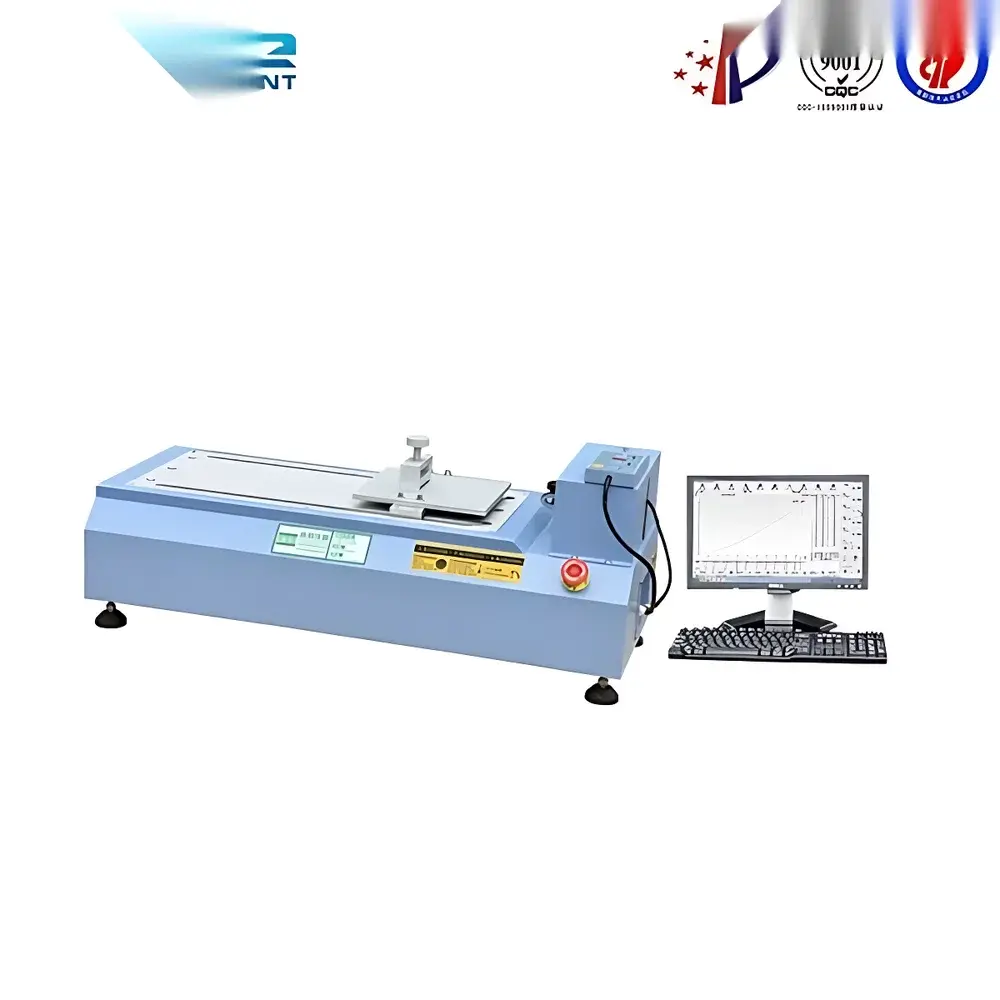
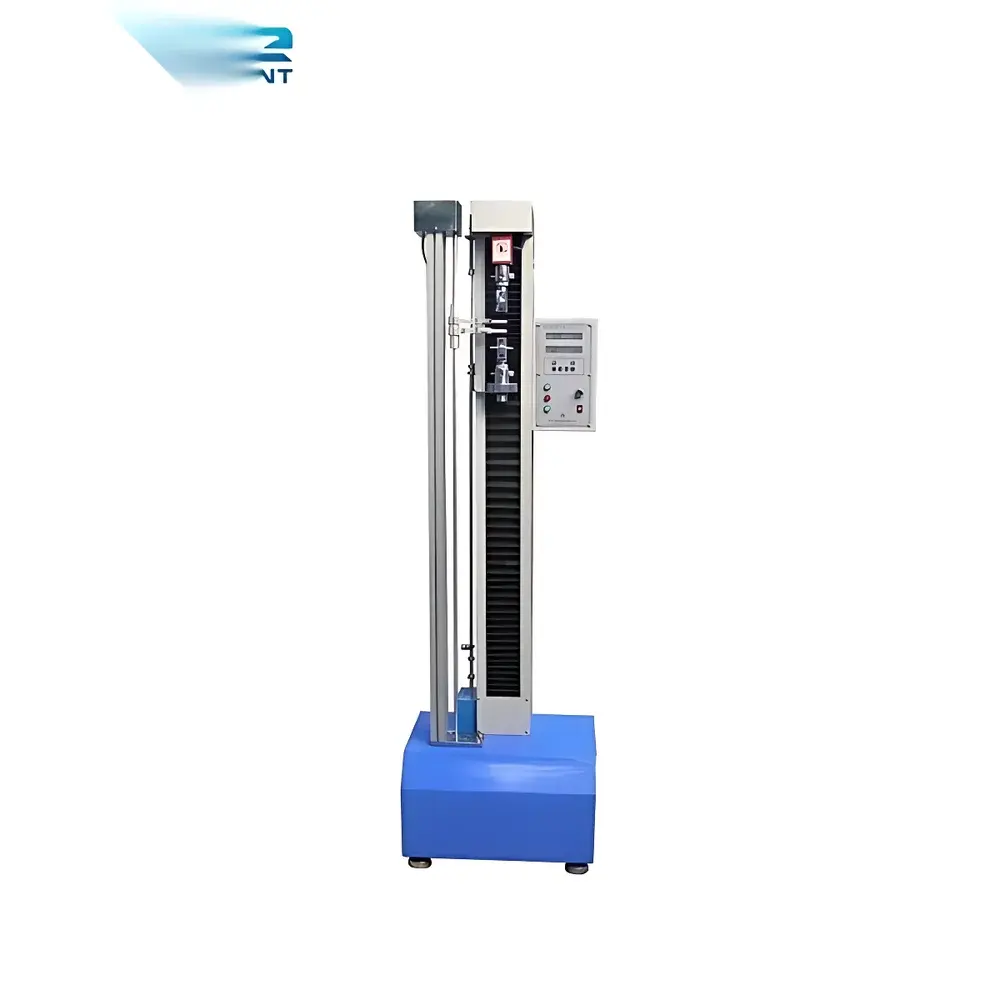
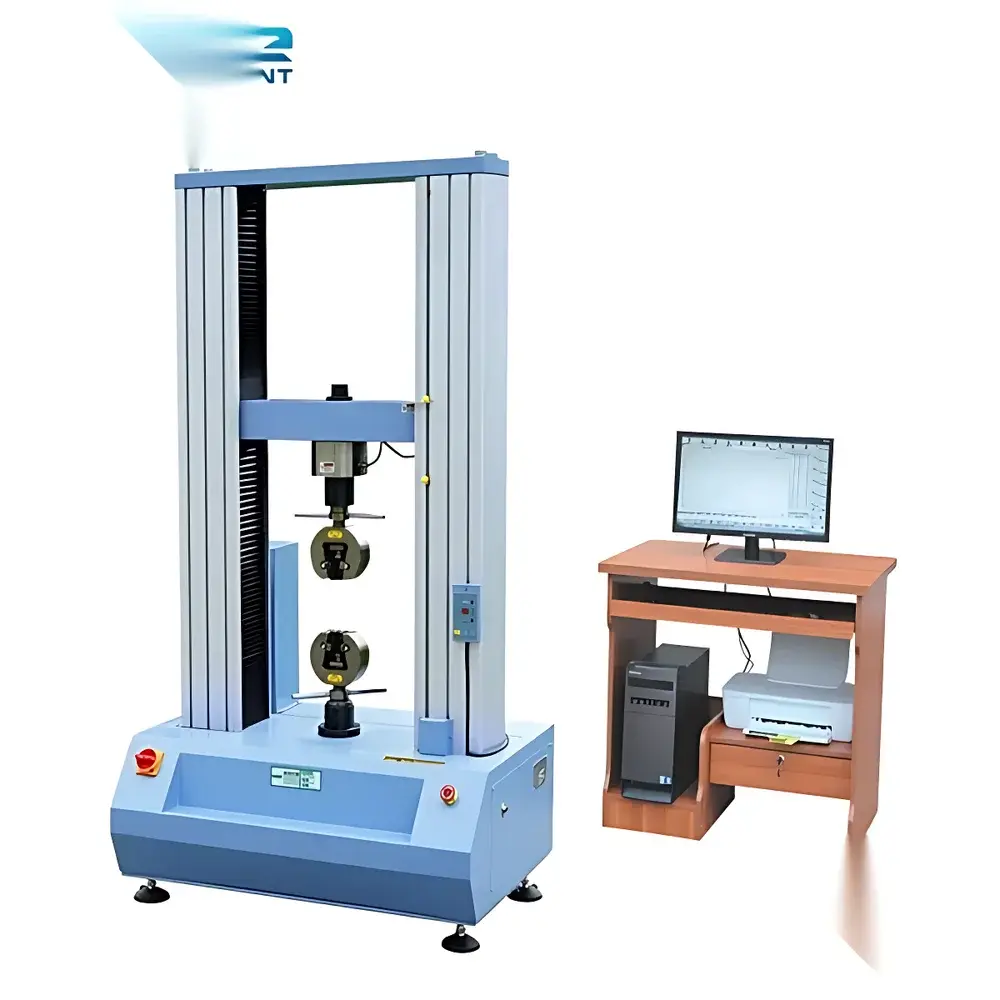
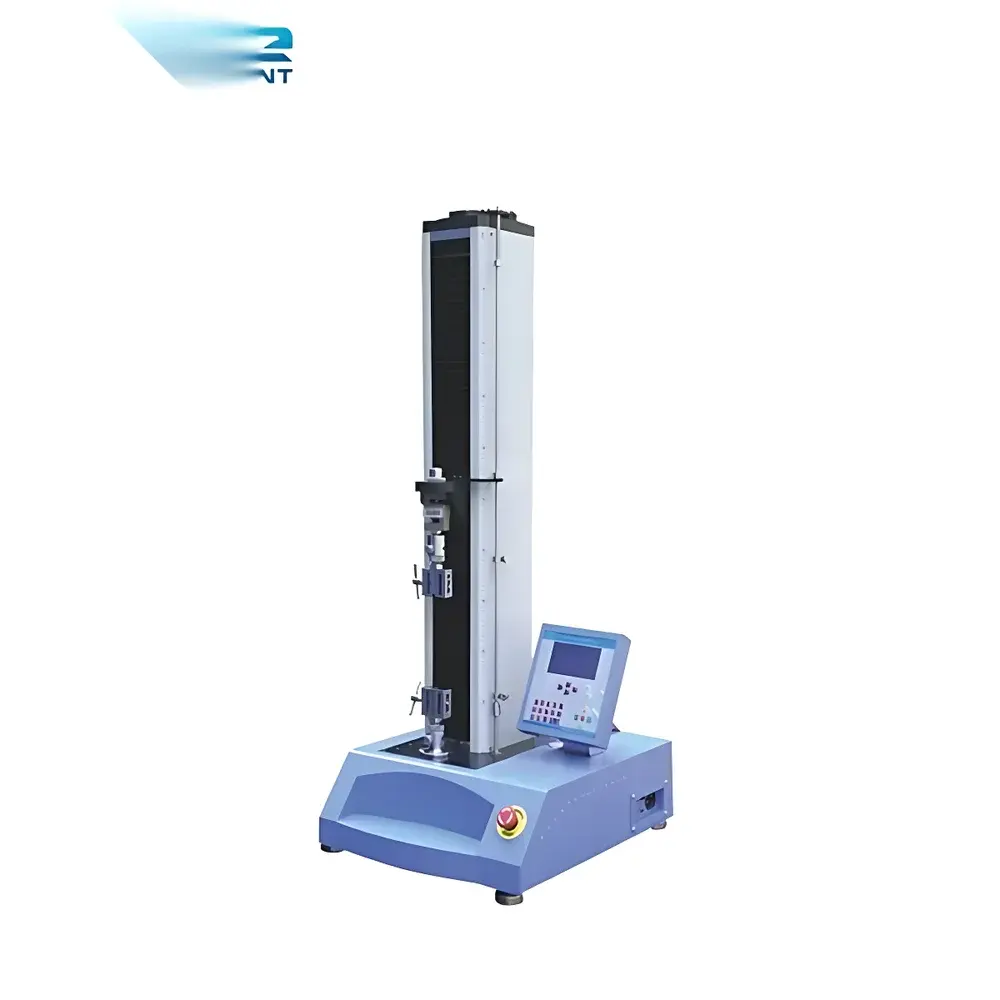
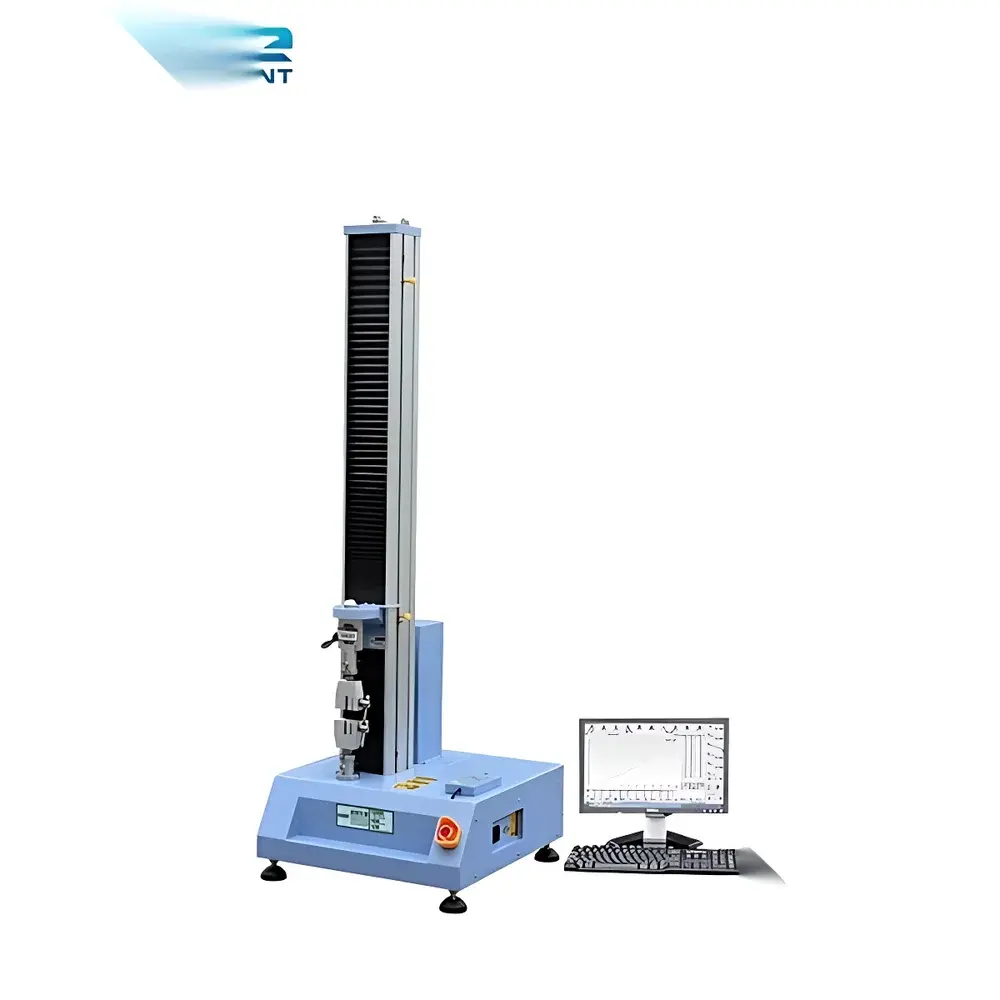
Compact Tensile Testing Machine
| Brand | OEM / Private Label |
|---|---|
| Origin | Imported |
| Supplier Type | Authorized Distributor |
| Price | USD 3,200 (FOB) |
| Compliance | GB/T 16491, GB/T 1040, GB/T 2790–2792, GB/T 3923.1, GB/T 528, GB/T 2611, GB/T 17200 |
| Load Cell Accuracy | ±0.03% F.S. |
| Resolution | 1/100,000 full scale |
| Travel Protection | Mechanical & software-based limit control |
| Encoder | 2500 PPR AC servo motor with Panasonic drive |
| Drive System | Precision ground ball screw + linear guideways |
| Data Acquisition | PC-based real-time curve plotting, peak hold, auto-stop on break, overload protection, unit conversion, report generation |
Overview
The Compact Tensile Testing Machine is an entry-level electromechanical universal testing system engineered for precision uniaxial tensile, peel, tear, and flexural property evaluation of polymers, films, foils, adhesives, textiles, elastomers, and thin metallic specimens. It operates on the fundamental principle of controlled displacement-driven force measurement: a high-fidelity load cell captures axial force while a calibrated ball-screw actuator delivers precise crosshead motion under closed-loop servo control. Designed to meet the mechanical integrity verification requirements of R&D labs, QC departments, and contract testing facilities, this machine delivers metrological traceability aligned with national standards (GB/T series) and serves as a cost-optimized alternative to full-scale universal testers without compromising core repeatability or data fidelity.
Key Features
- Auto-stop-on-break functionality ensures immediate crosshead halt upon specimen fracture—minimizing post-failure overtravel and preserving sensor integrity.
- High-precision load cell with explosion-proof housing, ±0.03% full-scale accuracy, <0.01% zero drift, built-in thermal compensation, and 150% transient overload tolerance.
- Integrated Panasonic AC servo motor with 2500 pulses per revolution encoder enables smooth, low-noise motion control across speed ranges from 0.01 to 500 mm/min.
- Ground ball-screw transmission coupled with preloaded linear guideways guarantees minimal backlash, sub-micron positioning repeatability, and long-term mechanical stability.
- Dual-layer safety architecture: hardware travel limit switches prevent mechanical overextension; software-defined upper load thresholds trigger immediate shutdown to protect transducer integrity.
- Real-time Windows-based software provides synchronized force–displacement curve acquisition at 100 Hz sampling rate, with configurable test protocols, automatic peak detection, and breakpoint identification.
Sample Compatibility & Compliance
This tester accommodates specimens up to 100 mm wide and 300 mm gauge length, supporting standard dumbbell, strip, and loop configurations per ISO 527, ASTM D638, ASTM D882, and GB/T 1040. Its force range (typically 1–5 kN, configurable per model) suits thin films (≥12 µm), pressure-sensitive adhesives (PSA), medical tubing, packaging laminates, and nonwovens. All firmware and calibration procedures comply with GB/T 16491 (Chinese equivalent of ISO 7500-1), and documentation supports GLP-compliant audit trails—including user authentication, parameter change logs, and electronic signature readiness per FDA 21 CFR Part 11 when deployed in regulated environments.
Software & Data Management
The embedded Windows application supports multi-language UI (English, Chinese, Spanish), customizable test templates, and automated report generation in PDF/XLS formats compliant with internal QA workflows. Raw data export includes timestamped .csv files with force (N), displacement (mm), strain (%), and stress (MPa) columns—enabling third-party statistical analysis (e.g., Minitab, JMP). Audit-ready features include operator ID tagging, test method versioning, calibration certificate linkage, and immutable data archiving. Optional API integration allows direct ingestion into LIMS platforms via TCP/IP or OPC UA protocols.
Applications
- Quantitative evaluation of tensile strength, elongation at break, Young’s modulus, and yield point for thermoplastic films and biodegradable packaging materials.
- Peel adhesion testing per GB/T 2790 (180° peel) and GB/T 2792 (T-peel) for PSA tapes, labels, and medical device backings.
- Loop tensile assessment of suture materials and braided polymer cords in accordance with GB/T 14203 and ISO 10534-2.
- Quality conformance screening for extruded profiles, injection-molded parts, and composite laminates prior to batch release.
- Educational use in materials science laboratories for hands-on instruction in stress–strain behavior, Hooke’s law validation, and failure mode analysis.
FAQ
What is the maximum recommended specimen thickness for reliable clamping?
Standard pneumatic or wedge-action grips accommodate specimens up to 5 mm thick; optional high-capacity grips extend compatibility to 12 mm for rigid composites.
Does the system support ASTM D882 testing for thin plastic films?
Yes—the software includes preconfigured D882 test methods with strain rate control, extensometer synchronization (optional), and modulus calculation per Annex A2.
Can calibration certificates be issued with NIST-traceable references?
Factory calibration is performed using certified deadweight standards; optional UKAS-accredited calibration with uncertainty reporting is available upon request.
Is remote diagnostics supported?
Yes—secure remote desktop access (with client consent) enables real-time troubleshooting, firmware updates, and parameter optimization by technical support engineers.
What maintenance intervals are recommended for long-term accuracy?
Load cell verification every 6 months; ball-screw lubrication and guideway inspection annually; full system performance verification per GB/T 16491 every 12 months.



