
Composite Cyclic Salt Spray Test Chamber – Manufacturer-Supplied Environmental Test System
| Key | Brand: Other Brands |
|---|---|
| Origin | Imported |
| Supplier Type | Authorized Distributor |
| Price | USD 12,500 (FOB) |
| Chamber Volume Options | 108 L / 270 L / 480 L |
| Temperature Range | +5°C to +55°C |
| Humidity Range | 85–95% RH |
| Temp. Uniformity | ≤ ±2°C |
| Temp. Stability | ≤ ±0.5°C |
| Salt Deposition Rate | 1–2 mL/80 cm²·h |
| Spray Mode | Continuous or Cyclic (Programmable) |
| Timer Range | 1 min to 999 h |
| Heating Power | 1.3–1.8 kW |
| Input Voltage | AC 220V±10% / 380V±10%, 50 Hz |
| Compliance | GB/T 2423.17–2022, IEC 60068-2-11, ASTM B117, ISO 9227, MIL-STD-810H, DIN 50021 |
Overview
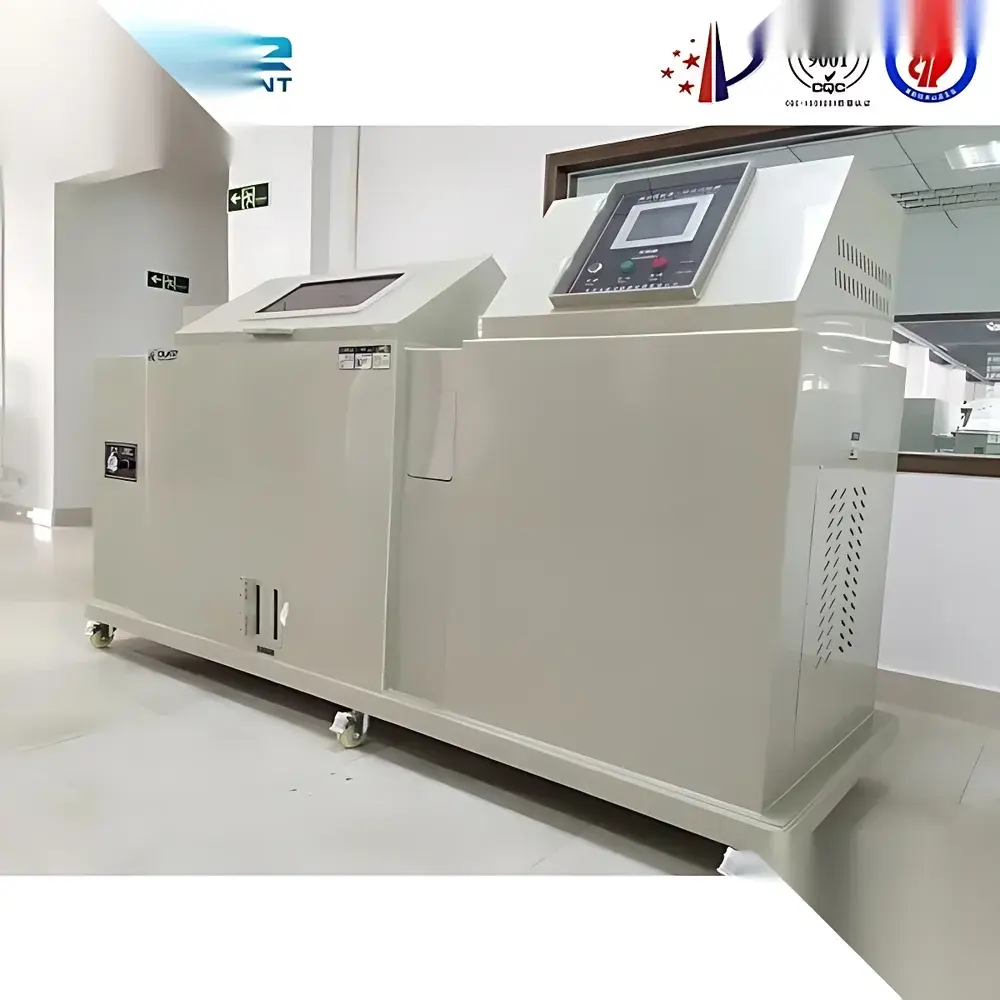
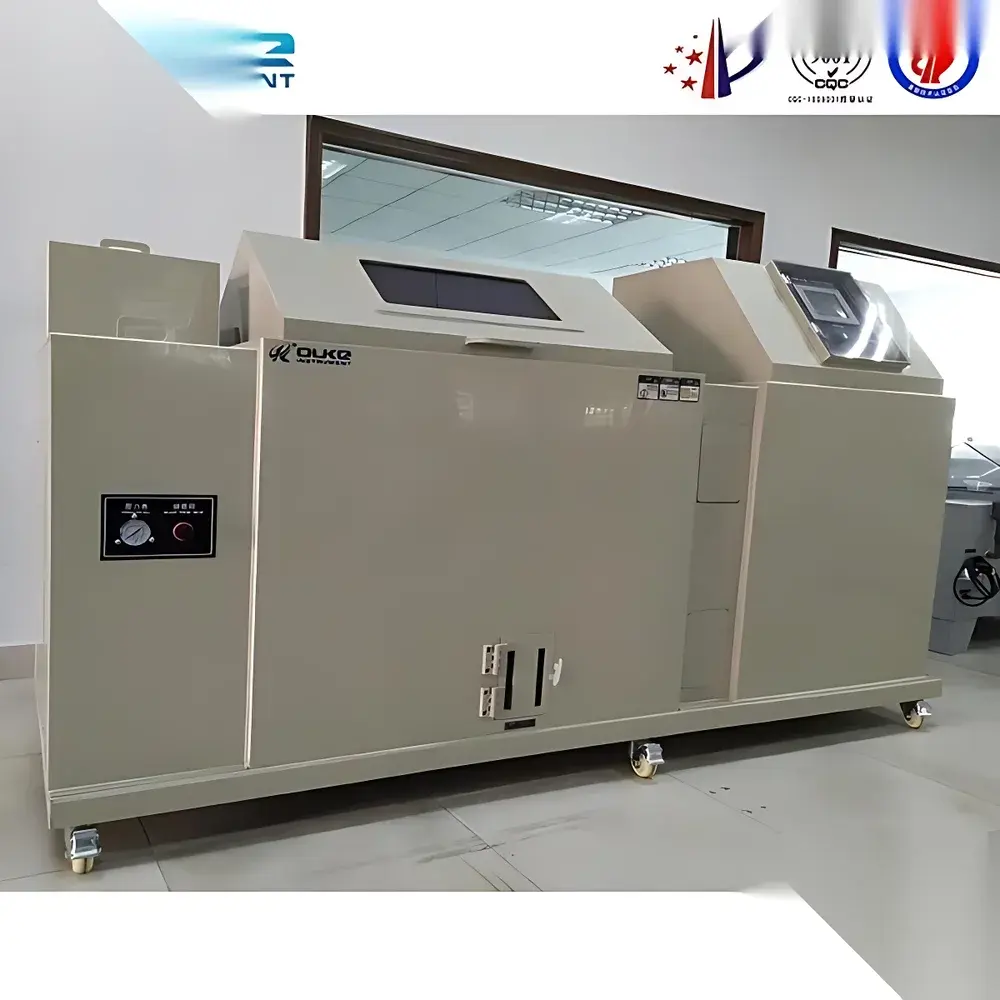
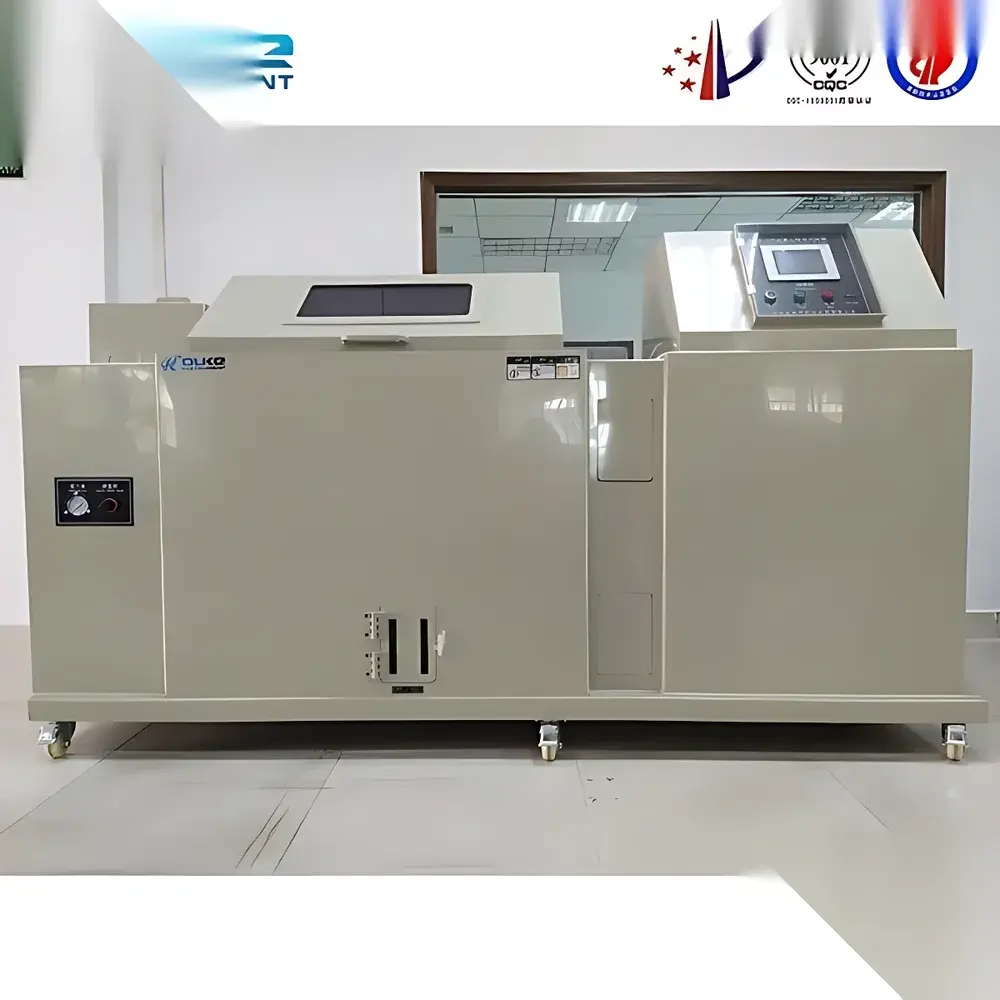
The Composite Cyclic Salt Spray Test Chamber is an engineered environmental simulation system designed for accelerated corrosion testing of metallic and coated materials under rigorously controlled, multi-phase climatic conditions. Unlike conventional static salt fog chambers, this system integrates programmable temperature control, high-fidelity humidity regulation, and precisely metered salt aerosol generation—enabling full compliance with cyclic corrosion test (CCT) protocols such as ISO 16701, SAE J2334, and GMW 14872. The chamber operates on the principle of sequential or overlapping exposure phases—including neutral salt spray (NSS), drying, humid conditioning, and wet storage—thereby replicating real-world service environments where electrochemical degradation occurs synergistically with thermal and hygroscopic stress. Its structural integrity, leak-tight sealing via water-trap labyrinth design, and corrosion-resistant construction ensure long-term repeatability and metrological stability across thousands of operational cycles.
Key Features
- Intelligent LED-based PID temperature controller with dual-loop fuzzy logic algorithm—enabling rapid setpoint attainment and <±0.5°C thermal stability over full operating range (+5°C to +55°C)
- Tower-type atomization system with non-crystallizing ceramic nozzles and integrated salt solution pre-heating, ensuring uniform droplet distribution (1–2 mL/80 cm²·h) and eliminating nozzle clogging
- Independent heating circuitry using Ni-Cr alloy sheathed heaters, fully isolated from humidity and spray subsystems for fail-safe thermal management
- Water-sealed chamber door and gasket-free flange interface—validated to prevent salt mist leakage per ISO 9227 Annex A requirements
- Dual-stage pressure regulation for compressed air supply, coupled with mechanical and electronic overtemperature cut-offs at both heater and chamber wall levels
- Transparent polycarbonate observation lid with anti-fog coating—allowing real-time visual monitoring of specimen condition and spray morphology without interrupting test continuity
- Modular configuration supporting standalone salt spray, steady-state humidity, or fully automated composite cycling—field-upgradable to wet-dry-salt-humidity sequences
Sample Compatibility & Compliance
This chamber accommodates standard test specimens up to 1200 mm (L) × 500 mm (W) × 800 mm (D) in the largest model (SH-120), with V-shaped stainless steel sample racks included as standard. All internal surfaces are fabricated from seamless fiberglass-reinforced polymer (FRP), eliminating weld seams and galvanic interfaces that could compromise test validity. Auxiliary components—including collection funnels, calibrated measuring cylinders, and inline water filtration for brine preparation—meet ASTM D1193 Type IV purity specifications. The system conforms to national and international regulatory frameworks governing materials qualification: GB/T 2423.17–2022 (China), IEC 60068-2-11 (IEC), ISO 9227 (neutral/acetic/copper-accelerated salt spray), ASTM B117, and MIL-STD-810H Method 509.11. It supports GLP-compliant test documentation when paired with optional audit-trail-capable data loggers.
Software & Data Management
While the base configuration features a stand-alone LED PID controller with manual parameter entry, optional RS485/Modbus RTU or Ethernet TCP/IP interfaces enable integration into centralized laboratory information management systems (LIMS). Third-party SCADA platforms (e.g., Ignition, WinCC) can acquire real-time temperature, humidity, spray status, and cycle phase data at 1-second resolution. All digital controllers retain ≥30 days of timestamped operational logs—including start/stop events, alarm triggers (e.g., low brine level, overtemp), and calibration history—supporting FDA 21 CFR Part 11 compliance when deployed with electronic signature modules. Raw data export is available in CSV format; no proprietary file locking or vendor-specific software dependencies are imposed.
Applications
- Corrosion resistance validation of automotive body panels, fasteners, and under-hood components per GMW 14872 and Ford CETP 00.00-L-467
- Coating adhesion and blistering assessment for aerospace aluminum alloys (e.g., AA2024-T3) under ASTM D1654
- Qualification of marine-grade stainless steels (e.g., UNS S32205) per NACE TM0169 and ISO 15156
- Accelerated aging of printed circuit board (PCB) conformal coatings exposed to coastal or industrial atmospheres
- Material screening for renewable energy infrastructure—including solar mounting hardware and offshore wind turbine fasteners
- Research-grade investigation of synergistic degradation mechanisms involving chloride ingress, hygroscopic swelling, and thermal fatigue
FAQ
Can this chamber perform pure humidity-only or dry-only test cycles?
Yes—the control system allows deactivation of salt spray and selection of either constant humidity mode (85–95% RH) or temperature-only conditioning without humidity control.
What maintenance intervals are recommended for the spray nozzles and filtration system?
Nozzle inspection and ultrasonic cleaning are advised every 200 operational hours; the inline water filter cartridge requires replacement every 500 hours or per ASTM D1193 verification reports.
Is third-party calibration certification available upon delivery?
Yes—NIST-traceable calibration certificates for PT100 sensors and deposition rate verification are provided as an optional add-on service.
Does the chamber support automatic transition between wet/dry/salt phases without operator intervention?
Yes—when configured with the optional programmable cycle controller, up to 99 distinct phase steps (duration, temp, RH, spray ON/OFF) can be sequenced and repeated indefinitely.
Are custom chamber dimensions or material upgrades (e.g., PVDF-lined interior) possible?
Yes—OEM engineering support is available for application-specific modifications, subject to structural validation and compliance re-certification.



