
Composite Salt Spray Test Chamber Manufacturer
No specifications available.
Overview
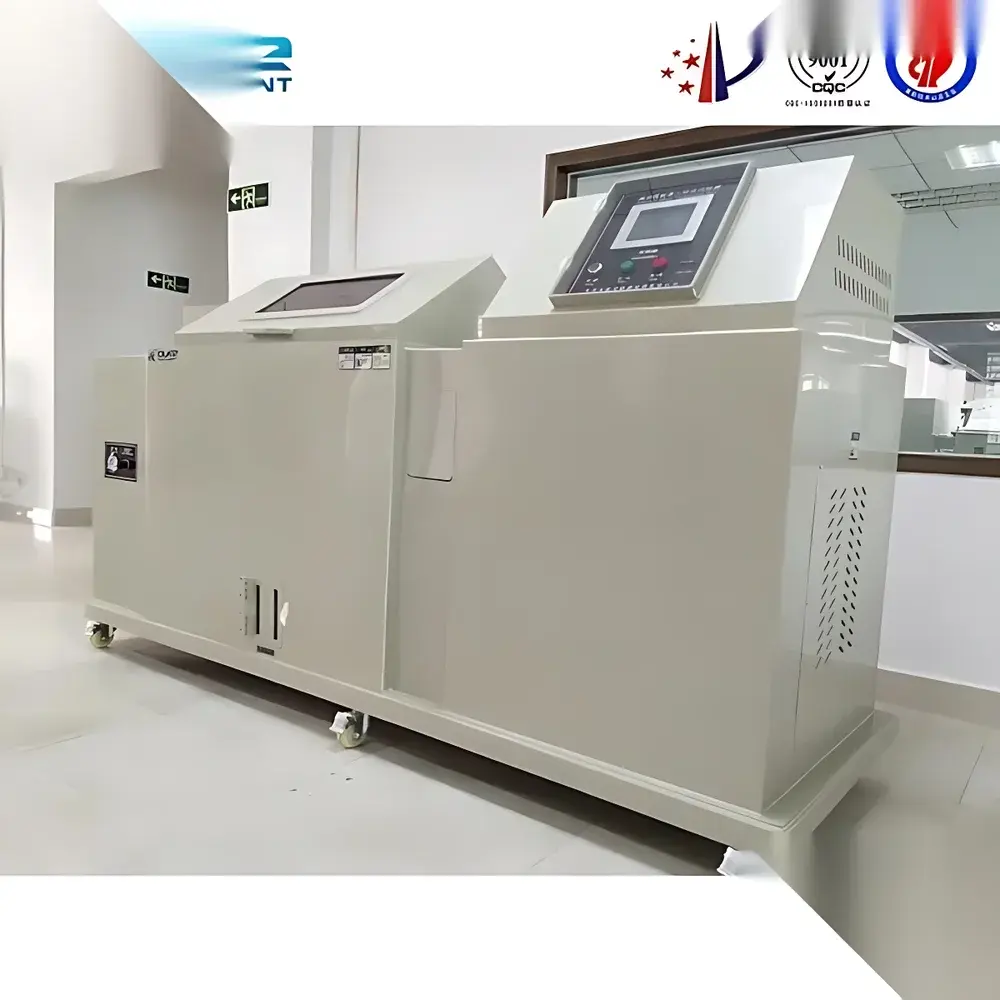
The Composite Salt Spray Test Chamber is an engineered environmental test system designed to evaluate the corrosion resistance of metallic materials, coated surfaces, and protective finishes under accelerated, multi-stress conditions. Unlike standard neutral salt spray (NSS) chambers, this composite system integrates controlled salt fog exposure with alternating cycles of high humidity, drying, and optional sulfur dioxide (SO₂) gas dosing—enabling simulation of real-world industrial or coastal atmospheric degradation mechanisms. It operates on the principle of electrochemical corrosion acceleration via chloride ion penetration, combined with synergistic effects from SO₂-induced acidification and cyclic hygrothermal stress. The chamber complies with internationally recognized test standards including ASTM B117, ISO 9227, IEC 60068-2-11 (salt mist), ISO 6988 (SO₂ testing), and JIS Z 2371, supporting both qualification testing and comparative process validation in QC/QA laboratories and R&D environments.
Key Features
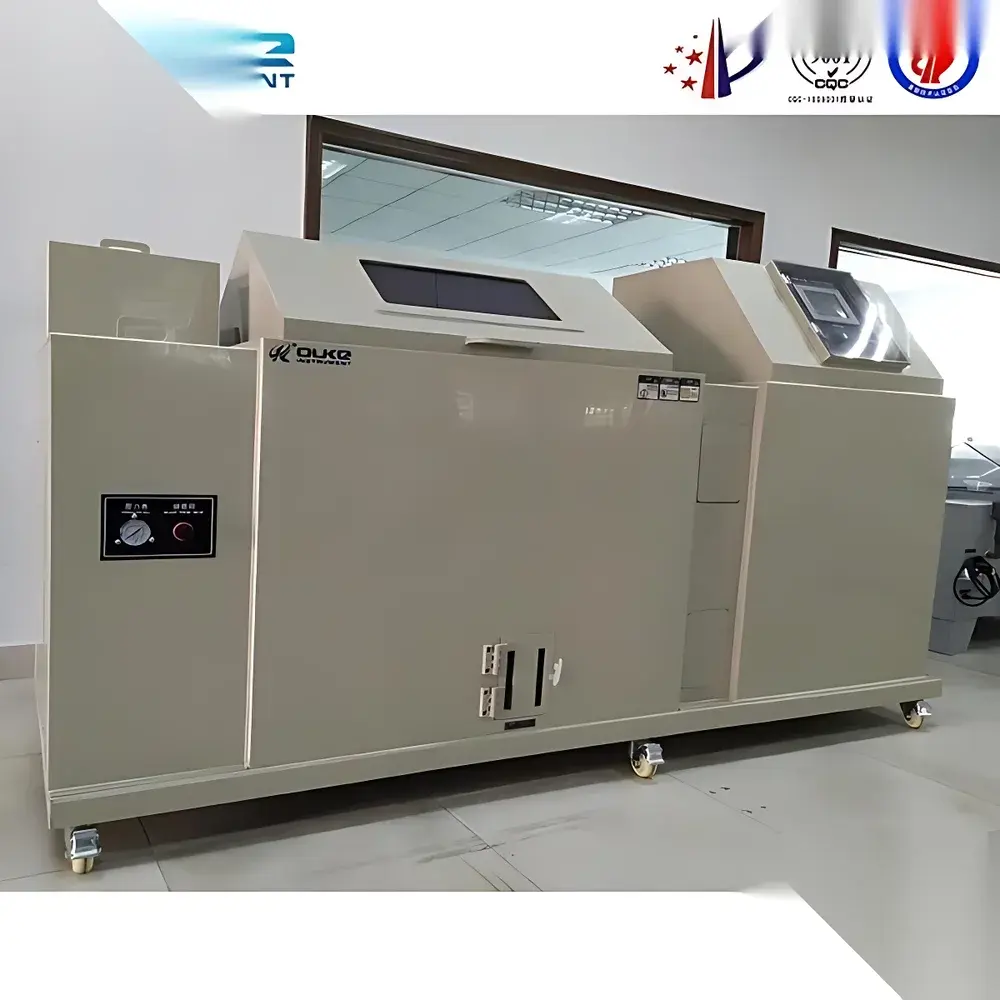
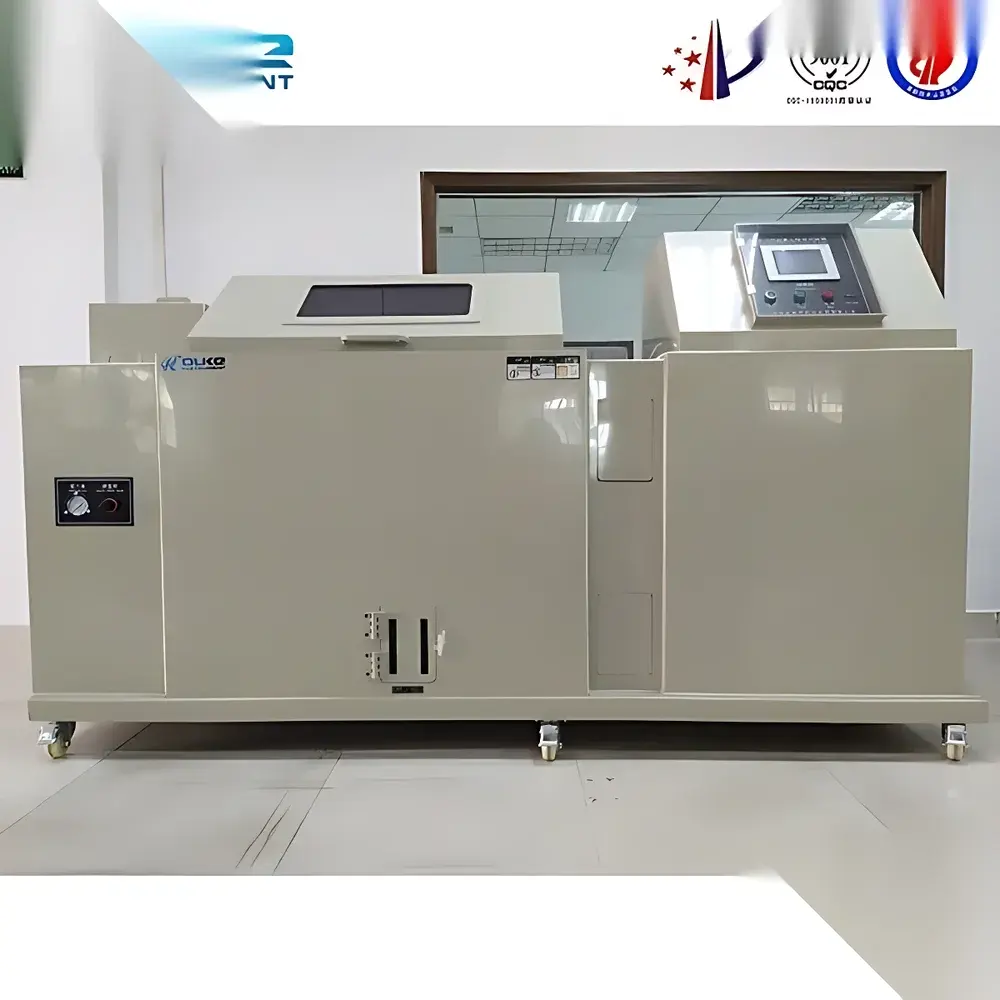
- Robust dual-layer construction: Exterior housing fabricated from reinforced PVC rigid plastic board—resistant to UV aging, chemical corrosion, and mechanical impact; interior chamber lined with seamless PVC sheet for long-term resistance to saline and acidic condensates.
- Full-view transparent lid made from high-impact, optically clear polycarbonate-acrylic composite material; enables real-time visual monitoring without interrupting test cycles.
- Hydro-sealed lid interface with integrated water trough gasket ensures complete containment of corrosive aerosols and SO₂ gas, meeting ISO 9227 containment requirements and minimizing operator exposure risk.
- Pneumatic lid support mechanism allows smooth, hands-free opening/closing—reducing mechanical wear and improving ergonomics during sample loading/unloading.
- Immersion-type heating system using U-shaped titanium alloy heating elements mounted in the inner water bath; delivers rapid thermal response and uniform temperature distribution (±2 °C uniformity, ±0.5 °C stability).
- High-precision PID temperature controller with PT100 platinum RTD sensor; programmable setpoint resolution of 0.1 °C and adjustable ramp/soak profiles for multi-stage test sequences.
- Adjustable salt fog generation system with calibrated nozzles and compressed air saturation; salt deposition rate controllable within 1–2 mL/80 cm²·h per ASTM B117 specifications.
- Integrated SO₂ gas delivery subsystem—including pressure-regulated cylinder connection, mass-flow-controlled injection, and post-test exhaust neutralization pathway—supporting mixed-gas corrosion protocols per ISO 6988.
Sample Compatibility & Compliance
The chamber accommodates a wide range of specimen geometries and mounting configurations—including flat panels, fasteners, electronic enclosures, automotive components, and coated metal substrates—within three standard working chamber volumes (150 L, 250 L, and 750 L). All models meet CE marking requirements for electrical safety and electromagnetic compatibility (EMC). Design and operational parameters align with GLP-compliant laboratory practices: temperature and timer logs are traceable, calibration intervals follow ISO/IEC 17025 guidelines, and chamber validation reports (IQ/OQ/PQ) can be generated per client request. Optional audit-ready data logging supports 21 CFR Part 11 compliance when paired with validated software modules.
Software & Data Management
While the base configuration features a standalone microprocessor-based controller with digital display and manual parameter entry, optional PC-based control software provides extended functionality—including remote monitoring via Ethernet/Wi-Fi, automated test sequence programming, real-time graphing of chamber temperature/humidity/SO₂ concentration, and exportable CSV/Excel reports. All logged data includes timestamped metadata, operator ID, and instrument calibration status—facilitating internal audits and regulatory submissions. Firmware updates are delivered via secure USB or network interface, with version history retained for traceability.
Applications
This composite chamber is routinely deployed in quality assurance departments of automotive OEMs and Tier-1 suppliers for evaluating zinc-nickel plating performance; in electronics manufacturing for assessing conformal coating integrity under marine-equivalent conditions; in aerospace component certification for validating chromate conversion coatings; and in academic corrosion science research for mechanistic studies of pitting initiation under cyclic chloride/sulfur exposure. Its flexibility supports custom test protocols beyond standardized methods—such as modified PROHIBIT or Cyclic Corrosion Testing (CCT) variants—making it suitable for both routine conformance testing and failure mode analysis.
FAQ
What standards does this chamber support?
It is configured to execute ASTM B117, ISO 9227 (NSS, AASS, CASS), ISO 6988 (SO₂), and IEC 60068-2-11. Custom protocol implementation is possible upon technical review.
Is SO₂ gas included with the system?
One certified SO₂ cylinder (with regulator and connecting hardware) is supplied as standard equipment; refills must be sourced locally per regional gas supplier regulations.
Can test cycles be programmed automatically?
Yes—the optional software package enables fully automated multi-phase cycling (salt spray → humid soak → dry → SO₂ exposure) with user-defined durations, transitions, and alarm thresholds.
What maintenance is required for long-term reliability?
Routine tasks include daily deionized water replenishment, weekly nozzle cleaning, quarterly calibration of PT100 sensors and flow meters, and annual inspection of pneumatic actuators and seal integrity.
Is third-party validation support available?
Yes—factory-trained engineers provide IQ/OQ documentation packages and on-site PQ execution in accordance with ISO/IEC 17025 and client-specific SOPs.



