
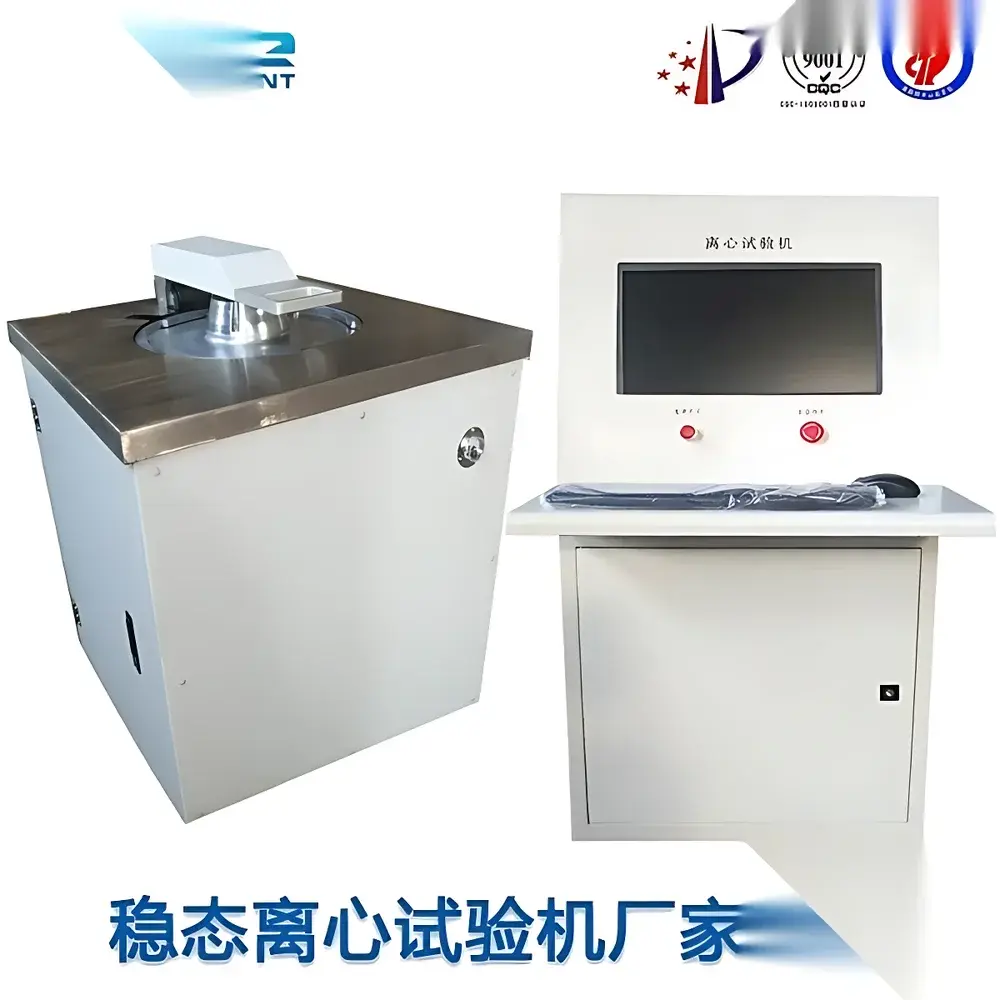
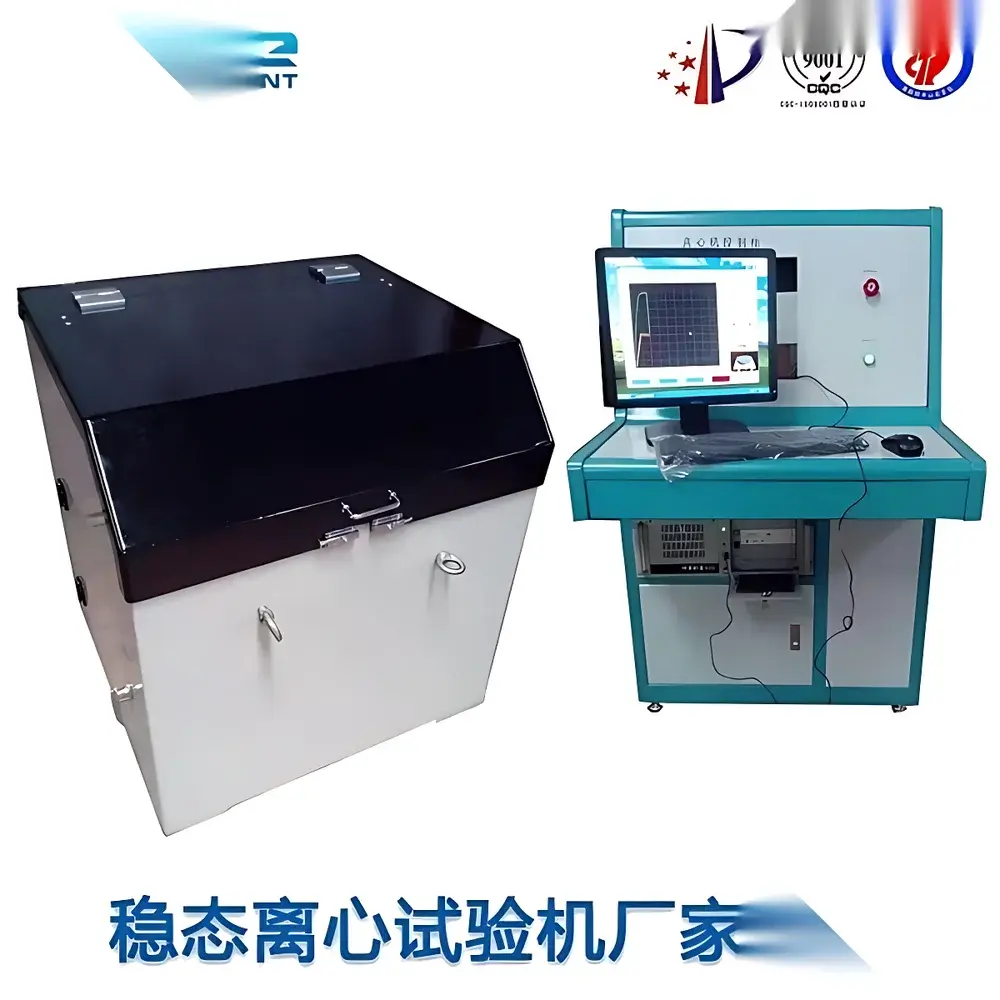
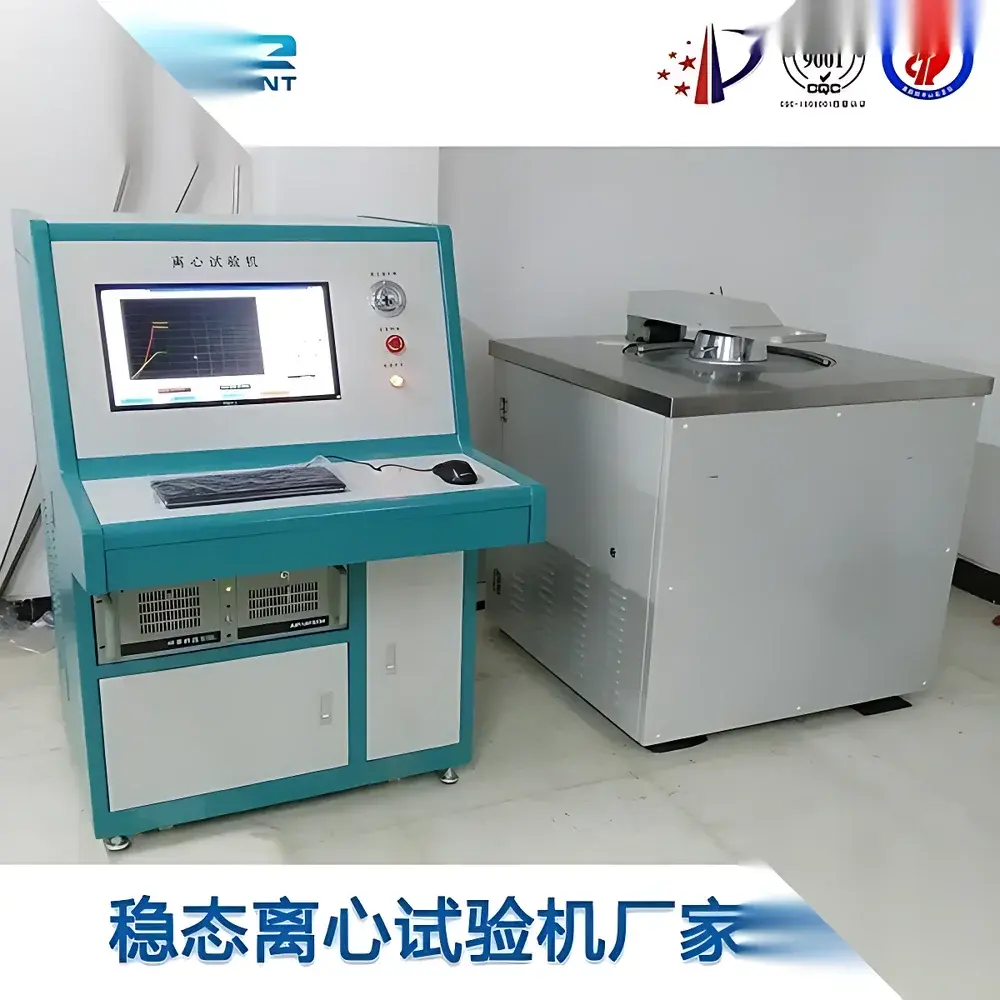
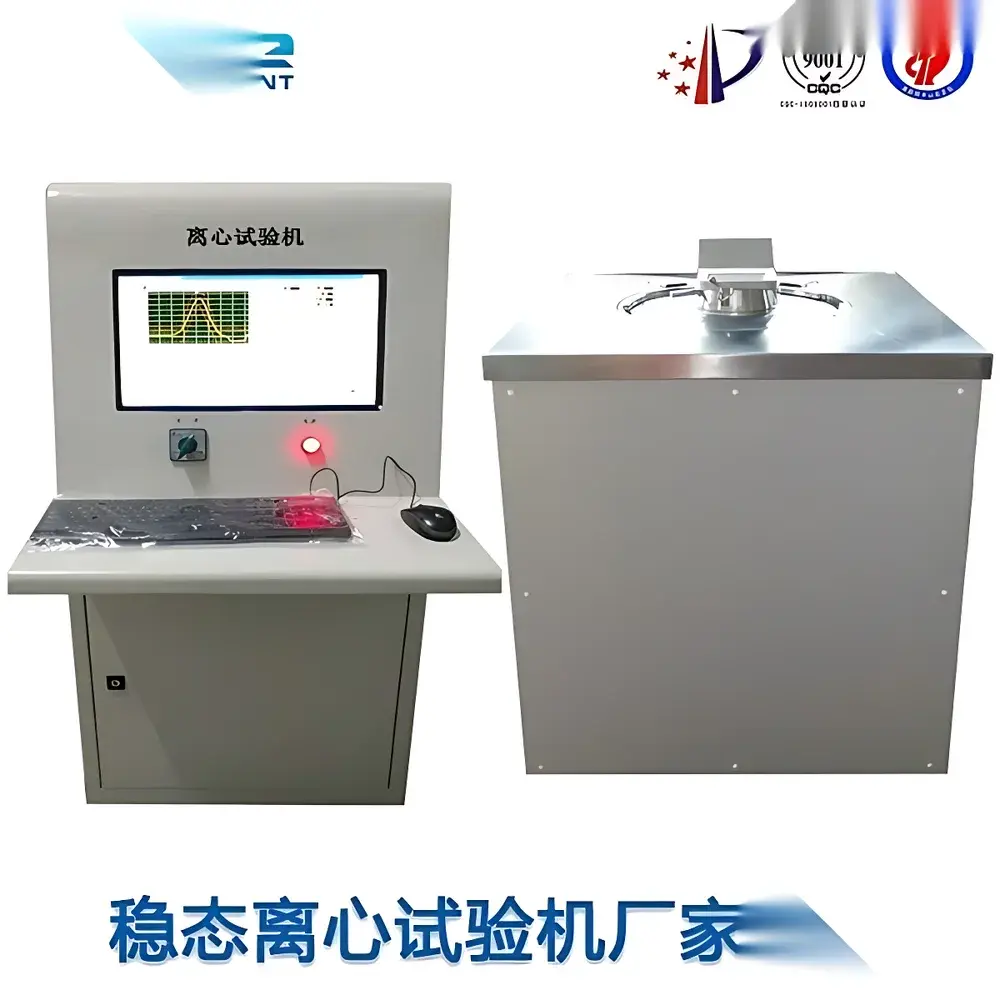
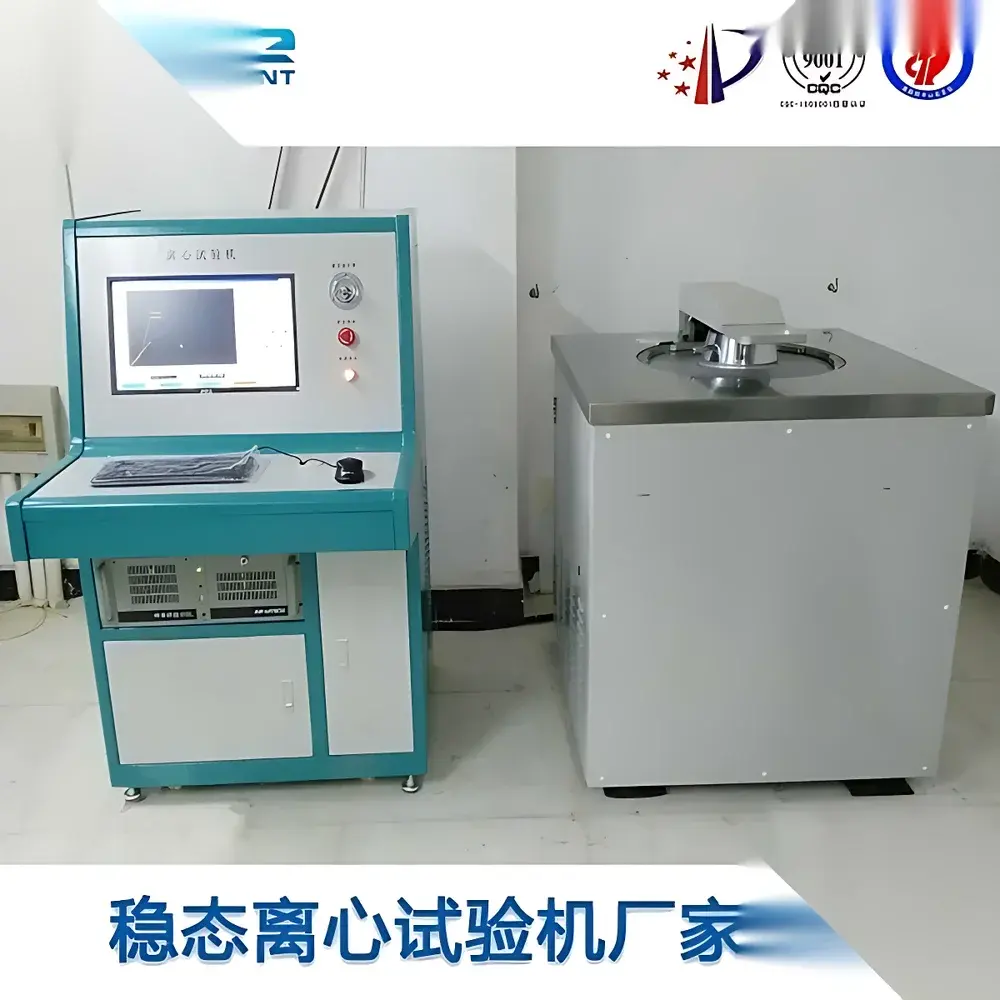
Composite Steady-State Acceleration Test System
| Key | Brand: Other Brands |
|---|---|
| Origin | Imported |
| Manufacturer Type | General Distributor |
| Price | USD 28,000 (approx.) |
| Compliance Standards | MIL-STD-810F, MIL-STD-202F, MIL-STD-883C, GJB 150, GJB 360, GB/T 2423, IEC 60068-2-27 |
Overview
The Composite Steady-State Acceleration Test System is an electromechanical centrifuge-based testing platform engineered for the precise application and measurement of sustained, high-magnitude acceleration loads—expressed in multiples of gravitational acceleration (g)—on electronic components, microelectromechanical systems (MEMS), avionics modules, and other compact electro-mechanical devices. Unlike transient shock or vibration test methods, this system subjects specimens to controlled, steady-state radial acceleration fields generated via high-speed rotation about a fixed axis, simulating operational overloads such as those encountered during missile launch, aircraft maneuvering, or satellite deployment. The system operates on the principle of centripetal force generation: acceleration magnitude (a) is determined by a = ω²r, where ω is angular velocity (rad/s) and r is the effective radius from rotation center to specimen center of gravity. This enables deterministic, repeatable, and traceable acceleration profiles across defined spatial axes (X, Y, Z).
Key Features
- Multi-axis acceleration capability: Independent mounting configurations allow sequential or discrete testing along X, Y, and Z directions per test specimen, with specimen center positioning radius configurable up to 1000 mm.
- Programmable multi-step acceleration profiles: Supports up to six discrete acceleration levels per test sequence, each with user-defined dwell time, ramp rate, and tolerance band monitoring.
- Real-time closed-loop control architecture: Industrial-grade motion controller synchronizes motor speed, slip-ring power delivery, and sensor feedback at 1 kHz sampling rate; integrated safety interlocks monitor overspeed, overcurrent, and thermal limits.
- Modular slip-ring assembly: Configurable current channel count (up to 15 circuits), rated at 500 V AC/DC and 5 A per channel, enabling continuous power and signal transmission to powered DUTs during rotation.
- Dual-mode operation: Switchable between fully automated script-driven execution (via embedded industrial PC) and manual jog mode for setup verification and calibration alignment.
- Comprehensive protection logic: Hardware-enforced fail-safes include open-circuit detection, acceleration limit violation shutdown, and emergency mechanical brake activation within ≤150 ms.
Sample Compatibility & Compliance
The system accommodates specimens up to 200 mm in height and 200–1000 mm radial installation offset, supporting standard test fixtures compliant with MIL-STD-810F Annex G and GJB 150.15A. Mounting plates are precision-machined aluminum with M4/M6 tapped holes and dynamic balancing certification (ISO 1940 Grade G2.5). All models meet electromagnetic compatibility (EMC) requirements per EN 61326-1 and safety standards per IEC 61000-6-2. Calibration traceability follows ISO/IEC 17025 guidelines, with annual verification using NIST-traceable laser tachometry and calibrated load cells. The system is validated for use in GLP-compliant environmental qualification laboratories and supports audit-ready documentation per FDA 21 CFR Part 11 when paired with optional electronic signature and audit trail software modules.
Software & Data Management
Control and data acquisition are managed through a Windows-based HMI running real-time deterministic control firmware. The software suite provides synchronized time-stamped logging of acceleration magnitude (±0.5% FS accuracy), rotational speed, chamber temperature, and slip-ring voltage/current per channel. All test sessions generate XML-formatted reports compliant with IEEE 1671-2010 (Standard for Automatic Test Markup Language), including pass/fail status against user-defined tolerances, curve overlay capability, and deviation heatmaps. Raw binary data is exportable in HDF5 format for post-processing in MATLAB, Python (NumPy/Pandas), or LabVIEW. Optional validation packages include IQ/OQ documentation templates aligned with ISO 9001:2015 and ICH Q9 risk management principles.
Applications
- Qualification testing of inertial sensors, gyroscopes, and accelerometers under sustained g-loading conditions.
- Structural integrity assessment of solder joints, wire bonds, and ceramic package substrates per JESD22-A108.
- Reliability screening of automotive ECUs subjected to high-g cornering or braking scenarios.
- Verification of MEMS actuator anchoring strength and proof-mass suspension robustness.
- Pre-launch environmental stress screening (ESS) for CubeSat subsystems per ECSS-Q-ST-70-08C.
- Failure mode analysis of piezoelectric transducers and RF filters under centrifugal stress gradients.
FAQ
What acceleration ranges are achievable across different models?
Acceleration output depends on rotational radius and maximum RPM. Standard configurations deliver 30–2000 m/s² (≈3–204 g) for mid-range units; high-capacity variants extend to 200,000–400,000 m/s² (≈20,400–40,800 g) at optimized radii.
Is the system compatible with third-party data acquisition hardware?
Yes—digital I/O ports (TTL/RS-422) and Ethernet-based API (RESTful JSON interface) enable integration with external DAQ systems, thermal imaging cameras, or strain gauge conditioners.
How is specimen center-of-gravity alignment verified prior to test?
Each turntable includes precision-machined reference datum surfaces and a removable optical alignment jig; optional laser displacement sensors provide real-time CG offset measurement with ±0.1 mm resolution.
Can the system perform combined acceleration + temperature stress testing?
While not integrated, the base unit is designed for retrofitting into climate chambers (−65°C to +150°C) with feedthrough-rated slip rings and vacuum-compatible variants available upon request.
What maintenance intervals are recommended for long-term reliability?
Bearing lubrication and dynamic balance verification every 500 operational hours; slip-ring brush replacement every 1,000 hours; full metrological recalibration annually or after 200 test cycles, whichever occurs first.



