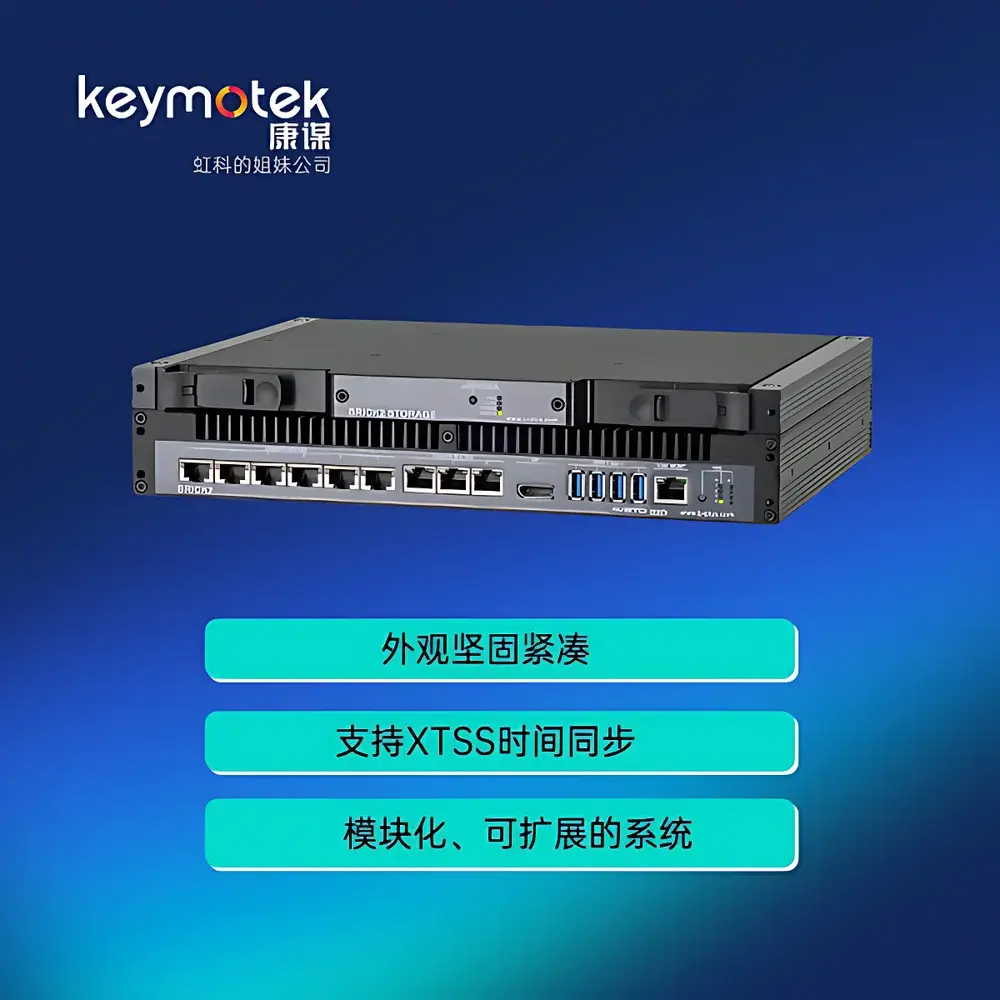


Conmoto BRICK2 High-Bandwidth Autonomous Driving Data Acquisition and Measurement System
| Brand | b-plus |
|---|---|
| Origin | Germany |
| Model | KM-B17049-B2C-002-C002 |
| CPU | Intel® Core™ i7-9850HE |
| RAM | 64 GB DDR4-2666 |
| Internal Storage | 512 GB M.2 NVMe |
| Ethernet | 6× 10GBase-T (IEEE 802.1AS gPTP), 3× 1000Base-T (IEEE 802.1AS gPTP) |
| Video Output | DisplayPort |
| GPS | Integrated high-sensitivity module with 24-h battery backup |
| Operating Temperature | −20 °C to +60 °C (full load, no write-speed derating) |
| Power Input | 12 V DC (10–28 V), cranking-safe down to 6 V |
| Max Power Consumption | 350 W |
| Dimensions (BRICK2 base unit) | 320 mm × 250 mm × 66 mm |
| Weight | ~7 kg (base unit + SPC + rack, excluding STORAGE modules) |
| Certifications | CE, FCC, VCCI, IEC/EN 61000-6-3/-4, KC, RoHS, REACH |
| OS Support | Windows 10 IoT Enterprise, Ubuntu 20.04 LTS |
| Time Sync | Hardware-accelerated IEEE 1588-2008 (802.1AS) |
| Expansion | 2× PCIe 3.0 x8 (mech. x16) slots, 1× PCIe 3.0 x8 storage slot (32 Gbit/s sustained write) |
| I/O | 4× GPI, SYSCRTL ignition input, NMEA/PPS serial, 4× USB 3.1 Gen1, 4× USB 2.0 |
Overview
The Conmoto BRICK2 is a ruggedized, high-bandwidth data acquisition and measurement platform engineered for deterministic, time-synchronized recording of multi-sensor ADAS and autonomous driving test data. Built on a modular, PCIe-based architecture, it integrates real-time Ethernet timing, hardware-accelerated IEEE 1588-2008 (802.1AS) grandmaster and slave capabilities, and low-latency I/O to support synchronized capture from LiDAR, radar, camera arrays, GNSS/IMU, and vehicle CAN/FlexRay/Ethernet AVB networks. Its design adheres to automotive-grade environmental and electrical robustness requirements—operating continuously at full computational and I/O load across −20 °C to +60 °C without thermal throttling or storage write-speed degradation. The system serves as a turnkey measurement node in closed-loop validation environments, track testing, and regulatory compliance data logging workflows where traceability, temporal fidelity, and long-term reliability are non-negotiable.
Key Features
- Deterministic Time Synchronization: Dual-mode IEEE 802.1AS gPTP implementation across six 10GBase-T and three 1000Base-T ports ensures sub-microsecond inter-device timestamp alignment—critical for sensor fusion validation and replay-based simulation.
- High-Throughput Storage Architecture: Dedicated PCIe 3.0 x8 NVMe slot supports sustained write speeds up to 32 Gbit/s; compatible with Conmoto’s BRICK2 STORAGE modules for scalable, hot-swappable, RAID-capable recording of raw sensor streams (e.g., 8× 10 GbE camera feeds + LiDAR point clouds).
- Automotive-Ready I/O Interface Suite: Includes ignition-controlled SYSCRTL input, four general-purpose inputs (GPI) with configurable edge detection, NMEA-0183/PPS serial interface for external GNSS discipline, and integrated high-sensitivity GPS with 24-hour supercapacitor backup for rapid cold-start reacquisition.
- Modular Measurement Expansion: Two mechanical x16 PCIe 3.0 x8 slots accommodate Conmoto BRICK Measurement Cards (BMC), enabling field-upgradable analog/digital acquisition, CAN FD, Automotive Ethernet (100BASE-T1/1000BASE-T1), or FPGA-accelerated preprocessing.
- Industrial-Grade Thermal & Electrical Design: Fanless convection cooling validated for continuous operation at 60 °C ambient under full 350 W load; wide-input 10–28 V DC power supply with cranking-safety down to 6 V meets ISO 16750-2 automotive electrical stress requirements.
- OS & Framework Flexibility: Pre-installed Windows 10 IoT Enterprise or Ubuntu 20.04 LTS; fully compatible with ADTF (Digitalwerk), ROS 2 Foxy/Humble, and ASAM MCD-2 MC-compliant toolchains for seamless integration into existing ADAS development pipelines.
Sample Compatibility & Compliance
The BRICK2 is designed for interoperability within heterogeneous ADAS test ecosystems. It natively ingests standardized protocols including AUTOSAR-compliant CAN FD frames, IEEE 802.3br-accelerated Ethernet AVB/TSN streams, ONVIF-compliant camera video over RTSP, and NMEA 0183/RTCM v3.x GNSS correction data. All timing-critical interfaces comply with IEEE 1588-2008 Annex D (gPTP) and ISO/IEC/IEEE 60559:2011 (floating-point arithmetic) for numerical reproducibility. The platform satisfies electromagnetic compatibility per EN 55032 Class B, EN 61000-6-2 (immunity), and automotive-specific EMC standards ISO 11452-2/4/8. CE, FCC, VCCI, KC, and RoHS/REACH declarations confirm conformity with global market access requirements. For regulated validation (e.g., UN R155, ISO 26262 ASIL-B tool qualification), the system supports audit-ready logging via optional ADTF-based GLP-compliant metadata tagging and FDA 21 CFR Part 11–compliant electronic signatures when deployed with validated software configurations.
Software & Data Management
Data integrity and traceability are enforced through hardware-rooted timestamping: every packet, frame, and sample is stamped at the PHY layer using dedicated timestamp units synchronized to the internal PTP grandmaster clock. Conmoto’s BRICK Control Center (BCC) provides centralized configuration, remote diagnostics, and health monitoring—including real-time NVMe wear-leveling metrics, PCIe link status, and thermal margin reporting. Raw data is stored in ASAM ATFX-compliant container format with embedded XMP metadata, enabling direct ingestion into dSPACE AutomationDesk, ETAS INCA, or Vector CANoe. Optional integration with Digitalwerk ADTF includes built-in signal routing, online filtering, and trigger-based segmented recording—supporting both manual and script-driven test case execution. All system logs, firmware updates, and configuration changes are recorded with immutable timestamps and user attribution, fulfilling GLP/GMP audit trail requirements.
Applications
- Multi-sensor synchronization validation for L3/L4 autonomous driving prototypes
- Regulatory test data acquisition per ISO 13207 (ADAS performance testing) and UNECE R79 (steering system homologation)
- Hardware-in-the-loop (HIL) and vehicle-in-the-loop (VIL) test bench data aggregation
- Real-world scenario replay for perception algorithm benchmarking (e.g., KITTI, nuScenes format export)
- Time-triggered network analysis of Automotive Ethernet TSN traffic (IEEE 802.1Qbv/Qbu)
- Long-duration durability testing with continuous 24/7 data logging under extreme thermal conditions
FAQ
Does the BRICK2 support hardware timestamping for all Ethernet interfaces?
Yes—each of the six 10GBase-T and three 1000Base-T controllers features integrated IEEE 1588-2008 hardware timestamping units, synchronized to a common oscillator with <100 ns jitter.
Can the system operate without external GPS while maintaining accurate time synchronization?
Yes—the onboard TCXO maintains ±50 ppb stability over temperature, and the integrated GPS module provides periodic disciplining; the system sustains 24 hours after GPS signal loss.
Is PCIe lane bifurcation supported for custom BMC cards?
The two PCIe 3.0 x8 slots support x8/x0 or x4/x4 bifurcation via BIOS configuration; mechanical x16 connectors ensure full bandwidth allocation per slot when used independently.
What is the maximum sustained write throughput achievable with dual NVMe modules?
When configured with two BRICK2 STORAGE modules in RAID 0 and managed via the onboard Intel VROC controller, sustained sequential writes exceed 5.5 GB/s (44 Gbit/s) under real-world sensor stream workloads.
Does the platform include built-in support for ASAM ODS or A2L file generation?
Native A2L export is provided via optional ADTF add-ons; ASAM ODS 6.1.0 schema-compliant database ingestion is supported through Conmoto’s BRICK Data Gateway middleware with configurable mapping rules.