
Corning LFR Low-Flow Continuous Flow Microreactor System
| Brand | Corning |
|---|---|
| Origin | USA |
| Manufacturer Status | Authorized Distributor |
| Origin Category | Imported |
| Model | LFR |
| Pricing | Upon Request |
| Translation Stage | Contact Manufacturer |
Overview
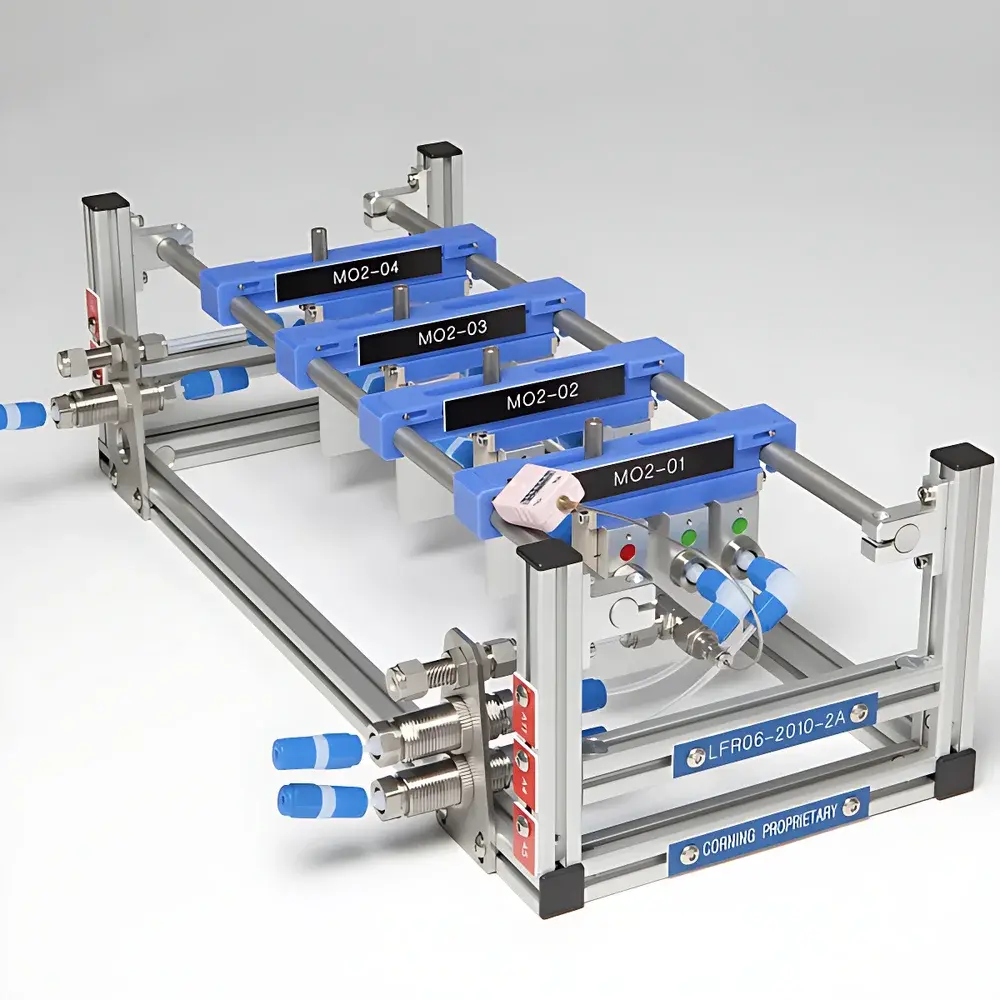
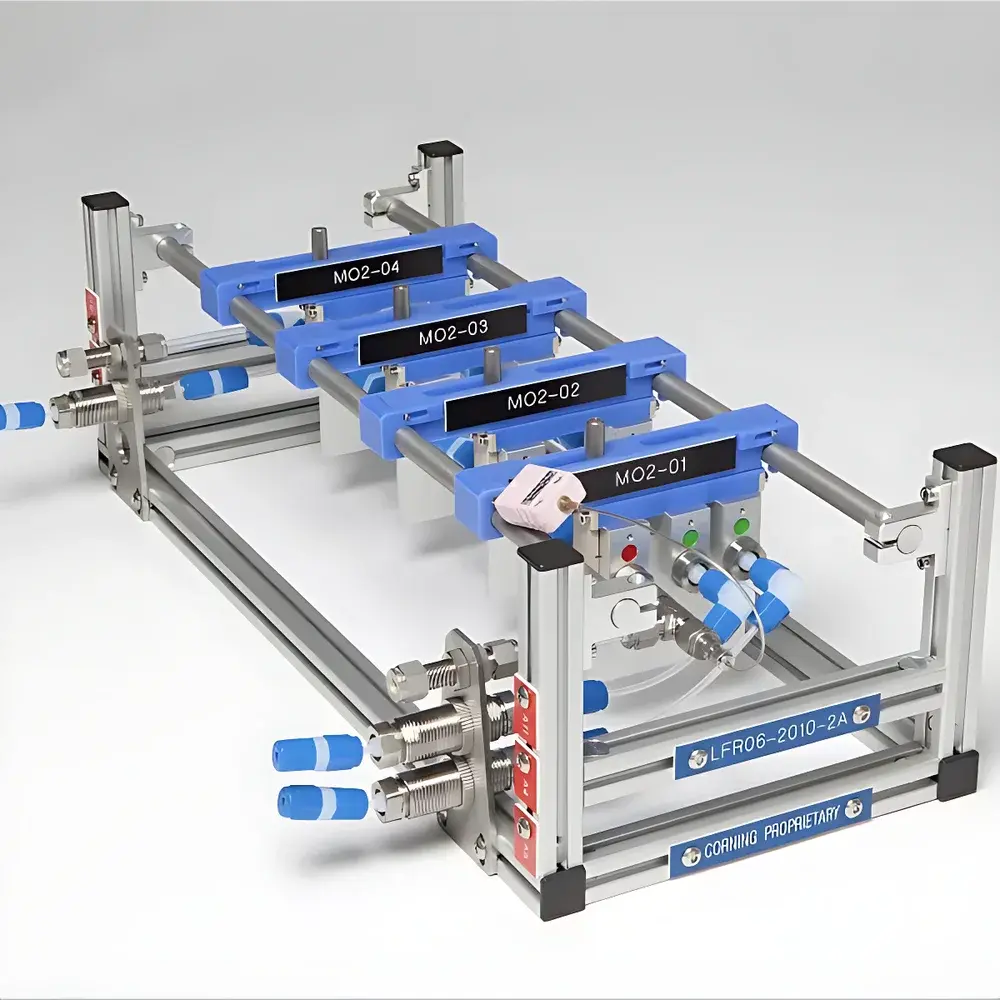
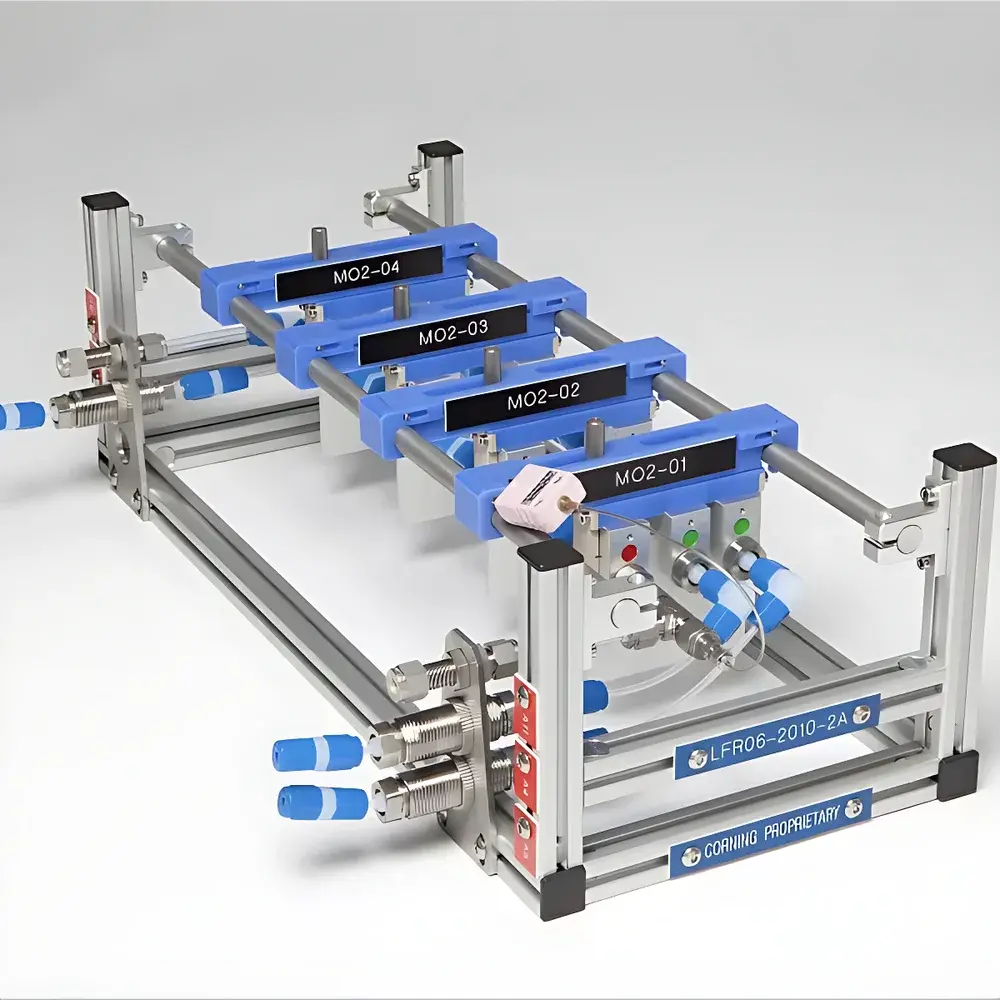
The Corning LFR (Low-Flow Reactor) is a precision-engineered continuous flow microreactor system designed for laboratory-scale process research, reaction screening, and kilogram-scale synthesis of fine chemicals, pharmaceuticals, and specialty materials. Built upon Corning’s proprietary glass-silicon composite microchannel architecture, the LFR operates on the principle of laminar flow with high surface-area-to-volume ratios—enabling exceptional heat transfer coefficients (>10,000 W/m²·K) and mass transfer rates under controlled residence time distribution (RTD). Unlike traditional batch reactors, the LFR eliminates scale-up discontinuities by maintaining identical fluidic, thermal, and kinetic boundary conditions from milligram to multi-kilogram output—fully satisfying the requirements of Quality-by-Design (QbD) and ICH Q5–Q9 frameworks. Its all-glass fluidic path ensures zero metal leaching, making it suitable for catalytic reactions involving sensitive transition metals (e.g., Pd, Ru, Ni), photochemical transformations, and highly corrosive reagents (e.g., HF, Cl₂, SOCl₂, strong acids/bases).
Key Features
- All-Glass Fluidic Pathway: Chemically inert borosilicate glass microchannels eliminate metal contamination, enabling compatibility with aggressive chemistries and facilitating regulatory-compliant synthesis of API intermediates.
- Modular Dual-Reactor Architecture: Consists of two independently operable modules—Reactor A and Reactor B—each configurable as standalone units or coupled in series/parallel for multi-step cascade reactions or residence time extension.
- Precision Low-Flow Operation: Supports volumetric flow rates from 0 to 10 mL/min per module, minimizing reagent consumption during early-stage route scouting and kinetic profiling—ideal for expensive or hazardous substrates.
- Wide Operational Envelope: Temperature range from –25 °C to +200 °C (with external heating/cooling jackets); maximum operating pressure up to 18 bar (261 psi), validated per ASME B31.3 process piping standards.
- Optimized Thermal Management: Integrated dual-path thermal exchange design separates process fluid routing from temperature control fluid paths—ensuring rapid thermal response (<60 s to reach setpoint) and ΔT uniformity < ±0.5 °C across full channel length.
- Visual Process Monitoring: Transparent reactor body enables real-time observation of phase behavior, precipitation, gas evolution, and fouling—critical for troubleshooting heterogeneous reactions and crystallization studies.
Sample Compatibility & Compliance
The Corning LFR accommodates liquid-phase, gas–liquid, and solid-suspended (slurry) reactions with particle sizes <50 µm. It complies with ASTM E2500-13 (Good Automated Manufacturing Practice), supports 21 CFR Part 11–compliant electronic record retention when integrated with validated SCADA or LIMS platforms, and meets ISO 13485 requirements for medical device-related chemical synthesis. Its non-porous, smooth glass surfaces exhibit low protein adsorption and are cleanable via CIP/SIP protocols—validated per USP Analytical Instrument Qualification guidelines.
Software & Data Management
While the LFR hardware operates as a stand-alone unit, it interfaces seamlessly with third-party flow control systems (e.g., Teledyne ISCO, Equilibar) and data acquisition platforms (NI LabVIEW, MATLAB, Python-based PySerial control). Time-stamped sensor outputs—including inline pressure, temperature, and optional UV-Vis or FTIR spectroscopy feeds—can be logged at ≥10 Hz resolution. Audit trails, user access logs, and parameter change histories are retained in accordance with GLP/GMP documentation requirements when deployed within validated IT infrastructure.
Applications
- Kinetic modeling and mechanistic studies of exothermic nitrations, halogenations, and diazotizations
- Photoredox catalysis under visible-light irradiation (compatible with LED array integration)
- Enantioselective asymmetric synthesis using immobilized chiral catalysts
- High-pressure hydrogenation and carbonylation reactions
- Continuous crystallization and polymorph screening under controlled supersaturation profiles
- Process safety evaluation (RC1e, ARSST) via calorimetric coupling
FAQ
Can the LFR be used for reactions involving solid suspensions?
Yes—provided particles remain below 50 µm and slurry concentration does not exceed 10 wt%, to avoid channel occlusion. Optional ultrasonic-assisted feed modules are available for enhanced dispersion.
Is the system compatible with automated reaction optimization platforms?
Yes—its analog/digital I/O ports support integration with robotic liquid handlers (e.g., Hamilton STAR) and AI-driven DoE software such as pCRISP or Synthia.
What validation documentation is supplied with the system?
Each unit ships with Factory Acceptance Test (FAT) report, material certifications (ASTM E1752 for glass), pressure test records, and IQ/OQ templates aligned with ASTM E2500-13.
Does Corning provide application support for process development?
Yes—Corning Life Sciences offers dedicated technical service including feasibility assessment, residence time distribution analysis, and scalable reactor mapping studies.



