
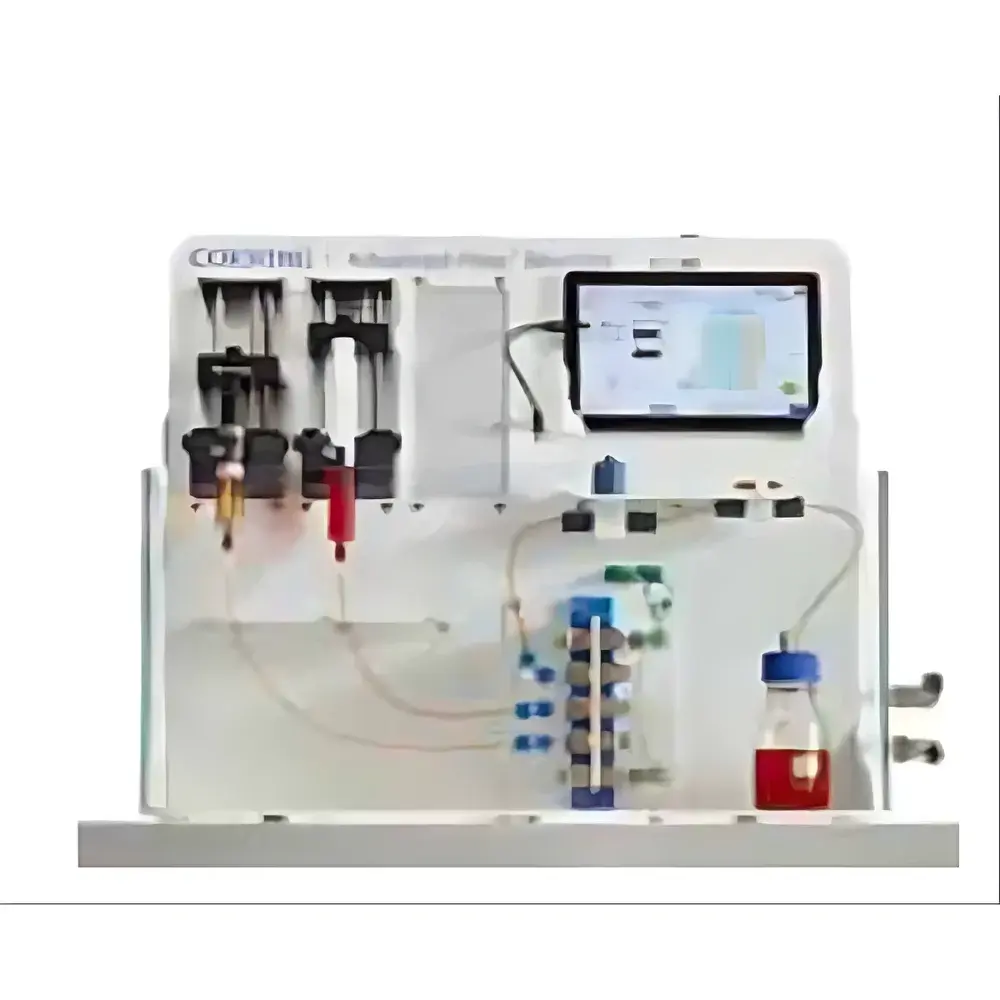
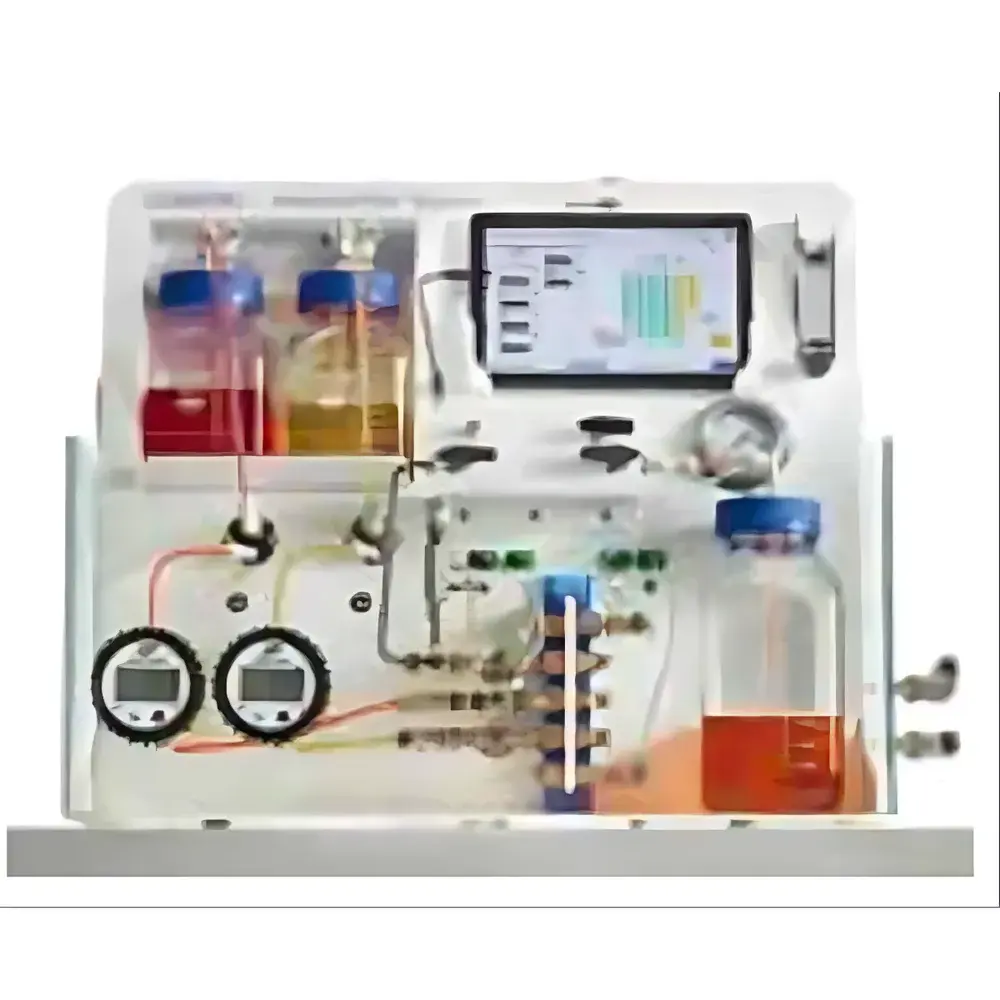
Corning Nebula™ Teaching Platform for Flow Chemistry
| Brand | Corning |
|---|---|
| Origin | USA |
| Manufacturer Status | Authorized Distributor |
| Product Origin | Imported |
| Model | Nebula™ Teaching Platform System |
| Pricing | Available Upon Request |
Overview
The Corning Nebula™ Teaching Platform is a purpose-built, benchtop-scale flow chemistry education and training system engineered to introduce students, educators, and industry professionals to the principles, safety protocols, and operational workflows of continuous-flow synthesis. Grounded in Corning’s industry-proven Advanced-Flow Reactor (AFR®) technology, the platform implements microstructured fluidic architecture based on laminar flow dynamics and precise residence time control—enabling reproducible, scalable, and inherently safe chemical transformations. Unlike batch-based pedagogical tools, the Nebula™ platform demonstrates core flow chemistry advantages: elimination of thermal runaway risk through high surface-area-to-volume ratios, real-time process monitoring via integrated sensors, and direct alignment with industrial continuous manufacturing paradigms used in pharmaceutical API synthesis, fine chemical production, and advanced material development. Designed for university laboratories, vocational training centers, and corporate R&D onboarding programs, it bridges theoretical instruction with hands-on, GLP-aligned experimental practice.
Key Features
- Open-architecture design supporting full data traceability—including flow rate, temperature, pressure, and residence time—with timestamped logging compliant with educational lab record-keeping standards.
- Plug-and-play modular integration: pre-calibrated peristaltic or syringe pumps, digital back-pressure regulator (BPR), and thermally stabilized reactor modules require no field calibration prior to first use.
- Ready-to-start thermal management: integrated chiller/heater unit maintains precise temperature control (±0.5 °C) across the entire fluidic path, with rapid thermal equilibration (<3 min from ambient to setpoint).
- Multi-stream fluid handling: supports 1 gas inlet (via mass flow controller) and 2–3 independent liquid feed lines (with optional solvent compatibility verification per stream).
- Chemically inert fluid path: all wetted surfaces constructed from fluoropolymer-lined glass and ceramic components—zero metallic contact ensures compatibility with strong acids, bases, halogenated solvents, and organometallic reagents.
- Patented “heart-shaped” microchannel geometry enabling superior radial mixing efficiency and uniform heat transfer—validated across gas–liquid, liquid–liquid, and solid-containing slurries.
- Modular reactor cartridges with 1–5 mL active volume—optimized for student-scale experiments while preserving kinetic fidelity and eliminating scale-up artifacts when transitioning to pilot AFR® systems.
Sample Compatibility & Compliance
The Nebula™ platform accommodates a broad spectrum of reaction classes including nitration, halogenation, hydrogenation, lithiation, photoredox catalysis, and multi-step telescoped sequences. Its corrosion-resistant architecture meets ASTM D543-20 requirements for chemical resistance testing of nonmetallic materials. All electronic subsystems comply with IEC 61000-6-3 (EMC emissions) and IEC 61010-1 (safety for laboratory equipment). Data acquisition firmware supports audit-trail generation per ALCOA+ principles, making it suitable for academic labs operating under GLP-like documentation frameworks. While not FDA-registered, its architecture aligns with foundational elements of FDA 21 CFR Part 11 for electronic records where local institutional policy mandates secure user authentication and change control.
Software & Data Management
The platform operates via Corning’s Nebula Control Suite—a Windows-based application offering intuitive graphical workflow configuration, real-time parameter visualization, and automated method saving. All sensor data are logged in .csv and .xlsx formats with embedded metadata (operator ID, timestamp, method version). Exported datasets integrate seamlessly with MATLAB, Python (Pandas), and JMP for kinetic modeling and statistical analysis. The software includes built-in SOP templates aligned with ACS Division of Chemical Education guidelines and supports custom annotation fields for pedagogical assessment rubrics.
Applications
- Undergraduate and graduate laboratory courses in organic synthesis, reaction engineering, and process safety.
- Capstone design projects evaluating residence time distribution, heat transfer coefficients, and mass transfer limitations in microreactors.
- Industry workforce upskilling in continuous manufacturing fundamentals—particularly for pharmaceutical QA/QC, process development, and EHS personnel.
- Method scouting for low-volume, high-value compound libraries under controlled stoichiometric and thermal conditions.
- Comparative studies between batch and flow kinetics using identical catalysts and substrates—quantifying improvements in selectivity, yield, and reproducibility.
FAQ
Is the Nebula™ platform compatible with Corning’s commercial AFR® reactors?
Yes—the fluidic interface, pressure rating, and control protocol are fully interoperable with Corning AFR® Series 1 and Series 2 reactor modules, enabling direct method translation without re-optimization.
Can third-party pumps or sensors be integrated?
The platform supports RS-485 and analog 0–10 V I/O for external device synchronization; however, Corning-certified peripherals are required to maintain system warranty and data integrity compliance.
What safety certifications does the system hold?
It carries CE marking per EU Machinery Directive 2006/42/EC and UL 61010-1 certification for North America, verified by TÜV Rheinland.
Does the system support remote operation or networked deployment?
Local area network (LAN) connectivity is supported for centralized monitoring across multi-station teaching labs; cloud-based operation is not enabled due to data sovereignty and cybersecurity policies for academic instrumentation.
Are consumables such as reactor cartridges available separately?
Yes—standardized glass-ceramic reactor cartridges (1 mL, 3 mL, and 5 mL variants) are stocked globally with lead times under 2 weeks; custom geometries require engineering review.



