
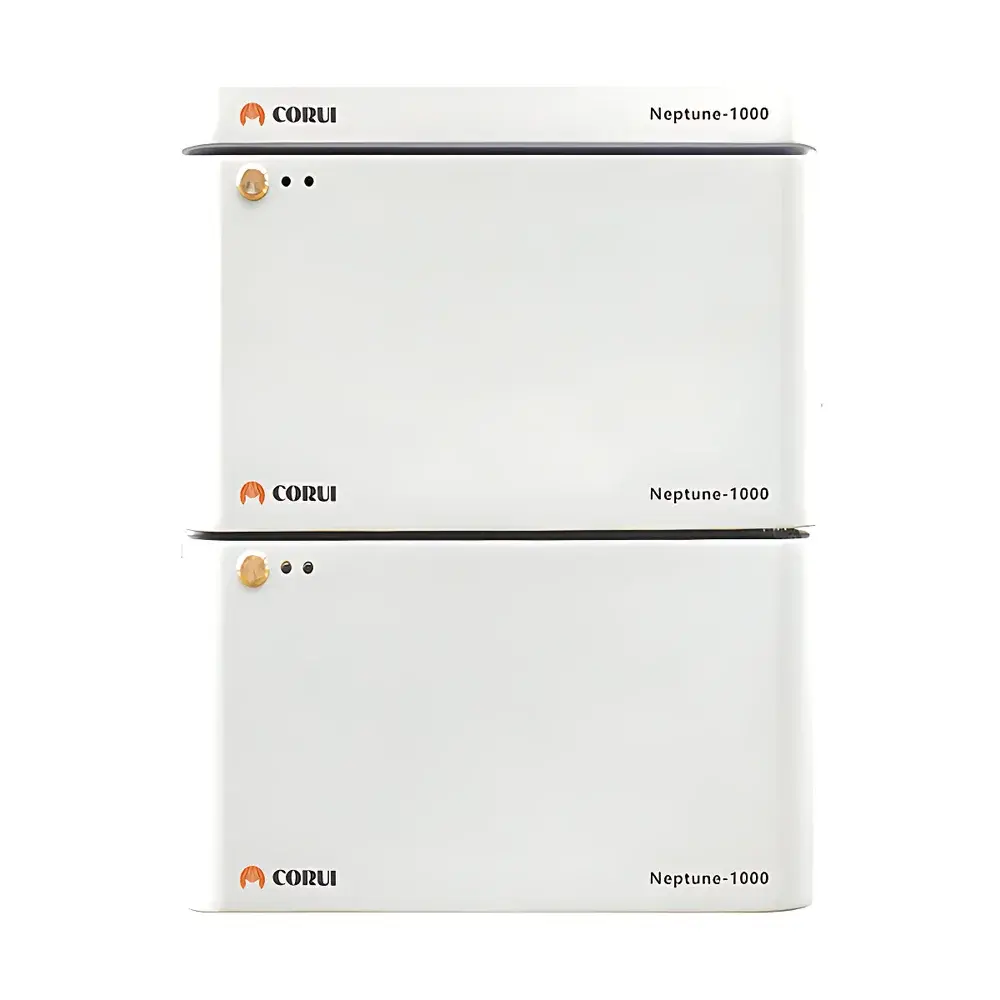
CORUITECH Neptune Clinical Mass Spectrometry Workflow System
| Brand | CORUITECH |
|---|---|
| UHPLC Integration | Integrated with CORUITECH UHPLC platform |
| Origin | Sichuan, China |
| Manufacturer Type | Original Equipment Manufacturer (OEM) |
| Instrument Type | LC-MS/MS clinical workflow system |
| Mass Analyzer Compatibility | Compatible with Sciex Triple Quadrupole MS (e.g., Jasper, 4500MD, 3200MD) |
| Flow Rate Range | 0.001–8 mL/min |
| Regulatory Design Basis | Engineered for CLIA-equivalent laboratory use and ISO 15189-aligned workflows |
Overview
The CORUITECH Neptune Clinical Mass Spectrometry Workflow System is an integrated, purpose-built LC-MS/MS solution engineered specifically for high-throughput, low-intervention clinical laboratories. Unlike conventional research-grade LC-MS/MS platforms—originally designed for controlled pharmaceutical or environmental applications—the Neptune system redefines operational feasibility in hospital-based clinical chemistry and toxicology settings by embedding sample preparation directly into the chromatographic workflow. At its core lies a proprietary online Solid-Phase Extraction Column (SSEC) technology that enables direct injection of minimally processed serum or plasma samples following only dilution and brief vortexing. This eliminates traditional offline liquid–liquid extraction (LLE) or protein precipitation steps while maintaining analytical specificity, sensitivity, and matrix robustness comparable to reference-grade methods. The system operates on tandem mass spectrometry (MS/MS) detection principles—utilizing electrospray ionization (ESI) or atmospheric pressure chemical ionization (APCI)—to deliver quantitative results for small-molecule biomarkers such as 25-hydroxyvitamin D₂/D₃, catecholamines, steroid hormones, immunosuppressants, and therapeutic drugs. Its architecture supports trace-level quantification across dynamic concentration ranges, aligning with JCTLM-endorsed reference measurement procedures for organic small molecules—52 of which rely on mass spectrometry as the definitive method.
Key Features
- Integrated SSEC column module enabling direct injection of diluted serum/plasma without offline extraction or centrifugation
- Two-minute, two-step sample preparation protocol: 200 µL sample + 10 µL isotopically labeled internal standard + 30-second vortex
- UHPLC front-end optimized for rapid gradient elution (≤3 min run time per sample), supporting >100 samples per 8-hour shift
- Modular design compatible with existing Sciex triple quadrupole mass spectrometers (Jasper, 4500MD, 3200MD), allowing seamless upgrade of legacy LC-MS/MS installations
- Column lifetime validated at ≥1,000 injections under routine clinical use conditions, reducing consumables cost per test vs. conventional LLE workflows
- Robust interference rejection: endogenous proteins, phospholipids, and lipids retained on SSEC column; target analytes eluted cleanly into MS interface
Sample Compatibility & Compliance
The Neptune system is validated for human serum and plasma matrices, with demonstrated performance across common anticoagulants (EDTA, heparin, citrate). It meets essential requirements for clinical laboratory accreditation frameworks including ISO 15189:2022 (Medical laboratories — Requirements for quality and competence) and supports alignment with CLIA ’88 regulatory expectations for test validation, precision, accuracy, and reportable range documentation. While not FDA 510(k)-cleared, the system is designed for use in laboratories operating under Good Laboratory Practice (GLP) and Good Manufacturing Practice (GMP)-informed quality management systems. Data integrity features—including audit-trail-enabled software logging, user-access controls, and electronic signature support—are implemented to facilitate compliance with 21 CFR Part 11 where required. All method development data—including limit of quantitation (LOQ), recovery rates (>85% for 25-OH vitamin D₂/D₃), inter-day CVs (<8%), and carryover (<0.05%)—are documented per CLSI EP17-A2 and EP05-A3 guidelines.
Software & Data Management
Neptune’s control and analysis software provides a unified interface for instrument operation, sequence scheduling, peak integration, calibration curve fitting, and report generation. It supports AIA-compliant output formats (e.g., .csv, .txt) for bidirectional integration with LIS/HIS systems via HL7 v2.x messaging. Quantitative workflows include built-in isotope dilution mass spectrometry (IDMS) algorithms, automated internal standard normalization, and real-time QC flagging based on predefined acceptance criteria (e.g., IS response deviation >15%, blank contamination thresholds). All raw data files (.wiff, .raw) are stored with immutable metadata timestamps and user attribution. Software versioning, change logs, and validation documentation packages are provided to support laboratory IT validation protocols.
Applications
The Neptune system delivers clinically actionable data for assays where immunoassay limitations are well documented:
- Newborn screening panels (e.g., amino acids, acylcarnitines)
- Vitamin D status assessment (25-OH vitamin D₂ and D₃ isomer differentiation)
- Therapeutic drug monitoring (tacrolimus, cyclosporine, sirolimus, everolimus)
- Endocrine testing (cortisol, aldosterone, testosterone, estradiol, metanephrines)
- Toxicology screening (opioids, benzodiazepines, stimulants, antidepressants)
- Metabolomics profiling in metabolic disorder diagnostics
Each assay is supported by pre-validated chromatographic methods and MS/MS transitions, with optional method transfer assistance available from CORUITECH application scientists.
FAQ
Is the Neptune system FDA-cleared or CE-IVD marked?
No. The Neptune is intended for research use and clinical laboratory-developed test (LDT) implementation under laboratory quality systems compliant with ISO 15189 or equivalent standards.
Can it be used with non-Sciex mass spectrometers?
Currently validated only for Sciex triple quadrupole platforms (Jasper, 4500MD, 3200MD); compatibility with other vendors’ instruments is under evaluation and will be announced separately.
What is the typical turnaround time from sample receipt to final report?
Under standard workflow, total processing time—including sample prep, UHPLC separation, MS/MS acquisition, and automated reporting—is ≤25 minutes per sample, enabling same-day reporting for individual specimens.
Does the SSEC column require regeneration or special maintenance?
No routine regeneration is needed. Column cleaning is performed automatically during each gradient cycle using a dedicated wash solvent step embedded in the method.
How does Neptune handle high-lipid or hemolyzed samples?
The SSEC column demonstrates resilience against common matrix interferences; however, grossly lipemic or hemolyzed samples exceeding CLSI-recommended limits should undergo pre-analytical review per laboratory SOPs.





