
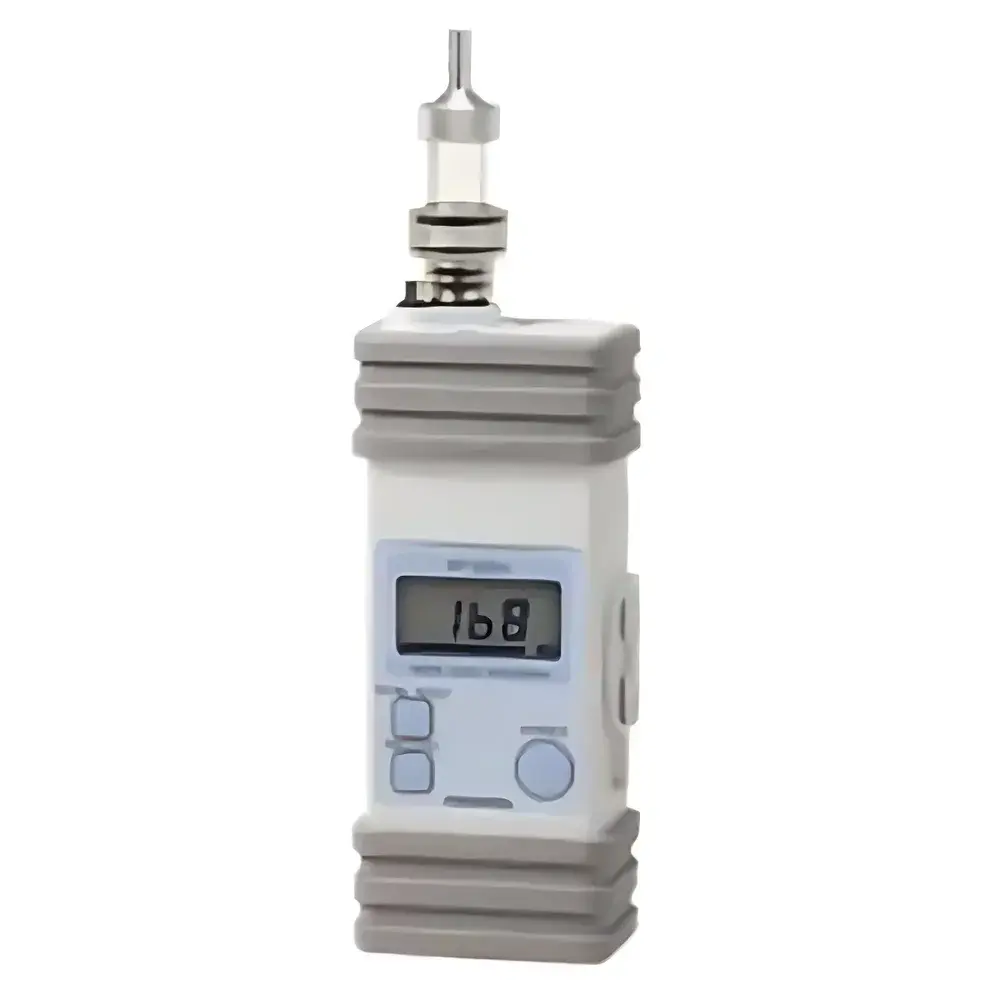
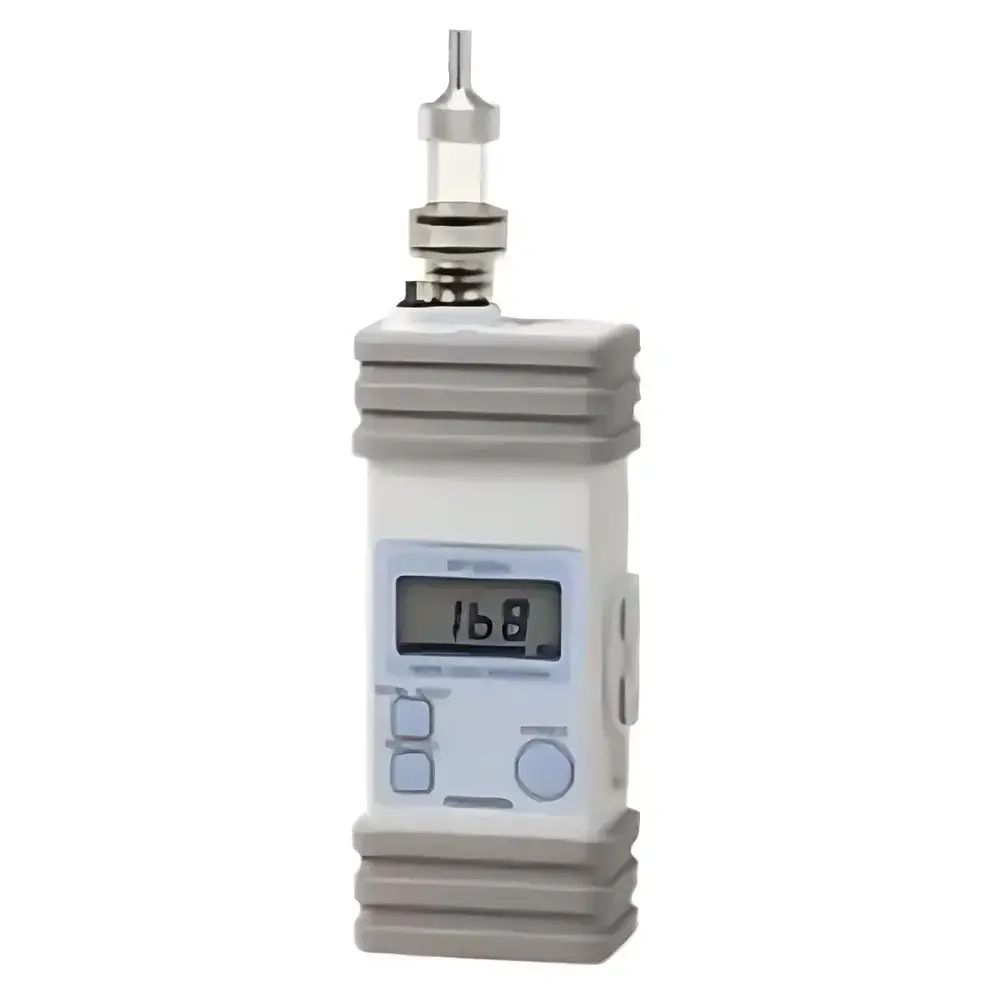
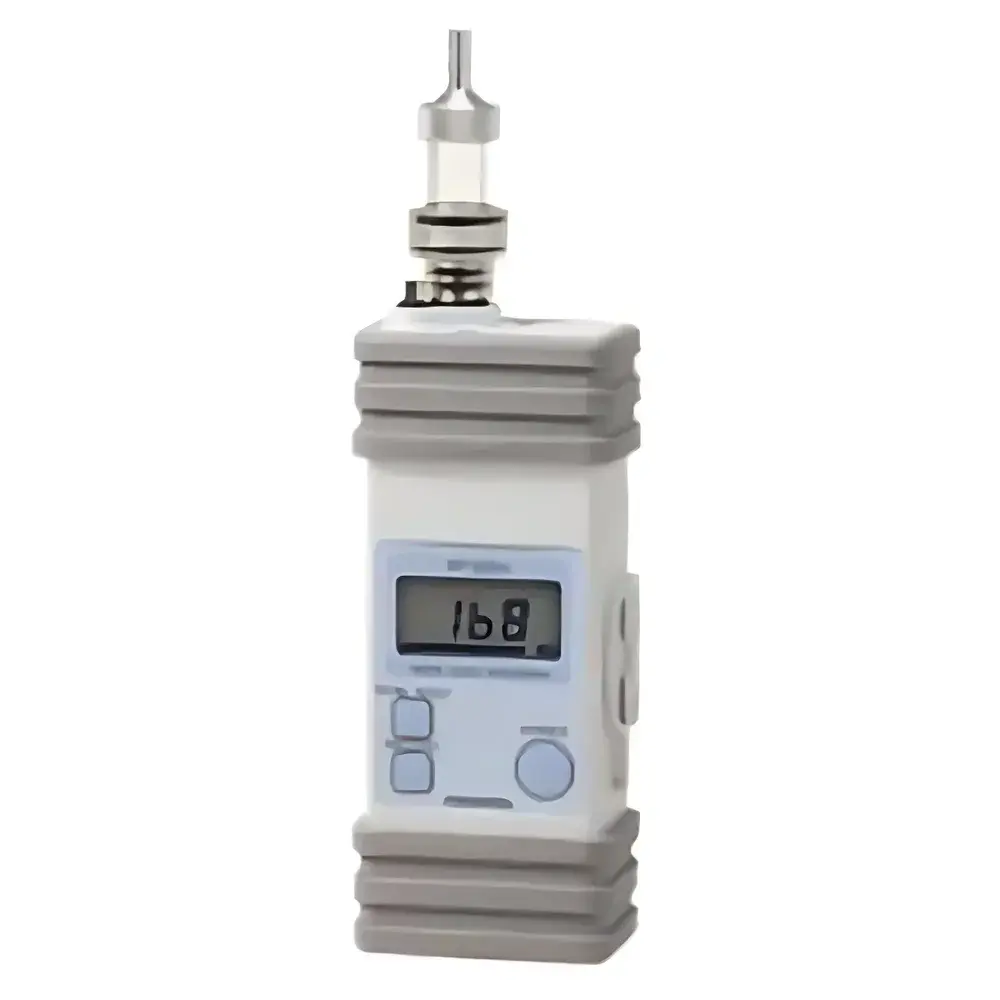
New Cosmos XP-329M Portable Odor Analyzer
| Brand | New Cosmos |
|---|---|
| Origin | Japan |
| Model | XP-329M |
| Sensor Type | High-sensitivity tin oxide (SnO₂) sintered semiconductor |
| Display | 7-segment LED, 3.5-digit (000–999) |
| Measurement Range | 000–999 arbitrary odor units |
| Repeatability | ±5% ±1 digit (under identical conditions) |
| Sampling Method | Active aspiration (flow rate: 350 ± 100 mL/min) |
| Response Time (90%) | ≤20 s (with calibration odor) |
| Power Supply | 3 × AA alkaline batteries |
| Battery Life | Up to 10 h (at 25°C, typical use) |
| Operating Environment | 0–40°C, 10–80% RH (non-condensing) |
| Storage Environment | −10–50°C, ≤80% RH (non-condensing) |
| Dimensions (W×H×D) | 60 × 140 × 40 mm (excl. protrusions) |
| Weight | ≈300 g (incl. batteries) |
| Analog Output | DC 0–0.99 V (corresponding to 000–999 display) |
| Data Memory Capacity | 18,000 records |
| Included Accessories | Filter unit, 3 × AA alkaline batteries, set of 10 filter discs |
Overview
The New Cosmos XP-329M Portable Odor Analyzer is a compact, field-deployable instrument engineered for rapid, on-site assessment of odor intensity in ambient air and localized emission sources. It employs a high-sensitivity tin oxide (SnO₂) sintered semiconductor gas sensor — a robust, thermally stabilized sensing element optimized for detecting volatile organic compounds (VOCs) and sulfur-containing odorants commonly associated with wastewater treatment plants, composting facilities, food processing lines, and industrial exhaust streams. Unlike optical or chromatographic methods, the XP-329M operates on resistance-change transduction: target odor molecules adsorb onto the heated SnO₂ surface, altering its electrical resistance proportionally to concentration. The resulting signal is linearized and displayed as a dimensionless odor unit (000–999), calibrated against standardized reference odors (e.g., n-butanol per ISO 13736). Its lightweight form factor (≈300 g) and battery-powered operation enable walk-around surveys, fence-line monitoring, and real-time odor mapping without reliance on external infrastructure.
Key Features
- Ultra-portable design: 60 × 140 × 40 mm footprint and sub-300 g mass facilitate one-handed operation and extended field deployment.
- Long-duration power management: 10-hour continuous runtime on three standard AA alkaline batteries — validated under ISO 12099-compliant ambient conditions (25°C, 50% RH).
- Real-time peak-hold functionality: Automatically captures and retains the maximum detected value during sampling, critical for transient odor events such as valve releases or wind-shift-driven plume encounters.
- Dual-mode output interface: Analog voltage output (0–0.99 V DC, scalable 1 mV per unit) supports integration with data loggers or SCADA systems; internal memory stores up to 18,000 timestamped readings with status flags.
- Integrated active aspiration: Built-in pump delivers consistent 350 ± 100 mL/min flow, minimizing boundary-layer effects and enhancing sampling reproducibility across variable humidity and particulate loads.
- Intuitive LED interface: 3.5-digit display simultaneously indicates measured value, battery status, memory full warning, and operational mode — no menu navigation required.
Sample Compatibility & Compliance
The XP-329M is designed for qualitative and semi-quantitative odor screening—not compound-specific identification. It responds broadly to reducing gases (e.g., H₂S, mercaptans), aldehydes, esters, and short-chain fatty acids, making it suitable for regulatory pre-screening per Japanese Ordinance on Odor Control (Act No. 96 of 1971) and complementary to EN 13725:2022 dynamic olfactometry validation protocols. While not a certified olfactometer, its repeatability (±5% ±1 digit under controlled conditions) meets field-survey requirements outlined in ISO 16000-28 for indoor air quality odor assessments. The device complies with IEC 61000-6-3 (EMC emission standards) and IP54-rated ingress protection for dust and water splashes during outdoor use. Filter cartridges (included) mitigate particulate interference per ISO 16000-23 recommendations.
Software & Data Management
Data retrieval occurs via optional USB-to-serial adapter (not included) using New Cosmos’ proprietary PC software (XP-Link v3.x), which enables time-stamped batch export to CSV or Excel formats. Each record includes measurement value, acquisition timestamp, battery voltage, and memory index. Audit-trail functionality logs all user-initiated operations (e.g., zero adjustment, filter replacement alerts) — supporting GLP-aligned documentation practices. Raw analog output allows connection to third-party DAQ systems compliant with IEEE 1451.2 transducer interface standards. Firmware updates are performed offline via SD card, ensuring traceability and version control in regulated environments.
Applications
- Environmental compliance monitoring at municipal wastewater treatment plants and landfill perimeter zones.
- Routine odor audits in food manufacturing facilities (e.g., fish processing, dairy fermentation, bakery exhaust stacks).
- Odor nuisance investigations by municipal environmental health officers responding to community complaints.
- Pre-commissioning verification of biofilter and activated carbon scrubber efficiency.
- Academic field studies quantifying odor dispersion patterns under varying meteorological conditions.
- QA/QC support for deodorant product development and efficacy testing (e.g., spray formulations, catalytic filters).
FAQ
Is the XP-329M suitable for regulatory reporting under EPA or EU odor directives?
No — it provides indicative odor intensity values only. For legally defensible odor concentration data, dynamic olfactometry (EN 13725) or GC-MS analysis is required.
Can the sensor be recalibrated in the field?
Yes — zero adjustment is performed using ambient clean air; span calibration requires certified n-butanol standard gas (available separately) and must follow New Cosmos’ documented procedure.
What maintenance is required beyond filter replacement?
Sensor aging necessitates annual factory recalibration to maintain ±5% repeatability; the device logs cumulative operating hours to prompt service scheduling.
Does the instrument meet ATEX or IECEx certification for hazardous areas?
No — it is rated for general-purpose use only and must not be operated in explosive atmospheres classified under Directive 2014/34/EU.
How does humidity affect measurement accuracy?
Relative humidity >80% RH may cause condensation on the sensor surface, leading to drift; operation is specified for 10–80% RH non-condensing conditions per ISO 16000-28.





