
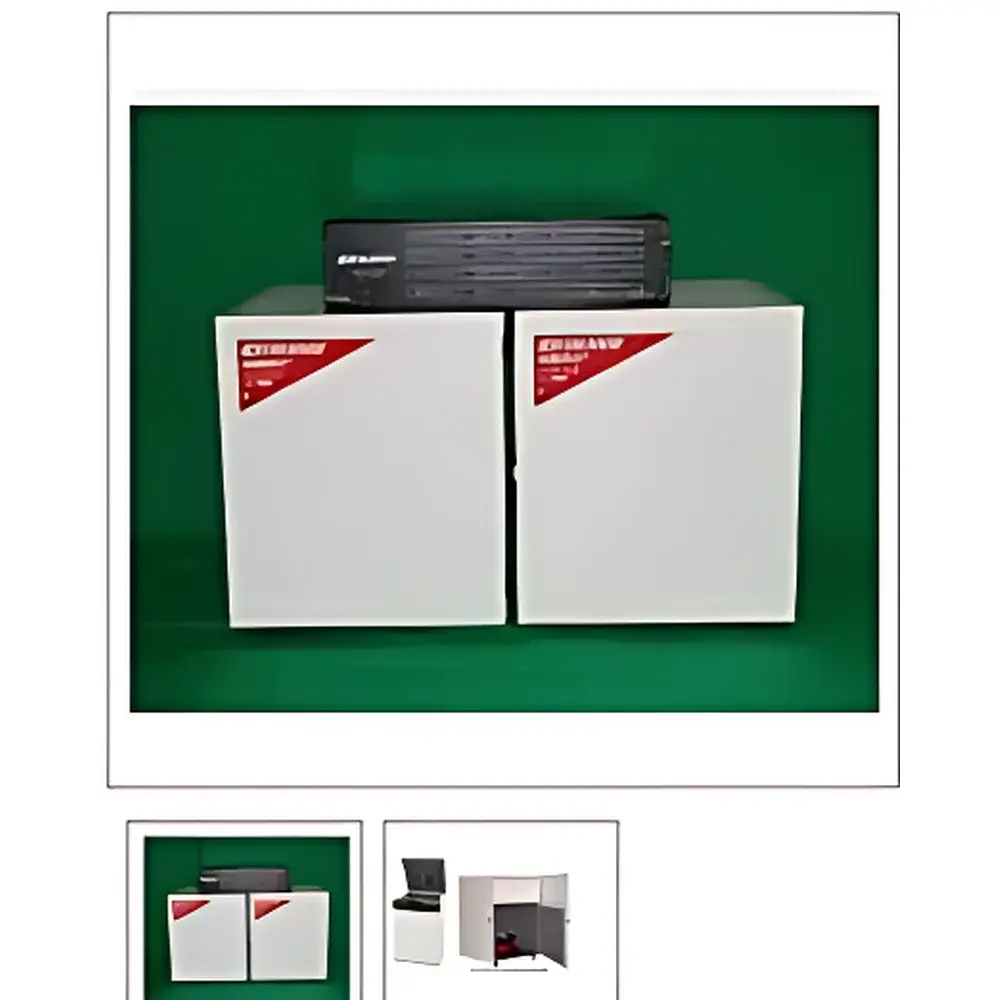
COULBOURN AASS Automated Acoustic Startle Response System
| Brand | COULBOURN |
|---|---|
| Origin | USA |
| Model | AASS |
| Sound Output Range | 20 Hz – 25.5 kHz (audio), 20 Hz – 20 kHz (white noise) |
| Max SPL | 128 dB |
| Stimulus Control | Computer-controlled amplitude, frequency, duration, rise/fall time |
| Optional Modules | Footshock (up to 3.0 mA), Visual Flash Stimulus |
| Chamber Configuration | Single or 8-chamber sound-attenuated enclosures |
| Data Acquisition | Analog signal conditioning (amplification + integration), 16-bit ADC |
| Compliance | Designed for GLP-compliant behavioral phenotyping workflows |
Overview
The COULBOURN AASS Automated Acoustic Startle Response System is a rigorously engineered platform for quantitative measurement of sensorimotor gating and defensive reactivity in rodent models. It operates on the principle of measuring whole-body startle magnitude—via high-fidelity force transduction from an instrumented response platform—following precisely timed, calibrated acoustic or multimodal stimuli. The system implements standardized paradigms including habituation, prepulse inhibition (PPI), and baseline startle response, all under fully programmable stimulus control. Its architecture integrates real-time analog signal conditioning (low-noise amplification and exponential integration), high-resolution analog-to-digital conversion (16-bit), and deterministic timing synchronization between stimulus onset and data capture—ensuring sub-millisecond temporal fidelity required for latency-based metrics such as response onset and peak latency.
Key Features
- Modular sound-attenuated chamber configurations: single-unit or scalable 8-chamber rack-mount systems, each equipped with broadband acoustic transducers capable of generating calibrated white noise (20 Hz–20 kHz) and pure-tone stimuli (10 Hz–25.5 kHz) up to 128 dB SPL.
- Computer-controlled stimulus parametrization: independent adjustment of amplitude, frequency, duration, rise time, and decay time for both auditory and noise pulses; integrated calibration routines verify output integrity prior to each session.
- Multi-modal stimulation capability: optional footshock module (0.05–3.0 mA, constant-current, isolated output) and visual flash unit (LED-based, adjustable intensity and duration) enable fear-potentiated startle (FPS) and cross-sensory gating studies.
- Automated response quantification: animal placement within a restraint tube on a precision load-cell platform yields force displacement signals; analog integration emulates physiological response kinetics, minimizing high-frequency artifact while preserving temporal resolution.
- Real-time acquisition interface: software displays raw digitized waveforms and computed metrics—including response amplitude, latency to onset, time-to-peak, and area-under-curve—during active trials.
- FDA 21 CFR Part 11–ready software architecture: audit trail logging, electronic signature support, and user-access-level permissions facilitate regulatory compliance in preclinical safety pharmacology and neurobehavioral toxicology studies.
Sample Compatibility & Compliance
The AASS system is validated for use with mice (C57BL/6, DBA/2, BALB/c) and rats (Sprague-Dawley, Long-Evans), accommodating standard restraint tubes and weight ranges from 15–500 g. All acoustic outputs are traceably calibrated using NIST-traceable sound level meters and ¼-inch condenser microphones per ANSI S1.4 and IEC 61672 standards. Experimental protocols align with established guidelines from the NIH Behavioral Assessment Core, the Psychopharmacology Committee of the International Union of Basic and Clinical Pharmacology (IUPHAR), and ASTM E2593–18 (Standard Guide for Preclinical Neurobehavioral Assessment). The system supports GLP-compliant study documentation through automated metadata embedding (animal ID, session timestamp, operator, protocol version) into each acquired dataset.
Software & Data Management
Acquisition and analysis are executed via COULBOURN’s proprietary StartleSoft™ suite, built on a deterministic real-time kernel to guarantee stimulus-event synchronization within ±100 µs. The software enables protocol templating, batch scheduling across multiple chambers, and dynamic parameter randomization (e.g., inter-trial interval jittering). Raw waveform data are stored in HDF5 format with embedded metadata, ensuring long-term reproducibility and interoperability with MATLAB, Python (via h5py), and R. Built-in statistical modules compute group-level PPI %, habituation slopes, and ANOVA-ready summary tables. Export options include CSV, Excel, and PDF reports compliant with FDA eCTD submission requirements.
Applications
- Neuropsychiatric disease modeling: quantification of PPI deficits in genetic (e.g., DISC1, Neuregulin-1 KO) and pharmacological (e.g., MK-801, apomorphine) models of schizophrenia and bipolar disorder.
- Drug discovery: evaluation of antipsychotic, anxiolytic, and pro-cognitive compounds in dose-response and time-course designs.
- Sensorimotor gating development: longitudinal assessment across postnatal weeks to map ontogeny of inhibitory circuitry.
- Fear conditioning integration: FPS protocols combining tone-shock pairing with startle probe testing to assess amygdala-prefrontal engagement.
- Toxicology screening: detection of subtle neurobehavioral disruption following subchronic exposure to environmental neurotoxicants or novel chemical entities.
FAQ
What acoustic calibration standards does the AASS system follow?
The system adheres to ANSI S1.4 Type 1 sound level meter specifications and employs NIST-traceable calibration procedures before each experimental block.
Can the software export data directly into SPSS or GraphPad Prism?
Yes—StartleSoft™ supports native export to CSV and Excel formats, both of which are natively readable by SPSS, GraphPad Prism, and R statistical environments.
Is the footshock module independently programmable for intensity and duration?
Yes—the shock generator delivers constant-current output (0.05–3.0 mA) with user-defined pulse width (1–500 ms) and inter-pulse intervals, synchronized to acoustic stimuli with microsecond precision.
Does the system support automated animal identification via RFID or barcode scanning?
While not included as standard, the software API permits integration with third-party hardware interfaces (e.g., USB HID scanners) for automated subject ID ingestion into metadata fields.
How is thermal drift compensated during extended multi-hour sessions?
The load-cell platform incorporates temperature-compensated strain gauge circuitry, and the software applies real-time baseline correction using pre-stimulus 50-ms windows to maintain signal stability across ambient fluctuations.






