
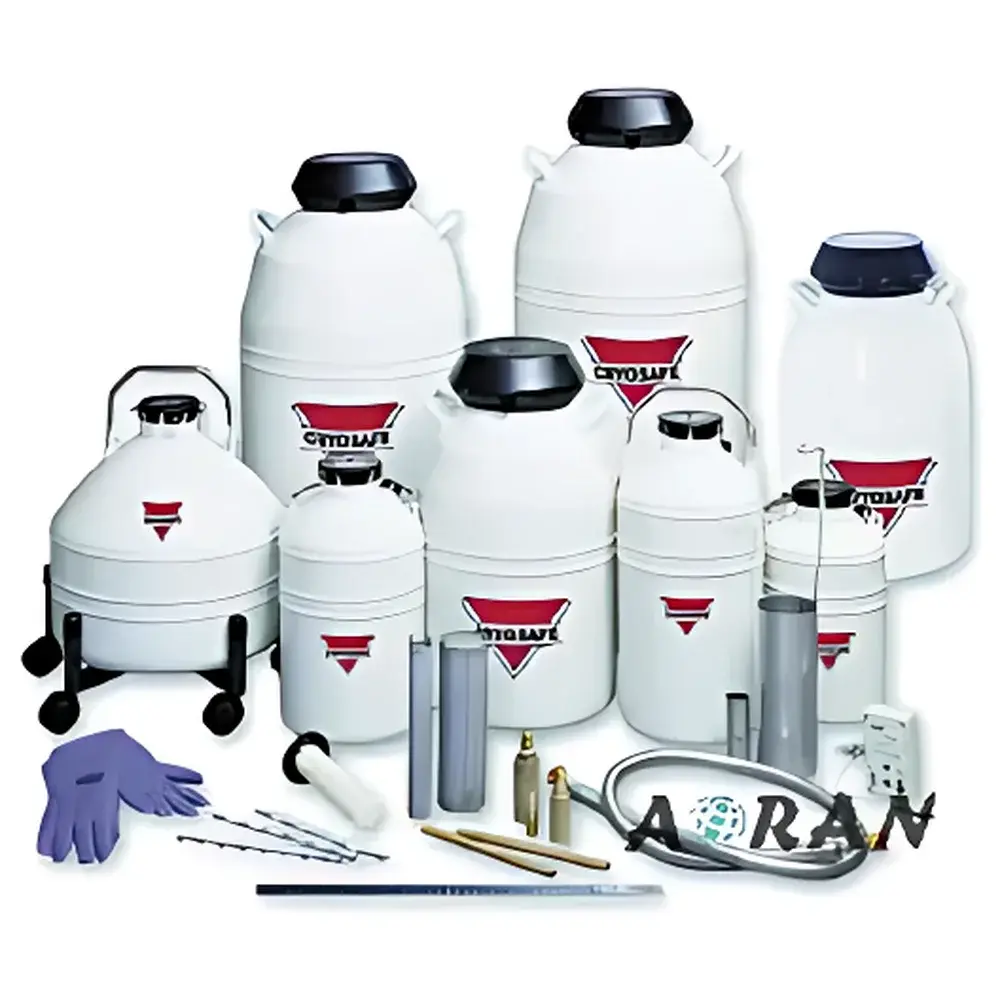
Cryosafe SSC-ET Long-Term Biological Liquid Nitrogen Storage System
| Brand | Cryosafe |
|---|---|
| Origin | USA |
| Model | SSC-ET |
| Liquid Nitrogen Capacity | 3.6–36.5 L |
| Evaporation Rate | 0.09–0.15 L/day |
| Static Hold Time | 54–224 days |
| Outer Diameter | 222–464 mm |
| Height | 406–690 mm |
| Neck Diameter | 51 mm |
| Bucket Quantity | 6–60 |
| 0.5 mL Straws (Loose) | 732–7800 |
| Empty Weight | 3.6–15.4 kg |
| Full Weight | 6.5–44.8 kg |
| Compliance | Designed for ISO 13485-aligned biobanking workflows, compatible with GLP/GMP sample integrity requirements |
Overview
The Cryosafe SSC-ET Long-Term Biological Liquid Nitrogen Storage System is an engineered solution for stable, ultra-low-temperature cryopreservation of sensitive biological specimens—including human and animal cells, tissues, embryos, oocytes, stem cell lines, and genomic material. Operating in the liquid phase at sustained temperatures of –185 °C or lower, the SSC-ET series leverages high-efficiency vacuum insulation and optimized thermal geometry to minimize liquid nitrogen (LN₂) boil-off. Unlike vapor-phase systems, liquid-phase storage ensures uniform thermal stability across all storage zones, critical for long-term viability of temperature-sensitive biospecimens. Each unit is constructed from medical-grade stainless steel (304/316), with seamless double-walled vacuum-jacketed construction and multi-layer reflective insulation to achieve industry-leading evaporation rates as low as 0.09 L/day—enabling static hold times exceeding 220 days under controlled ambient conditions (20–25 °C, minimal door openings). The system is designed for integration into regulated biorepositories, clinical IVF laboratories, and academic core facilities requiring traceable, reproducible, and audit-ready cryogenic storage.
Key Features
- Vacuum-insulated stainless steel dewar architecture with validated thermal performance across all capacities (3.6–36.5 L)
- Precision-engineered neck tube (51 mm ID) balancing thermal isolation and ergonomic access for cryotools and automated handlers
- Modular aluminum or stainless steel canisters and buckets—standardized for compatibility with ANSI/SLAS-format cryoboxes and barcode-labeled straws
- Low-profile bucket design (127–279 mm height) enabling vertical stratification and consistent thermal gradient control
- Consistent LN₂ level maintenance across models via optimized inner vessel geometry and pressure-relief venting
- Structural integrity verified per ASTM F2141 (Standard Specification for Cryogenic Vessels for Biomedical Applications)
- Surface finish compliant with ISO 13485 requirements for cleanroom-compatible equipment surfaces
Sample Compatibility & Compliance
The SSC-ET accommodates a wide range of primary and secondary cryocontainers: loose 0.5 mL straws (up to 7,800 per 36.5 L model), 10-straw cryobars, 1.8 mL external-thread vials, and standard 2D matrix boxes (e.g., Nunc™, Corning®). All configurations support direct immersion in LN₂ without risk of container fracture or seal failure. The system meets essential functional criteria for biobank accreditation under ISBER Best Practices and supports compliance with FDA 21 CFR Part 11 when paired with validated electronic monitoring systems (e.g., LN₂ level loggers with audit trail). Its passive thermal stability eliminates dependency on active cooling electronics—reducing single-point failure risks and simplifying validation for GCP, GLP, and CLIA environments.
Software & Data Management
While the base SSC-ET operates as a standalone passive storage device, it is fully interoperable with third-party monitoring platforms including TempTale® Ultra, Sensitech® CryoView, and custom IoT-enabled LN₂ telemetry systems. Optional accessories—such as low-level acoustic alarms, analog/digital level transducers, and Ethernet-connected controllers—enable real-time remote monitoring, automated alerting (SMS/email), and export of time-stamped temperature and fill-level data in CSV or JSON formats. All logged data may be configured to meet ALCOA+ principles (Attributable, Legible, Contemporaneous, Original, Accurate, Complete, Consistent, Enduring, Available) for regulatory submissions and internal quality audits.
Applications
- Clinical embryology labs performing long-term embryo/oocyte banking under CAP/CLIA standards
- Pharmaceutical biobanks storing reference cell lines and potency assay materials
- Academic genomics cores preserving primary tissue isolates and iPSC derivatives
- Government and military repositories maintaining pathogen isolates and vaccine seed stocks
- Contract research organizations (CROs) validating cryopreservation protocols per USP and ISO 20387
FAQ
What is the difference between liquid-phase and vapor-phase storage in LN₂ tanks?
Liquid-phase storage submerges samples directly in LN₂ (–196 °C), ensuring maximal thermal uniformity and stability; vapor-phase storage maintains samples above the liquid surface (typically –150 °C to –190 °C), offering reduced contamination risk but higher thermal variability.
Can the SSC-ET be integrated into a facility-wide cryo-monitoring network?
Yes—via optional analog 4–20 mA outputs or digital RS-485/Modbus interfaces compatible with BMS, LabVantage, or custom SCADA deployments.
Are replacement buckets and canisters available with serialized traceability?
Yes—Cryosafe provides lot-numbered, sterilizable aluminum buckets with laser-etched model and serial identifiers for full chain-of-custody documentation.
Does the system require routine calibration or preventive maintenance?
No scheduled calibration is required; however, annual visual inspection of vacuum integrity (via frost line assessment) and neck tube cleanliness is recommended per manufacturer guidelines.
Is the SSC-ET suitable for transport between laboratory sites?
It is not certified for transportation under UN 2037 regulations; it is intended for stationary, facility-based storage only. Mobile variants require separate DOT-compliant certification.





