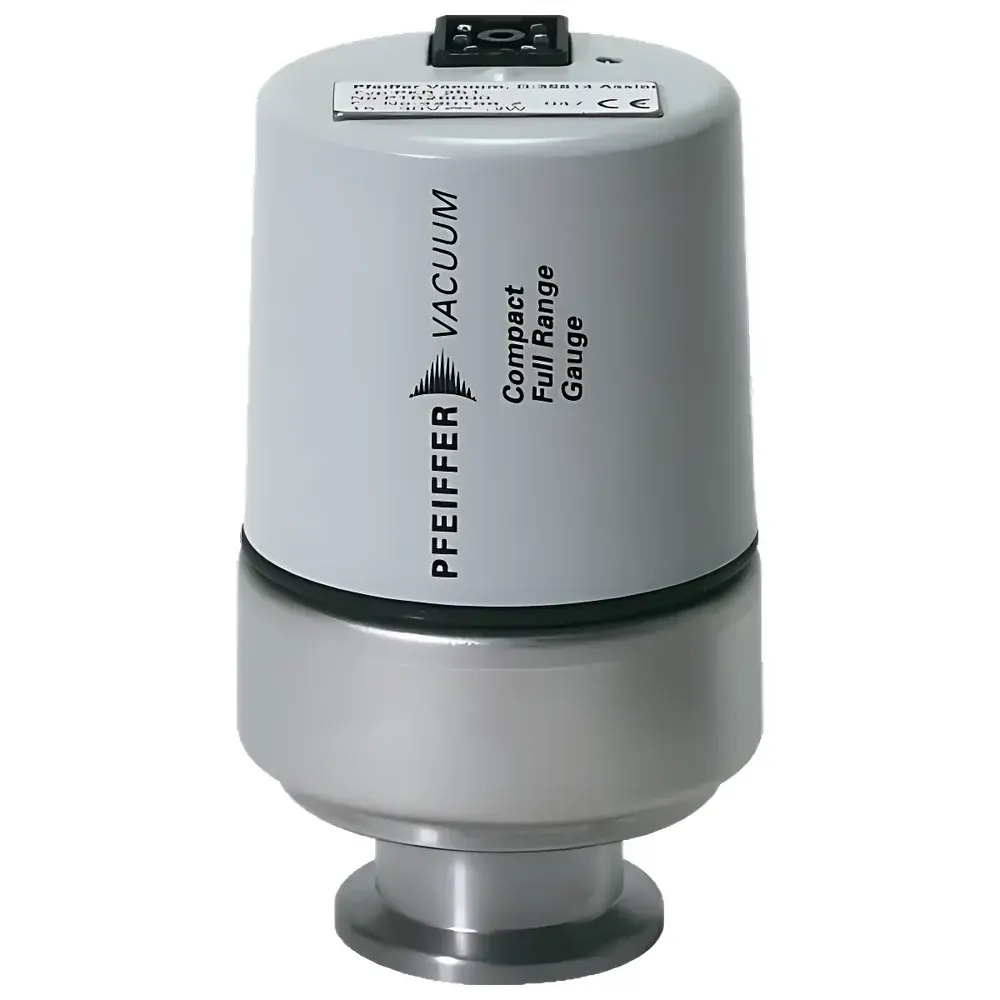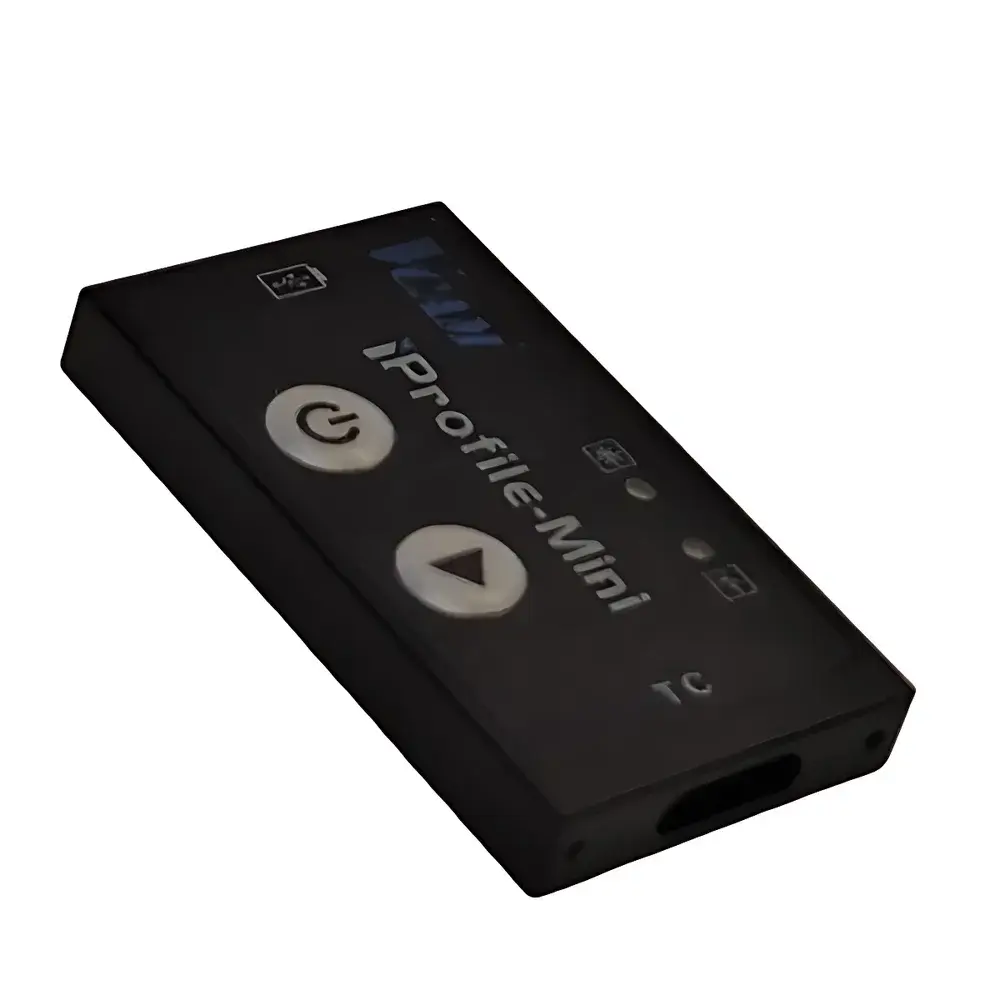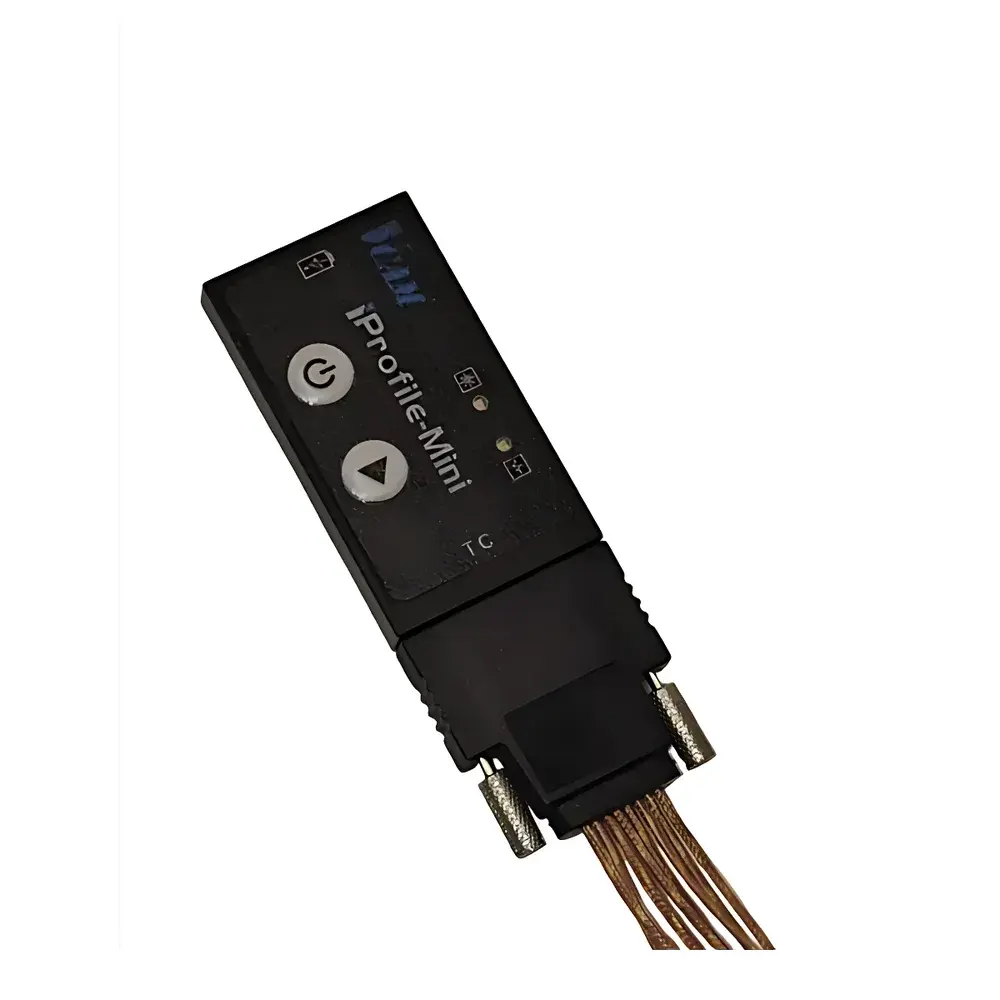
Crystal nVision Reference Pressure Recorder
| Brand | Crystal |
|---|---|
| Origin | Denmark |
| Model | nVision Reference Recorder |
| Type | Pressure Calibrator |
| Calibration Target | Pressure Controllers |
| Design | Modular Architecture |
| Pressure Range | Up to 15000 psi (1000 bar, 100 MPa) |
| Accuracy (Differential Pressure) | ±0.025% of reading |
| Data Storage | 500,000 points |
| Sampling Rate | 10 readings per second per 2 modules |
| Environmental Rating | Submersible to 3 ft (≈0.9 m) |
| Operating Temperature Range | −20 °C to +50 °C |
| Thermal Compensation | Full accuracy compensation across −20 °C to +50 °C |
| Certification | A2LA-accredited calibration certificate with test data at five temperature points |
| Input/Output Capabilities | Gauge & absolute pressure, switch status, voltage, current, and temperature |
Overview
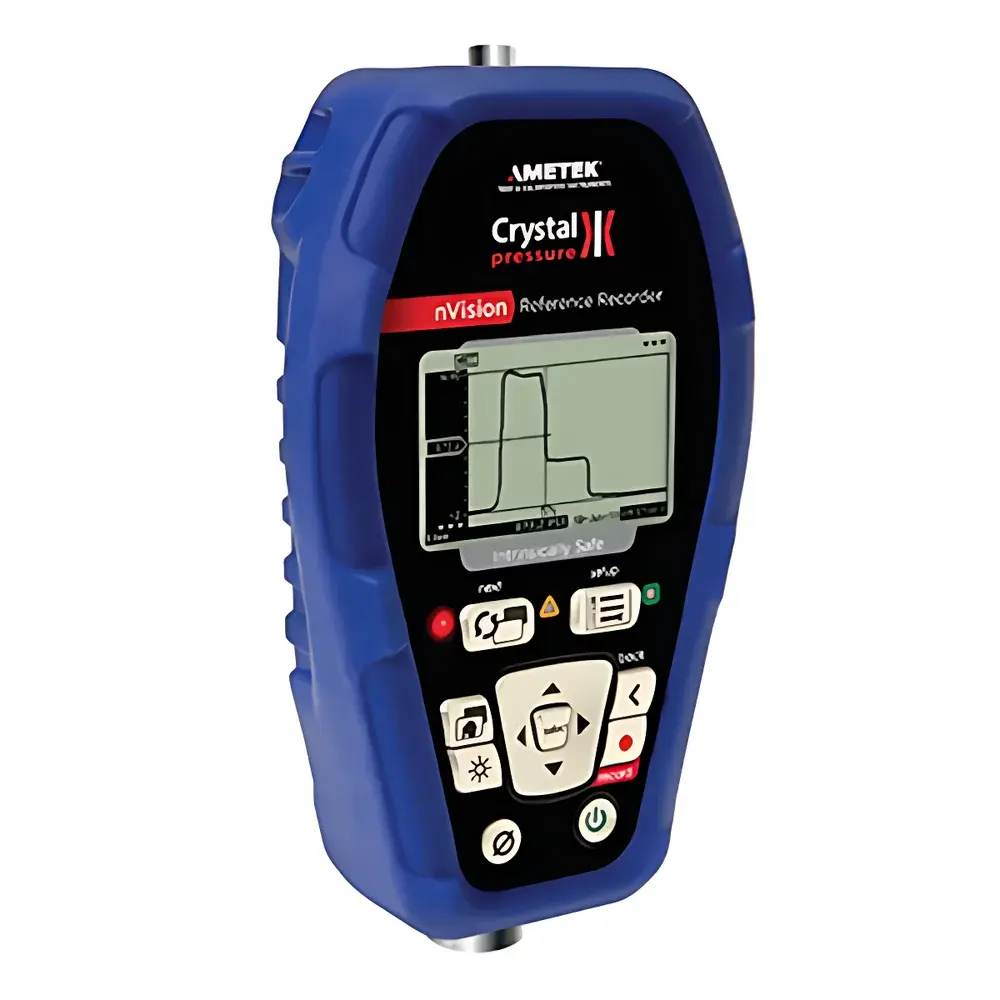
The Crystal nVision Reference Pressure Recorder is a high-accuracy, modular pressure calibration and verification instrument engineered for metrology-grade field and laboratory applications. Based on precision quartz resonator sensor technology—widely recognized for long-term stability, low hysteresis, and minimal drift—the nVision delivers reference-level performance in a rugged, portable form factor. Unlike traditional deadweight testers, the nVision eliminates mechanical dependency on gravity and environmental constraints while maintaining traceable uncertainty budgets suitable for primary standard comparison. It operates as both a real-time pressure monitor and a standalone data logger, supporting gauge, absolute, and differential pressure measurements up to 100 MPa (15,000 psi). Its submersible housing (IP68-rated to 0.9 m depth) and wide thermal operating range (−20 °C to +50 °C), combined with full multi-point temperature compensation, ensure consistent accuracy across diverse industrial environments—from offshore calibration vans to pharmaceutical cleanroom validation suites.
Key Features
- Modular architecture enables flexible configuration: pressure modules can be swapped in-field without recalibration; additional input modules support simultaneous acquisition of voltage (0–10 V), current (0–24 mA), thermocouple (Type J/K/T), and digital switch status.
- High-resolution data logging: stores up to 500,000 timestamped records internally; samples at up to 10 Hz per active module (dual-module operation supported).
- Real-time graphical display: built-in high-contrast OLED screen renders live pressure trends, statistical overlays (min/max/mean), and alarm thresholds—no PC required for basic verification tasks.
- Wear-localized design: all mechanical wear occurs exclusively on replaceable CPF (Crystal Pressure Fitting) adapters, preserving sensor integrity and extending service intervals.
- Traceable metrological assurance: supplied with an A2LA-accredited calibration certificate, including measurement uncertainties and raw test data across five discrete temperatures (−20 °C, 0 °C, 20 °C, 40 °C, 50 °C), fully compliant with ISO/IEC 17025 requirements.
Sample Compatibility & Compliance
The nVision supports calibration of a broad spectrum of pressure-controlling devices, including but not limited to digital pressure controllers (e.g., GE Druck DPI 620, Fluke 754), electro-pneumatic transducers, safety interlock systems, and hydraulic test benches. Its modular interface accommodates NPT, G, and metric thread standards via CPF adapters. The instrument meets IEC 61000-6-2 (immunity) and IEC 61000-6-3 (emission) for industrial environments. All calibration documentation adheres to ISO 9001 and ISO/IEC 17025 traceability frameworks. For regulated industries, the device supports audit-ready record export in CSV and PDF formats—with embedded digital signatures and tamper-evident metadata—to satisfy FDA 21 CFR Part 11 and EU Annex 11 data integrity requirements.
Software & Data Management
The nVision connects to Windows-based host systems via USB-C or Bluetooth 5.0. Crystal’s proprietary nVision Desktop Suite provides real-time monitoring, configurable alarm logic, automated report generation (including deviation summaries and pass/fail flags), and secure data archiving. Logged datasets include full metadata: sensor serial numbers, environmental conditions (ambient temperature/humidity), operator ID, and GPS-derived location stamps (optional). Exported files are cryptographically hashed and time-stamped, enabling GLP/GMP-compliant review workflows. Firmware updates are delivered through digitally signed packages, ensuring version control and integrity verification.
Applications
- Primary and secondary calibration of pressure controllers in accredited calibration laboratories.
- Field verification of safety-critical pressure instrumentation in oil & gas wellhead systems and subsea control modules.
- Validation of pressure-dependent processes in biopharmaceutical manufacturing (e.g., autoclave cycle mapping, filter integrity testing).
- Research-grade characterization of pressure transducer linearity, repeatability, and thermal zero shift under controlled climatic conditions.
- Mobile metrology services requiring transportable, battery-powered reference standards with documented uncertainty budgets.
FAQ
Is the nVision suitable for calibrating both analog and digital pressure controllers?
Yes—the nVision accepts analog voltage/current inputs and digital switch signals alongside pressure, enabling full functional testing of controller setpoints, deadband, and response timing.
Does the instrument require periodic recalibration by the user?
No field recalibration is needed; however, recommended recalibration intervals are 12 months or per ISO/IEC 17025 internal procedures—depending on usage frequency and criticality of application.
Can the nVision operate independently without a PC connection?
Yes—it functions autonomously as a data logger and real-time display unit for up to 30 days on a single charge, with full local storage and onboard analysis.
What standards does the A2LA calibration certificate cover?
The certificate complies with ISO/IEC 17025:2017 and includes uncertainty budgets per ISO 5725, referenced to NIST-traceable primary standards.
How is data integrity ensured during export and archival?
All exported reports contain SHA-256 hashes, UTC timestamps, and digital signatures—meeting ALCOA+ principles for attributable, legible, contemporaneous, original, and accurate records.