
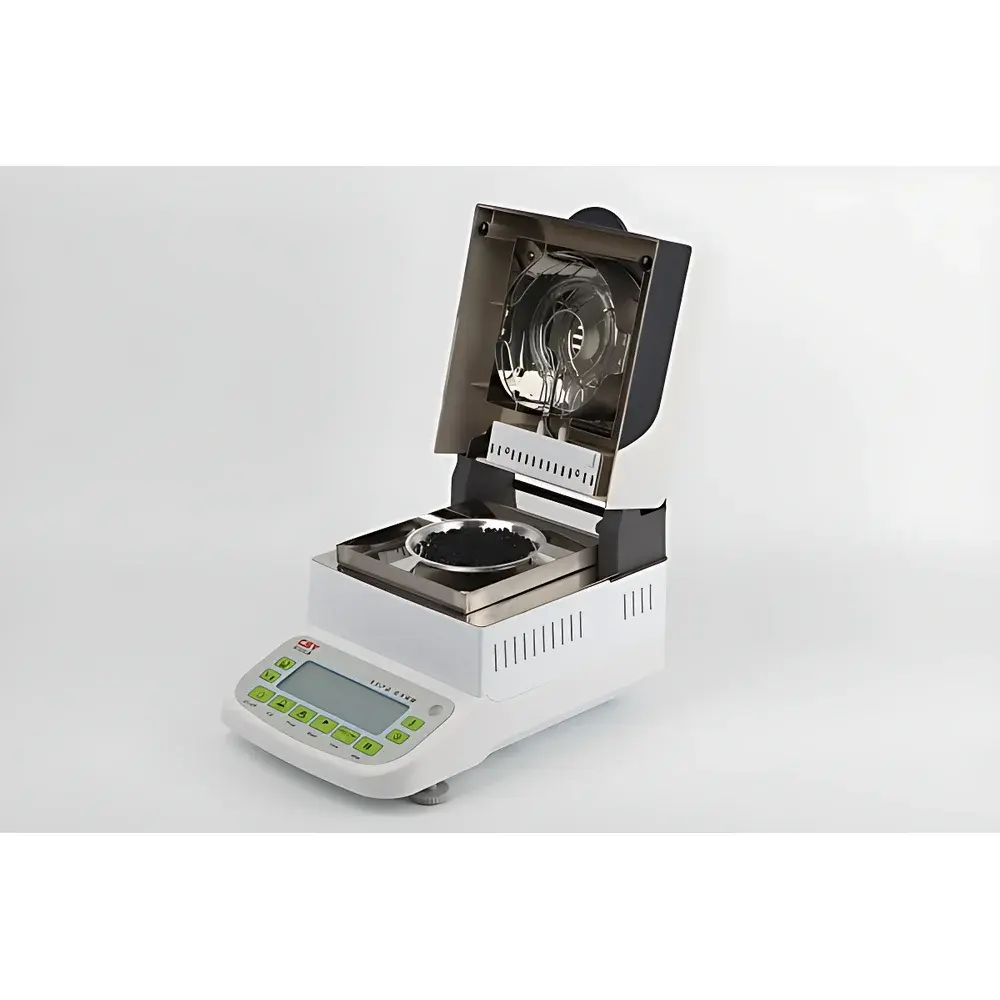
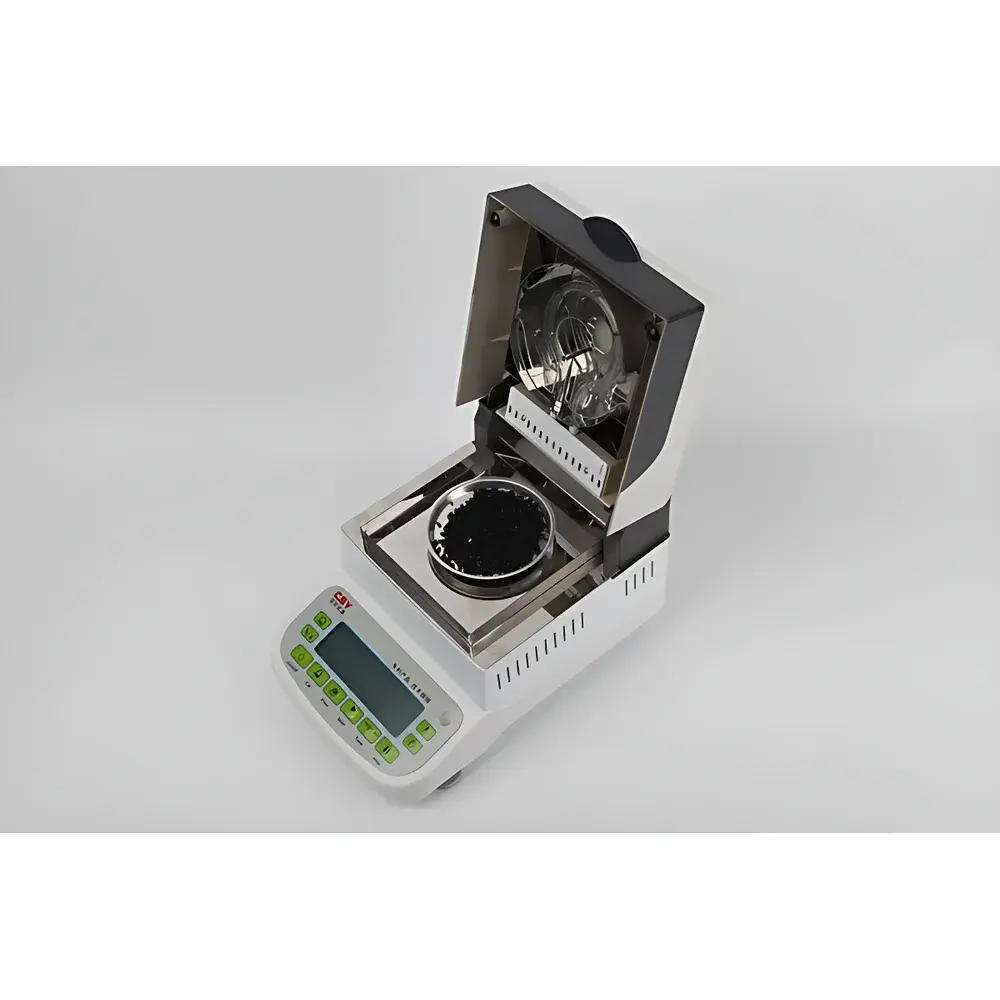
CSY-L5 Plastic Pellet Moisture Analyzer by CSY Instruments
| Brand | CSY Instruments |
|---|---|
| Origin | Guangdong, China |
| Manufacturer | Shenzhen CSY Instrument Manufacturing Co., Ltd. |
| Model | CSY-L5 |
| Measurement Range | 0.01–100% H₂O |
| Readability | 0.01% |
| Weighing Capacity | 0–100 g |
| Weighing Sensor Resolution | 0.001 g |
| Heating Source | Halogen Lamp (Adjustable, 0–205 °C) |
| Dimensions | 310 × 200 × 200 mm |
| Sensor | HBM (Germany) Load Cell |
| Compliance | ASTM D6980, ISO 15512, GB/T 29246–2012 |
Overview
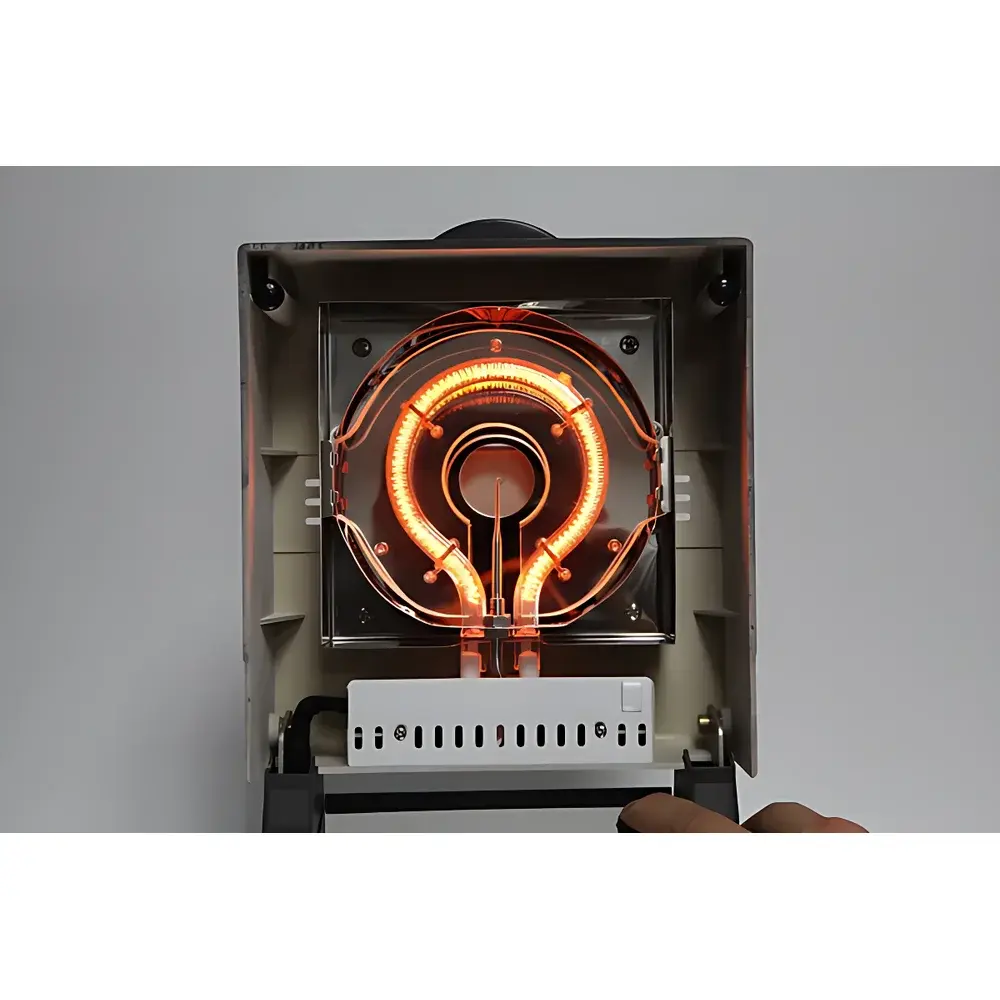
The CSY-L5 Plastic Pellet Moisture Analyzer is a dedicated halogen-based thermogravimetric moisture determination system engineered for rapid, reliable quantification of residual moisture content in thermoplastic polymers and related raw materials. It operates on the principle of loss-on-drying (LOD): a precisely controlled halogen heating element uniformly elevates sample temperature while an integrated high-resolution analytical balance continuously monitors mass loss in real time. The instrument calculates moisture content (%) as the percentage of initial mass lost under defined thermal conditions—typically within 3–8 minutes—delivering results traceable to gravimetric reference methods such as ASTM D6980 (Standard Test Method for Determination of Moisture Content of Plastics by Loss in Weight) and ISO 15512 (Plastics — Determination of water content). Unlike conventional convection ovens, the CSY-L5’s annular halogen lamp ensures rapid thermal response, homogeneous surface heating, and minimal thermal degradation of heat-sensitive polymer granules—critical for maintaining material integrity during pre-processing quality control.
Key Features
- Halogen heating system with adjustable temperature range (room temperature to 205 °C), enabling method optimization for diverse polymer matrices including PP, PE, PS, ABS, PVC, PC, PET, PPS, PA6/PA66 (nylon), and filled compounds.
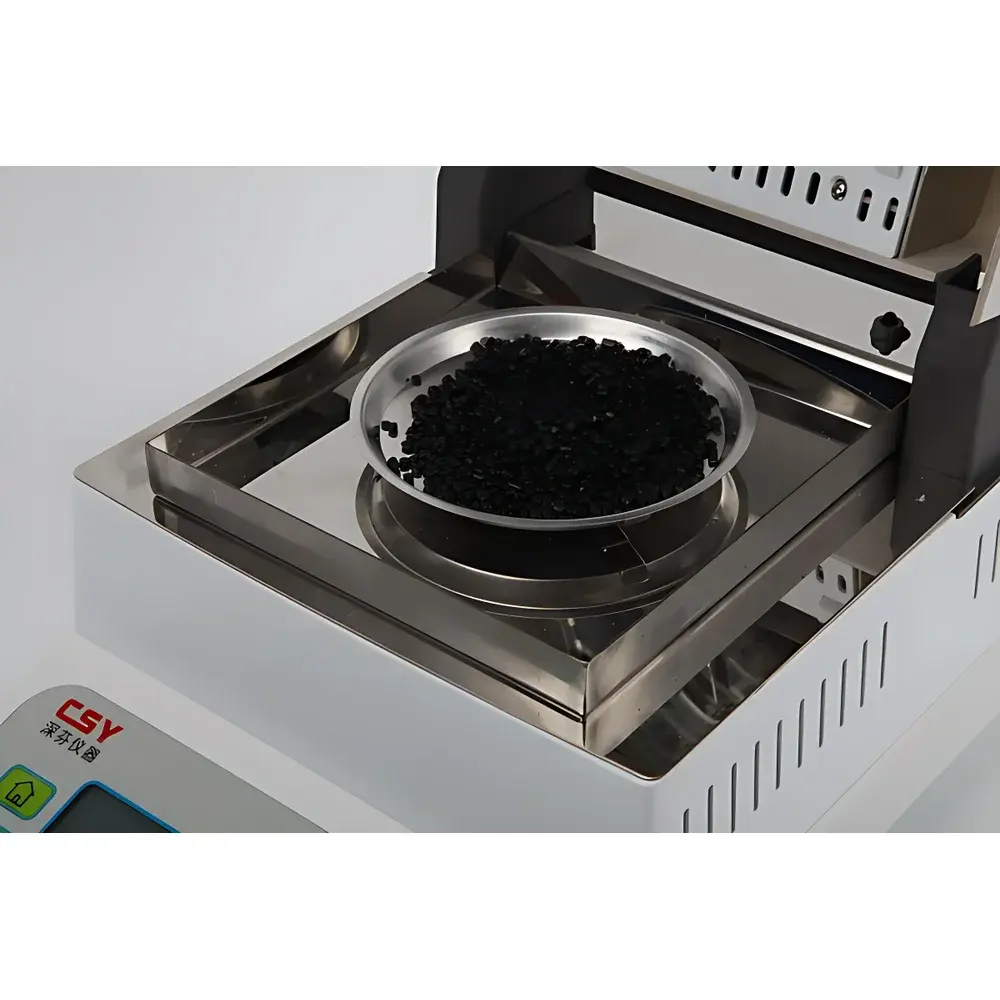
- High-precision weighing module featuring a certified HBM (Germany) load cell with 0.001 g resolution and 100 g capacity—designed for reproducible measurement of small-volume plastic pellets (typically 1–10 g samples).
- Real-time dynamic moisture display: % moisture loss updates continuously during drying, allowing operators to monitor drying kinetics and verify endpoint stability before final result lock.
- Pre-programmed and user-definable drying profiles—including ramp-hold, step-heating, and auto-endpoint detection based on mass change rate thresholds (e.g., ≤0.1 mg/min over 60 s).
- Compact benchtop footprint (310 × 200 × 200 mm) with robust aluminum alloy housing, ESD-safe design, and intuitive membrane keypad interface—no PC or software installation required for basic operation.
- Automatic completion alert with audible beep and on-screen result freeze; data retention includes date/time stamp, sample ID, method name, final moisture %, initial/final mass, and drying duration.
Sample Compatibility & Compliance
The CSY-L5 is validated for use across the full spectrum of plastic raw materials requiring moisture specification per ISO 10350-1, ASTM D4000, and UL 746C. Compatible sample forms include virgin and regrind pellets, flakes, powders (e.g., carbon black, calcium carbonate fillers), silicone elastomer crumbs, uncured rubber compounds, and thermoset preforms. It meets essential requirements for GLP-compliant QC laboratories: audit-trail-capable data logging (via optional RS232/USB export), method validation support, and alignment with ISO/IEC 17025 calibration traceability pathways. While not FDA 21 CFR Part 11–certified out-of-the-box, its deterministic LOD output and fixed-parameter operation support retrospective validation for regulated environments when paired with documented SOPs and periodic balance calibration records.
Software & Data Management
The analyzer operates autonomously via embedded firmware with no external software dependency. All measurement data—including up to 200 stored results with metadata—are retained in non-volatile memory. Optional connectivity modules enable ASCII-formatted data export to LIMS or Excel via RS232 serial or USB virtual COM port. Exported files contain structured fields: Sample_ID, Date_Time, Initial_Mass_g, Final_Mass_g, Moisture_%, Drying_Time_s, Temperature_C, Method_Name. For enterprise integration, third-party middleware (e.g., LabWare, STARLIMS drivers) may be configured using standard SCPI-like command sets. Firmware supports user-defined report templates compliant with internal QA documentation standards.
Applications
- Pre-drying verification of hygroscopic resins (e.g., nylon, PET, PC) prior to injection molding or extrusion to prevent hydrolytic degradation and surface defects.
- In-process monitoring of desiccant dryer performance across hopper-fed production lines.
- Supplier qualification testing per contractual moisture limits (e.g., ≤0.02% for engineering-grade PBT).
- R&D formulation studies evaluating moisture sorption/desorption behavior of polymer blends and additives.
- Quality release testing of masterbatches, conductive composites, and flame-retardant compounds where moisture-induced agglomeration affects dispersion.
- Compliance verification against automotive OEM specifications (e.g., VDA 278, Ford WSS-M99P1111-A) requiring sub-0.05% moisture in under-hood components.
FAQ
How does the CSY-L5 ensure measurement equivalence with the reference oven method?
It achieves correlation through controlled, uniform halogen heating that replicates the thermal profile of standardized convection ovens (ASTM D6980 Annex A), validated via inter-laboratory round-robin studies showing R² ≥ 0.995 against 3-hour 105 °C oven drying.
Can the CSY-L5 measure moisture in filled or reinforced plastics?
Yes—its wide dynamic range (0.01–100%) and adaptive endpoint detection accommodate high-loading formulations (e.g., 40% glass fiber, 30% mineral filler) without manual intervention.
Is calibration traceable to national standards?
The HBM sensor is factory-calibrated with NIST-traceable weights; users perform daily verification using Class M1 stainless steel test weights per ISO 9001 clause 7.6.
What maintenance is required?
Annual recalibration of the weighing module and biannual cleaning of the halogen lamp reflector and sample chamber with lint-free isopropyl alcohol wipes.
Does it support GMP documentation requirements?
While not Part 11–compliant natively, its deterministic output, timestamped storage, and export capability enable integration into validated electronic record systems when supported by site-specific procedural controls.





