
Custom-Built Automotive Whole-Vehicle Thermal Cycling Chamber
| Brand | OEM / Custom Manufacturer |
|---|---|
| Origin | Imported |
| Manufacturer Type | Authorized Distributor |
| Temperature Range | -70°C to +150°C (configurable) |
| Humidity Range | 20–98% RH (optional: 5–98% RH) |
| Temperature Uniformity | ±0.5°C |
| Humidity Uniformity | ±2.5% RH |
| Temperature Fluctuation | ±2°C |
| Humidity Fluctuation | +2–3% RH |
| Resolution | 0.1°C / 0.1% RH |
| Heating Rate | ~4.0°C/min |
| Cooling Rate | ~1.0°C/min |
| Construction Material | SUS#304 Stainless Steel |
| Control System | LCD Touchscreen Controller with English/Chinese Interface |
| Compliance | MIL-STD-810G (Method 501.6, 502.6), IEC 60068-2-1 (Cold), IEC 60068-2-2 (Dry Heat), IEC 60068-2-30 (Damp Heat Cycle), GB/T 2423.1–2001, GB/T 2423.2–2001, GB/T 2423.4–1993 |
Overview
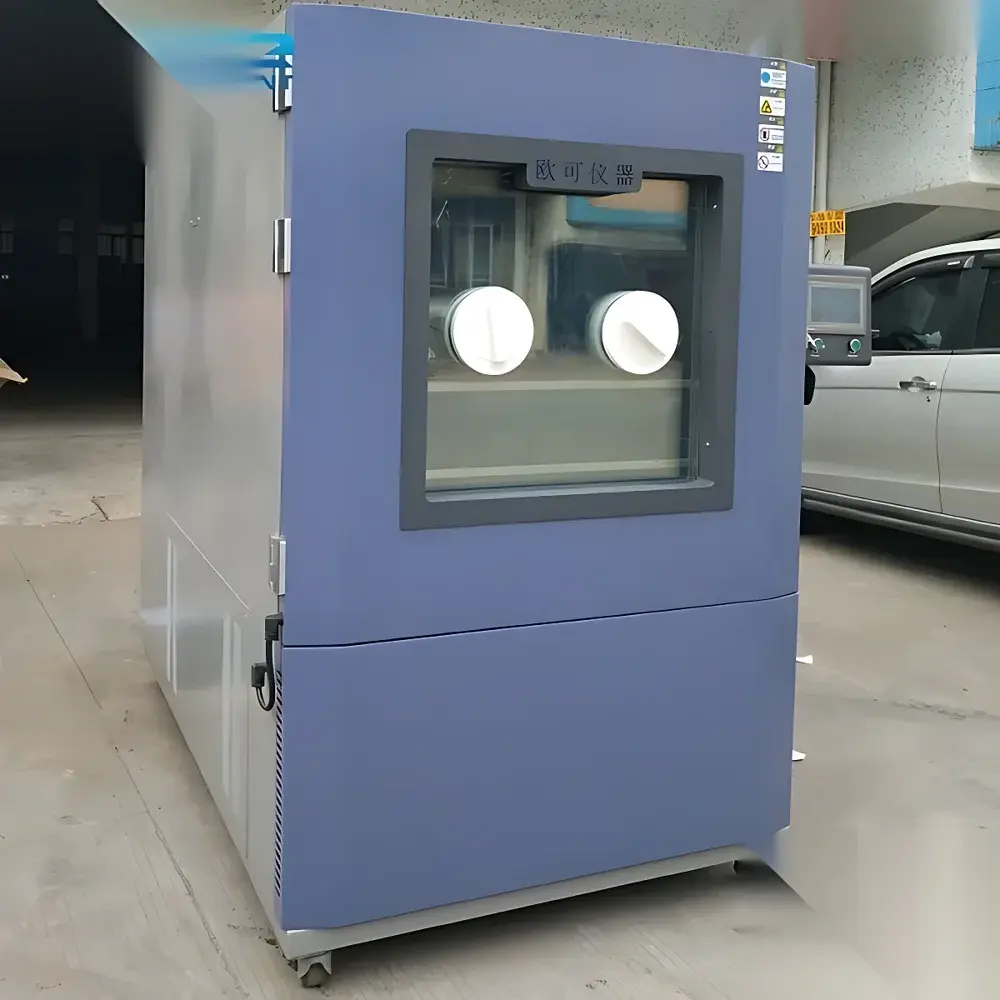
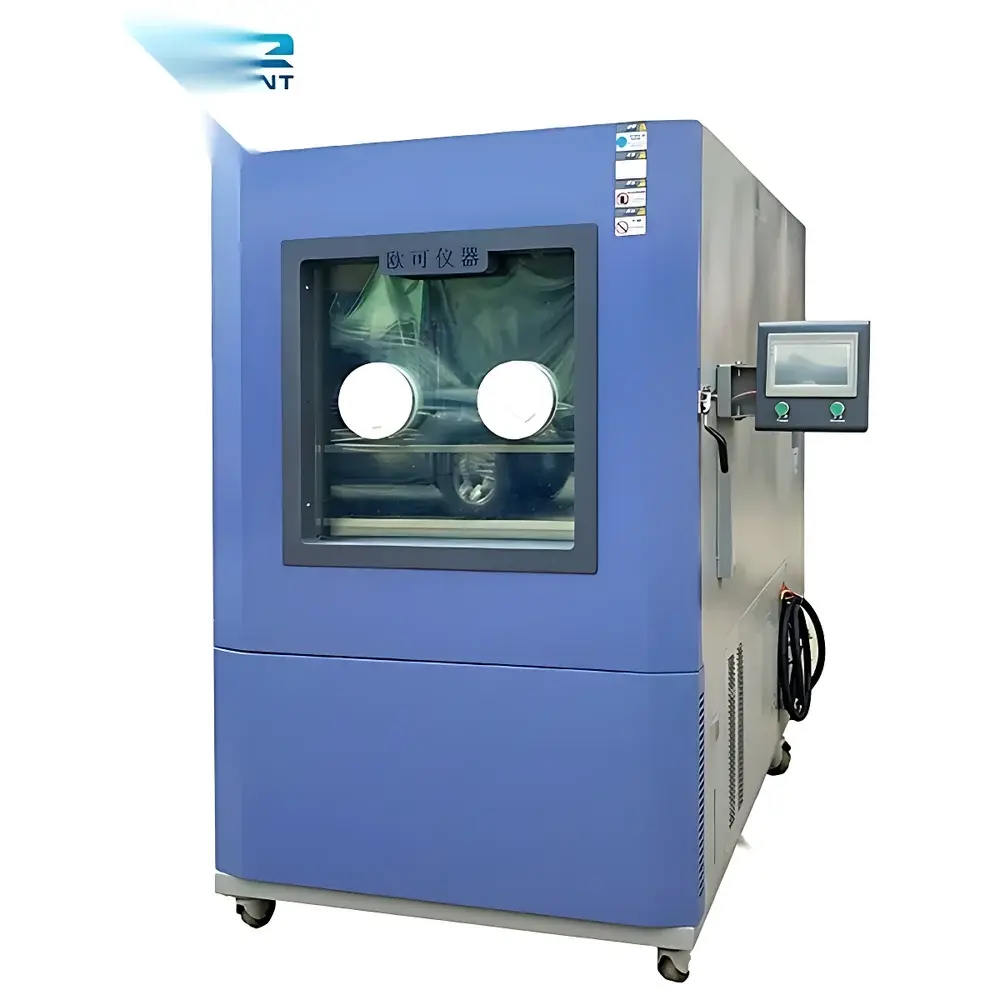
The Custom-Built Automotive Whole-Vehicle Thermal Cycling Chamber is an engineered environmental test system designed specifically for full-scale thermal validation of passenger vehicles, light-duty trucks, and EV powertrain assemblies under controlled, repeatable, and standards-compliant conditions. Unlike standard chamber configurations, this system integrates structural reinforcement, oversized access apertures, and high-capacity HVAC subsystems to accommodate complete vehicle bodies—up to 100 cm × 100 cm × 100 cm internal volume—with minimal airflow obstruction and uniform thermal distribution across the entire test envelope. Its operational principle relies on dual-stage refrigeration (R404A/R23 cascade system), precision PID-controlled heating elements, and a closed-loop humidity generation system using stainless-steel steam generators and desiccant-assisted drying. The chamber meets the thermodynamic and temporal fidelity requirements of automotive OEM validation protocols—including thermal soak, cold start simulation, heat soak recovery, and accelerated climate aging—while maintaining traceable compliance with MIL-STD-810G, IEC 60068-2 series, and China’s GB/T 2423 family of environmental testing standards.
Key Features
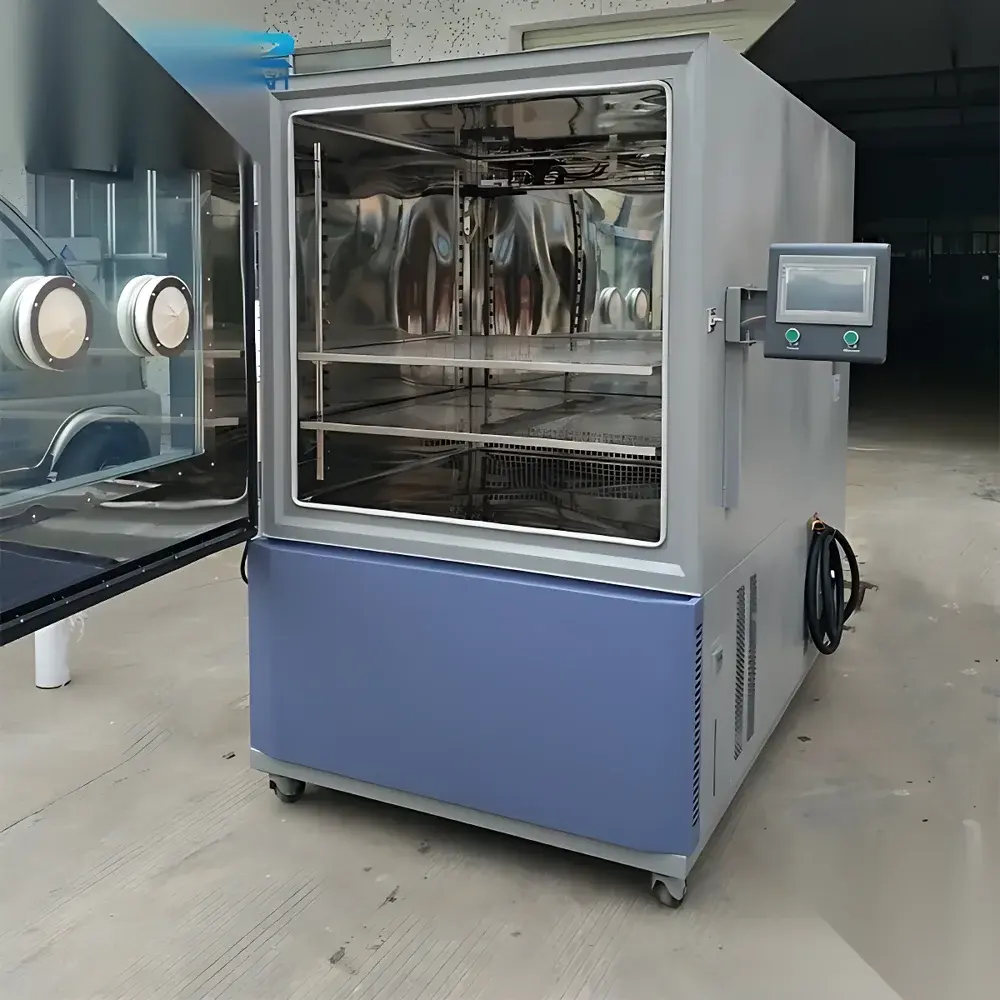
- Structural integrity optimized for whole-vehicle loading: reinforced floor plate (load capacity ≥ 2,500 kg), integrated anchoring points, and removable rear panel for drivetrain access
- High-fidelity climate control: ±0.5°C temperature uniformity and ±2.5% RH humidity uniformity across full working volume, verified per IEC 60068-3-5
- Dual-mode refrigeration architecture: primary R404A stage coupled with secondary R23 cascade loop enables stable operation down to –70°C without compressor overload or oil migration
- Intelligent touchscreen controller with real-time data logging, alarm history, and user-defined profile sequencing (up to 99 segments, 999 cycles)
- Optically clear multi-layer tempered glass observation window with embedded conductive film for anti-fogging and EMI-shielded visibility during live testing
- Standardized 50 mm diameter cable port (left-side mounted), two-tier SUS#304 adjustable shelves, four locking casters, and leveling feet for site adaptability
- Comprehensive safety architecture: overtemperature/overhumidity cut-off, refrigerant pressure monitoring, door interlock, and automatic emergency power disconnect
Sample Compatibility & Compliance
This chamber accommodates complete automotive platforms—including ICE and BEV configurations—with dimensional flexibility across six standard internal volume options (80 L to 1000 L). It supports simultaneous instrumentation of up to 64 thermocouple or RTD channels via optional signal feedthroughs. All configurations are certified to meet mandatory regulatory and industry-specific compliance frameworks: MIL-STD-810G Method 501.6 (High Temperature), Method 502.6 (Low Temperature), IEC 60068-2-1 (Cold), IEC 60068-2-2 (Dry Heat), IEC 60068-2-30 (Damp Heat Cycling), and GB/T 2423.1–2001, GB/T 2423.2–2001, and GB/T 2423.4–1993. Calibration certificates are provided per ISO/IEC 17025-accredited procedures, with optional NIST-traceable sensor validation and uncertainty reporting.
Software & Data Management
The embedded controller firmware supports CSV export of time-stamped temperature/humidity profiles with 1-second resolution. Optional PC-based software (Windows 10/11 compatible) enables remote monitoring, multi-chamber synchronization, automated report generation (PDF/Excel), and audit trail functionality compliant with FDA 21 CFR Part 11 requirements—including electronic signatures, user role management, and immutable event logs. Data integrity safeguards include cyclic redundancy check (CRC) validation, write-once storage mode, and encrypted local backup to USB media. All software modules undergo annual functional verification per GLP/GMP-aligned validation protocols.
Applications
- Automotive OEM thermal validation: cabin HVAC performance mapping, battery thermal management system (BTMS) stress testing, and ADAS sensor drift analysis under extreme ambient conditions
- Power electronics reliability assessment: inverter cooling efficiency, DC-DC converter derating behavior, and charging module thermal cycling endurance
- Material compatibility screening: interior trim warpage, sealant adhesion loss, gasket compression set, and polymer embrittlement at sub-zero temperatures
- Regulatory certification support: UN ECE R100 (EV safety), ISO 16750-4 (electrical loads), and SAE J2380 (thermal shock resistance for automotive electronics)
- Research-grade climate aging: accelerated corrosion evaluation of under-hood components and electrochemical degradation modeling of lithium-ion cells
FAQ
Can this chamber be customized for non-standard vehicle dimensions or integration with external dynamometers?
Yes—structural modifications, extended access tunnels, and CAN/LIN bus interface modules are available under OEM engineering collaboration.
Is humidity control available across the full temperature range, including below 0°C?
Humidity is actively maintained from +10°C to +150°C; sub-zero humidity operation is limited to dry nitrogen purge mode (optional accessory).
What documentation is included for IQ/OQ/PQ qualification?
Factory acceptance test (FAT) reports, as-built drawings, calibration certificates, and a customizable URS-compliant qualification protocol package are supplied.
Does the system support third-party SCADA or MES integration?
Yes—Modbus TCP, OPC UA, and Ethernet/IP communication drivers are available as configurable firmware options.
What is the typical lead time for a configured whole-vehicle chamber?
Standard delivery is 14–18 weeks from PO confirmation, inclusive of FAT and on-site commissioning support.



