
Custom-Built Combined Environmental Vibration Test System for Temperature, Humidity, and Mechanical Shock Simulation
| Brand | OEM / Custom Manufacturer |
|---|---|
| Origin | Imported |
| Supplier Type | Authorized Distributor |
| Price | USD 14,000 (FOB) |
| Vibration Frequency Range | 100–300 rpm (continuous adjustment) |
| Amplitude | 25.4 mm (1 in) peak-to-peak |
| Max Payload Capacity | 100 kg (customizable up to 500 kg) |
| Operating Duration | Up to 9999 h/min/sec |
| Motor Power | 1 HP (746 W) |
| Max Current Draw | 4 A |
| Test Table Dimensions | 100 cm × 120 cm (customizable) |
| Compliance | ASTM D999, ASTM D3580, ISTA 3A/3E/3H, EN 60068-2-6, EN 60068-2-14, ANSI X3.36, UL 60950-1 |
Overview
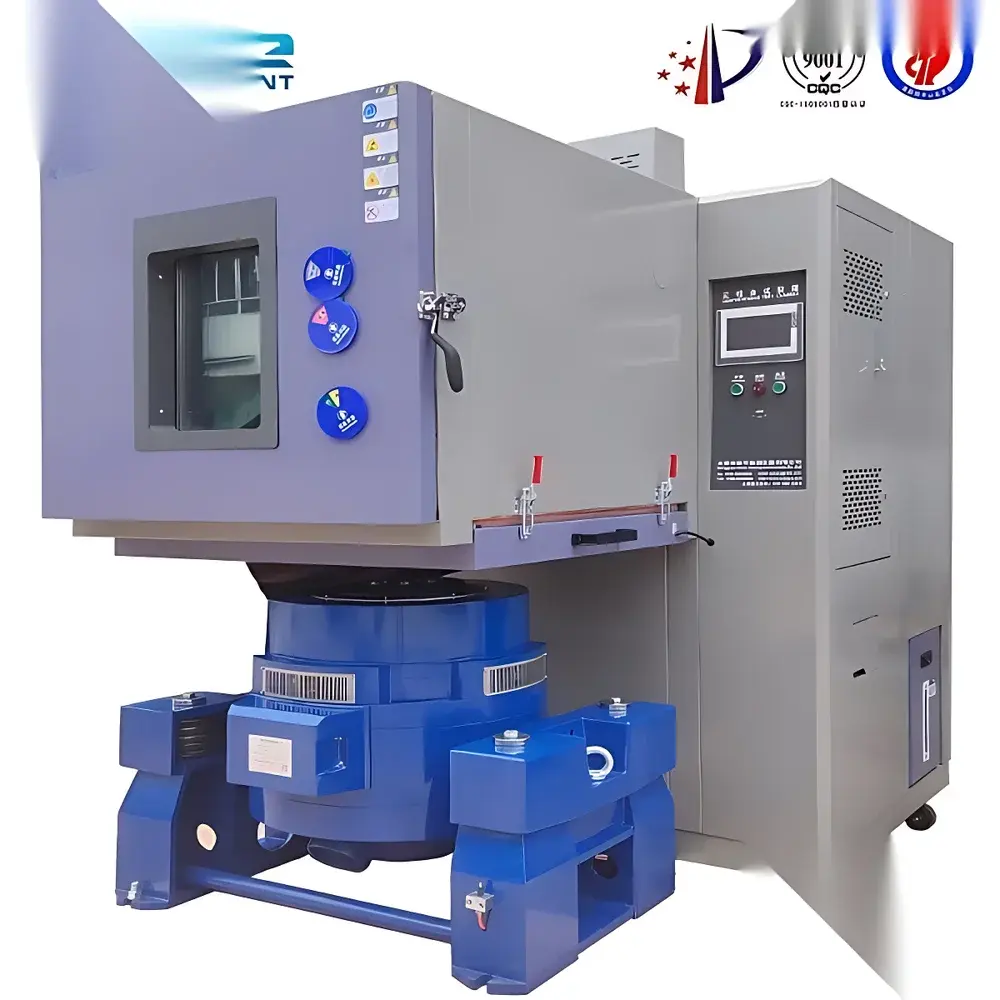
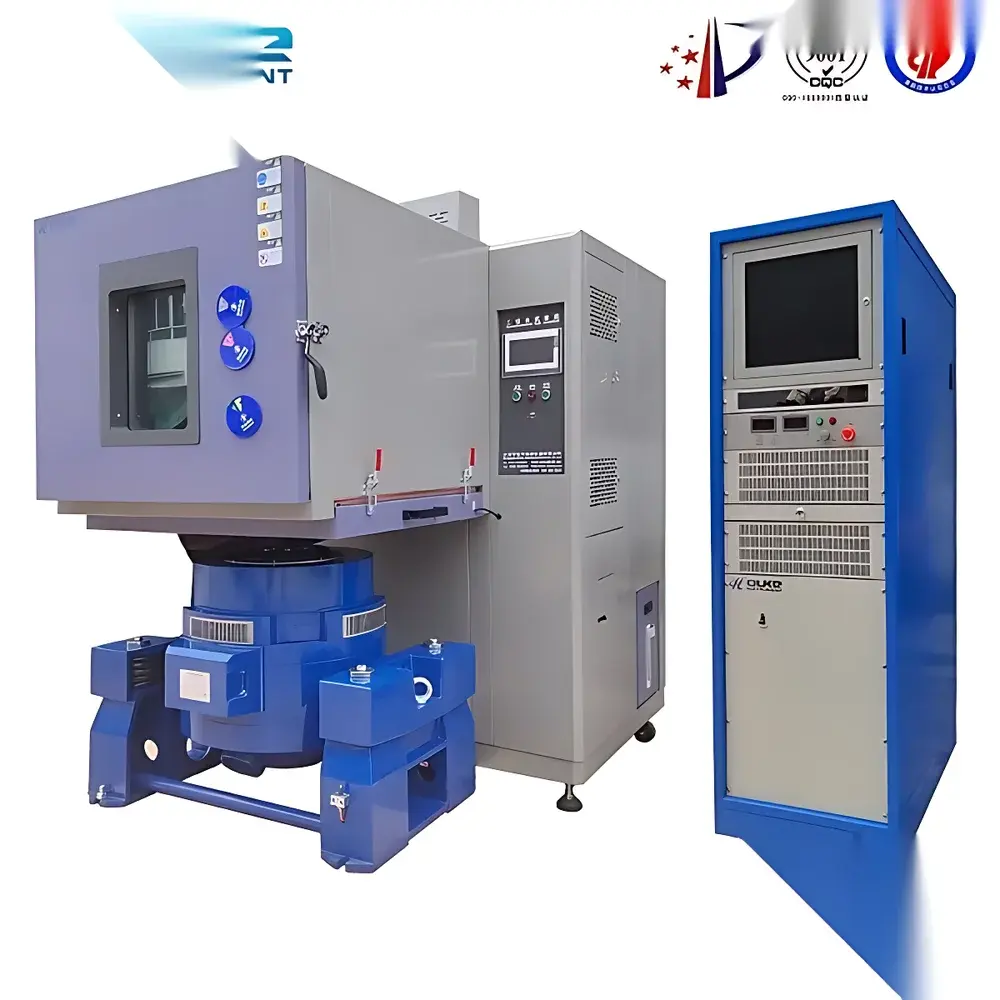
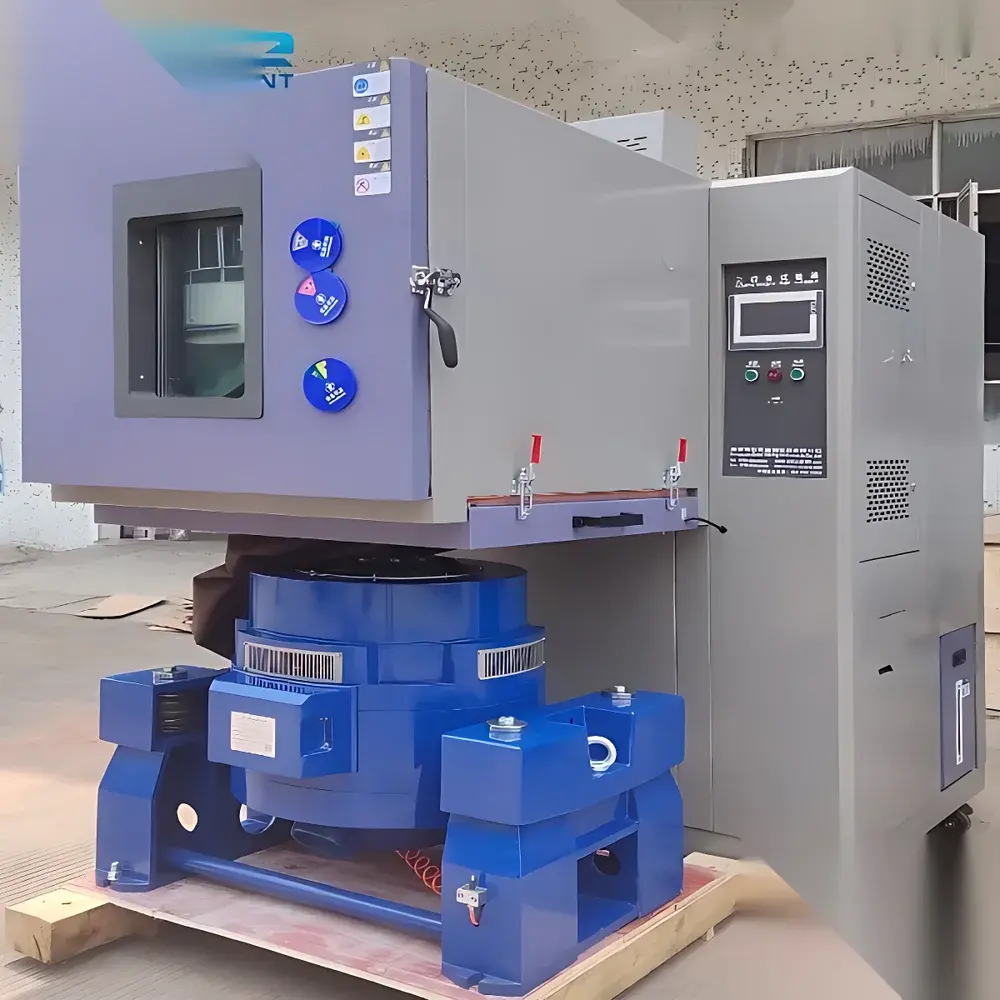
The Combined Environmental Vibration Test System is an integrated physical property testing platform engineered to replicate real-world transport and operational stress conditions across three critical environmental domains: controlled temperature (high/low), optional humidity, and mechanically induced vibration. It operates on the principle of simultaneous multi-axis mechanical excitation—typically vertical sinusoidal or random motion—coupled with precision thermal conditioning via forced-air refrigeration and electric heating elements. Unlike standalone shakers or climate chambers, this system enables synchronized exposure to thermal cycling (e.g., −40 °C to +150 °C) and broadband vibrational energy (100–300 rpm, 25.4 mm amplitude), allowing accelerated evaluation of structural integrity, solder joint reliability, packaging performance, and functional stability under combined stress loads. Designed for laboratory-based qualification testing, it supports deterministic test profiles aligned with international logistics validation standards.
Key Features
- Digitally calibrated frequency display with ±0.5 rpm resolution for repeatable profile execution
- Low-noise synchronous belt drive mechanism achieving acoustic output <62 dB(A) at 1 m distance
- Modular rail-mounted fixture interface enabling rapid, tool-free sample mounting and alignment
- Reinforced steel base frame with high-damping elastomeric isolation pads ensuring minimal floor-transmitted vibration
- Interlocked safety door with emergency stop circuitry compliant with IEC 60204-1
- Optional integrated humidity control module (10–95% RH, ±3% RH accuracy) with condensate management
Sample Compatibility & Compliance
The system accommodates rigid and semi-rigid specimens up to 100 kg mass and 100 cm × 120 cm footprint; custom table configurations support larger payloads and non-standard geometries. Samples may be powered during testing—electrical feedthroughs (up to 250 VAC / 10 A) and thermocouple access ports are available upon specification. All thermal-vibrational profiles are programmable to meet GLP-compliant audit trails per ISO/IEC 17025 requirements. The system is validated against ASTM D999 (vibration of packaged-products), ASTM D3580 (sinusoidal vibration testing), ISTA 3-series protocols (e.g., 3A for parcel delivery, 3H for motor freight), and EN 60068-2-6 (vibration) and EN 60068-2-14 (thermal shock). Full calibration certificates traceable to NIST or UKAS standards are provided with each unit.
Software & Data Management
Control is managed via a Windows-based HMI with embedded real-time monitoring and logging. The software supports dual-mode operation: manual parameter entry and automated sequence scripting with up to 99 step profiles. All sensor data—including table acceleration (m/s²), chamber temperature (±0.3 °C), humidity (if equipped), and motor current—are timestamped and stored in CSV/Excel-compatible format. Audit logs record operator ID, start/stop timestamps, parameter changes, and alarm events—fully compliant with FDA 21 CFR Part 11 requirements when configured with user authentication and electronic signature modules. Remote diagnostics and firmware updates are supported over Ethernet or optional Wi-Fi.
Applications
This system serves as a core qualification instrument in R&D labs, QC departments, and third-party certification facilities. Primary use cases include: validating electronics enclosure robustness under thermal-mechanical fatigue; assessing printed circuit board (PCB) solder joint reliability per IPC-J-STD-001; evaluating consumer product packaging integrity for e-commerce shipment (ISTA 3A); verifying automotive component survivability during cold-start vibration; and supporting MIL-STD-810G Method 514.7 (vibration) and Method 502.6 (temperature) compliance testing. It is widely deployed in sectors including aerospace component suppliers, medical device manufacturers subject to ISO 13485, and contract electronics manufacturing services (EMS) providers performing Design Verification Testing (DVT).
FAQ
Can the system perform random vibration profiles in addition to sinusoidal?
Yes—optional electrodynamic shaker integration supports broadband random vibration testing per ISO 10816 and MIL-STD-810G Annex G.
Is humidity control included as standard?
No—humidity capability is an optional add-on module specified at time of order.
What is the typical temperature ramp rate?
Standard configuration achieves ≥3 °C/min cooling and ≥5 °C/min heating between −40 °C and +150 °C, dependent on load mass and chamber volume.
Does the system support remote monitoring and control?
Yes—Ethernet connectivity enables full web-based supervision, real-time data streaming, and alarm notifications via SMTP or SNMP.
Are calibration and installation services included?
Factory calibration is standard; on-site installation, commissioning, and IQ/OQ documentation are available as billable service options.



