
Custom-Built Temperature and Humidity Controlled Environmental Test Chamber for Pipe Material Testing
| Brand | OEM / Private Label |
|---|---|
| Origin | Imported |
| Manufacturer Type | Authorized Distributor |
| Pricing | USD 2,650 (excl. tax & freight) |
| Temperature Range | -40°C to +150°C (standard) |
| Humidity Range | 20%–98% RH |
| Temperature Uniformity | ±0.5°C (at 25°C, unloaded) |
| Humidity Uniformity | ±3% RH (at 60% RH, unloaded) |
| Ramp Rate | 1–3°C/min (air average, load-dependent) |
| Cooling Water Requirement | 10–28°C, 0.1–0.3 MPa |
| Compliance | GB/T 2423.1–2023, GB/T 2423.2–2023, IEC 60068-2-1, IEC 60068-2-2, GJB 1032A–2021, MIL-STD-2164A |
Overview
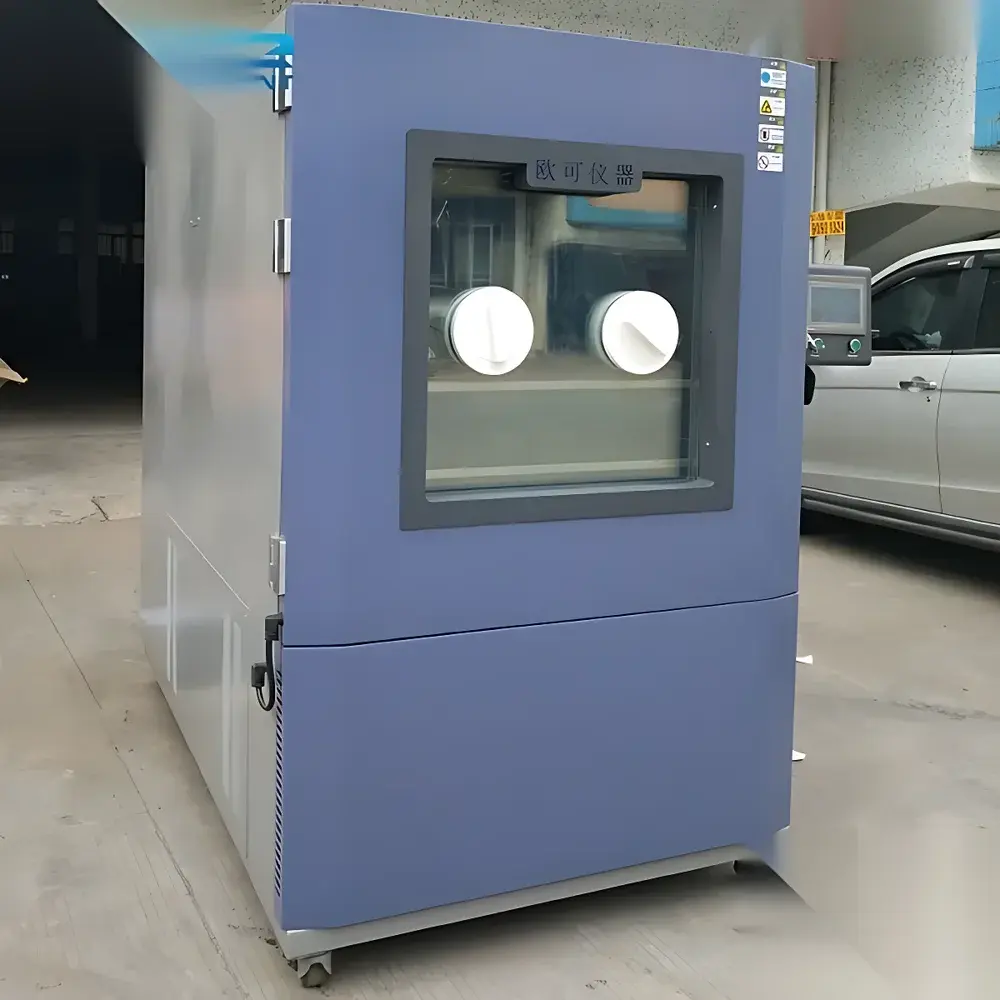
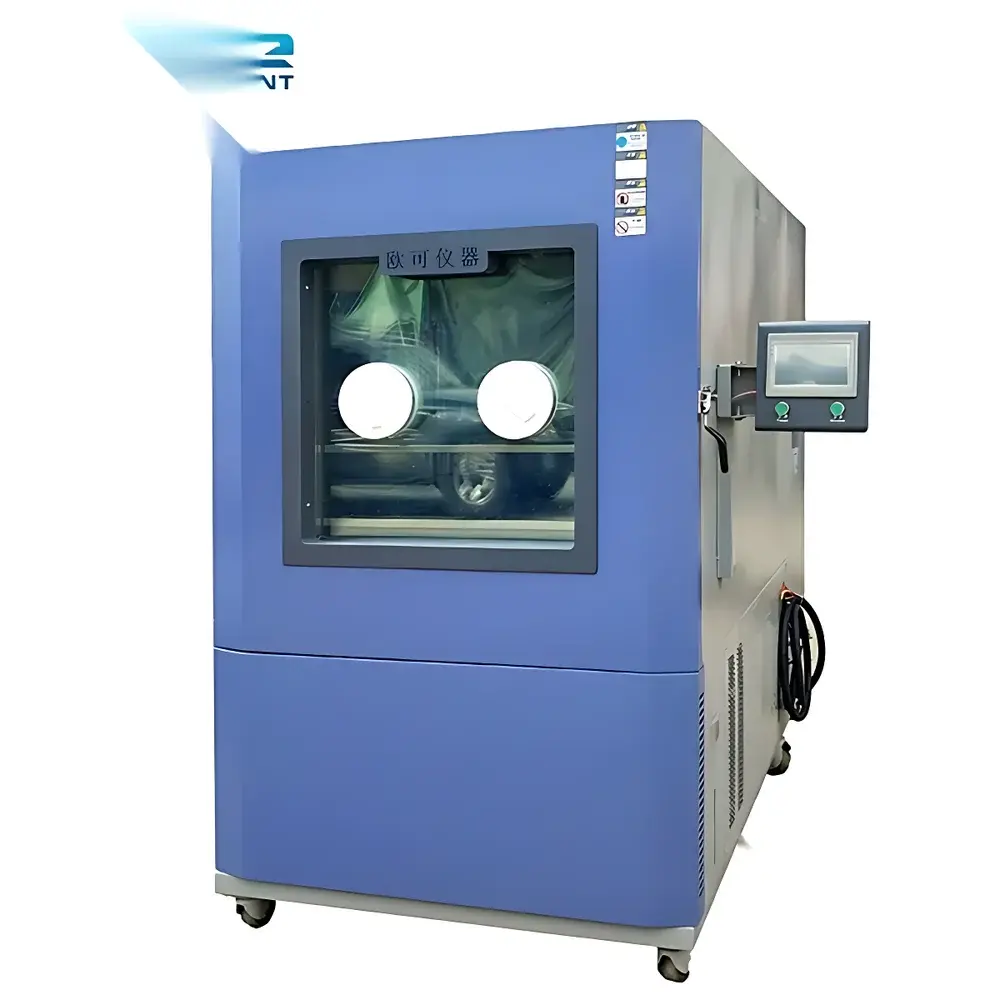
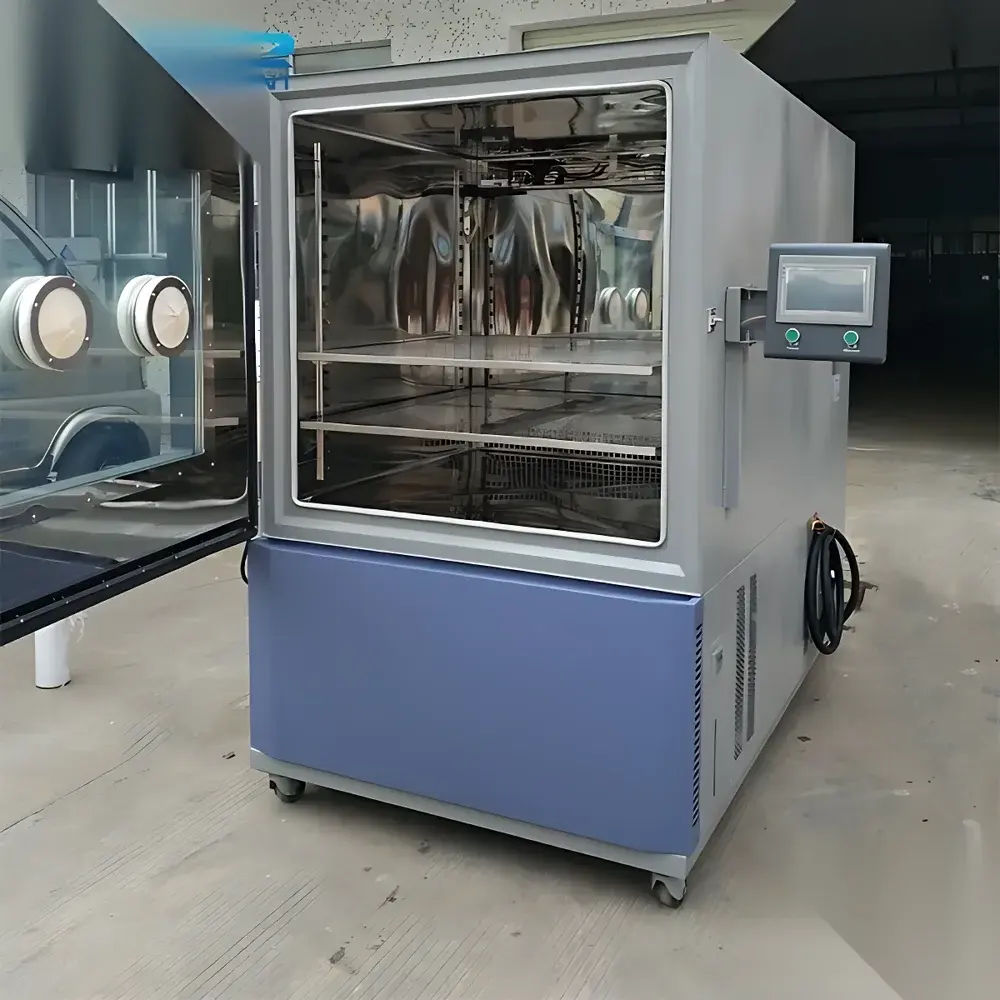
The Custom-Built Temperature and Humidity Controlled Environmental Test Chamber for Pipe Material Testing is a precision-engineered environmental simulation system designed specifically to evaluate the dimensional stability, mechanical integrity, and long-term aging behavior of thermoplastic, thermoset, and composite piping materials under controlled thermal and hygrothermal stress conditions. Based on the principle of balanced temperature and humidity control (BTHC), the chamber employs a dual-loop P.I.D.-regulated SSR-driven heating/humidification system coupled with a high-efficiency refrigeration circuit featuring full-capillary automatic capacity modulation. This architecture ensures dynamic equilibrium between thermal/humidity input and chamber heat/moisture loss—enabling stable, repeatable, and traceable conditioning across extended test durations. Unlike generic environmental chambers, this unit integrates structural and operational adaptations for tubular specimen handling—including reinforced floor loading capacity, optimized air circulation patterns for axial airflow through pipe bundles, and configurable internal mounting rails compatible with ASTM D1598, ISO 1167, and EN 927-3 test fixtures.
Key Features
- Full-capillary refrigeration system with auto-load capacity adjustment—superior to expansion valve-based designs in stability, response linearity, and low-temperature reliability
- Integrated BTHC control algorithm using dual-channel P.I.D. regulation of SSR-controlled heaters and ultrasonic humidifiers, ensuring ≤±0.5°C temperature deviation and ≤±3% RH deviation (at 60% RH) under standard unloaded conditions
- Comprehensive safety architecture: dry-run protection for humidifier, independent over-temperature cutoff (dual-stage), low-water-level interlock, compressor overcurrent/overheat/overload monitoring, high-pressure refrigerant cut-off switch, magnetic circuit breaker, and earth-leakage protection (30 mA)
- Ergonomic curved-chamber design with flush-mount non-spring handles and seamless interior welds—minimizing condensation traps and facilitating ISO 17025-compliant cleaning protocols
- Touchscreen controller with multi-segment programmability (up to 99 cycles, 999 steps), real-time trend logging, USB data export, and optional RS485/Modbus RTU interface for SCADA integration
Sample Compatibility & Compliance
This chamber accommodates pipe specimens up to Ø300 mm × 2,000 mm (customizable per client specification), with reinforced floor loading capacity of 150 kg/m². Internal airflow velocity is maintained at 0.5–1.2 m/s via tangential centrifugal fans with adjustable vane diffusers—ensuring uniform thermal-hygric exposure across curved surfaces without localized stagnation or turbulence-induced measurement artifacts. The system meets mandatory requirements for environmental stress screening (ESS) and accelerated aging validation per GJB 1032A–2021, MIL-STD-2164A, and GB/T 2423.1–2023 (cold) / GB/T 2423.2–2023 (dry heat). All control parameters—including setpoint accuracy, ramp rate verification, and sensor calibration intervals—are documented per ISO/IEC 17025:2017 Clause 6.4 and support GLP/GMP audit readiness.
Software & Data Management
The embedded controller firmware supports full audit trail functionality compliant with FDA 21 CFR Part 11 Annex 11 requirements—including user-level access control (admin/operator/viewer), electronic signature capture for test initiation/termination, and immutable event logs (start/stop time, parameter deviations, alarm triggers, manual overrides). Raw sensor data (PT100 temperature, capacitive RH) is sampled at 1 Hz and stored internally for ≥30 days; external export formats include CSV and XML. Optional PC-based software (Windows 10/11) enables remote monitoring, statistical process control (SPC) charting (X-bar/R), and automated report generation aligned with ISO 9001:2015 clause 8.2.4.
Applications
- Accelerated hygrothermal aging of PE, PP-R, PVC-U, and cross-linked polyethylene (PEX) pipes per ISO 1167-2 and ASTM F2023
- Dimensional stability testing under cyclic temperature-humidity profiles (e.g., 40°C/93% RH → −20°C/30% RH) for underground water supply systems
- Validation of adhesive bond durability in multi-layer composite pipes exposed to tropical or desert climatic simulations
- Pre-conditioning of pipe fittings and gaskets prior to hydrostatic pressure testing (ISO 1167-1)
- Environmental stress screening (ESS) of pipe manufacturing lots to detect latent defects per MIL-STD-2164A
FAQ
What is the actual temperature ramp rate for loaded pipe specimens?
Ramp rates are specified as air-average values per IEC 60068-3-5. Actual specimen core temperature transition depends on wall thickness, thermal diffusivity, and bundle density—typically requiring 1.5–2.5× the air ramp duration to achieve thermal equilibrium.
Can the chamber operate continuously at 98% RH above 85°C?
Yes—achieved via saturated steam injection with pre-heated water feed and condensate management system; sustained operation requires cooling water inlet ≤25°C and ambient room temperature ≤28°C.
Is third-party calibration certification included?
Factory calibration uses NIST-traceable PT100 and capacitive RH sensors. Optional UKAS-accredited calibration certificate (ISO/IEC 17025) is available upon request with 10-day lead time.
How is compliance with GLP/GMP verified during routine use?
Built-in self-diagnostic routines verify sensor drift, heater/humidifier output linearity, and refrigerant pressure stability daily; all results are logged with timestamps and operator ID for review during internal audits.
Are custom internal dimensions and mounting configurations supported?
Yes—structural modifications including floor reinforcement, vertical rail spacing, and door hinge orientation are engineered per client drawing and validated via finite element analysis (FEA) prior to fabrication.



