
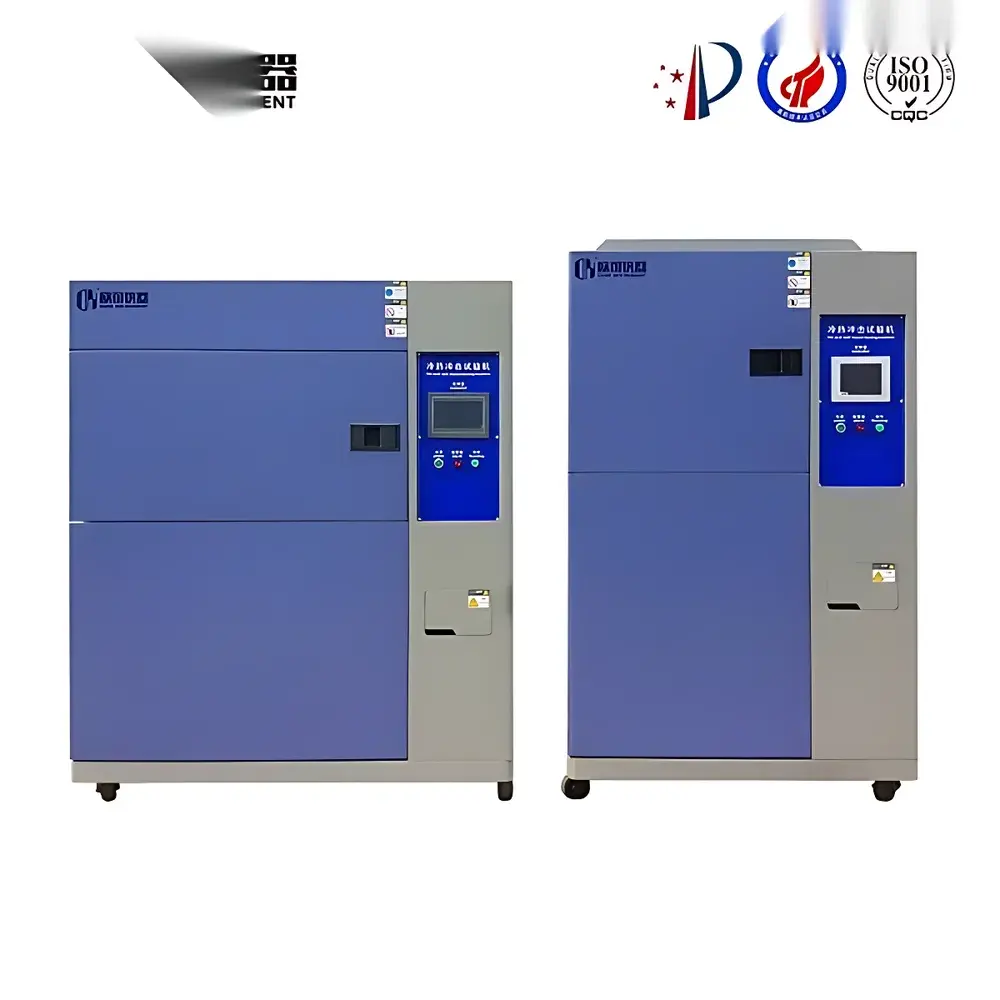
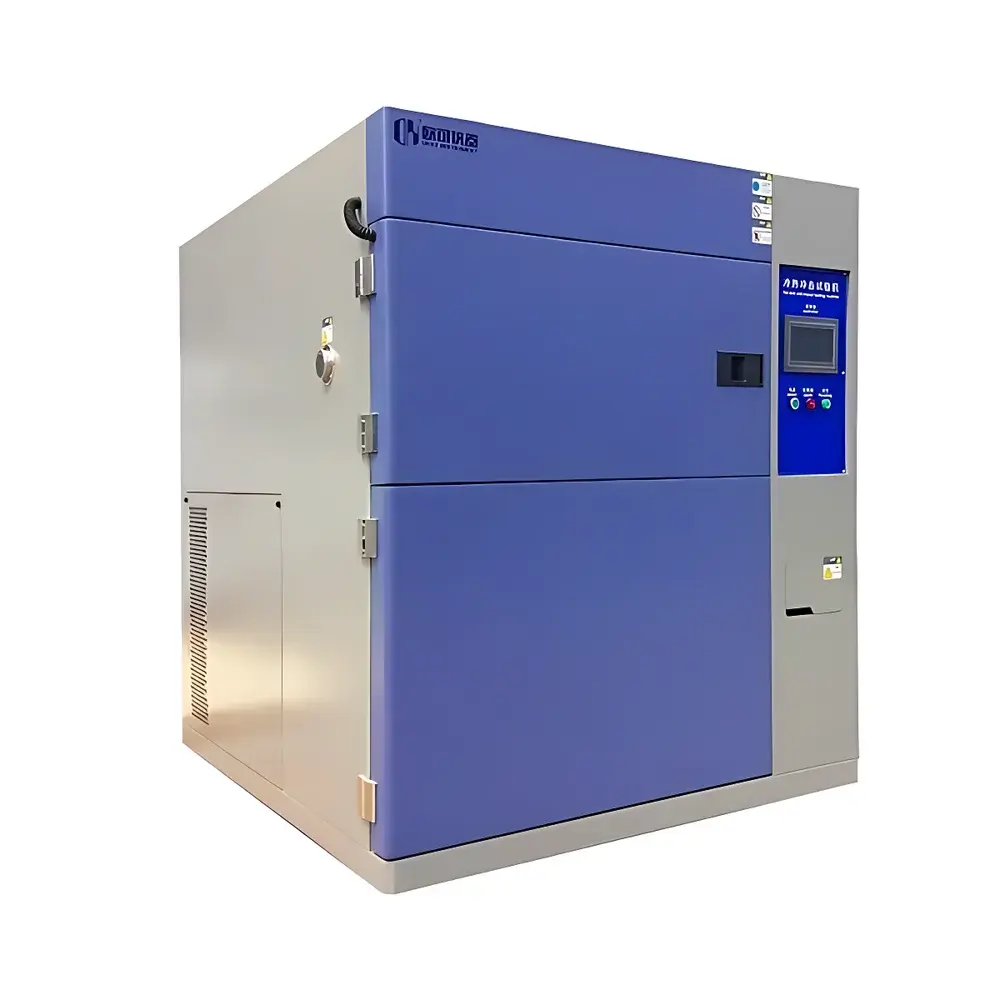
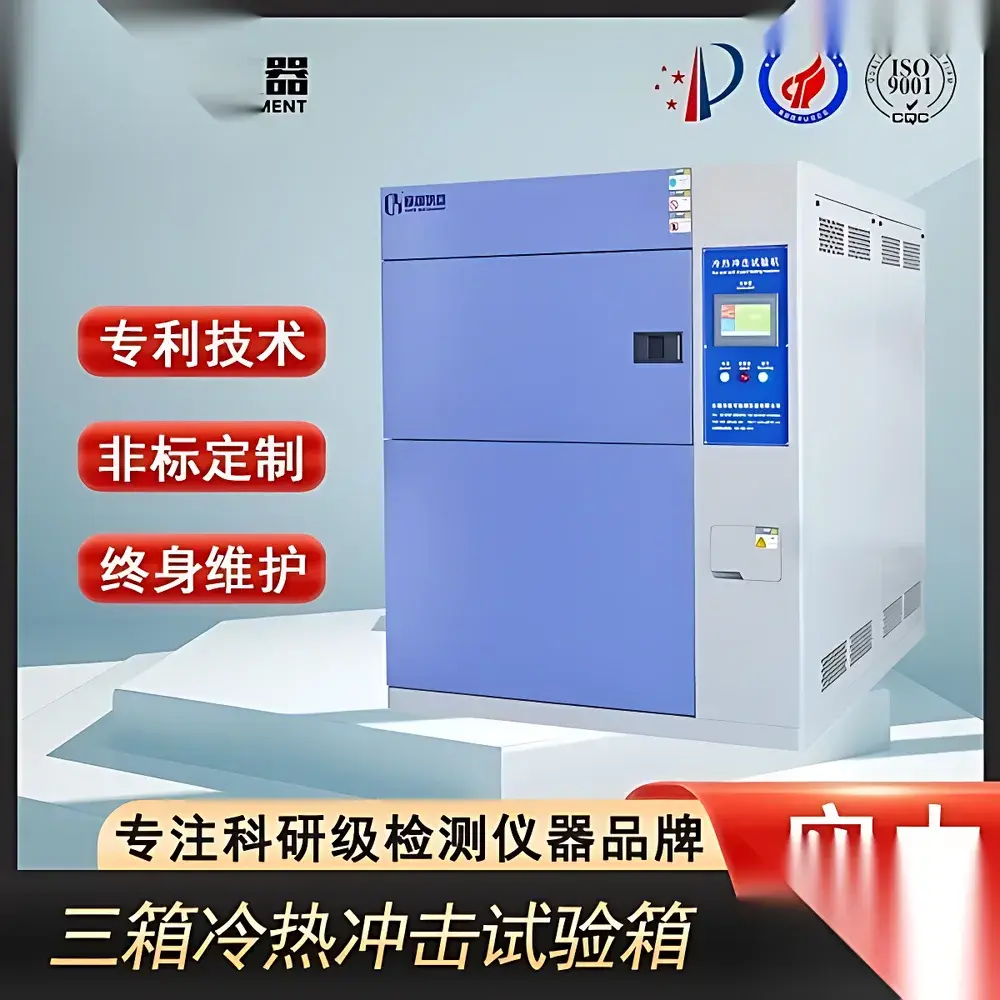
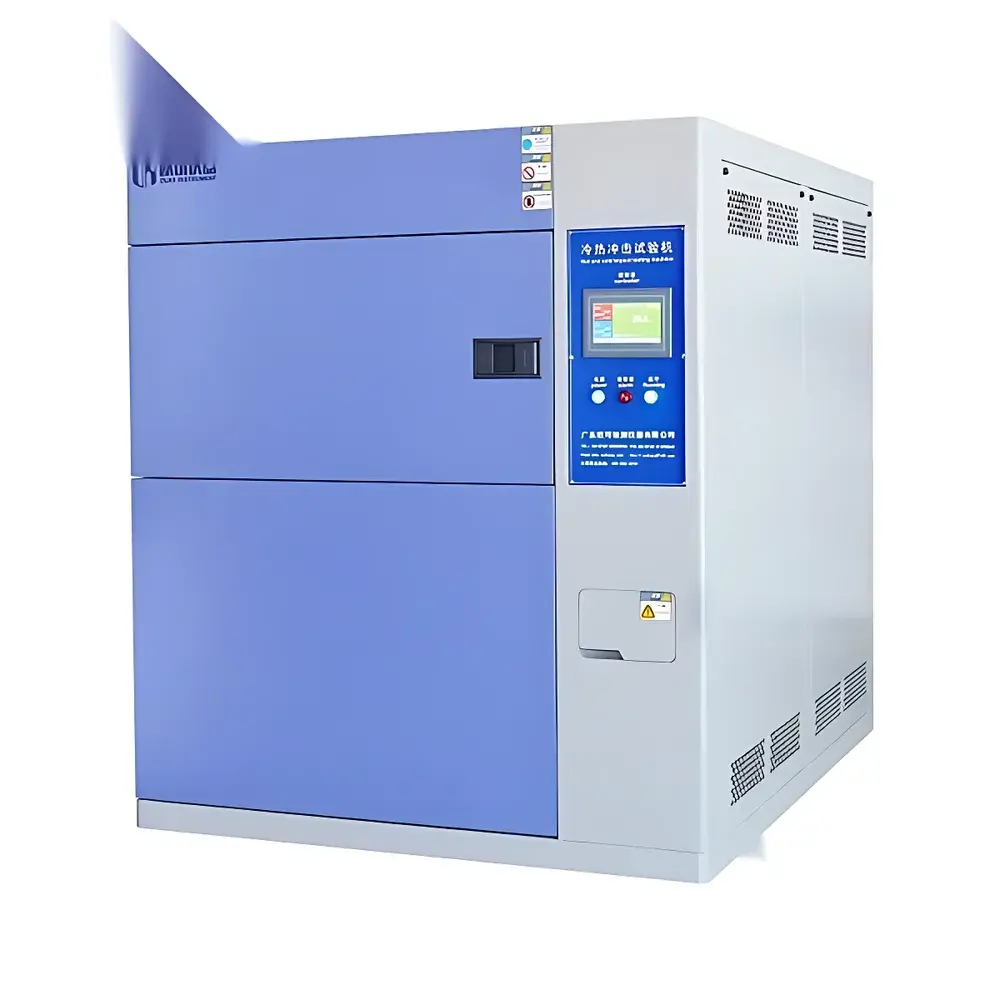
Custom-Built Thermal Shock Test Chamber
| Brand | Other Brands |
|---|---|
| Origin | Imported |
| Manufacturer Type | General Distributor |
| Price | USD 11,200 (approx.) |
Overview
The Custom-Built Thermal Shock Test Chamber is an engineered environmental simulation system designed to evaluate material and component resilience under rapid, repetitive transitions between extreme high- and low-temperature zones. Operating on the principle of two-zone or three-zone thermal shock—where specimens are mechanically transferred between independently controlled hot and cold chambers—the system induces controlled thermal stress gradients that accelerate failure mechanisms associated with coefficient-of-thermal-expansion (CTE) mismatch, interfacial delamination, solder joint fatigue, and microcrack propagation. This methodology conforms to internationally recognized test standards including MIL-STD-810H Method 503.7, IEC 60068-2-14 (Test Nb), JIS Z 8702, and ASTM D6988. The chamber supports qualification testing for aerospace components, automotive ECUs, semiconductor packaging, PCB assemblies, and polymer-based structural parts where reliability under thermal cycling is mission-critical.
Key Features
- Configurable dual-chamber or triple-chamber architecture, enabling both air-to-air and liquid-to-air thermal shock profiles per user-defined dwell times and transfer speeds
- Advanced temperature control system featuring imported PID-regulated digital controllers with SSR output, auto-tuning capability, and ±0.3 °C temperature uniformity (within working volume)
- High-efficiency refrigeration circuit utilizing hermetically sealed Tecumseh (France) compressors, coupled with AVM (USA) refrigerant flow modulation technology—reducing energy consumption by ≥40% versus conventional systems
- Optimized heat exchange design incorporating custom-molded thick-aluminum finned evaporators, minimizing thermal inertia and shortening stabilization time by up to 35%
- Robust mechanical construction: interior chamber and sample carrier fabricated from SUS304 stainless steel; outer enclosure from pre-treated cold-rolled steel with epoxy polyester powder coating
- Integrated safety architecture including over-temperature cut-off, compressor overload protection, phase failure monitoring, and short-circuit isolation—compliant with IEC 61000-6-2/6-4 EMC requirements
- Extended maintenance cycle: frost accumulation management enables defrost intervals of up to 72 hours, with each defrost operation completed within ≤60 minutes
Sample Compatibility & Compliance
The chamber accommodates standard test specimens up to 500 mm × 500 mm × 500 mm (W×D×H), with optional custom payload carriers available upon specification. It supports non-destructive post-test inspection and integrates seamlessly into GLP/GMP-aligned validation workflows. All firmware and controller logic comply with FDA 21 CFR Part 11 requirements for electronic records and signatures when paired with validated software packages. Temperature mapping reports (per ISO/IEC 17025) and IQ/OQ documentation templates are provided as part of commissioning support.
Software & Data Management
Equipped with embedded real-time data acquisition and visualization firmware, the system delivers continuous logging of chamber temperatures (hot zone, cold zone, transfer zone), specimen surface thermocouple readings (optional), cycle count, and alarm event timestamps. Data export is supported via RS232 serial interface and USB mass storage mode (FAT32 formatted), generating timestamped CSV files compatible with MATLAB, JMP, and Minitab. Graphical trend analysis includes overlayable multi-cycle comparison, deviation-from-setpoint histograms, and pass/fail status flagging against user-defined thresholds. Audit trails record all parameter modifications, operator logins, and calibration interventions—ensuring traceability for regulatory submissions.
Applications
- Qualification of lead-free solder joints in high-density PCBAs under JEDEC JESD22-A104 thermal shock protocols
- Accelerated aging studies of elastomeric seals and gaskets used in cryogenic and high-temperature fluid systems
- Reliability screening of MEMS devices, optical sensors, and ceramic substrates prior to field deployment
- Material compatibility assessment for composite laminates exposed to diurnal thermal cycles in satellite thermal control systems
- Process validation of adhesive bonding integrity in automotive battery module assemblies
- Failure mode identification in medical device housings subjected to sterilization–cooling thermal transients
FAQ
What is the typical temperature range for the hot and cold chambers?
Standard configurations offer +150 °C to +200 °C (hot zone) and −70 °C to −40 °C (cold zone); extended ranges are available upon engineering review.
Can the chamber be validated for GMP environments?
Yes—IQ/OQ documentation, temperature mapping procedures, and alarm response verification protocols are included; full PQ support is available through certified third-party partners.
Is remote monitoring supported?
The system provides optional Ethernet/WiFi-enabled remote access via secure HTTPS interface, supporting live view, historical data retrieval, and configurable SMS/email alerting through integrated wireless telemetry modules.
How is specimen transfer accuracy maintained across repeated cycles?
A servo-driven horizontal or vertical transfer mechanism ensures positional repeatability within ±0.5 mm, with pneumatic locking and position feedback verification before each thermal exposure phase.
Does the system meet CE and UKCA marking requirements?
All electrical and mechanical subsystems conform to EN 61000-6-2 (immunity) and EN 61000-6-4 (emissions); CE Declaration of Conformity is supplied with delivery.



