
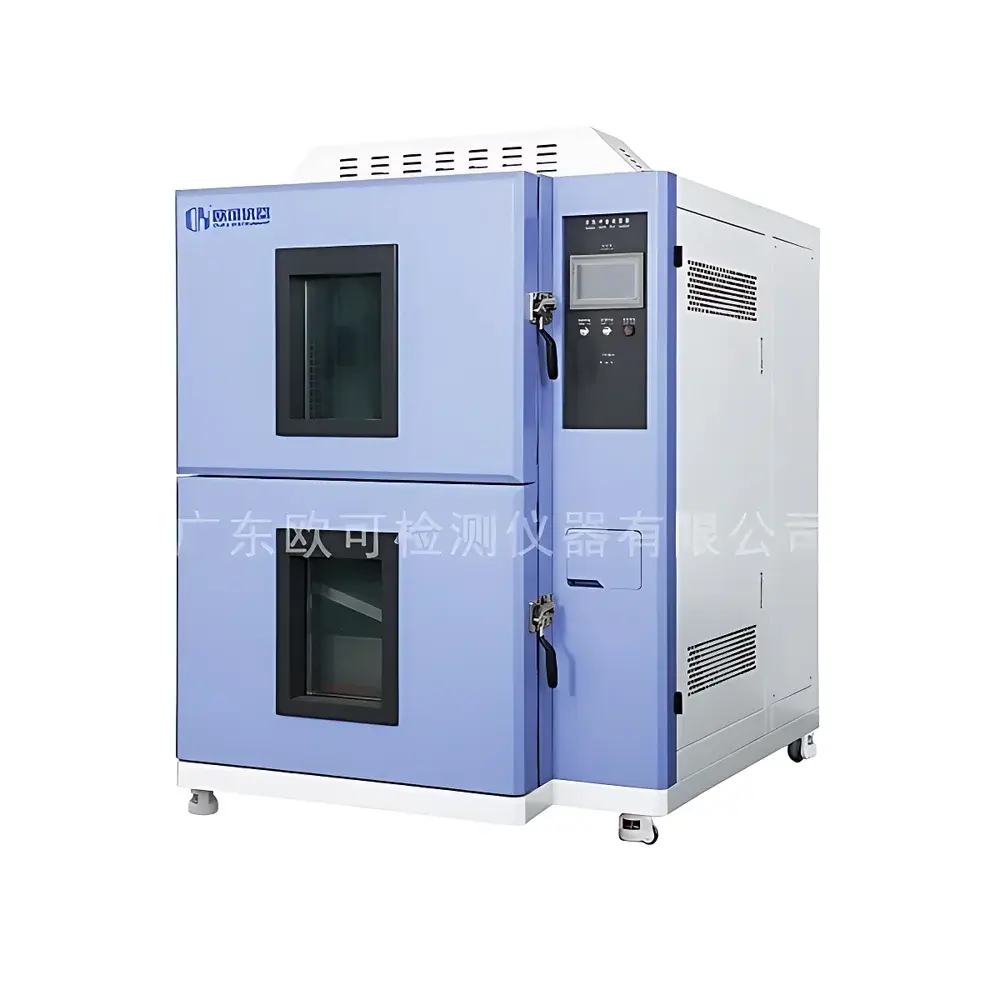
Custom-Built Thermal Shock Test Chamber – Industrial-Grade Rapid Temperature Cycling Environmental Chamber
| Brand | OEM / Custom Manufacturer |
|---|---|
| Origin | Imported (EU/US/Japan Sourced Components) |
| Supplier Type | Authorized Distributor |
| Power Supply | Customizable per client specification |
| Internal Dimensions (W×H×D, mm) | 500×600×500 |
| Temperature Range | −40 °C to +150 °C / −60 °C to +150 °C / −70 °C to +150 °C |
| Temperature Fluctuation | ±0.5 °C |
| Temperature Uniformity | ±1.5 °C |
| Temperature Deviation | ≤2 °C |
| Ramp Rate | 3–25 °C/min (linear, programmable) |
| Load Capacity | 5–50 kg aluminum mass |
| Control System | PID-based Balanced Temperature & Humidity Control (BTHC) |
| Refrigeration | Dual-stage mechanical cascade system with R404A/R23 refrigerants |
| Construction | Mirror-finish SUS304 stainless steel interior, insulated with high-density polyurethane foam + glass wool |
| Compliance | GB/T 2423.1–1989, GB/T 2423.2–1989, IEC 60068-2-1, MIL-STD-2164A, GJB 1032–1990 |
Overview
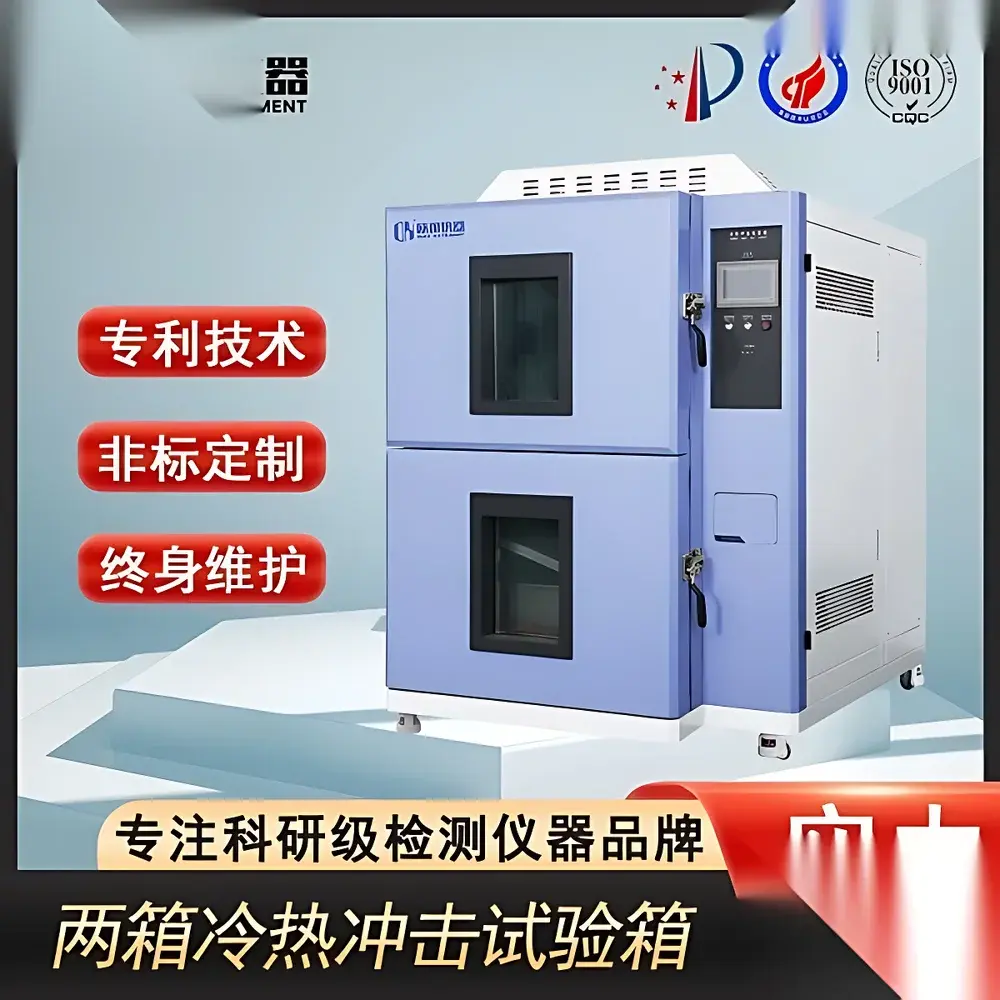
The Custom-Built Thermal Shock Test Chamber is an industrial-grade environmental test system engineered for accelerated reliability validation of electronic components, aerospace subsystems, automotive modules, and precision optical assemblies under extreme thermal cycling stress. Operating on the principle of rapid, controlled transitions between independently maintained low-temperature and high-temperature zones—typically via dual-chamber or single-chamber lift-and-transfer mechanisms—the system subjects test specimens to abrupt temperature differentials exceeding 200 °C within seconds. This replicates real-world thermal shock events encountered during operational deployment, transportation, or storage in harsh climates. Designed to meet stringent requirements for temperature stability, repeatability, and traceable calibration, the chamber integrates a balanced temperature control architecture (BTC/BTHC) that dynamically compensates for thermal load variations using proportional-integral-derivative (PID) algorithms and solid-state relays (SSR). Its core function is not merely temperature exposure but the quantification of material integrity degradation, solder joint fatigue, seal failure, or interfacial delamination induced by repeated thermal expansion mismatch.
Key Features
- Programmable linear ramp rates from 3 °C/min up to 25 °C/min, verified per IEC 60068-3-11 methodology using calibrated PT100 sensors mounted at multiple spatial locations.
- Dual-stage cascade refrigeration system utilizing environmentally compliant R404A (low-temp stage) and R23 (ultra-low-temp stage), sourced from certified compressors (e.g., Tecumseh or Copeland) with integrated oil management and automatic capacity modulation via capillary tube networks.
- High-efficiency forced-air circulation with multi-blade centrifugal impellers and extended-shaft motors ensures uniform airflow distribution and minimizes thermal stratification across the working volume.
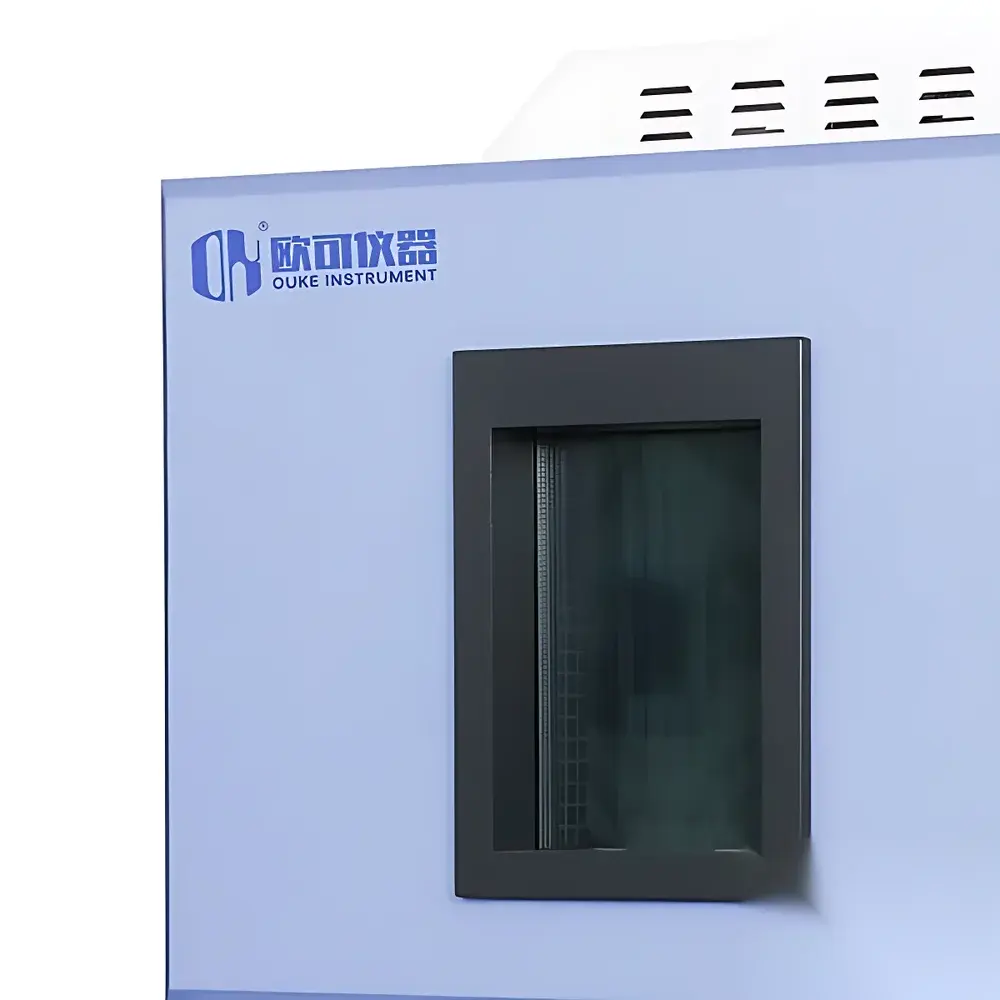
- Double-layer vacuum-insulated viewing window with embedded heating elements prevents condensation and maintains optical clarity during sub-zero operation.
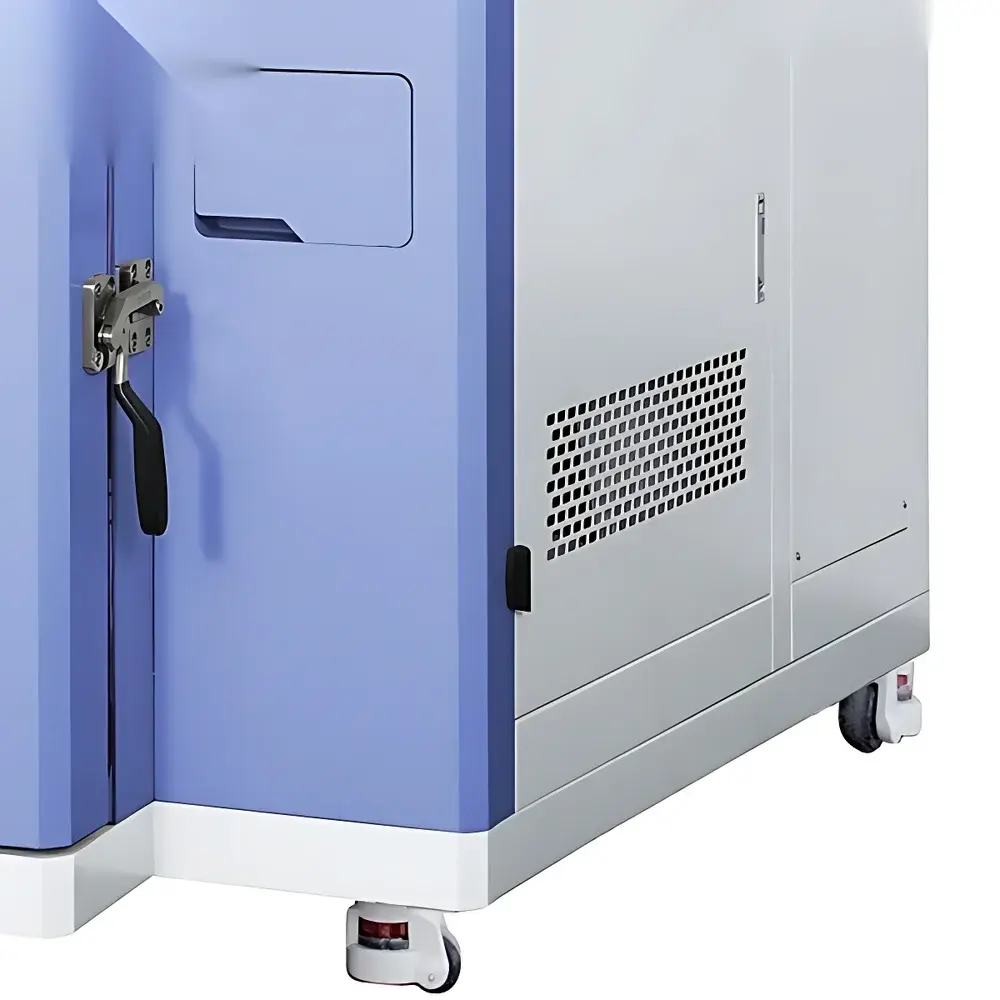
- Modular construction with mirror-polished SUS304 stainless steel interior and cold-rolled steel exterior with electrostatic powder coating enables long-term corrosion resistance and ease of cleaning under ISO 14644 cleanroom-compatible protocols.
- Integrated RS232 communication interface supports bidirectional data exchange with external SCADA systems, LIMS platforms, or validated electronic lab notebooks for audit-ready documentation.
Sample Compatibility & Compliance
The chamber accommodates standard test loads ranging from 5 kg to 50 kg aluminum reference masses—per IEC 60068-3-10—enabling consistent thermal inertia benchmarking across configurations. It supports samples with maximum dimensions up to 1000 mm × 1000 mm × 800 mm and includes standardized Φ30 mm cable ports with silicone grommets for powered device-in-test (DIT) monitoring. All models are designed and validated to comply with international environmental testing standards including GB/T 2423.1–1989 (cold), GB/T 2423.2–1989 (dry heat), IEC 60068-2-1 (cold), IEC 60068-2-2 (dry heat), MIL-STD-2164A (environmental stress screening for electronics), and GJB 1032–1990 (Chinese military ESS). Calibration certificates traceable to NIST or PTB standards are available upon request, supporting GLP/GMP-regulated qualification protocols.
Software & Data Management
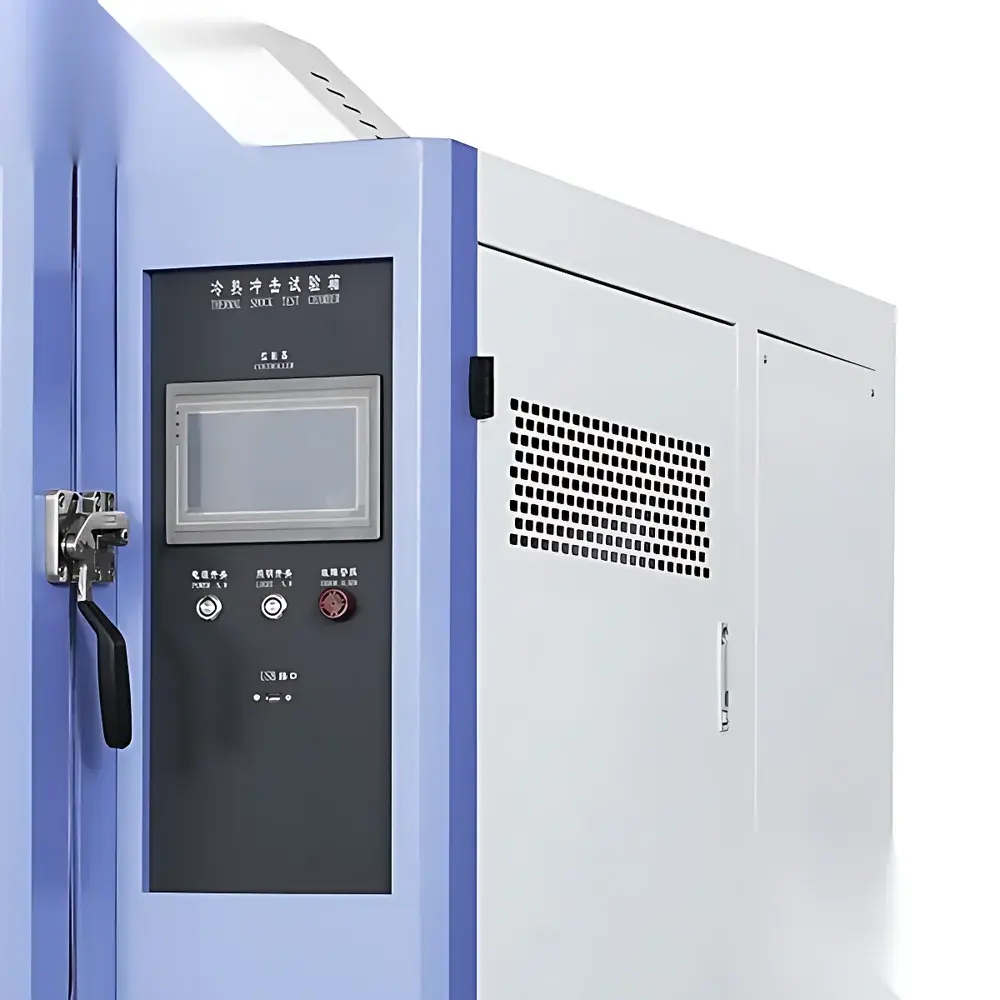
Equipped with a touch-enabled LCD controller featuring intuitive icon-based navigation, the system provides real-time display of setpoints, actual chamber temperatures, ramp profiles, elapsed cycle time, and alarm status. Temperature logging occurs at user-defined intervals (1–60 seconds) with internal memory retention for ≥30 days of continuous operation. Optional PC-based software enables full test sequence programming—including dwell times, transition durations, loop counts, and pass/fail criteria—with automated report generation in PDF/CSV formats. When configured for regulated environments, optional 21 CFR Part 11-compliant firmware adds electronic signatures, audit trails, role-based access control, and immutable data archiving—fully aligned with FDA, ISO 13485, and IATF 16949 quality management system requirements.
Applications
This thermal shock chamber serves critical roles in product development and quality assurance workflows across multiple sectors: accelerated life testing of printed circuit board assemblies (PCBAs) per IPC-9701; qualification of battery enclosures under EV thermal runaway scenarios; validation of MEMS sensor packaging integrity; verification of adhesive bond strength in optoelectronic modules; and screening of avionics hardware prior to flight certification. It is routinely deployed in third-party test laboratories accredited to ISO/IEC 17025 and used in conjunction with vibration shakers for combined environmental stress screening (ESS) per Bellcore TR-NWT-000332 and Telcordia GR-63-CORE specifications.
FAQ
What is the typical lead time for custom configuration and factory acceptance testing (FAT)?
Standard configurations ship within 8–10 weeks after order confirmation; FAT includes thermal mapping per ASTM E742, ramp rate verification, and system calibration—documented in a formal FAT report.
Can the chamber be integrated into an existing facility’s Building Management System (BMS)?
Yes—optional Modbus RTU or BACnet MS/TP gateways enable seamless integration with industrial BMS platforms for centralized monitoring and alarm escalation.
Is remote diagnostics and preventive maintenance support available?
All units include embedded Ethernet connectivity and support secure remote login for firmware updates, parameter tuning, and predictive fault analysis using compressor current profiling and refrigerant pressure trending.
Does the system meet CE, UKCA, or UL safety certifications?
Standard configurations carry CE marking per Machinery Directive 2006/42/EC and EMC Directive 2014/30/EU; UL 61010-1 listing is available as an optional factory-installed certification package.
What maintenance schedule is recommended for optimal long-term performance?
Quarterly inspection of refrigerant charge, air filter replacement, door gasket integrity check, and annual recalibration of all PT100 sensors and controller inputs—per manufacturer-recommended PM checklist included with delivery documentation.



