
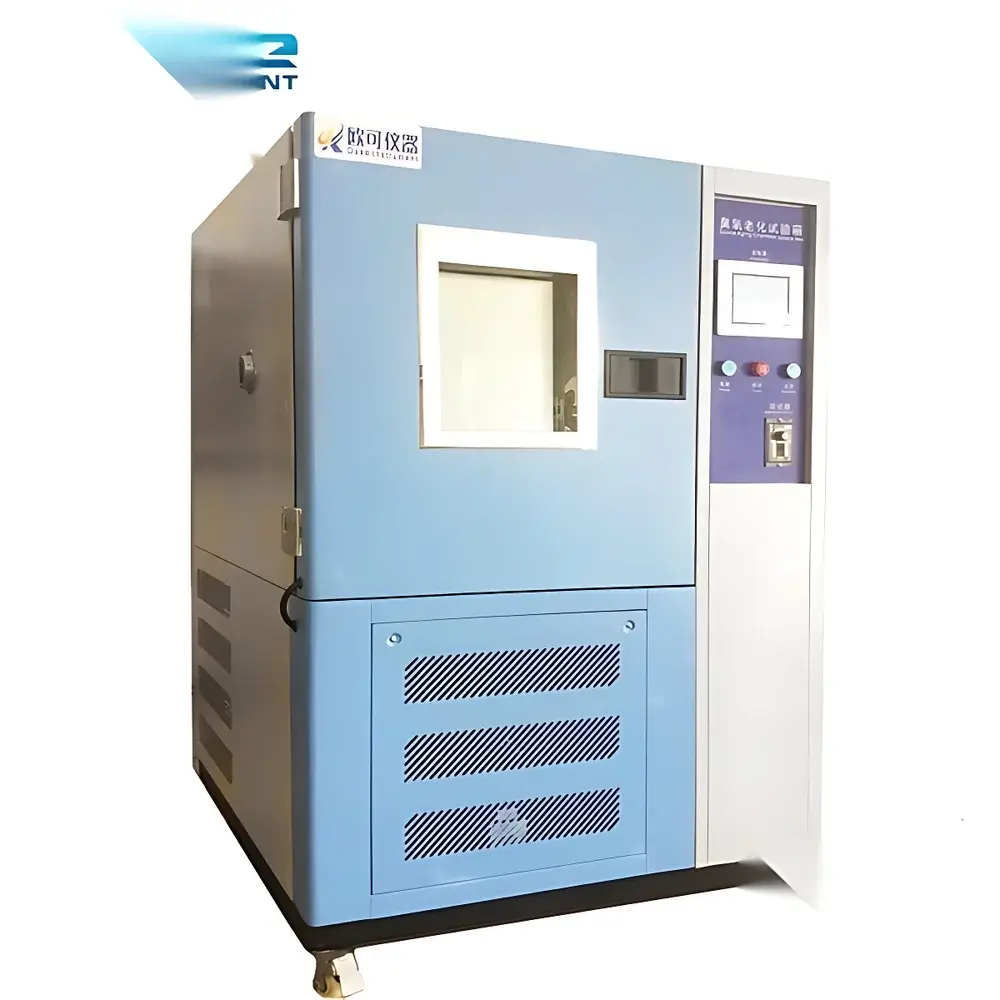
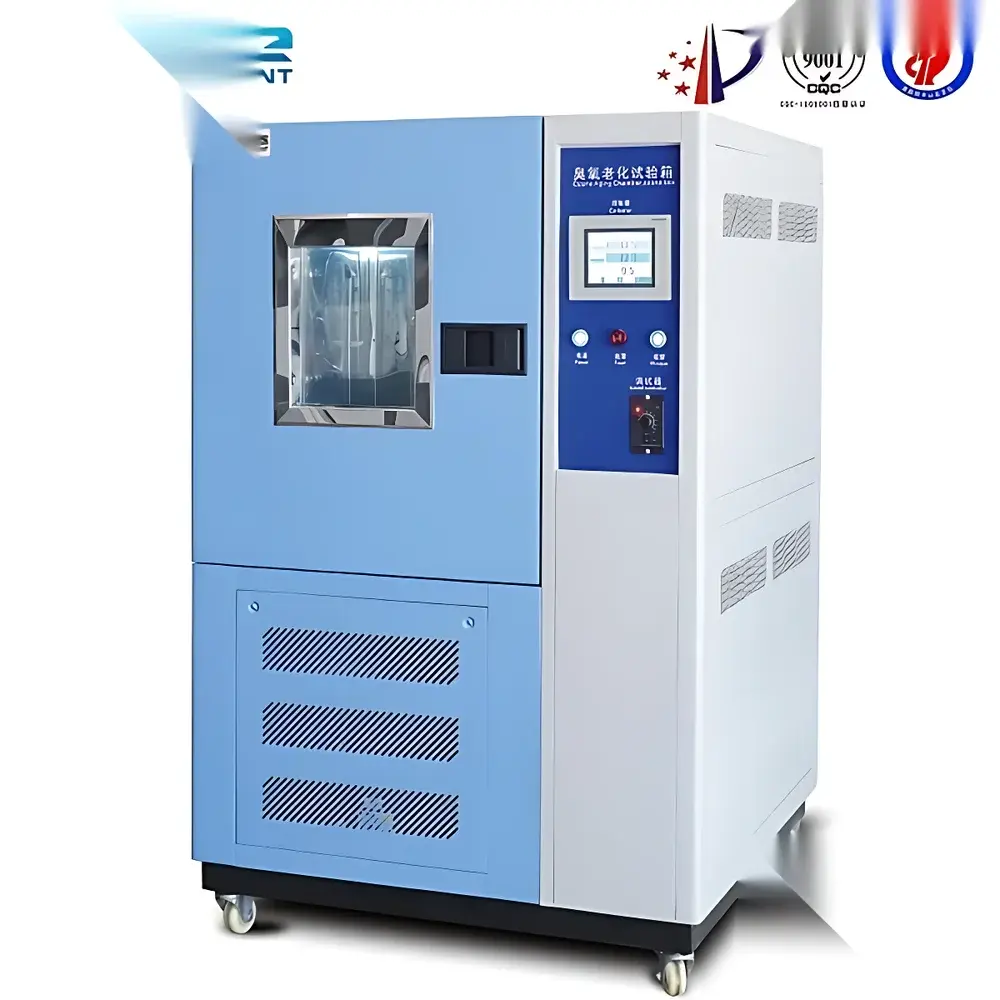
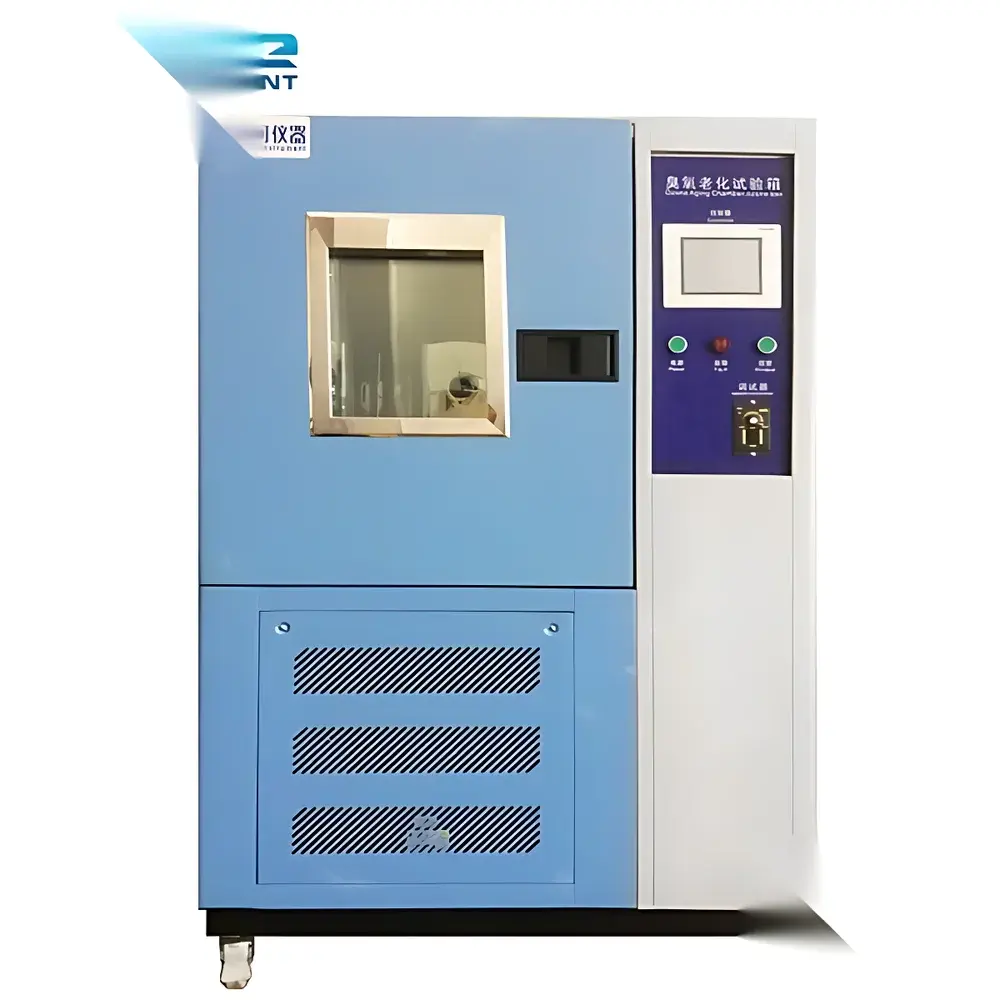
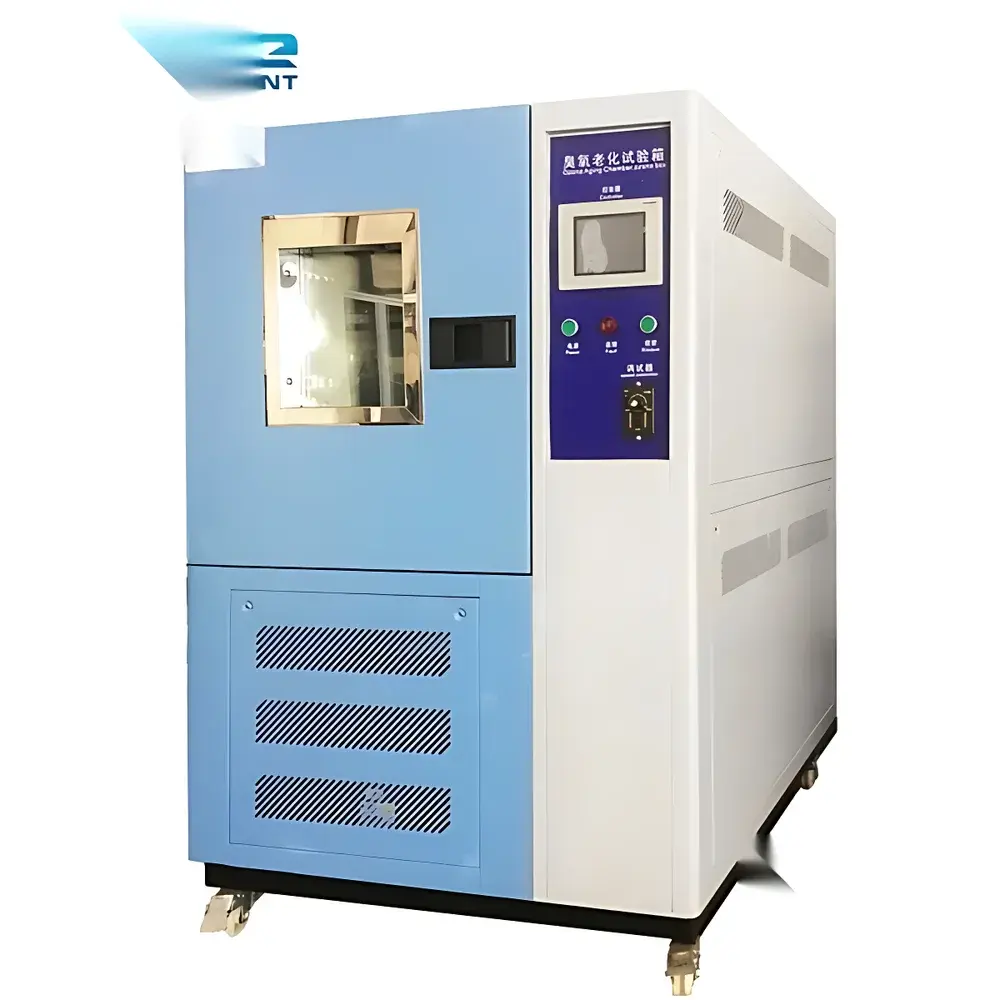
OK-CY-100 Ozone Aging Test Chamber
| Brand | OEM |
|---|---|
| Origin | Imported |
| Manufacturer Type | Authorized Distributor |
| Model | OK-CY-100 |
| Temperature Range | 25–80 °C |
| Humidity Range | 30–65 %RH |
| Ozone Concentration Range | 50–1500 pphm |
| Temperature Uniformity | ±0.5 °C |
| Sample Rack | 360° continuous rotation at 1 rpm |
| Gas Flow Velocity | 8–16 mm/s |
| Control System | 7-inch color touchscreen + Siemens PLC |
| Ozone Generation | Silent discharge tube |
| Ozone Detection | Non-dispersive UV absorption sensor (≥5 yr lifespan) |
| Compliance | GB/T 7762–2003, GB/T 2951.21–2008, GB/T 11206–2009, ISO 1431-1:2004 |
Overview
The OK-CY-100 Ozone Aging Test Chamber is an engineered environmental test system designed to evaluate the resistance of elastomeric materials—particularly vulcanized rubber compounds—to oxidative degradation induced by atmospheric ozone. Unlike general-purpose climate chambers, this instrument implements a closed-loop, fully sealed ozone generation and circulation architecture based on silent discharge technology, enabling precise, reproducible exposure under controlled thermal, hygroscopic, and gaseous conditions. Its operational principle relies on the photochemical reactivity of ozone (O₃) with unsaturated carbon–carbon double bonds in polymer chains, initiating surface cracking and microfissure propagation—a failure mode critical to automotive seals, cable jackets, conveyor belts, and aerospace sealing components. The chamber complies with internationally recognized accelerated aging protocols, allowing laboratories to replicate years of outdoor ozone exposure within days or weeks, thereby supporting material formulation optimization, quality control release testing, and regulatory documentation for ISO/TS 16949, IATF 16949, and ASTM D1149–22.
Key Features
- Sealed stainless-steel test chamber conforming to ISO 1431-1:2004 dimensional and material specifications, minimizing ozone leakage and ensuring operator safety.
- Adjustable ozone concentration range from 50 to 1500 pphm (parts per hundred million), digitally regulated via PID-controlled silent discharge ozone generator with real-time feedback.
- Non-dispersive ultraviolet (UV) ozone analyzer providing continuous, drift-free online measurement; calibrated traceability supported by built-in metrology interface per ISO/IEC 17025 requirements.
- Motor-driven 360° rotating sample rack operating at 1 rpm—engineered to follow cycloidal trajectory principles for uniform strain distribution across static and dynamic test configurations.
- Integrated environmental control: 7-inch industrial-grade touchscreen HMI paired with Siemens S7-1200 PLC for independent regulation of temperature (25–80 °C, ±0.5 °C stability), relative humidity (30–65 %RH), and gas flow velocity (8–16 mm/s).
- Dual-safety architecture: Overtemperature, overcurrent, motor thermal overload, and ozone leak detection circuits—all compliant with IEC 61000-6-2 EMC and IEC 61000-6-4 emission standards.
Sample Compatibility & Compliance
The OK-CY-100 accommodates standardized dumbbell specimens (e.g., ISO 37 Type 2, ASTM D412 C), O-rings, extruded profiles, and molded parts up to 100 × 100 × 100 cm internal chamber volume. It supports both static tensile strain (per ISO 1431-1 Annex A) and dynamic flexing modes (optional accessory). All operational parameters—including ozone setpoint, temperature ramp rate, dwell time, and humidity profile—are programmable and auditable. The system meets GLP-compliant data integrity requirements: event logs, user access levels, electronic signatures, and 21 CFR Part 11–ready audit trails are available via optional software modules. Calibration certificates for ozone sensor and temperature/humidity probes are provided with NIST-traceable documentation upon delivery.
Software & Data Management
The embedded control firmware records all process variables at 1-second intervals, storing time-stamped datasets locally on industrial SD card and exporting via RS232 or 4–20 mA analog output. Optional PC-based software enables remote monitoring, multi-chamber synchronization, statistical process control (SPC) charting, and automated report generation in PDF/CSV formats. Data export conforms to ASTM E2500–21 guidelines for analytical instrument qualification, supporting IQ/OQ/PQ validation packages required for pharmaceutical, medical device, and Tier-1 automotive suppliers.
Applications
- Evaluation of antioxidant and antiozonant additive efficacy in synthetic rubbers (e.g., SBR, BR, EPDM, CR).
- Accelerated life-cycle assessment of rubber-to-metal bonded assemblies in brake hoses and engine mounts.
- Comparative screening of halogenated vs. non-halogenated flame-retardant cable compounds under ozone stress.
- Supporting ASTM D1149, ISO 1431-1, and GB/T 7762 test method execution for QC/QA release testing.
- Root cause analysis of field failures attributed to ozone-induced surface embrittlement.
FAQ
What ozone concentration accuracy does the OK-CY-100 achieve across its full range?
The non-dispersive UV sensor maintains ±5 pphm absolute accuracy from 50 to 500 pphm, and ±1 % of reading above 500 pphm, verified annually per ISO 17025-accredited calibration protocol.
Can the chamber operate continuously for extended validation cycles?
Yes—rated for uninterrupted operation up to 1000 hours, with redundant thermal fusing, ozone catalyst scrubber maintenance alerts, and automatic shutdown on sensor timeout.
Is third-party certification available for compliance with FDA or EU MDR requirements?
Upon request, factory-issued IQ/OQ documentation and witnessed performance verification reports can be supplied, aligned with ISO 13485 and MDR Annex XIV criteria.
How is ozone destruct handled after testing?
Integrated catalytic ozone destruct unit converts residual O₃ to ambient O₂ prior to exhaust, eliminating need for external scrubbers and meeting OSHA PEL (0.1 ppm) and EU Directive 2004/108/EC limits.
Does the system support custom test profiles beyond standard methods?
Yes—the Siemens PLC platform accepts user-defined multi-step programs with conditional logic, including ramp-hold cycles, humidity-ozone interaction sequences, and synchronized mechanical actuation triggers.



