CYKY CY-MSZ180-I-DC-Q Desktop Single-Target DC Magnetron Sputtering System
| Brand | CYKY |
|---|---|
| Origin | Henan, China |
| Manufacturer Type | Direct Manufacturer |
| Equipment Type | DC Magnetron Sputtering Coater |
| Application Field | Microelectronics |
| Substrate Diameter | 100 mm |
| Maximum Substrate Temperature | 500 °C |
| Base Vacuum | 1.0 × 10⁻⁴ Pa |
| Chamber Material | High-Purity Fused Quartz |
| Chamber Dimensions | Ø180 mm × 200 mm |
| Observation Window | Full-360° Transparent Quartz Viewport |
| Target Size | Ø50 mm (2-inch), Thickness ≤ 3 mm |
| DC Power Supply | 300 W, Adjustable |
| Pumping Speed | Turbo Molecular Pump — 600 L/s |
| Vacuum Gauge | Composite Gauge (10⁻⁵–10⁵ Pa) |
| Sample Stage | Rotating & Heated |
| Interface | Intuitive Modular Control Panel |
| Overall Dimensions | 550 mm × 350 mm × 1200 mm |
| Total Power Consumption | 2 kW |
Overview
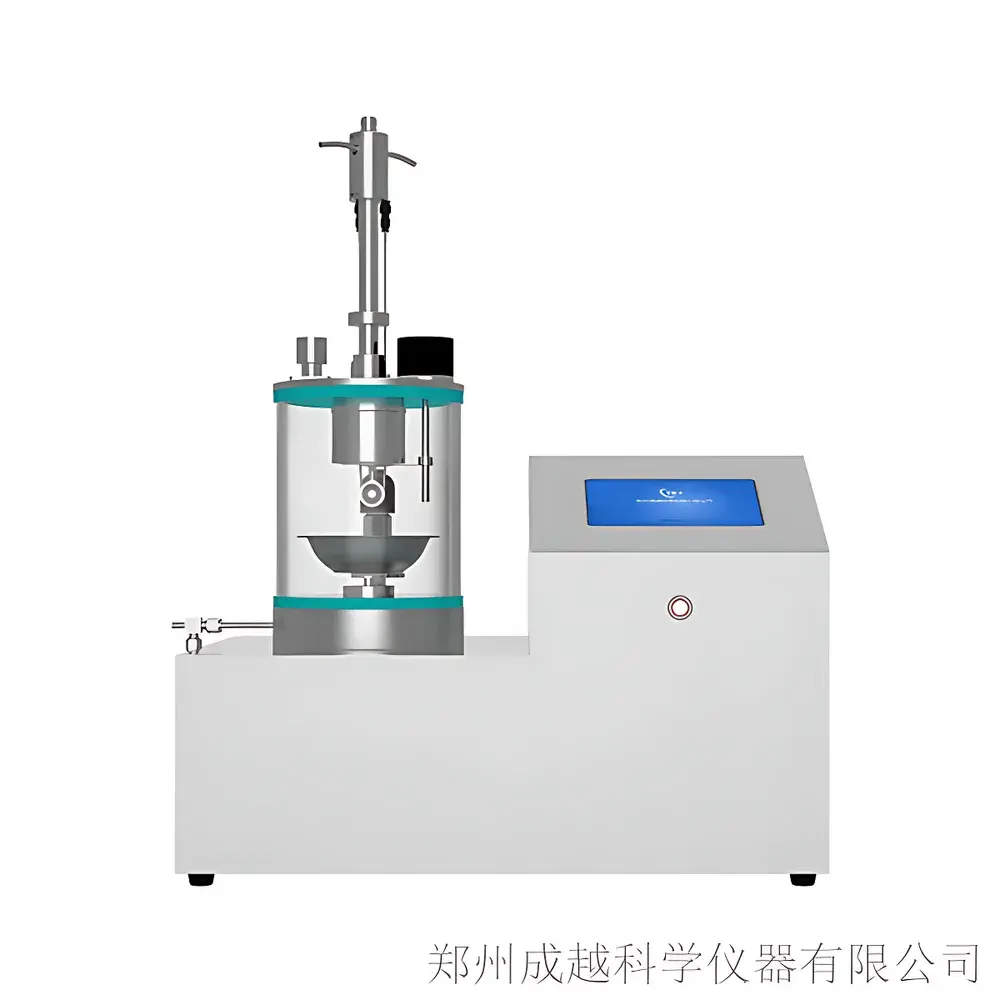
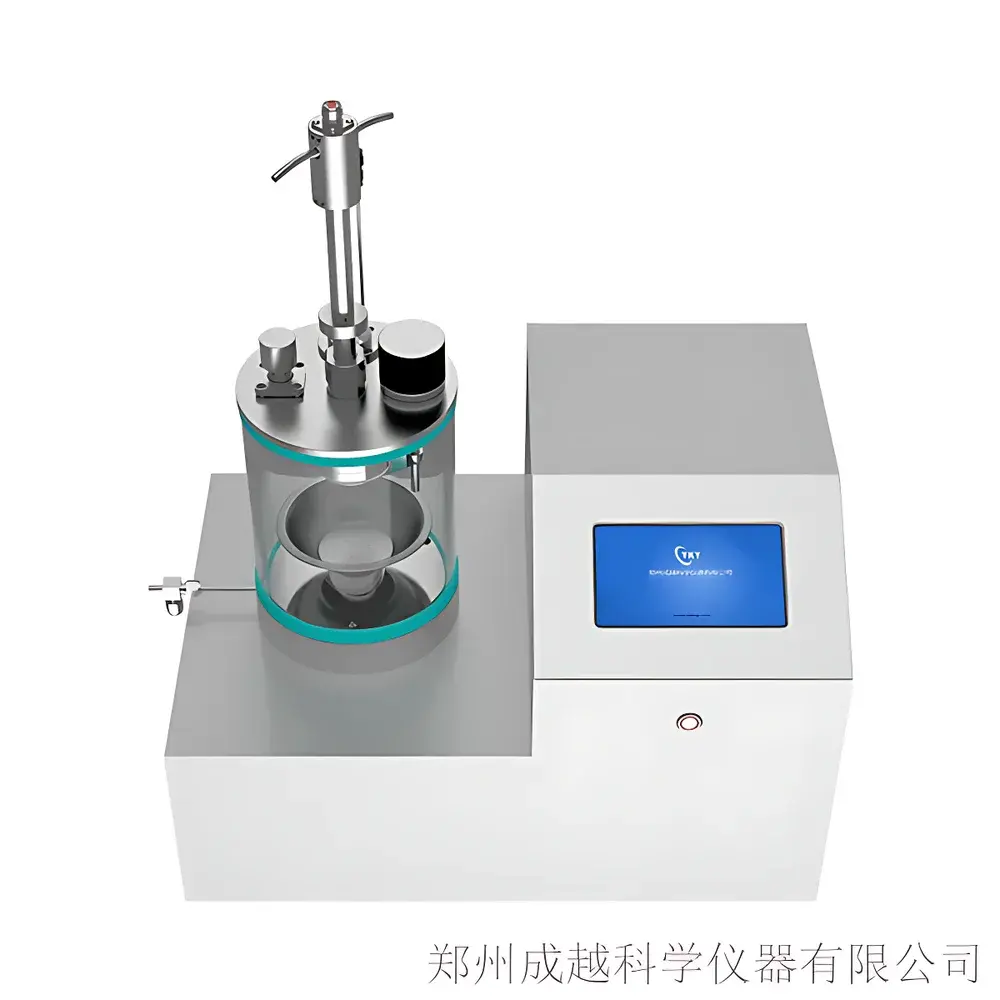
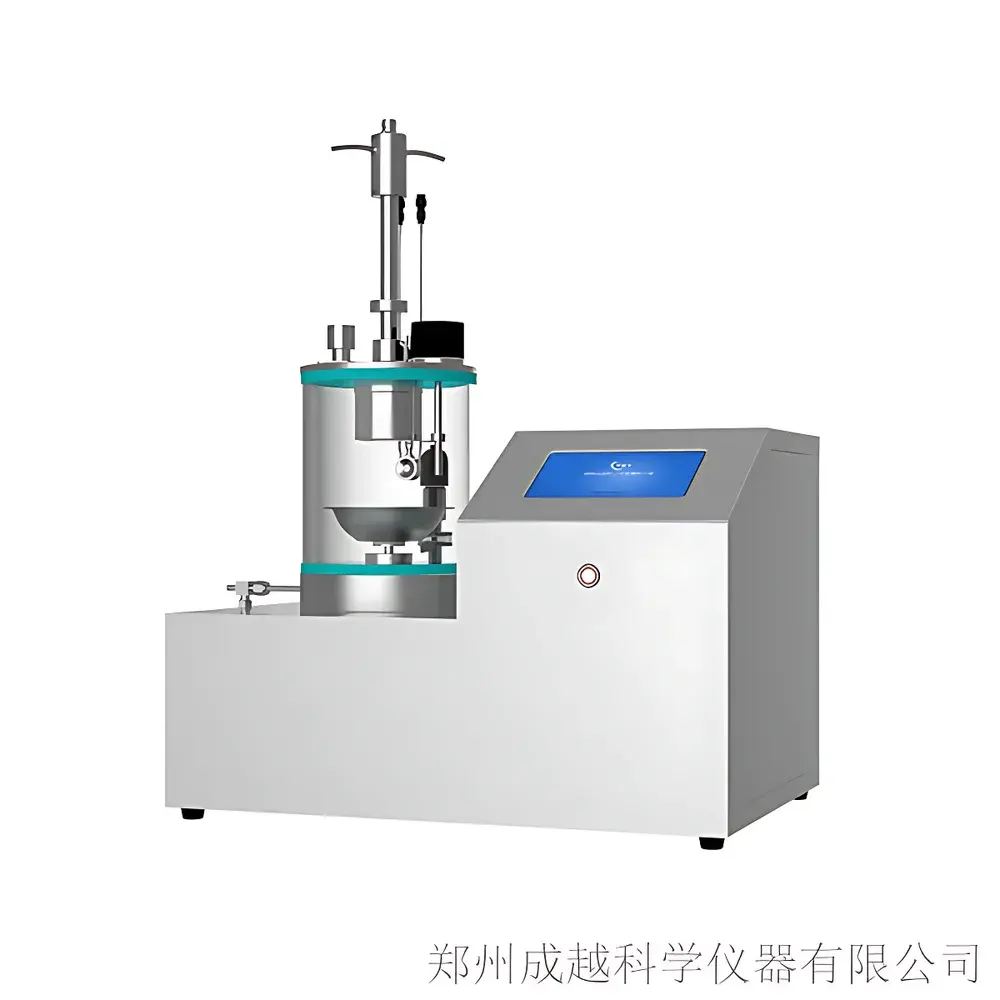
The CYKY CY-MSZ180-I-DC-Q is a compact, benchtop-scale DC magnetron sputtering system engineered for precise, reproducible thin-film deposition in academic and industrial R&D laboratories. Based on the principle of plasma-assisted physical vapor deposition (PVD), it utilizes a high-density argon plasma generated under controlled low-pressure conditions to physically eject atoms from a conductive target material via momentum transfer—enabling conformal, stoichiometric, and low-defect film growth on substrates up to 100 mm in diameter. Its fused quartz vacuum chamber (Ø180 mm × 200 mm) provides full 360° optical access, permitting real-time visual monitoring of plasma ignition, target erosion, and film nucleation without compromising vacuum integrity. Designed specifically for microelectronics prototyping, SEM sample preparation, optical coating development, and functional ceramic thin-film synthesis, the system delivers stable DC sputtering performance with minimal thermal load and high process repeatability.
Key Features
- Fused quartz vacuum chamber with integrated full-circumference transparent viewport—enables unobstructed optical observation and in situ process documentation
- Modular architecture with quick-access top-hinged lid design—facilitates rapid chamber opening, target replacement, and routine cleaning
- Heated and rotationally driven substrate stage (Ø100 mm)—enhances lateral film uniformity and promotes adatom surface mobility during growth
- Dual-stage vacuum system: Low-noise dual-stage rotary vane pump (1.1 L/s) paired with a high-speed turbo molecular pump (600 L/s)—achieves base pressure ≤1.0 × 10⁻⁴ Pa within <15 minutes
- Integrated composite vacuum gauge spanning 10⁻⁵–10⁵ Pa—supports accurate pressure monitoring across roughing, pumping, and sputtering regimes
- Dedicated 300 W DC power supply with adjustable voltage/current output—optimized for stable plasma ignition and sustained operation with metallic targets (e.g., Au, Pt, Cr, Ti, Al)
- Single 2-inch (Ø50 mm) magnetron cathode assembly—accepts standard targets up to 3 mm thickness, compatible with industry-standard KF40 flange mounting
Sample Compatibility & Compliance
The CY-MSZ180-I-DC-Q accommodates rigid planar substrates including silicon wafers (up to 4″), glass slides, alumina ceramics, and metal coupons. Its maximum substrate heating capability of 500 °C supports thermally activated processes such as interfacial diffusion control or post-deposition annealing-in-situ. The quartz chamber ensures chemical inertness against reactive sputtering environments (e.g., Ar/O₂ mixtures) and eliminates metallic outgassing contamination—critical for oxide and nitride film synthesis. While not certified to ISO 9001 or CE for production-line deployment, the system adheres to standard laboratory safety protocols per IEC 61000-6-3 (EMC) and IEC 61010-1 (electrical safety). Vacuum components comply with ISO-KF dimensional standards (KF40 main port, KF16 vent port), ensuring seamless integration with auxiliary gas lines, residual gas analyzers (RGAs), or load-lock modules.
Software & Data Management
The system operates via an embedded modular control interface with tactile buttons and LED status indicators—designed for intuitive manual operation without external PC dependency. All critical parameters—including chamber pressure, DC power output, stage temperature, and pumping time—are logged locally with timestamping and stored in non-volatile memory. Optional RS-232 or USB-to-serial connectivity enables integration with third-party LabVIEW or Python-based automation frameworks for protocol scripting and long-term data archiving. Though the base configuration does not include FDA 21 CFR Part 11-compliant audit trails or electronic signatures, its deterministic hardware logic and repeatable manual workflows support GLP-aligned documentation practices when paired with laboratory notebook entries and calibrated sensor records.
Applications
- Preparation of conductive coatings for SEM/TEM sample mounting and charge dissipation (e.g., Au/Pd, Cr, Pt)
- R&D-scale fabrication of resistive heater layers, transparent electrodes (ITO analogs), and seed layers for subsequent electroplating
- Deposition of hard wear-resistant films (e.g., TiN, CrN) on MEMS test structures
- Optical thin-film stacks for anti-reflection or high-reflectance coatings on laser optics substrates
- Functional ceramic thin films (e.g., ZnO, NiO, LiCoO₂) for solid-state battery and memristor prototype studies
- Controlled metal–insulator interface engineering in heterostructure device research
FAQ
What target materials are compatible with the CY-MSZ180-I-DC-Q?
Conductive metallic and semi-metallic targets (e.g., Au, Ag, Cu, Ti, Cr, Ni, Mo, W, ITO) with diameters of 50 mm and thickness ≤3 mm are fully supported. Non-conductive targets require RF sputtering capability, which is not available in this DC-only configuration.
Can the system be upgraded to support reactive sputtering (e.g., with O₂ or N₂)?
Yes—via optional mass flow controller (MFC) integration into the existing KF40 gas inlet port, enabling precise partial pressure control of reactive gases while maintaining stable DC plasma discharge.
Is the quartz chamber suitable for high-power or long-duration sputtering runs?
The high-purity fused quartz construction exhibits excellent thermal shock resistance and low outgassing rates, making it appropriate for continuous operation at ≤300 W for up to 2 hours; extended runs may require periodic cooling intervals to maintain chamber integrity.
Does the rotating stage support programmable speed control?
The stage rotates at a fixed mechanical frequency (20–20000 Hz) optimized for uniformity enhancement; variable-speed motor control is not included in the standard configuration but can be added as a custom module.
What maintenance is required for long-term vacuum performance?
Routine maintenance includes quarterly inspection of O-rings, monthly cleaning of the turbomolecular pump’s inlet filter, and annual calibration of the composite vacuum gauge using a reference capacitance manometer.