
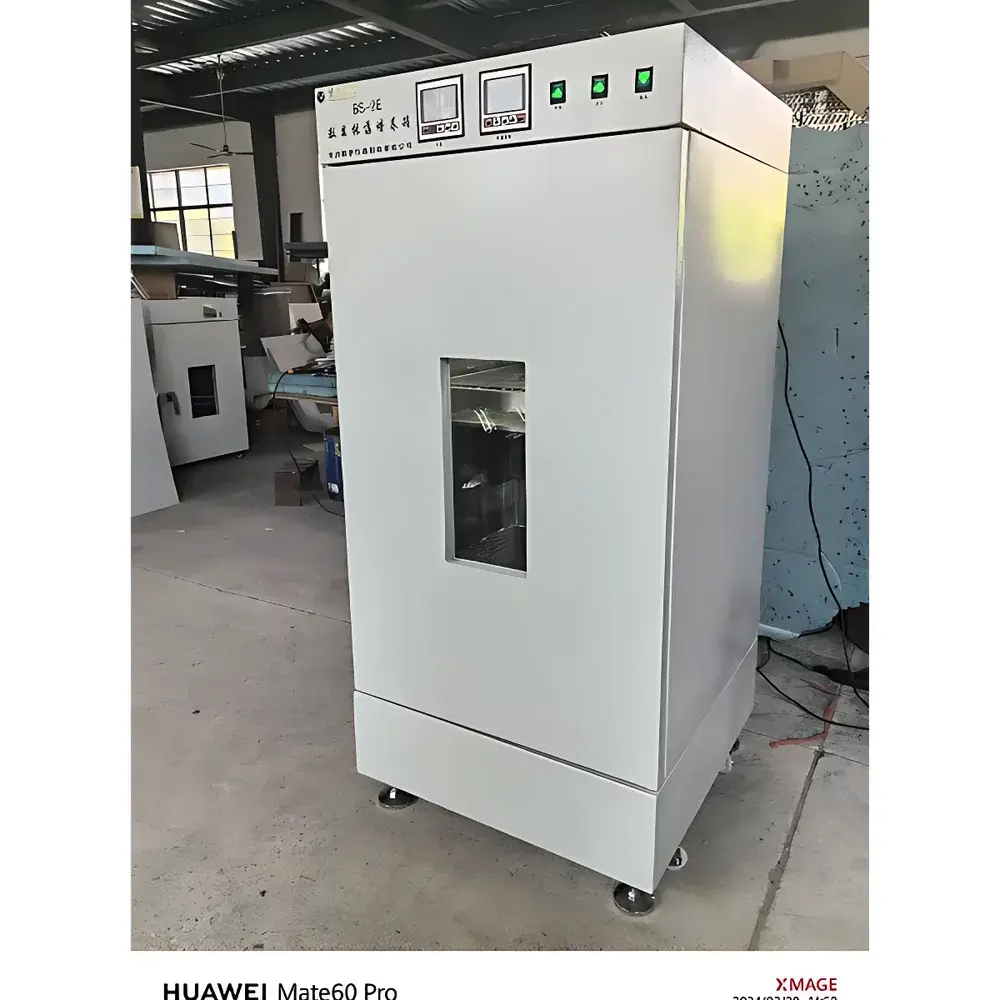
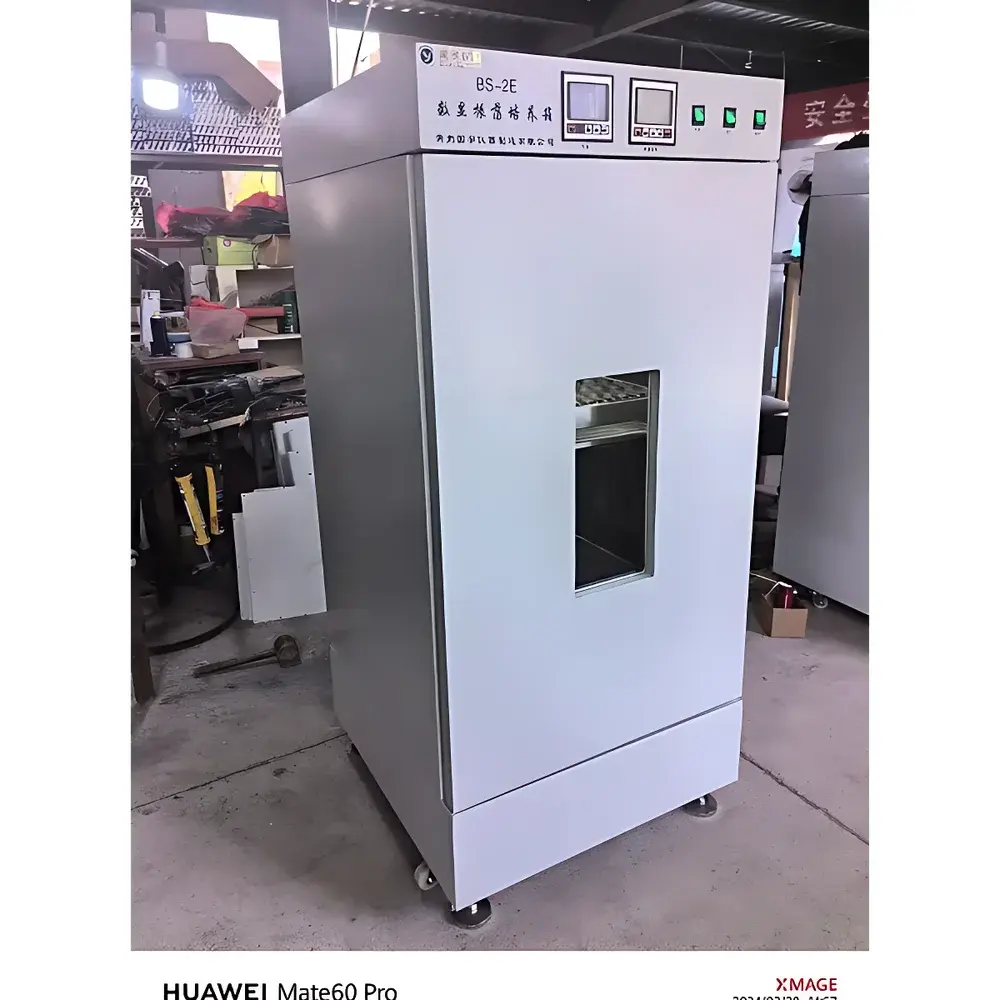
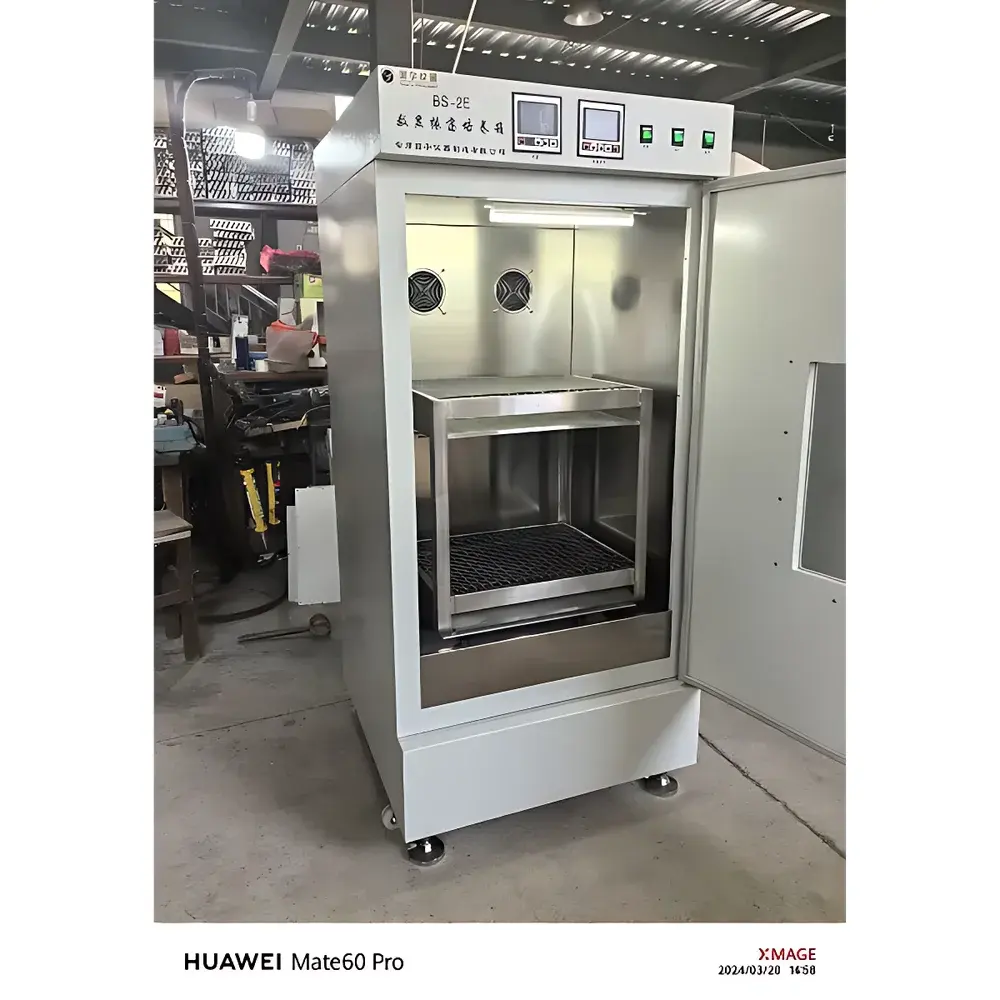
CZGY BS-2E Digital Display Incubator Shaker
| Brand | CZGY |
|---|---|
| Origin | Jiangsu, China |
| Manufacturer Type | Direct Manufacturer |
| Instrument Type | Air-Bath Constant-Temperature Orbital Shaker |
| Timer Range | Temperature Control Timer & Oscillation Timer: 0–9999 min |
| Oscillation Speed | 30–300 rpm (±1 rpm) |
| Oscillation Amplitude | 26 mm |
| Temperature Range | Ambient +5°C to 60°C (±0.5°C) |
| Shelf Configuration | Dual-layer Shaking Platform (500 × 400 mm per layer) |
| Drive System | Brushless DC Motor |
| Control Interface | LCD Digital Display |
| Chamber Material | Stainless Steel Interior |
| Housing Material | Cold-Rolled Steel with Epoxy Powder Coating |
| Heating Power | 500 W |
| Power Supply | 220 V, 50 Hz |
| Standard Fixture | Spring Clamp Assembly |
Overview
The CZGY BS-2E Digital Display Incubator Shaker is an integrated air-bath orbital shaker and temperature-controlled incubation platform engineered for reproducible cultivation, fermentation, hybridization, enzymatic assays, and cell/tissue-based biochemical investigations. Unlike water-bath systems, the BS-2E employs forced-air convection across a thermally insulated stainless steel chamber to achieve uniform temperature distribution and rapid thermal response—critical for aerobic microbial growth, suspension cell culture, and kinetic reaction studies requiring simultaneous agitation and thermal regulation. Its brushless DC motor ensures continuous operation at stable rotational speeds without carbon brush wear or electromagnetic interference, supporting unattended overnight or multi-day experiments under GLP-aligned conditions. The PID-based temperature control algorithm maintains setpoint stability within ±0.5°C across the full operating range (ambient +5°C to 60°C), while dual independent timers allow precise decoupling of heating duration from shaking duration—a functional requirement in protocols involving heat shock induction followed by post-shock oscillation.
Key Features
- Brushless DC drive system delivering consistent speed output from 30 to 300 rpm (±1 rpm accuracy) with zero maintenance over extended duty cycles
- Dual-layer orbital shaking platform (500 × 400 mm per shelf), enabling parallel processing of multiple flasks, tubes, or microplates
- High-efficiency air circulation design with optimized heater placement and insulation, minimizing thermal gradient across shelves (≤0.8°C max deviation)
- LCD digital interface with real-time display of setpoint and actual values for both temperature and speed; intuitive keypad navigation for parameter entry and recall
- Stainless steel interior chamber (304 grade) resistant to corrosion from organic solvents, acids, and repeated sterilization cycles
- Epoxy-coated cold-rolled steel housing providing mechanical robustness and chemical resistance in shared lab environments
- Spring clamp fixture standard-equipped for universal flask retention (100–2000 mL); optional clamps available for microtiter plates, test tubes, and custom vessels
Sample Compatibility & Compliance
The BS-2E accommodates common laboratory vessels including Erlenmeyer flasks (100–2000 mL), Fernbach flasks, serum bottles, centrifuge tubes, and deep-well microplates—supporting aerobic culture of bacteria (e.g., E. coli, Bacillus subtilis), yeasts (Saccharomyces cerevisiae), mammalian suspension cells (CHO, Sf9), and filamentous fungi. Its temperature and agitation parameters align with standard microbiological methods referenced in ISO 8570 (microbial growth kinetics), ASTM D5550 (aerobic biodegradation testing), and USP <1117> (environmental monitoring in pharmaceutical manufacturing). While not certified for IEC 61010-1 Class II safety or FDA 21 CFR Part 11 compliance out-of-the-box, its operational logs (via external data logging) support audit-ready documentation when integrated into validated workflows under GMP/GLP quality systems.
Software & Data Management
The BS-2E operates as a standalone instrument with embedded firmware controlling all thermal and mechanical functions. It does not include onboard data storage or network connectivity. However, analog output ports (0–5 V or 4–20 mA) are available upon request for integration with third-party SCADA systems, PLCs, or PC-based acquisition software (e.g., LabVIEW, MATLAB Data Acquisition Toolbox). Users may record operational parameters manually or via external USB data loggers synchronized with timer events. For regulated environments, timestamped manual logs—recording start/stop times, setpoints, observed deviations, and maintenance interventions—meet basic traceability requirements per ISO/IEC 17025 Clause 7.7.
Applications
- Microbial biomass production and bioprocess optimization in R&D-scale fermentations
- Suspension culture of insect and mammalian cells for recombinant protein expression
- Enzyme activity assays requiring controlled temperature and homogeneous mixing (e.g., lipase, amylase, protease kinetics)
- Environmental microbiology: BOD testing, bioremediation simulation, and soil slurry agitation
- Molecular biology workflows: plasmid amplification, phage propagation, and DNA library preparation
- Pharmaceutical stability studies where temperature-cycled agitation mimics transport or storage stress
FAQ
Is the BS-2E suitable for CO₂-sensitive cell cultures?
No—this unit lacks CO₂ regulation and humidification control; it is intended for non-CO₂-dependent applications such as bacterial growth, yeast fermentation, or biochemical assays.
Can the two shelves operate at different temperatures or speeds?
No—the BS-2E maintains uniform temperature and synchronous oscillation across both shelves; independent control is not supported.
What is the maximum load capacity per shelf?
Each 500 × 400 mm shelf supports up to 15 kg evenly distributed; total system capacity is 30 kg.
Does the instrument include validation documentation?
Factory calibration certificates for temperature and speed sensors are provided; IQ/OQ documentation templates can be supplied upon request for user-led qualification.
Is remote monitoring possible?
Not natively—but analog signal outputs enable connection to building management systems or external controllers for alarm-triggered notifications or trend logging.





