
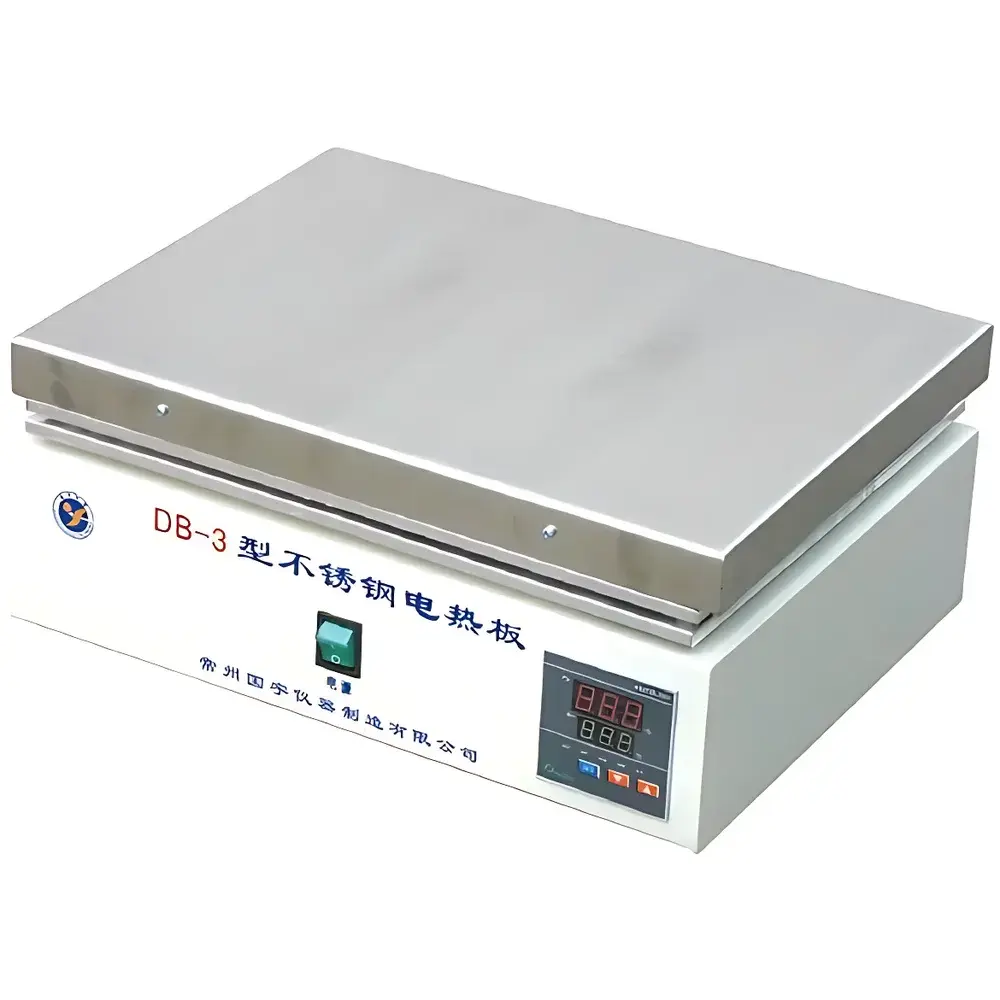
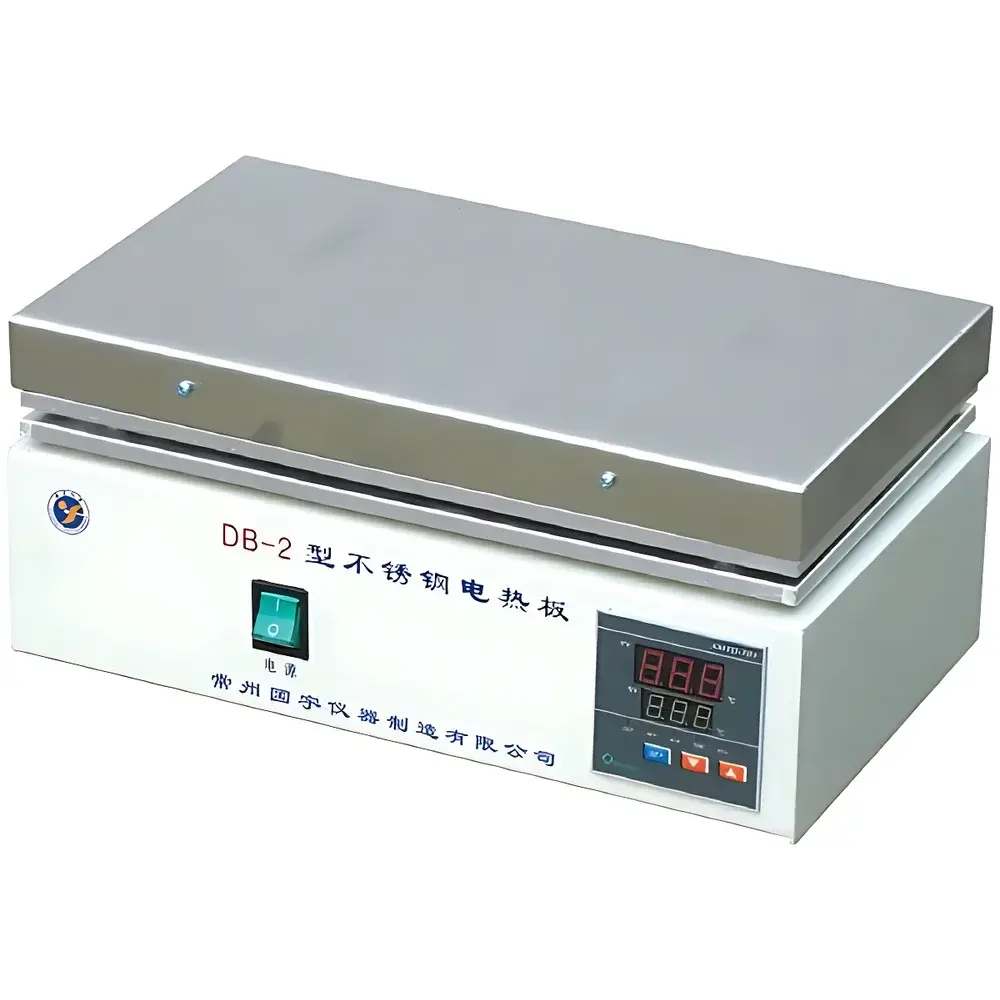
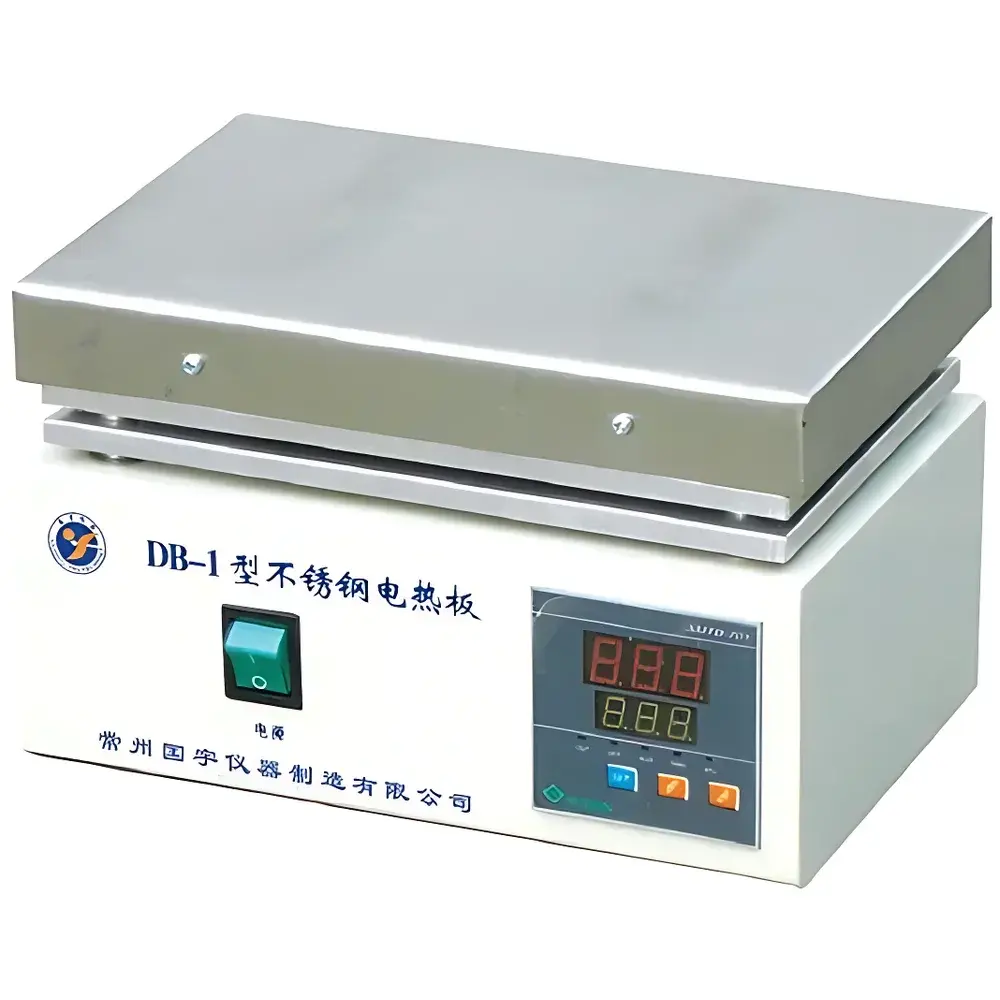
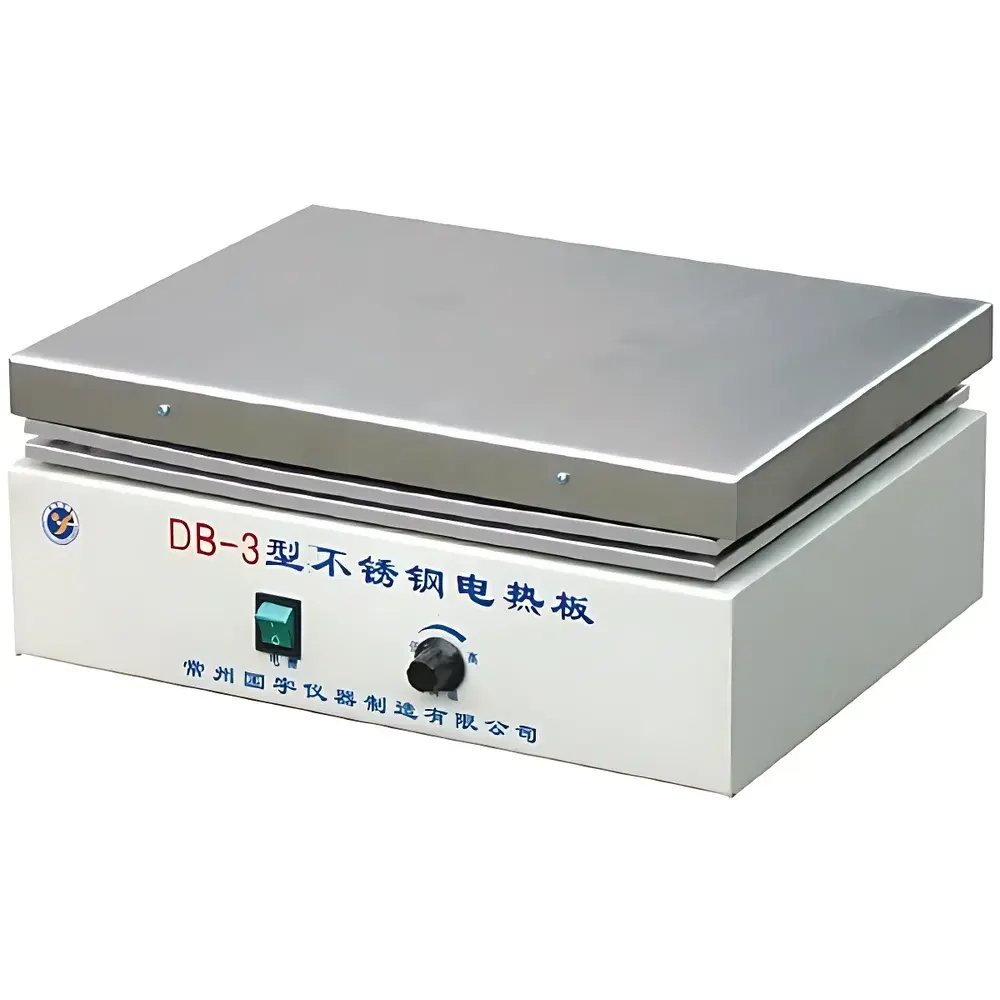
CZGY DB-3A Digital Stainless Steel Electric Heating Plate
| Brand | CZGY |
|---|---|
| Origin | Jiangsu, China |
| Manufacturer Type | Direct Manufacturer |
| Model | DB-3A |
| Working Surface Area | 400 × 300 mm |
| Heating Power | 1500 W |
| Power Supply | 220 V, 50 Hz |
| Temperature Control Range | Ambient to 300 °C |
| Temperature Control Accuracy | ±1 °C |
| Display | Digital LED |
| Panel Material | 304 Stainless Steel |
| Compliance | CE-marked design principles (IEC 61000-6-3, IEC 61000-6-2), suitable for GLP-compliant lab environments |
Overview
The CZGY DB-3A Digital Stainless Steel Electric Heating Plate is an engineered thermal platform designed for precise, repeatable, and contamination-free sample preparation in analytical, biological, environmental, and pharmaceutical laboratories. Based on resistive heating architecture with embedded Pt100-class temperature sensing and PID-based digital feedback control, the DB-3A delivers stable thermal output across its full 400 × 300 mm working surface — optimized for uniform heat distribution during drying, evaporation, digestion support, and pre-concentration steps. Its all-stainless-steel (304 grade) top plate resists corrosion from acids, alkalis, and organic solvents commonly encountered in wet chemistry workflows, including open-vessel acid digestions (e.g., HNO₃/HCl mixtures) and solvent removal prior to ICP-MS or AAS analysis. Unlike analog thermostats, the DB-3A integrates a microprocessor-controlled digital interface enabling setpoint programming, real-time temperature monitoring, and minor sensor offset calibration — features essential for method reproducibility under ISO/IEC 17025 and USP analytical instrument qualification frameworks.
Key Features
- Robust 304 stainless steel heating surface (400 × 300 mm) — chemically inert, non-porous, and easy to decontaminate between samples
- Digital LED display with dual-line readout: upper line shows real-time surface temperature; lower line displays user-defined setpoint
- PID temperature regulation delivering ±1 °C accuracy across the full 25–300 °C operating range (ambient start)
- 1500 W high-power heating element enabling rapid thermal ramping (typical 25 → 150 °C in <8 min) without localized hot spots
- Intuitive one-button SET navigation with △/▽ keys for parameter adjustment; long-press acceleration for efficient setpoint entry
- Built-in sensor offset correction function (SC parameter, adjustable from –50 to +50 °C) for traceable calibration alignment against NIST-traceable reference thermometers
- Over-temperature protection circuitry with automatic cut-off at 320 °C (hardware fail-safe independent of controller)
Sample Compatibility & Compliance
The DB-3A supports standard laboratory vessels including borosilicate glass beakers (50–1000 mL), PTFE digestion cups, quartz crucibles, and ceramic evaporating dishes. It is routinely deployed in EPA Method 3050B (acid digestion of sediments), ASTM D5177 (determination of moisture in plastics), and ISO 11465 (soil dry-mass determination). The unit conforms to electromagnetic compatibility (EMC) requirements per IEC 61000-6-3 (emission) and IEC 61000-6-2 (immunity), and meets general safety criteria aligned with IEC 61010-1 for laboratory electrical equipment. While not FDA 21 CFR Part 11 certified as a standalone device, its digital logging-capable variants (with optional RS-485 interface) support audit trails required for GMP/GLP environments when integrated into validated systems.
Software & Data Management
The DB-3A operates as a stand-alone instrument with no proprietary software dependency. All configuration and operation are performed via front-panel controls. For labs requiring electronic record retention, optional analog voltage output (0–5 V DC proportional to temperature) or Modbus RTU over RS-485 (available on DB-3A-PRO variant) enables integration with SCADA platforms, LIMS, or custom Python/LabVIEW acquisition scripts. Temperature setpoints and actual readings can be logged externally at user-defined intervals (e.g., every 10 s) with timestamping, satisfying raw data integrity requirements under ALCOA+ principles.
Applications
- Controlled evaporation of aqueous and organic extracts prior to gravimetric or instrumental analysis
- Pre-drying of filter papers, crucibles, and soil/sediment samples in environmental testing protocols
- Support heating stage for open-beaker microwave-assisted digestion workflows
- Constant-temperature conditioning of reagents and standards in QC/QA laboratories
- Thermal activation of catalysts and adsorbents in materials research
- Low-risk warming of viscous samples (e.g., polymer melts, crude oils) prior to rheological or density measurement
FAQ
What is the maximum safe operating temperature, and how is overheating prevented?
The DB-3A is rated for continuous operation up to 300 °C. A redundant bimetallic thermal cutoff activates at 320 °C, physically interrupting power to the heating element — independent of the digital controller.
Can the displayed temperature be calibrated against a reference thermometer?
Yes. Using the SC parameter in the service menu (accessed by holding SET for 3 seconds), users may apply a linear offset correction between –50 and +50 °C to align the display with a NIST-traceable probe placed directly on the surface.
Is the heating surface resistant to hydrochloric or nitric acid splashes?
The 304 stainless steel plate exhibits excellent resistance to short-term exposure to ≤30% HCl and ≤65% HNO₃ at temperatures below 100 °C. Prolonged contact with hot concentrated acids is not recommended; rinse immediately with deionized water after incidental exposure.
Does the DB-3A meet requirements for ISO/IEC 17025 accredited laboratories?
As a Class II laboratory heater, it supports accreditation when operated within documented procedures, with periodic verification using external thermometry and recorded calibration adjustments — consistent with Clause 6.4.10 (Equipment Verification) of ISO/IEC 17025:2017.
What maintenance is required to ensure long-term stability?
No scheduled maintenance is required. Wipe the surface with ethanol or mild detergent after each use. Avoid abrasive cleaners. Inspect power cord and housing annually for insulation integrity and physical damage per laboratory equipment management SOPs.



