
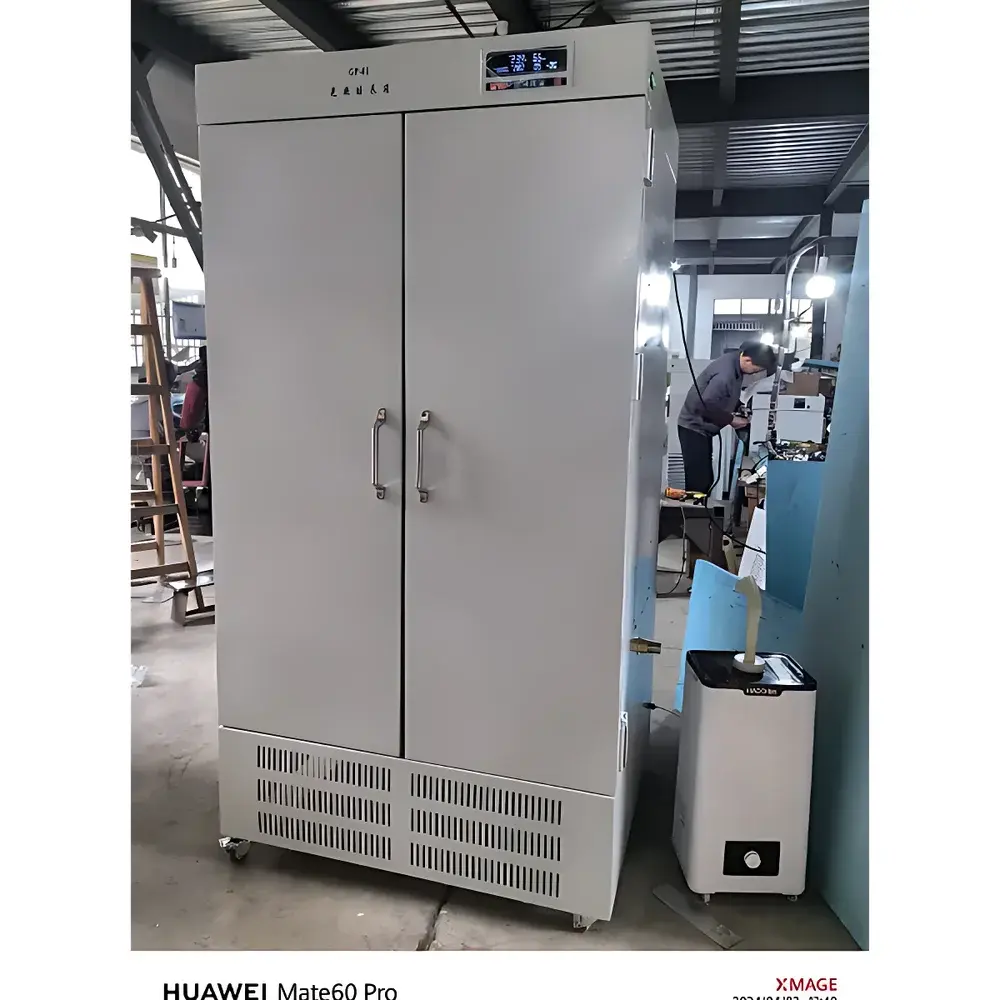
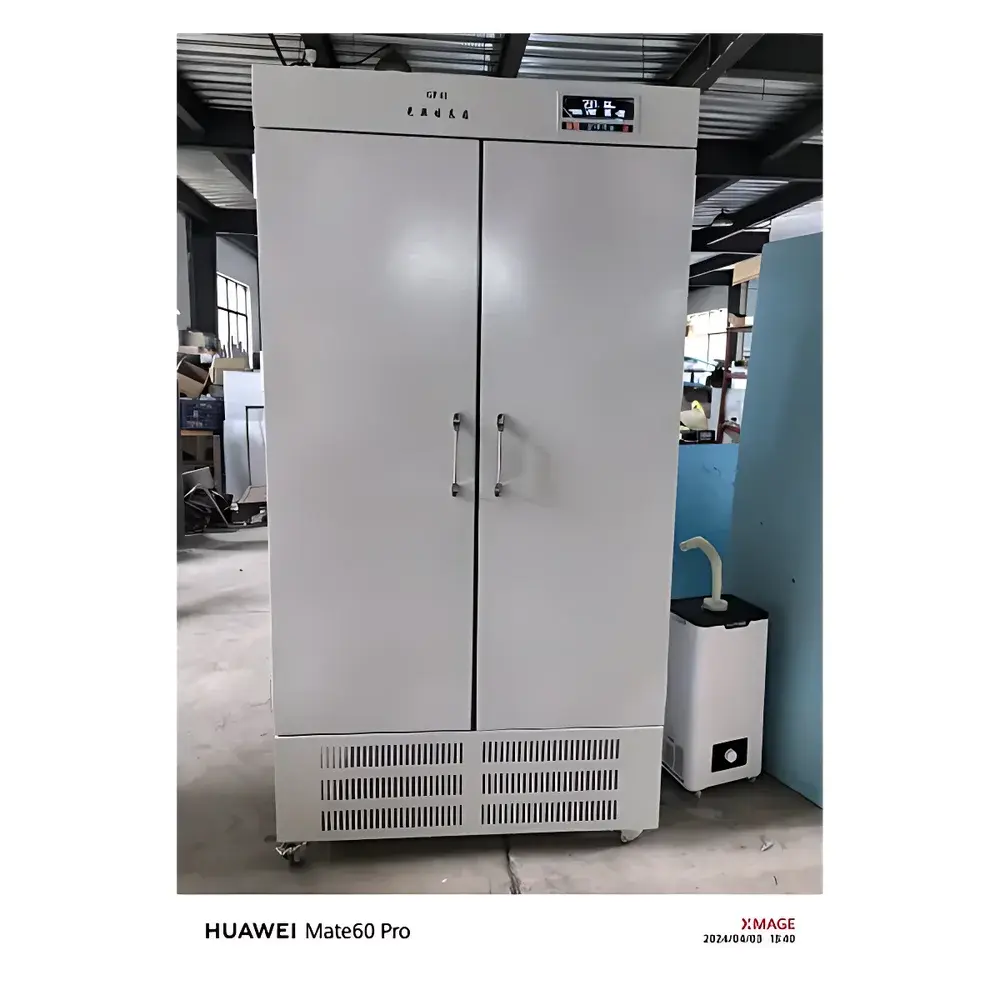
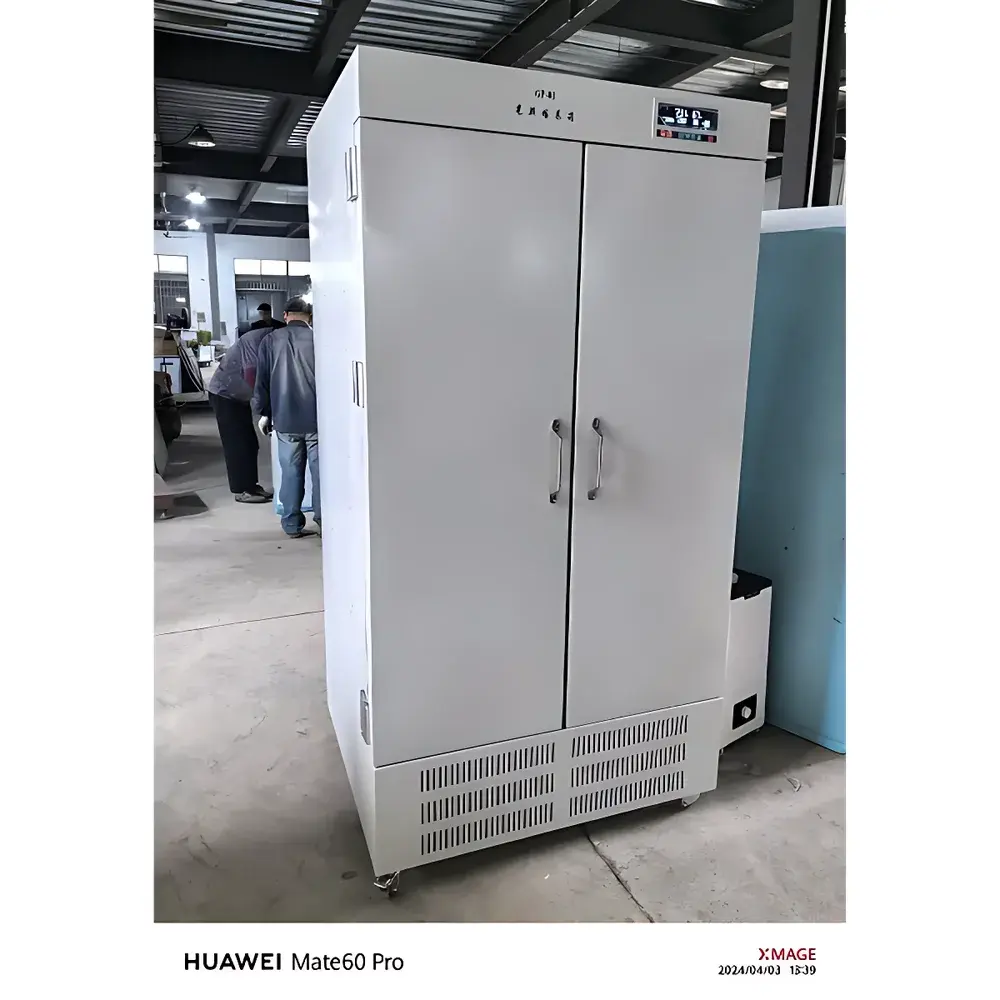
CZGY GP-01 Plant Growth Chamber
| Brand | CZGY |
|---|---|
| Origin | Jiangsu, China |
| Manufacturer Type | Direct Manufacturer |
| Region Category | Domestic (China) |
| Model | GP-01 |
| Illumination Method | Triple-side LED lighting |
| Light Source | High-efficiency white LED array |
| Spectral Range | Visible spectrum (400–700 nm, PAR-compatible) |
| Temperature Control Range | 10–50°C (with illumination), 5–50°C (without illumination) |
| Temperature Fluctuation | ±0.5°C |
| Temperature Uniformity | ±1.5°C |
| Humidity Range | 50–90% RH |
| Humidity Fluctuation | ±5% RH |
| Illuminance Range | Up to 12,000 lux |
| Light Intensity Adjustment | 6-step discrete control |
| Chamber Volume | 800 L |
| Internal Dimensions | 900 × 655 × 1365 mm (W × D × H) |
| Power Consumption | 2000 W |
| Control System | Microprocessor-based programmable controller with LCD interface |
| Programming Capacity | 30 segments per cycle |
| Timer Range | 0–9999 minutes or hours |
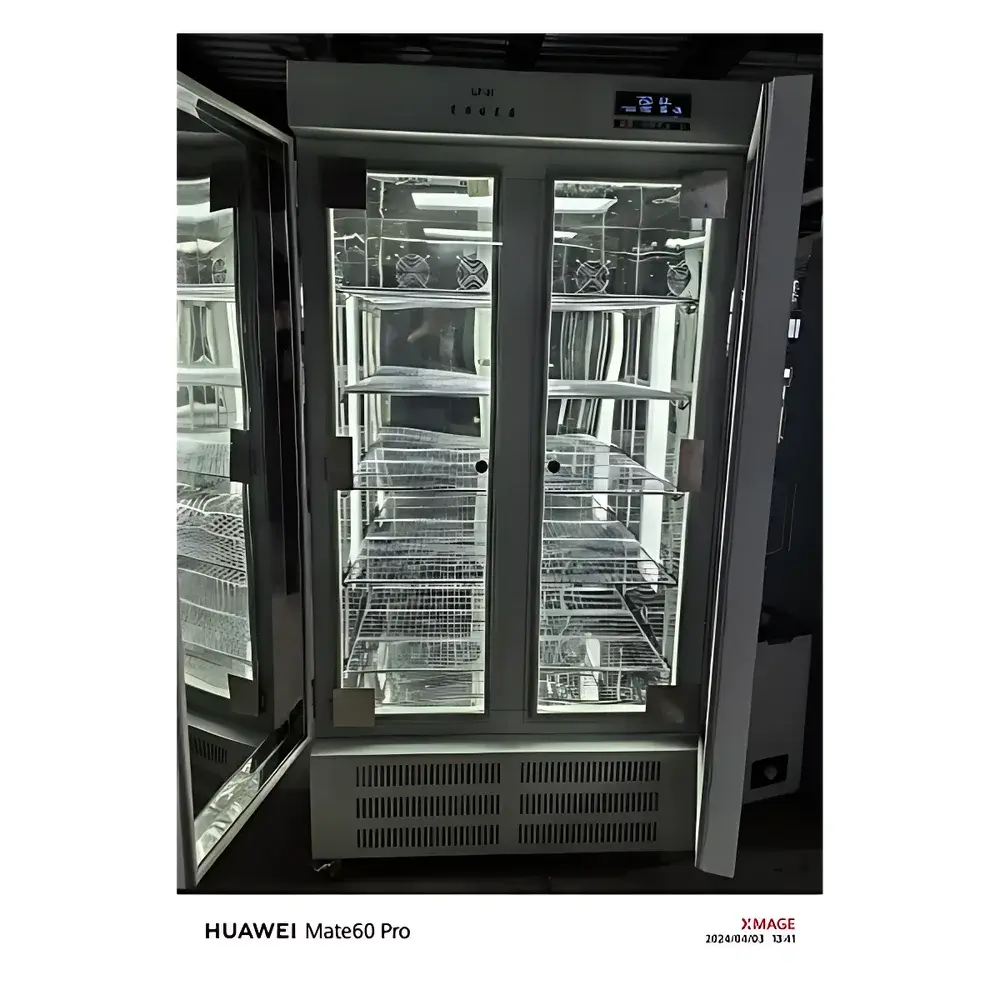
| Shelving | 5 adjustable stainless-steel shelves |
| Door Configuration | Dual-door design with full-view inner tempered glass door |
| Inner Chamber Material | AISI 304 stainless steel |
| External Casing | Cold-rolled steel with powder-coated finish |
| Air Circulation | Forced convection via axial fans |
| Humidification | External ultrasonic humidifier with auto-refill function |
Overview
The CZGY GP-01 Plant Growth Chamber is a precision-engineered environmental simulation system designed for reproducible, long-term cultivation of photobiological specimens under tightly controlled temperature, humidity, and spectral light conditions. Built on the principles of controlled-environment agriculture (CEA) and plant phenotyping research, it employs a triple-side LED illumination architecture to deliver uniform photosynthetically active radiation (PAR) across the entire 800 L working volume. Its microprocessor-based control system enables stable thermal regulation—±0.5°C fluctuation and ±1.5°C spatial uniformity—across both illuminated and non-illuminated operational modes. The chamber’s 30-segment programmable logic supports diurnal cycle emulation (e.g., day/night temperature and light transitions), making it suitable for seed germination studies, tissue culture incubation, insect rearing, microbial maintenance, and preclinical agro-biotech assays where environmental fidelity directly impacts experimental validity.
Key Features
- Triple-side high-uniformity LED illumination system delivering up to 12,000 lux at shelf level, with six discrete intensity levels calibrated for PAR compatibility (400–700 nm)
- AISI 304 stainless-steel inner chamber with seamless welds and corrosion-resistant finish—compliant with GLP cleaning protocols and ISO 14644-1 Class 8 cleanroom-compatible surface requirements
- Dual-door structure featuring full-view tempered glass inner door and insulated outer door—minimizes thermal leakage and enables real-time visual monitoring without disturbing internal conditions
- Forced-air convection via low-noise axial fans ensures rapid equilibration and uniform distribution of temperature and humidity throughout the 800 L volume
- External ultrasonic humidifier with automatic water refill function maintains 50–90% RH with ±5% RH stability; independent humidity sensor feedback loop prevents condensation on optical surfaces
- 30-stage programmable controller with LCD interface supports complex multi-parameter cycles—including ramp-hold profiles for temperature, light intensity, and timing—exportable via RS-232 for audit trail compliance
- Five height-adjustable stainless-steel shelves (load-rated to 15 kg per shelf); shelf spacing optimized for standard growth trays (e.g., 12-well plates, Petri dishes, hydroponic rafts)
Sample Compatibility & Compliance
The GP-01 accommodates a broad range of biological sample formats: agar plates, tissue culture flasks (T25–T225), seedling trays (up to 60 cm × 40 cm footprint), small animal cages (up to 30 cm × 20 cm × 25 cm), and microbial slant tubes. Its 900 × 655 × 1365 mm internal dimensions allow vertical stacking of multi-tiered growth systems while maintaining adequate airflow clearance. The chamber meets structural and operational prerequisites for ISO 17025-accredited laboratories performing environmental validation per ASTM E2913-22 (Standard Guide for Environmental Chamber Qualification) and supports documentation workflows aligned with FDA 21 CFR Part 11 for electronic records and signatures when paired with validated data logging software. All electrical components comply with IEC 61010-1 safety standards for laboratory equipment.
Software & Data Management
The embedded controller stores all setpoints, real-time sensor readings (temperature, humidity, light status), and alarm logs internally for ≥30 days. Data export is supported via RS-232 serial interface to third-party SCADA or LIMS platforms (e.g., LabWare, Thermo Fisher SampleManager). Optional USB data logger modules enable time-stamped CSV output compatible with JMP, MATLAB, or Python pandas analysis pipelines. Audit trails include operator ID (via optional keypad login), parameter change timestamps, and deviation alerts—fully traceable for GxP-regulated environments. Firmware updates are performed offline via SD card to maintain system integrity during critical experiments.
Applications
- Seed germination kinetics and stress-response screening under defined photoperiods and thermohygrometric gradients
- In vitro propagation of medicinal plants and horticultural cultivars requiring precise light quality and intensity control
- Entomological rearing of Drosophila, Tribolium, or aphid colonies under standardized developmental conditions
- Maintenance of fungal stock cultures (e.g., Aspergillus, Fusarium) and bacterial reference strains (e.g., Bacillus subtilis) in non-sterile but environmentally stable settings
- Pre-validation of pharmaceutical excipient stability under accelerated aging protocols (ICH Q1A–Q1E aligned, when combined with external humidity calibration)
- Teaching laboratory use in undergraduate botany, ecology, and biotechnology curricula for hands-on environmental physiology experiments
FAQ
What is the maximum PAR irradiance achievable at the top shelf?
Measured photosynthetic photon flux density (PPFD) reaches approximately 350 µmol·m⁻²·s⁻¹ at the uppermost shelf under full-intensity 12,000-lux setting—calibrated using NIST-traceable quantum sensors.
Can the GP-01 operate continuously for extended periods (e.g., >30 days)?
Yes. The industrial-grade hermetic compressor, redundant fan control logic, and thermal cut-off protection enable unattended 24/7 operation. Mean time between failures (MTBF) exceeds 25,000 hours per ASME BPE-2022 reliability modeling.
Is remote monitoring supported natively?
No built-in Ethernet or Wi-Fi module; however, RS-232 output allows integration with external IoT gateways (e.g., Siemens Desigo CC, Ignition SCADA) for cloud-based dashboarding and SMS alerting.
Does the chamber support CO₂ enrichment?
Not by default. CO₂ injection ports and IR-based CO₂ sensing are available as factory-installed options (model suffix “-CO2”)—requires separate gas supply and safety interlock verification.
How is calibration traceability maintained?
Each unit ships with a factory calibration certificate referencing NIST-traceable temperature/humidity standards (NIST SRM 1965, 2689). Field recalibration is supported using external probes compliant with ISO/IEC 17025-accredited labs.




