
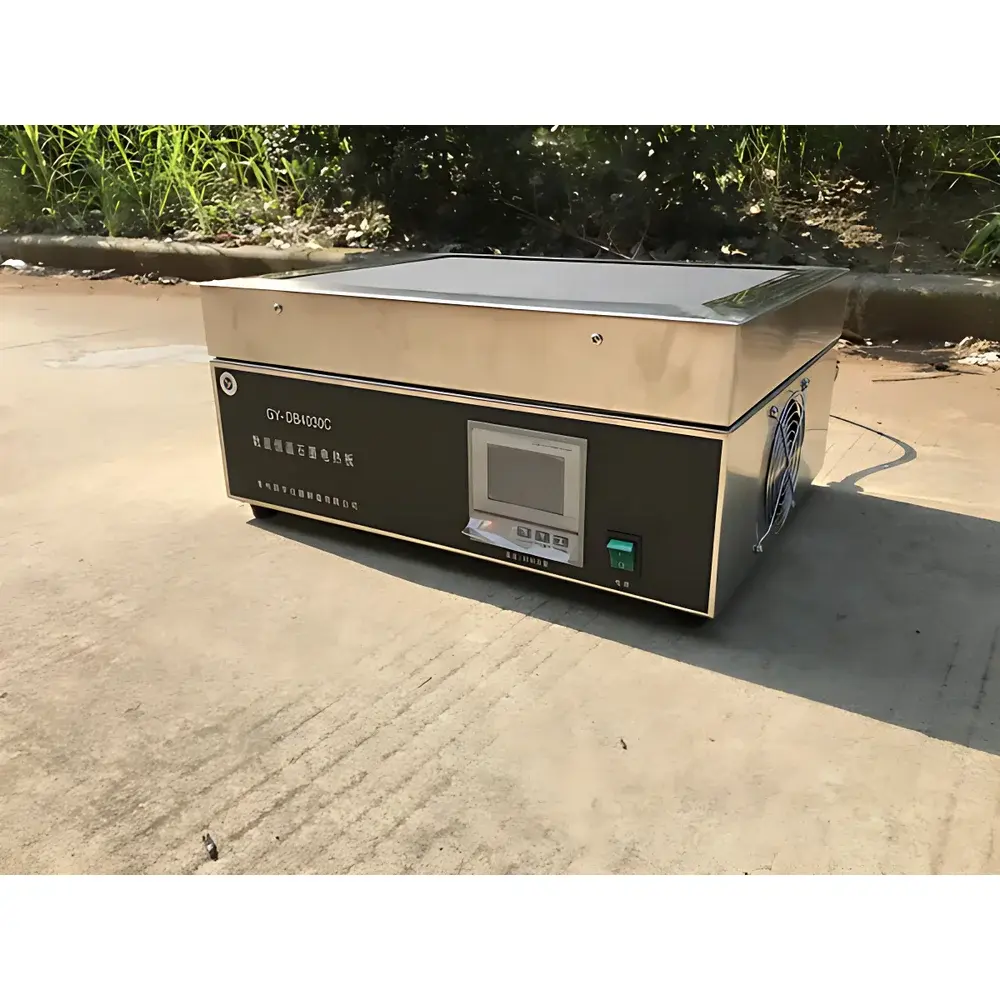
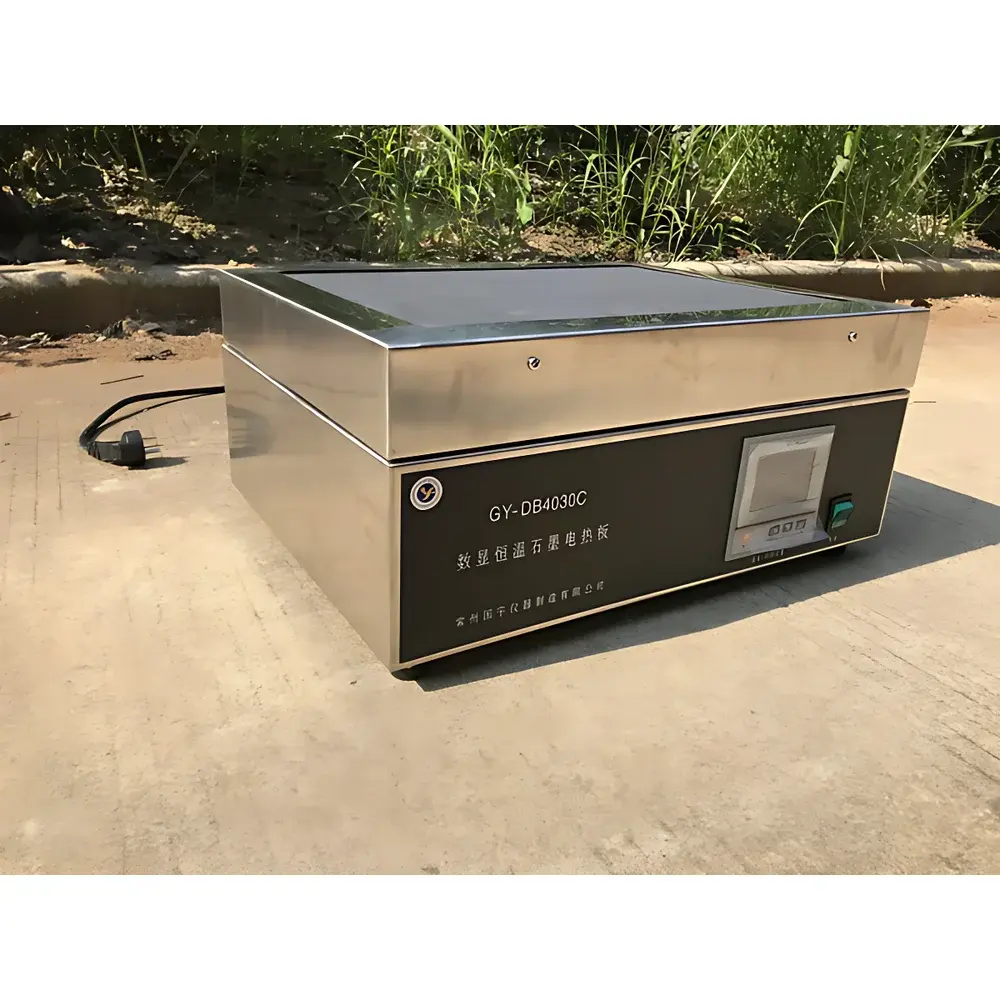
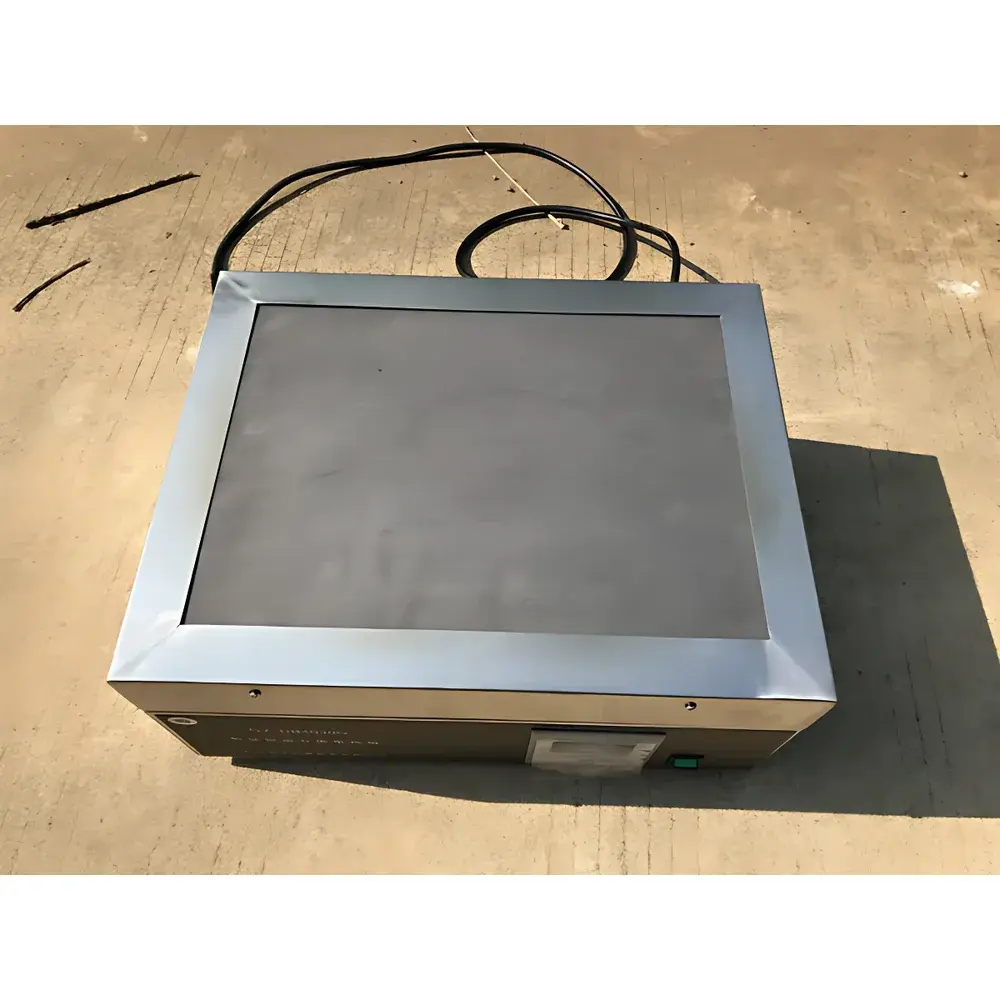
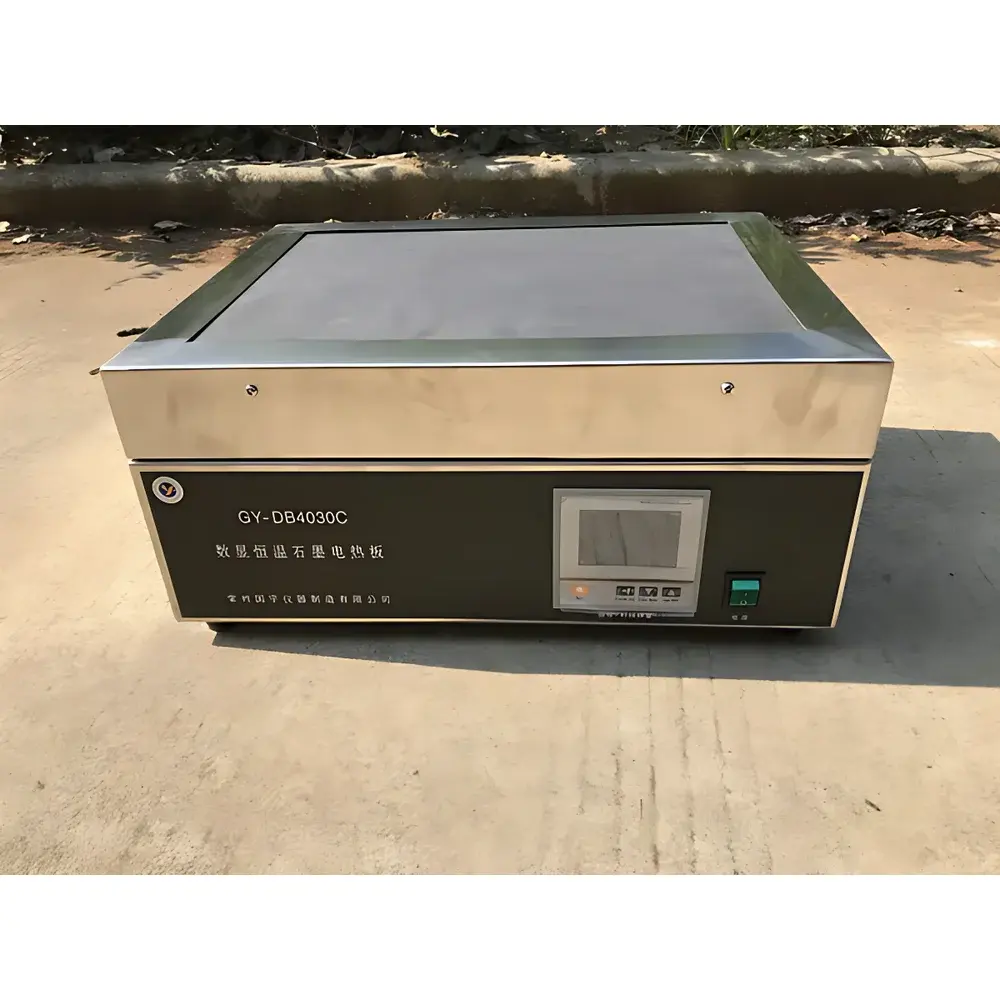
CZGY GY-DB4030C Digital Programmable Graphite Heating Block
| Brand | CZGY |
|---|---|
| Origin | Jiangsu, China |
| Manufacturer Type | Direct Manufacturer |
| Model | GY-DB4030C |
| Heating Power | 2400 W |
| Max. Operating Temperature | 450 °C |
| Temperature Uniformity | ±1 °C |
| Plate Dimensions | 460 × 360 mm |
| Heating Zone Dimensions | 400 × 300 mm |
| Display | LCD Digital Interface |
| Control Range | Ambient +10 °C to 450 °C |
| Temperature Resolution | 1 °C |
| Timer Range | 0–9999 min/h |
| Voltage/Frequency | 220 V / 50 Hz |
| Graphite Thickness | 30 mm |
| Insulation | Integrated Ceramic Fiber (Alumina-Silica) Board |
| Heating Element | Embedded Tubular Resistance Heater |
Overview
The CZGY GY-DB4030C Digital Programmable Graphite Heating Block is a precision-engineered thermal platform designed for controlled, uniform, and chemically resistant sample preparation in analytical laboratories. Unlike conventional stainless-steel hotplates, this unit employs a monolithic high-purity graphite heating surface—engineered for exceptional thermal conductivity, chemical inertness, and mechanical stability under aggressive digestion conditions. It operates on the principle of resistive heating with closed-loop PID temperature regulation, delivering stable thermal profiles across the entire 400 × 300 mm active zone. Its design supports standardized wet digestion protocols per ASTM D3682, EPA Method 3050B, ISO 11466, and GB/T 5009 series, making it suitable for trace metal analysis in environmental, agricultural, food safety, and geochemical laboratories where reproducible thermal treatment of solid and liquid matrices is critical.
Key Features
- Monolithic 30 mm-thick high-density graphite plate—resistant to concentrated HNO₃, HCl, HF, H₂SO₄, and aqua regia at elevated temperatures up to 450 °C
- PID-controlled digital temperature regulation with ±1 °C uniformity across the full heating zone and 1 °C resolution
- Embedded tubular heating elements integrated within the graphite substrate—minimizing thermal lag and maximizing energy transfer efficiency
- Ceramic fiber (alumina-silica) insulation layer beneath the plate—reducing heat loss and enhancing external surface safety
- Large-format LCD interface with dual-mode timer (0–9999 minutes or hours), real-time temperature display, and setpoint memory
- Stainless-steel housing with reinforced structural frame and passive convection cooling—ensuring long-term operational reliability and operator safety
Sample Compatibility & Compliance
The GY-DB4030C accommodates standard digestion vessels—including polytetrafluoroethylene (PTFE), perfluoroalkoxy (PFA), quartz, and borosilicate glass beakers and crucibles—up to 1000 mL capacity. Its flat, inert graphite surface eliminates hot spots and supports simultaneous processing of up to 12–16 samples depending on vessel footprint. The system complies with general laboratory safety requirements per IEC 61010-1 and meets baseline thermal stability criteria referenced in USP , ISO/IEC 17025:2017 (Clause 6.4.3), and GLP documentation workflows. While not inherently 21 CFR Part 11 compliant, its digital logging capability (via optional RS485/Modbus interface) enables integration into validated LIMS environments when paired with audit-trail-enabled data acquisition software.
Software & Data Management
The unit operates as a standalone instrument with no embedded operating system; all control logic resides in the microcontroller-based PID module. Temperature setpoints, timer values, and real-time readings are retained in non-volatile memory during power cycling. For traceable data capture, the optional communication interface supports ASCII protocol over RS485, enabling bidirectional parameter exchange with third-party SCADA or laboratory informatics platforms. Users may export time-stamped temperature logs (CSV format) via connected PC applications—supporting QA/QC record retention aligned with ISO/IEC 17025 Clause 7.7 and internal calibration SOPs.
Applications
- Acid digestion of soil, sediment, plant tissue, and biological samples prior to ICP-OES or ICP-MS analysis
- Open-vessel evaporation and concentration of aqueous extracts in environmental water testing (e.g., EPA 200.7, 200.8)
- Preparation of calibration standards and reference materials requiring precise thermal conditioning
- Controlled boiling and reflux of organic solvents in extraction workflows (e.g., Soxhlet pre-concentration)
- Thermal stabilization of reagents and buffers in QC labs performing AOAC 999.10 or ISO 5725-2 validation studies
FAQ
What is the maximum recommended continuous operating temperature for the graphite surface?
The graphite plate is rated for sustained operation at ≤450 °C; prolonged exposure above this threshold may accelerate oxidation and reduce service life.
Can the GY-DB4030C be used with hydrofluoric acid (HF)?
Yes—the high-purity graphite material exhibits resistance to HF up to 200 °C; however, use of PTFE or PFA labware is mandatory, and fume hood ventilation must comply with OSHA 1910.1200 requirements.
Is the temperature uniformity specification verified per ASTM E220?
No—the ±1 °C uniformity is determined per internal factory verification using nine-point thermocouple mapping per ISO 17025-accredited procedures; formal ASTM E220 calibration is available as an add-on service.
Does the unit include over-temperature protection?
Yes—a redundant bimetallic cut-off switch activates at 480 °C to interrupt power independently of the PID controller.
What maintenance is required to sustain accuracy over time?
Annual verification of temperature accuracy using a NIST-traceable thermometer and visual inspection of graphite surface integrity are recommended; no routine recalibration is required under normal usage conditions.



