
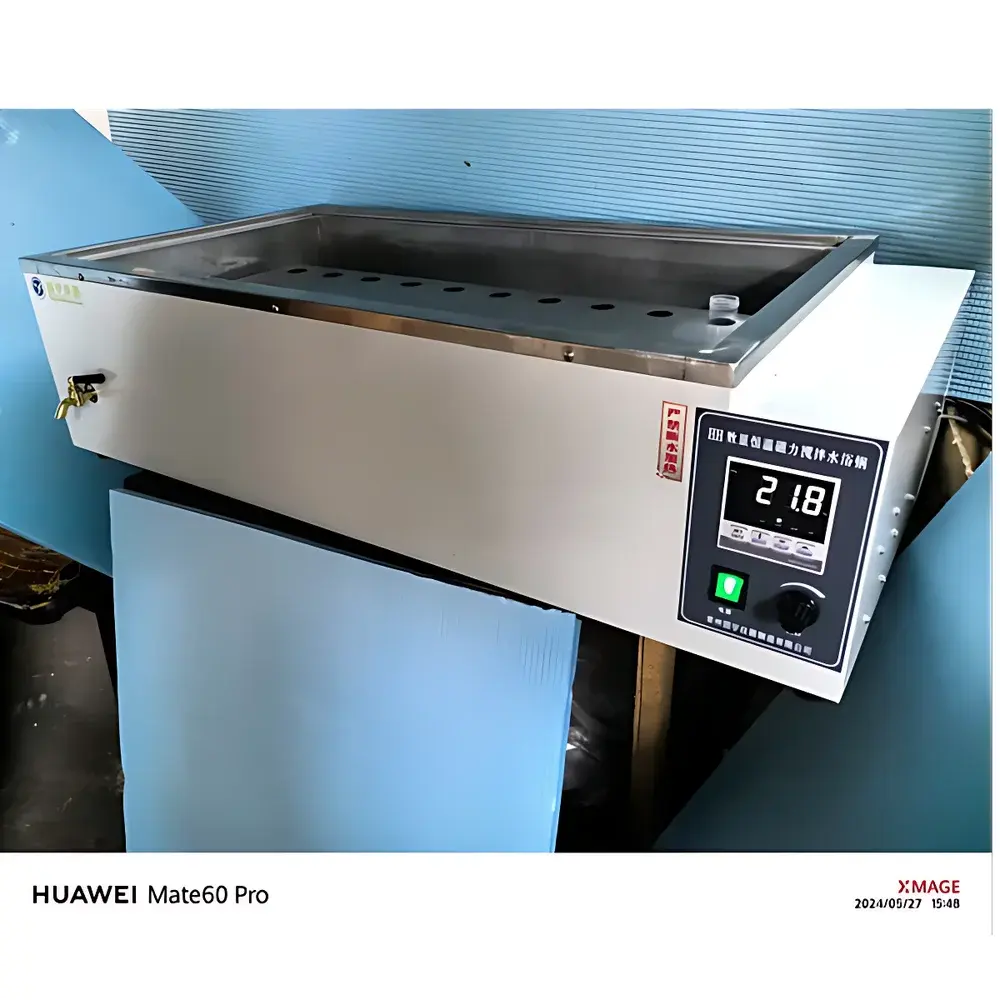
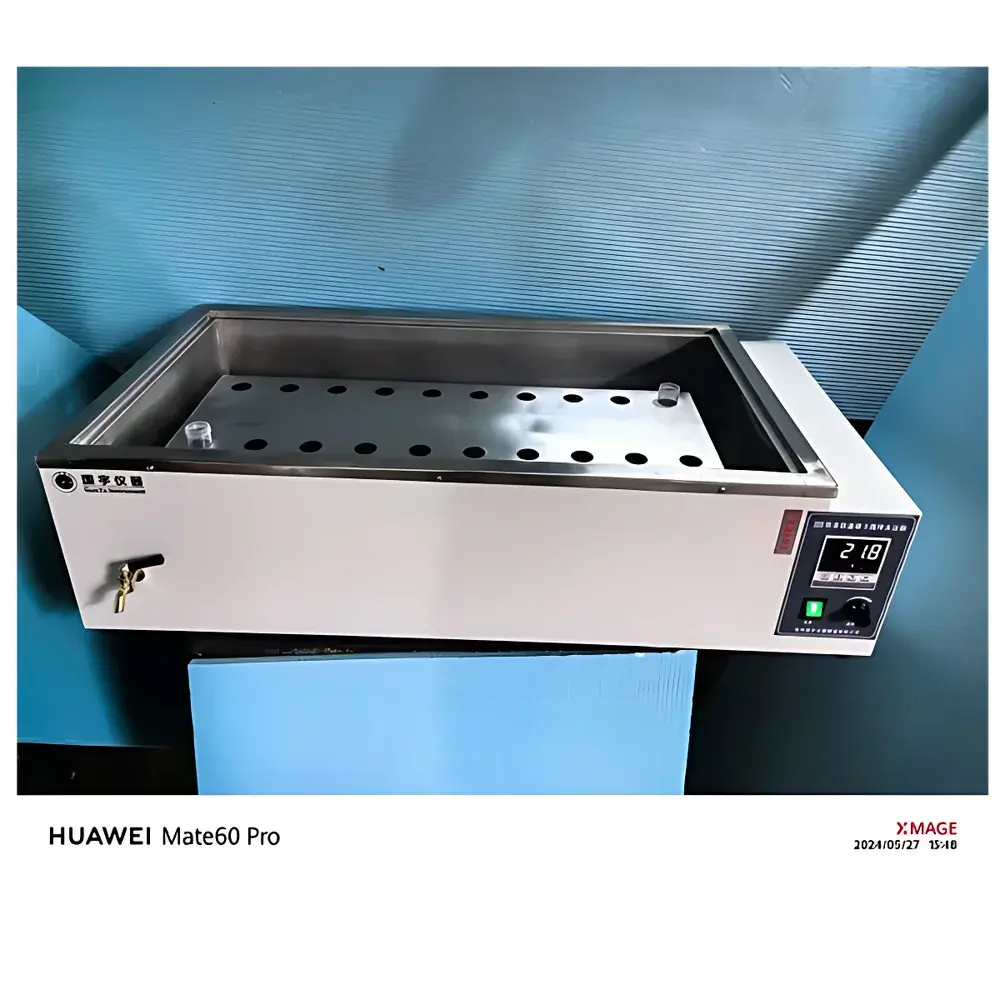
CZGY HH-20 Digital Constant-Temperature Magnetic Stirring Water Bath
| Brand | CZGY |
|---|---|
| Origin | Jiangsu, China |
| Manufacturer Type | Direct Manufacturer |
| Product Category | Domestic |
| Model | HH-20 |
| Price Range | USD 570–850 (FOB) |
| Temperature Range | Ambient +5°C to 100°C |
| Temperature Control Accuracy | ±0.5°C |
| Bath Capacity | 48 L |
| Heating Power | 2400 W |
| External Dimensions (W×D×H) | 775 mm × 415 mm × 150 mm (Stainless Steel Inner Tank) |
Overview
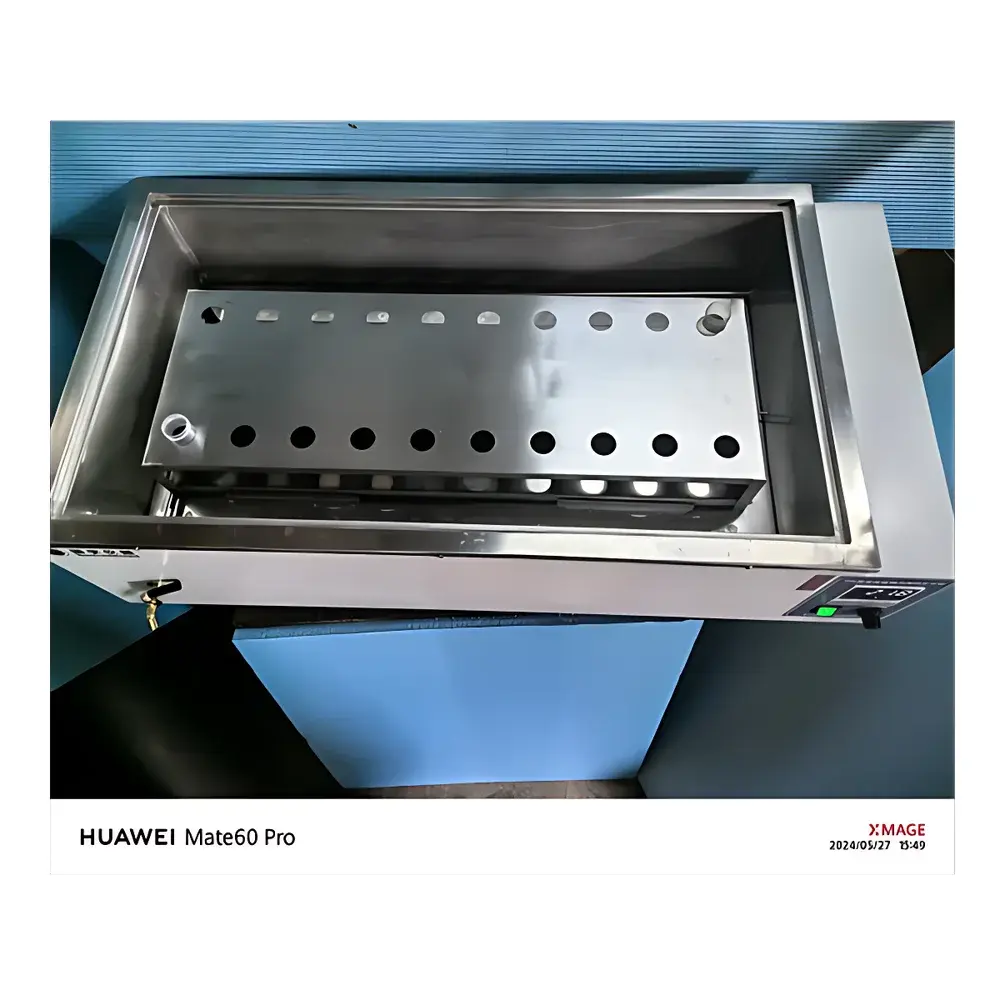
The CZGY HH-20 Digital Constant-Temperature Magnetic Stirring Water Bath is an integrated laboratory platform engineered for simultaneous precise thermal regulation and synchronized magnetic agitation across multiple small-volume samples. Unlike conventional water baths or standalone stirrers, the HH-20 employs a dual-function architecture: a high-capacity stainless steel bath (48 L) maintains uniform temperature distribution via solid-state relay-controlled 2400 W heating, while 20 independently positioned stirring positions—each fitted with a submersible magnetic stir bar—enable concurrent agitation of standard 50 mL centrifuge tubes. Its operating principle relies on resistive heating coupled with PID-based digital temperature feedback control, ensuring stable thermal equilibrium within ±0.5°C across the full range of ambient +5°C to 100°C. Designed specifically for high-throughput sample preparation workflows—including enzymatic reactions, solubility studies, buffer equilibration, and reagent pre-warming—the HH-20 eliminates cross-contamination risks associated with mechanical stirrers and supports reproducible thermal-mechanical conditioning without manual intervention.
Key Features
- 20-position magnetic stirring array with unified speed control: single rotary knob adjusts all stirrers simultaneously from startup to 2000 rpm, optimized for consistent vortexing in 50 mL centrifuge tubes
- Digital LED temperature display with real-time readout and programmable setpoint retention; intuitive interface with tactile buttons and visual status indicators
- Corrosion-resistant construction: 304 stainless steel inner tank (775 × 415 × 150 mm) welded for leak integrity; powder-coated cold-rolled steel outer housing for durability and chemical resistance
- High-efficiency 2400 W heating system with solid-state relay output ensures rapid thermal recovery after sample loading and minimal temperature overshoot
- Over-temperature protection circuit and dry-run safety cutoff prevent equipment damage during unattended operation
- Modular design supports customization: optional tube holders for alternate formats (15 mL, 100 mL, or custom-diameter vessels) are available upon request
Sample Compatibility & Compliance
The HH-20 accommodates standardized 50 mL conical centrifuge tubes as its primary configuration, with mechanical alignment features ensuring stable positioning during vigorous agitation. Tube holders are recessed into the bath floor to minimize vibration transmission and maintain thermal contact. While not certified to ISO/IEC 17025 or ASTM E2234 for metrological traceability, the unit meets general laboratory safety requirements per IEC 61010-1 (Safety Requirements for Electrical Equipment for Measurement, Control, and Laboratory Use). Its digital control system supports basic audit readiness—temperature setpoints and operational hours are logged internally for internal QA review. For regulated environments (e.g., GLP-compliant labs), users may integrate external data loggers compliant with FDA 21 CFR Part 11 for electronic record integrity.
Software & Data Management
The HH-20 operates as a stand-alone instrument with no embedded software stack or network connectivity. All control logic resides in a dedicated microcontroller with non-volatile memory for setpoint retention after power cycling. Temperature and stirring parameters are manually configured via front-panel controls; no PC interface, USB port, or cloud synchronization is provided. However, the device’s analog-compatible output signals (e.g., 0–5 V temperature feedback) can be interfaced with third-party DAQ systems for external logging. This minimalist firmware architecture prioritizes reliability, electromagnetic compatibility, and long-term serviceability—reducing failure modes common in feature-laden instruments with complex OS dependencies.
Applications
- High-throughput sample incubation requiring simultaneous heating and mixing—e.g., DNA ligation, protein denaturation assays, and cell culture medium pre-equilibration
- Standardized dissolution testing of pharmaceutical formulations using USP Apparatus I/II-compatible vessel arrangements
- Environmental analysis workflows involving sequential extraction and homogenization of aqueous samples prior to ICP-MS or HPLC analysis
- Quality control procedures in biomanufacturing where batch-wise thermal activation of enzymes must be paired with consistent shear input
- Academic teaching labs conducting kinetic experiments where students require identical thermal-agitation conditions across parallel replicates
FAQ
What is the maximum recommended fill level for optimal temperature uniformity?
For best thermal homogeneity and stirring efficiency, maintain water level between 30–45 L (63–94% of total capacity), ensuring full submersion of stir bars and at least 2 cm coverage above tube bottoms.
Can the HH-20 accommodate tubes larger than 50 mL?
Yes—custom-fit tube holders for 15 mL, 100 mL, or non-standard diameters are available as factory-installed options; contact technical support for dimensional specifications and lead time.
Is the temperature sensor calibrated to NIST-traceable standards?
The unit ships with factory calibration verified against reference thermometers; however, end-user recalibration using external PT100 probes is supported via the service menu for ongoing accuracy verification.
Does the device meet CE or UL certification requirements?
It complies with GB 4793.1–2007 (Chinese national standard equivalent to IEC 61010-1); CE marking is not applied, and UL listing is not held—users requiring North American electrical certification should consult local regulatory authorities prior to installation.
What maintenance intervals are recommended for long-term reliability?
Inspect stir bar condition and bath water quality every 200 operational hours; descale the tank quarterly using 5% citric acid solution if operating above 60°C for extended periods.



