
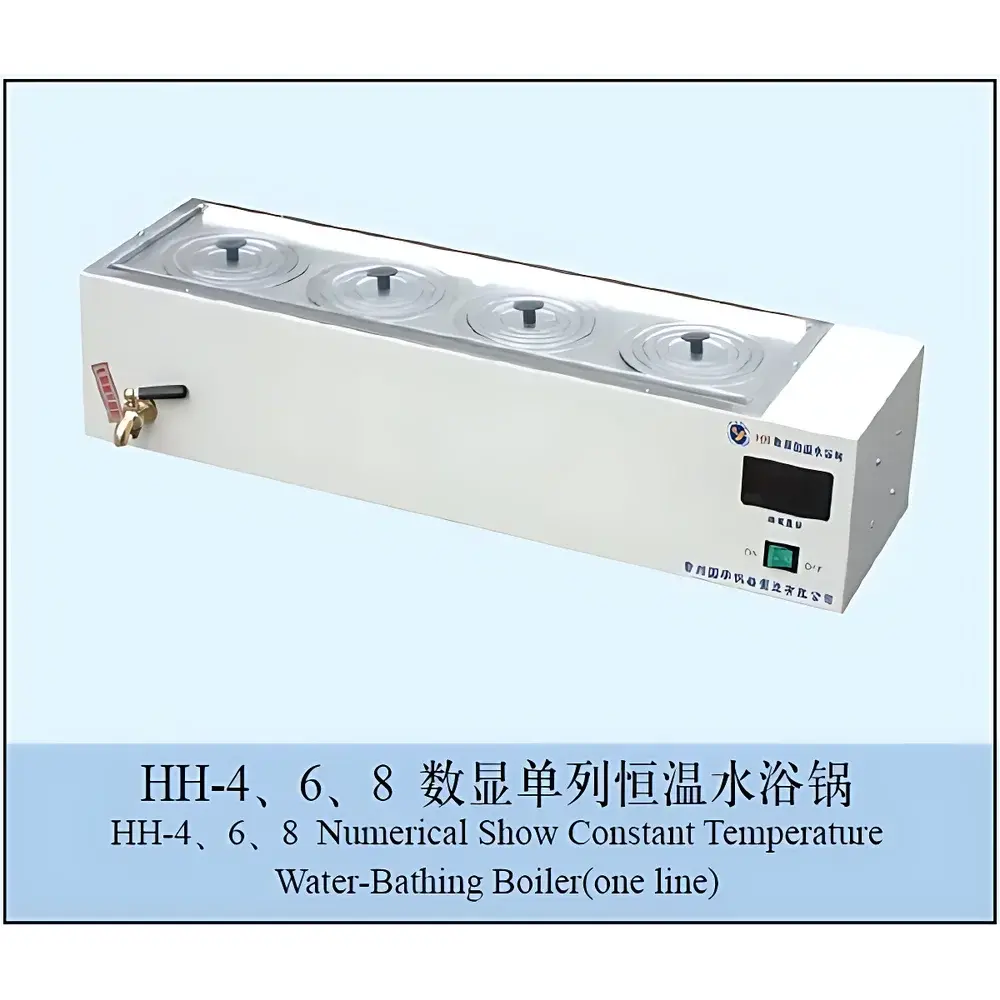
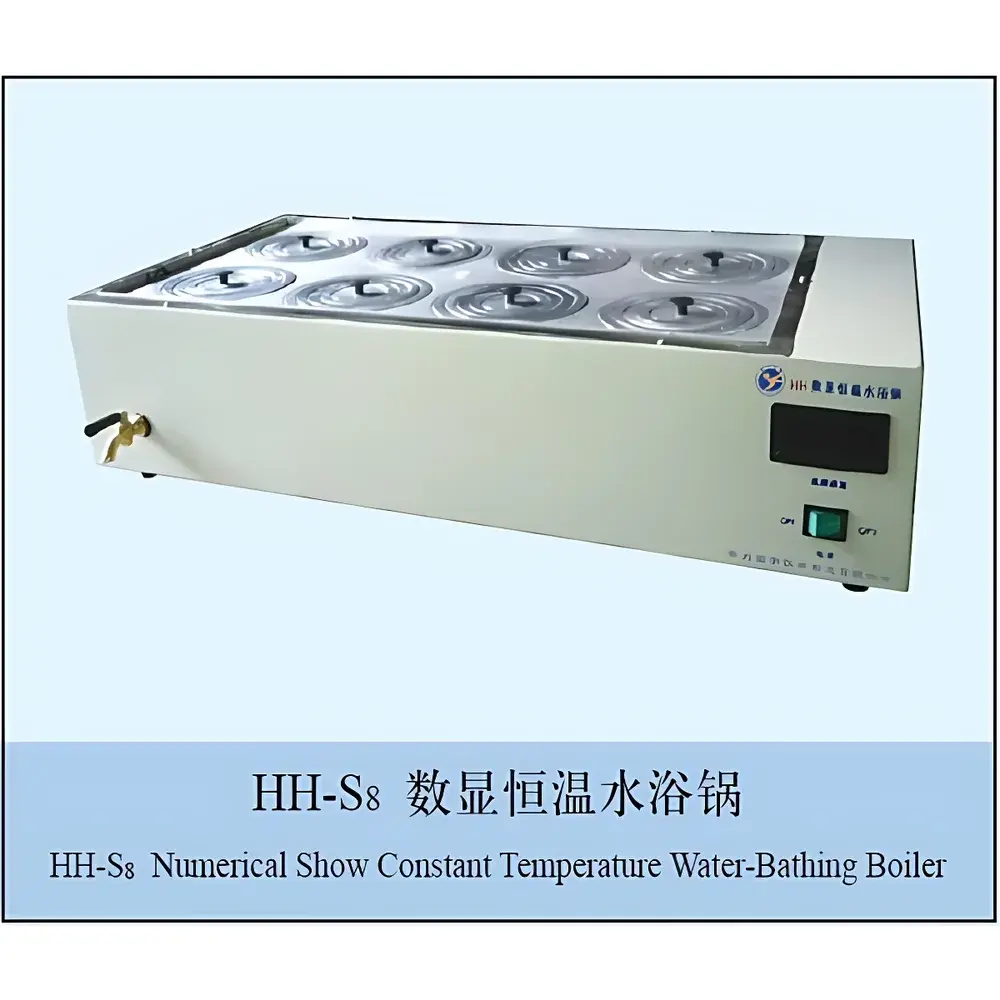
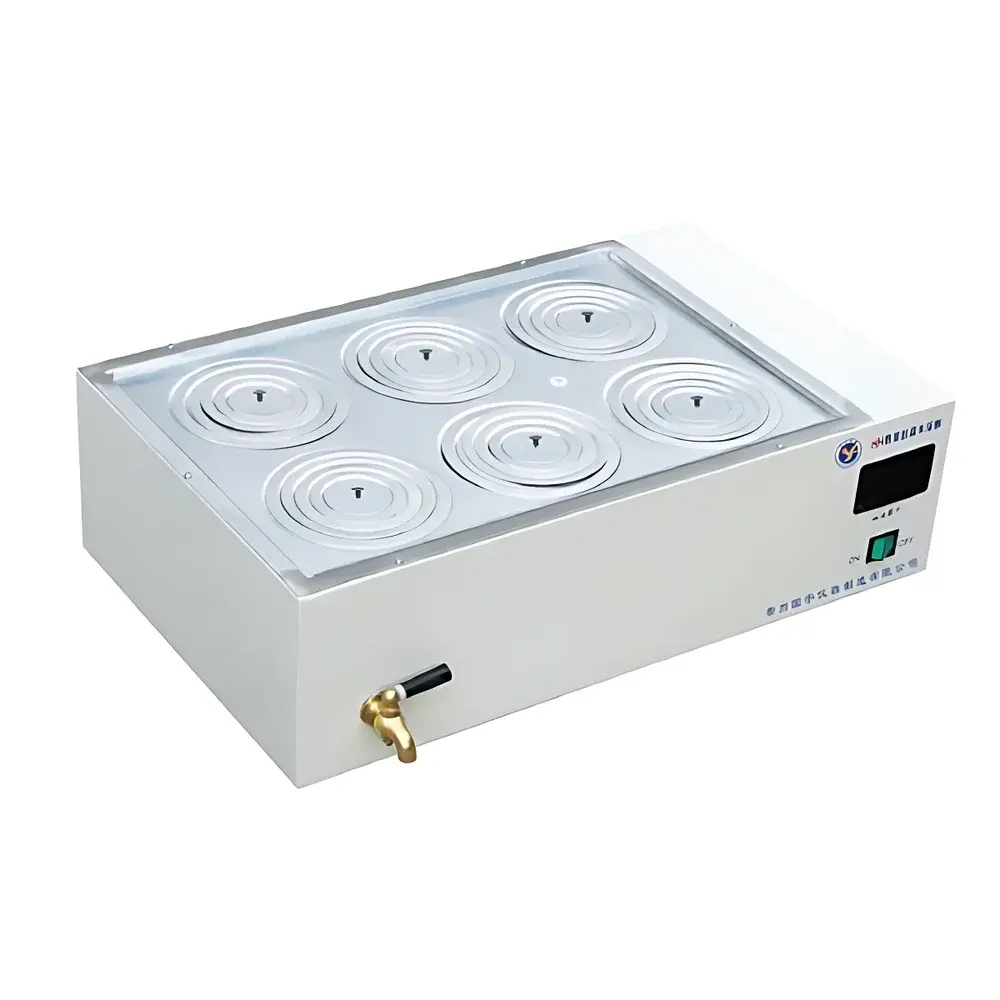
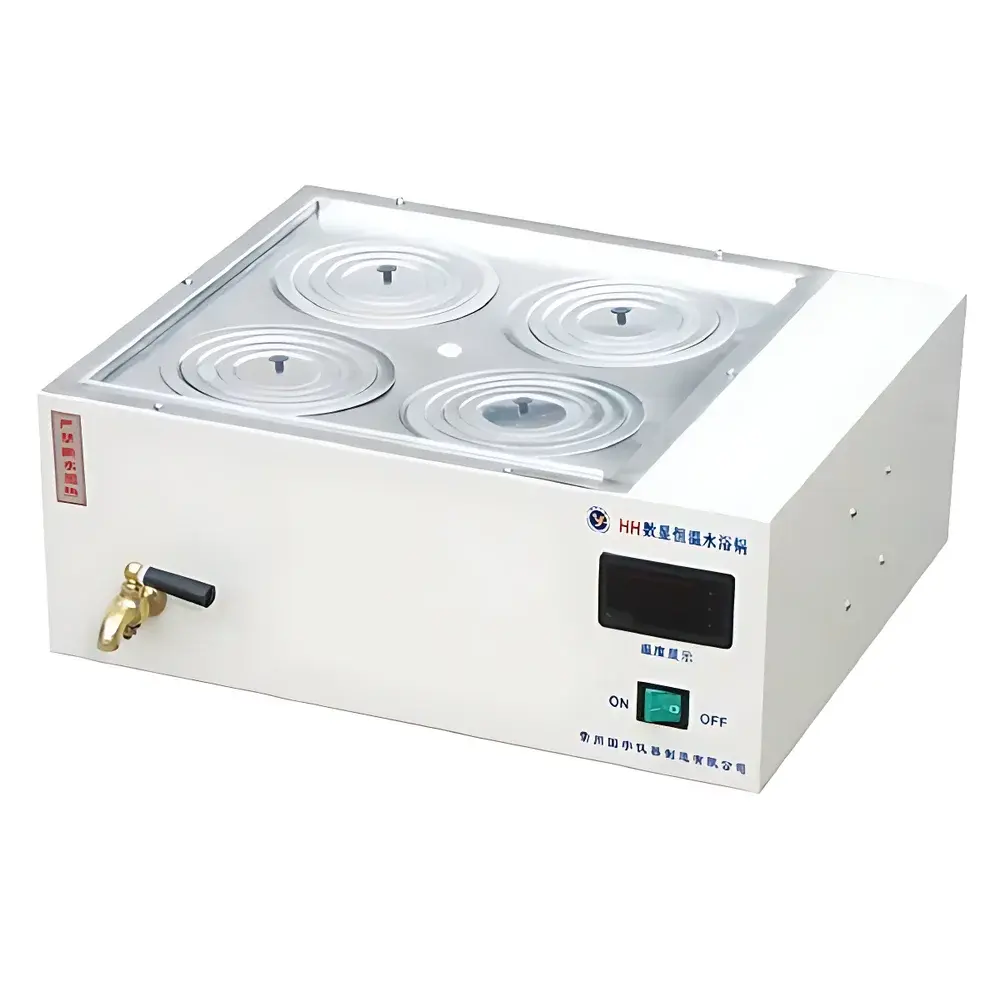
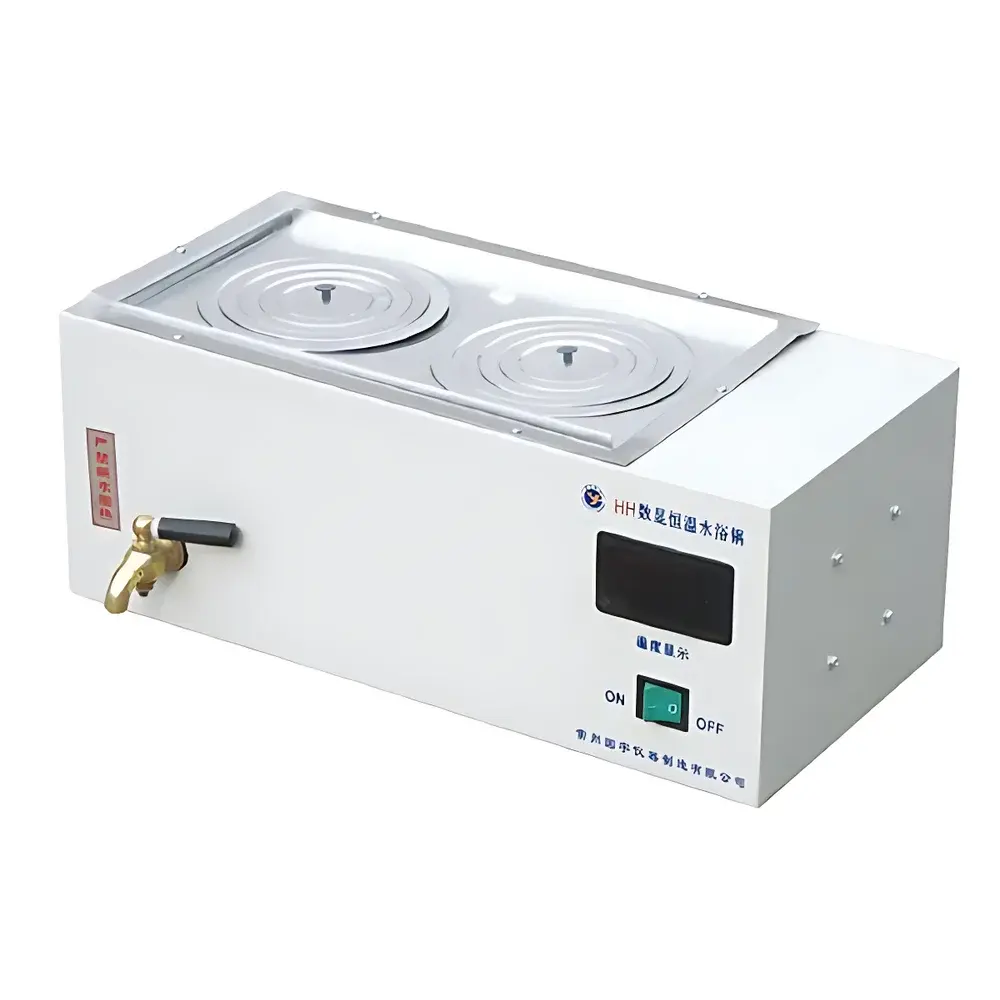
CZGY HH-8 Digital Display Single-Row Water Bath
| Brand | CZGY |
|---|---|
| Model | HH-8 |
| Type | Single-Row Constant-Temperature Water Bath |
| Temperature Range | Ambient to 100 °C |
| Control Accuracy | ±0.5 °C |
| Chamber Dimensions (L×W×H) | 1200 mm × 160 mm × 120 mm |
| Heating Power | 2000 W |
| Construction | Stainless Steel Inner Tank, Cold-Rolled Steel Outer Casing with Epoxy Powder Coating |
| Display | LED Digital Thermometer with SET/↑/↓ Keypad Interface |
| Safety | Grounded 3-Pin AC 220 V Input, Over-Temperature Protection, Earth Leakage Prevention Design |
| Compliance | Designed for GLP-aligned laboratory environments |
Overview
The CZGY HH-8 Digital Display Single-Row Water Bath is an engineered solution for precise, stable thermal control in routine laboratory workflows requiring uniform aqueous heating across eight parallel sample positions. Operating on the principle of convection-based heat transfer through a thermostatically regulated water medium, the HH-8 maintains consistent thermal equilibrium within ±0.5 °C across its full operating range (ambient to 100 °C), making it suitable for applications such as enzyme incubation, sample thawing, reagent equilibration, dissolution testing, and controlled hydrolysis. Its single-row configuration optimizes benchtop footprint while accommodating standard-sized glassware—including 12 cm-diameter vessels—without spatial interference. The unit integrates a microprocessor-controlled PID temperature regulation system with adjustable proportional band (P), cycle time (T), and anticipatory offset (E) parameters, enabling fine-tuned response characteristics for diverse thermal load profiles.
Key Features
- Stainless steel inner tank (304 grade) fabricated via seamless welding for corrosion resistance and long-term integrity under repeated thermal cycling
- Cold-rolled steel outer housing with electrostatic epoxy powder coating to resist chemical splashes and mechanical abrasion
- LED digital display with intuitive push-button interface (SET, ↑, ↓) for real-time temperature monitoring and setpoint adjustment
- Programmable PID controller supporting manual tuning of P (proportional band), T (output cycle time), and E (cut-off offset) parameters for optimized thermal stability
- 2000 W high-efficiency heating element immersed directly in the water bath chamber for rapid thermal recovery after sample insertion
- Integrated grounding terminal and three-pin grounded AC 220 V input compliant with IEC 61010-1 safety standards for laboratory electrical equipment
- Over-temperature cut-off circuitry prevents dry-run operation and safeguards against heater exposure due to low water level
Sample Compatibility & Compliance
The HH-8 accommodates cylindrical and rectangular containers up to 12 cm in diameter or width, including beakers, flasks, test tubes, and sample vials. Its open-bath design permits direct immersion of vessels without lid constraints, while the 120 mm water depth ensures full submersion of common laboratory glassware. The device is constructed and tested in accordance with general-purpose laboratory equipment requirements under ISO/IEC 17025 supporting environments. Though not certified to specific regulatory frameworks (e.g., FDA 21 CFR Part 11), its stable thermal performance and reproducible setpoint adherence support documentation practices required for GLP and basic GMP workflows. Users integrating the HH-8 into validated processes are advised to perform periodic calibration using NIST-traceable thermometers and maintain logbooks per internal SOPs.
Software & Data Management
The HH-8 operates as a standalone analog-digital hybrid instrument with no embedded software stack or network connectivity. Temperature data remains local to the LED display and is not stored, transmitted, or exportable. For laboratories requiring audit-ready records, the unit may be paired with external temperature dataloggers (e.g., calibrated thermocouple probes connected to USB-enabled recorders) that comply with 21 CFR Part 11 when used with appropriate validation protocols and electronic signature controls. Firmware-level parameter settings—including P, T, and E values—are retained during power cycling but lack password protection or versioned firmware updates.
Applications
- Controlled warming of biological reagents prior to assay setup (e.g., serum, enzymes, cell culture media)
- Constant-temperature incubation of microbiological samples during enrichment or enumeration steps
- Accelerated solvent evaporation in preparative chemistry workflows
- Standardized dissolution testing per USP methodology when used with approved vessel configurations
- Thermal conditioning of polymer solutions and colloidal dispersions prior to rheological characterization
- Pre-equilibration of HPLC mobile phases and calibration standards to minimize column temperature drift
FAQ
What is the minimum and maximum water volume required for safe operation?
The water level must fully cover the heating element at all times. Minimum operational depth is 80 mm; maximum fill height is 100 mm to prevent overflow during boiling. Underfilling risks heater damage; overfilling increases spill risk during sample handling.
Can the HH-8 be used with non-aqueous media such as oil or glycerol?
No. The HH-8 is designed exclusively for aqueous operation. Use of oils or viscous fluids may impair heat transfer uniformity, exceed material temperature limits, and void warranty coverage.
Is the temperature sensor user-replaceable or field-calibratable?
The integrated PT100-class sensor is factory-calibrated and sealed within the tank assembly. Field recalibration requires disassembly by authorized service personnel and verification against traceable reference standards.
Does the unit include a timer or automatic shut-off function?
No. The HH-8 lacks programmable timing logic. Continuous operation requires manual power interruption. Users should implement external timers or smart plugs if unattended use is necessary.
What maintenance procedures are recommended for long-term reliability?
Weekly descaling with 10% acetic acid solution is advised in hard-water regions. Monthly inspection of grounding continuity and visual assessment of tank weld integrity are recommended. Never immerse the control panel or housing in liquid during cleaning.



