
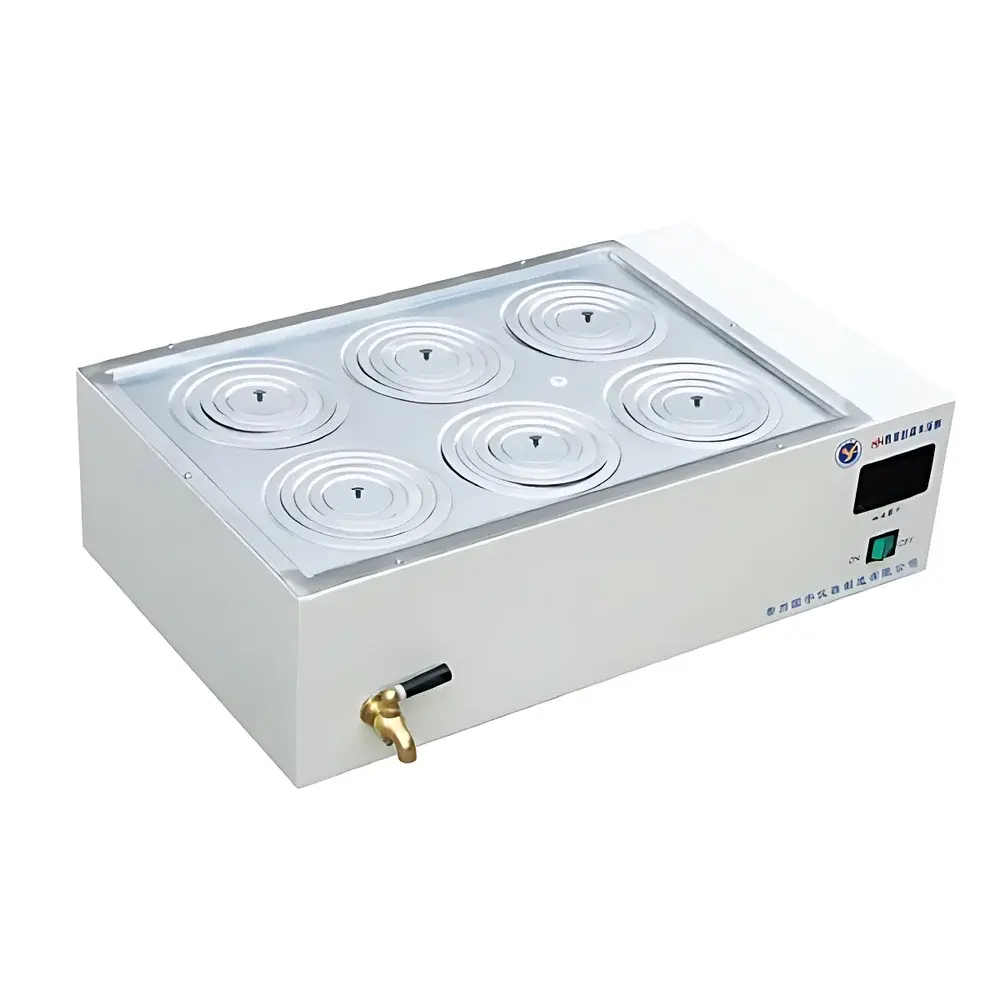
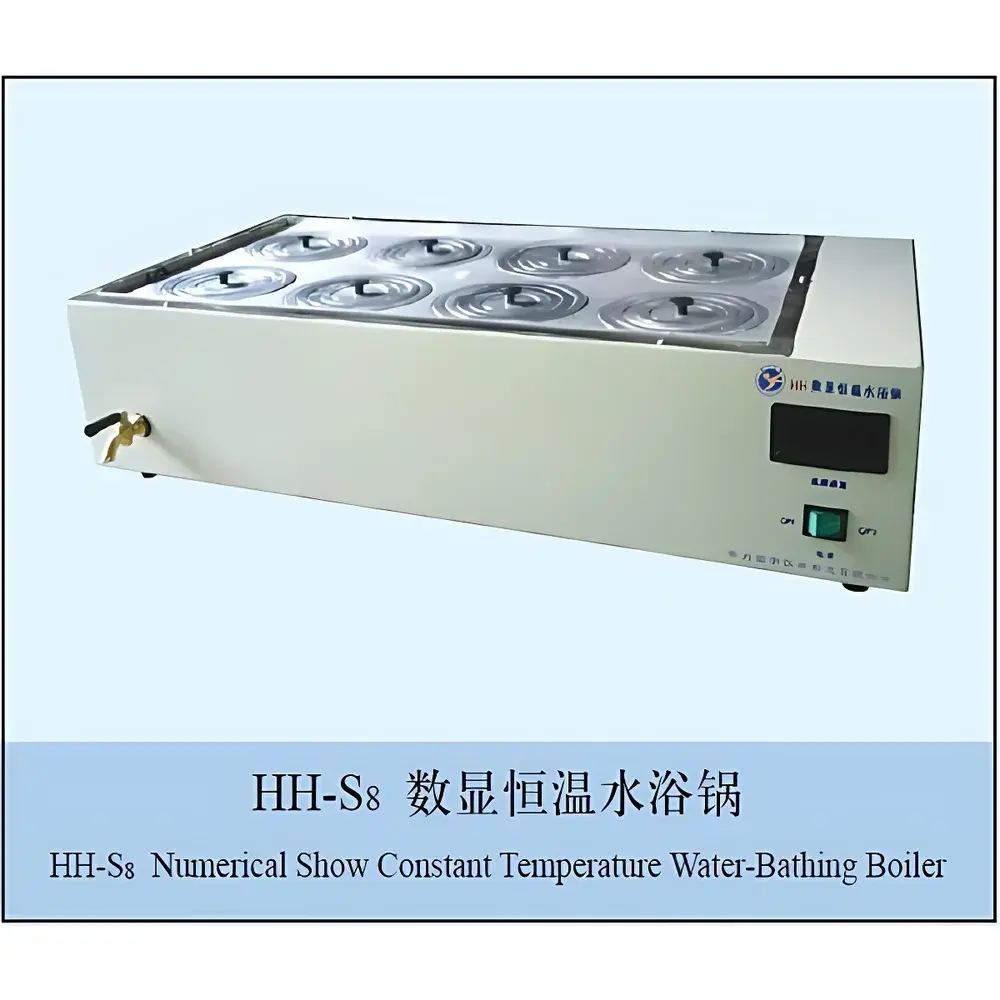
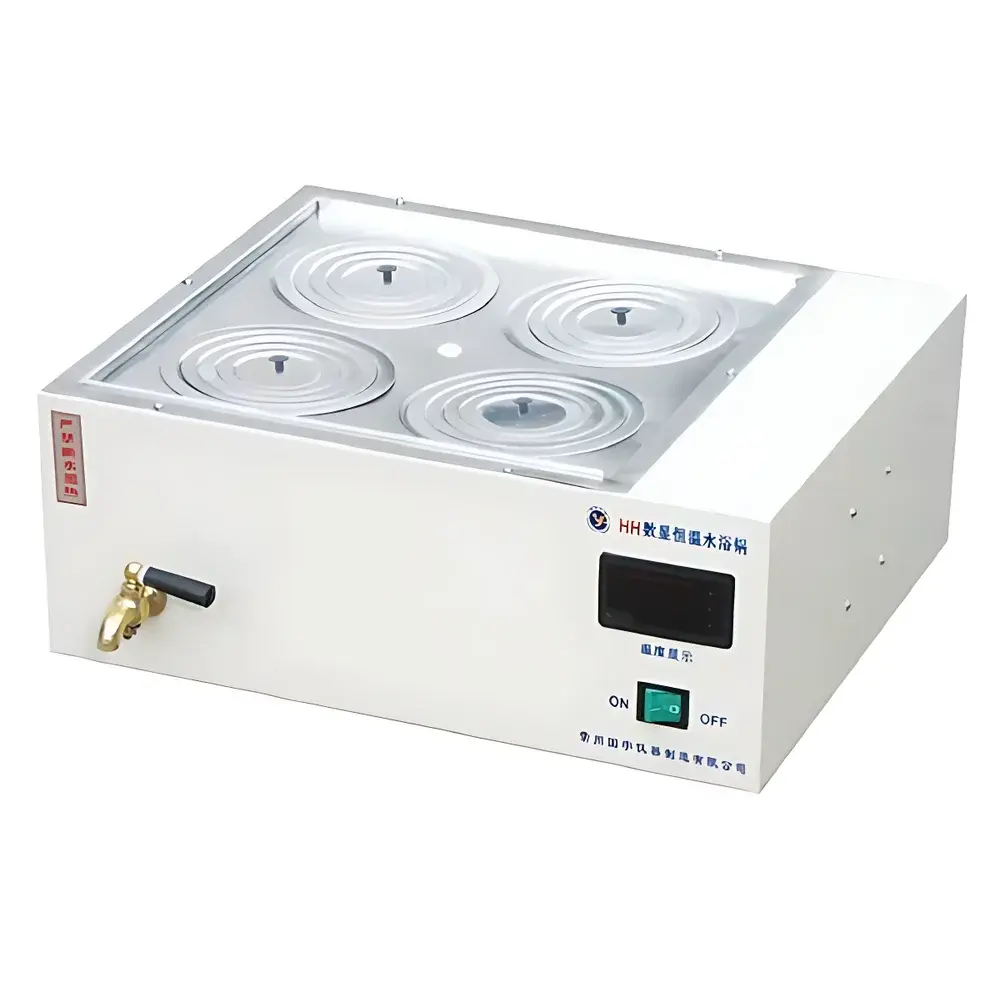
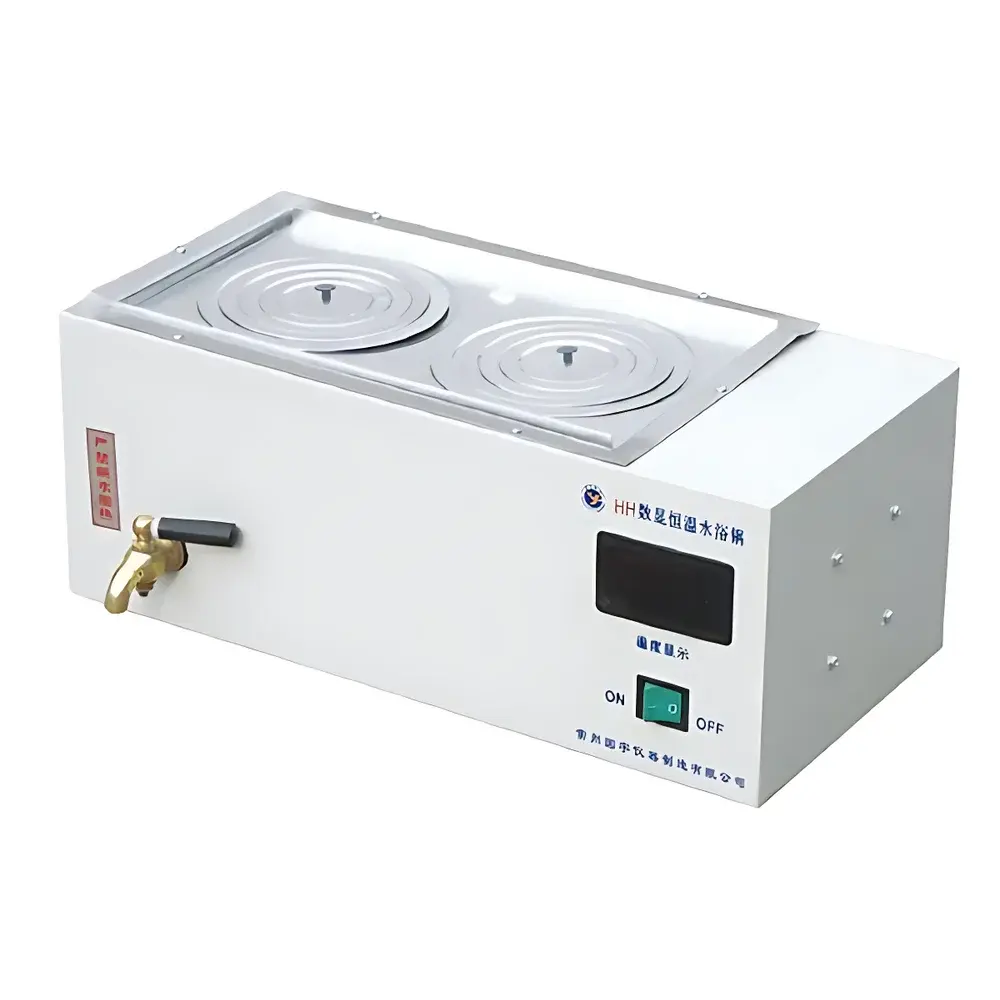
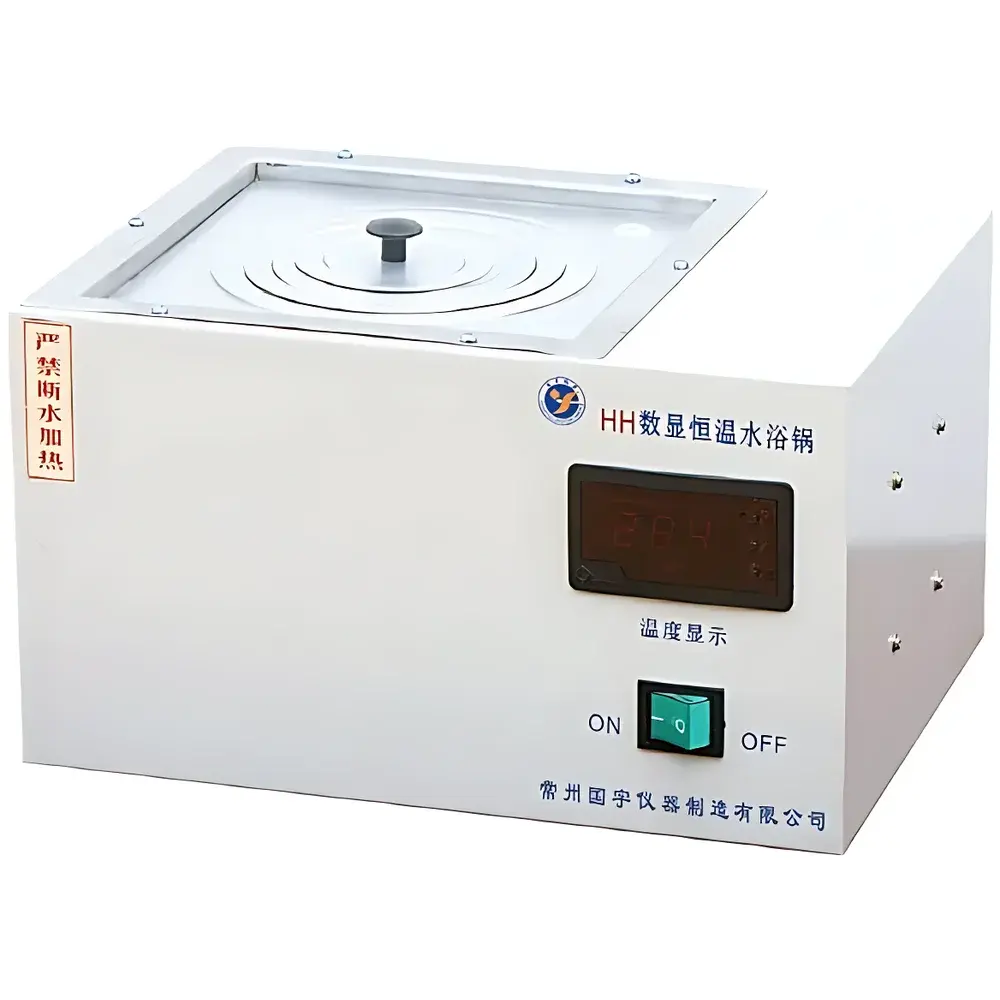
CZGY HH-S6 Digital Display Constant Temperature Water Bath
| Brand | CZGY |
|---|---|
| Model | HH-S6 |
| Type | Water Bath |
| Heating Power | 1500 W |
| Tank Dimensions (L×W×H) | 465 × 310 × 120 mm |
| Capacity | 6-well, dual-row configuration |
| Temperature Range | Ambient to 100 °C |
| Temperature Control Accuracy | ±0.5 °C |
| Construction | Stainless steel inner tank, cold-rolled steel outer shell with epoxy coating |
| Input Voltage | 220 V AC, 50 Hz |
| Compliance | Designed for GLP-compliant laboratory environments |
Overview
The CZGY HH-S6 Digital Display Constant Temperature Water Bath is a precision-engineered benchtop thermal platform designed for stable, uniform heating of samples in glassware—primarily beakers, flasks, and test tubes—within the temperature range of ambient to 100 °C. It operates on resistive heating principle, utilizing immersed stainless-steel-sheathed heating elements positioned beneath the bath chamber floor to ensure rapid thermal response and minimal temperature gradient across the well array. Unlike circulating baths, the HH-S6 relies on natural convection for heat distribution, making it suitable for applications where mechanical agitation or fluid recirculation is unnecessary or undesirable—such as gentle warming of enzyme solutions, pre-heating reagents prior to assay setup, or maintaining reaction vessels at defined setpoints during extended incubation periods. Its robust construction—including a fully welded 304 stainless steel inner tank and corrosion-resistant epoxy-coated cold-rolled steel housing—ensures long-term durability in high-humidity laboratory settings. The device complies with fundamental electrical safety requirements per IEC 61010-1 and is engineered for integration into quality-controlled workflows under ISO/IEC 17025 and GLP frameworks.
Key Features
- Digital PID temperature controller with intuitive push-button interface (SET, ↑, ↓) for precise setpoint entry and real-time display
- ±0.5 °C temperature control accuracy across full operating range (ambient to 100 °C), verified per ASTM E220 calibration methodology
- 6-well dual-row configuration (465 × 310 × 120 mm tank volume) optimized for parallel sample processing without cross-contamination
- 1500 W high-efficiency heating system enabling rapid thermal equilibration—typical warm-up time from 25 °C to 80 °C is <18 minutes
- No-circulation design eliminates risk of aerosol generation or sample disturbance; ideal for low-volatility or shear-sensitive preparations
- Integrated grounding terminal and three-pin power cord meeting IEC 60320 C13 standards for safe operation in regulated labs
- Front-panel LED display with high-contrast digits ensures readability under standard laboratory lighting conditions
Sample Compatibility & Compliance
The HH-S6 accommodates standard borosilicate glassware up to 1000 mL capacity per well, including Erlenmeyer flasks (up to 500 mL), graduated cylinders, and wide-mouth bottles. Its open-well geometry allows direct visual monitoring and easy insertion/removal of vessels. The unit is not rated for oil bath operation above 100 °C nor for use with organic solvents requiring explosion-proof certification. All materials in contact with water—including tank welds, drain plug gasket, and heater mounting hardware—meet USP Class VI biocompatibility criteria. While not inherently 21 CFR Part 11 compliant due to lack of audit trail functionality, the HH-S6 supports traceable temperature logging when paired with external data acquisition systems (e.g., certified thermocouple readers with timestamped output). It satisfies general-purpose lab equipment requirements under ISO 15195:2018 (calibration laboratories) and serves as a validated auxiliary device in USP and compounding environments when operated within documented SOPs.
Software & Data Management
The HH-S6 operates as a standalone analog-digital hybrid instrument with no embedded firmware-based data logging, network connectivity, or USB/RS-232 interfaces. Temperature setpoint and current bath temperature are displayed locally only. For regulatory traceability, users must implement manual logbook entries or integrate third-party calibrated temperature probes (e.g., NIST-traceable Pt100 sensors) connected to validated data loggers compliant with 21 CFR Part 11 Annex 11 requirements. The controller’s internal PID parameters (P, T, E) are accessible via extended keypress sequences but are intended for fine-tuning under technician supervision—not routine user adjustment. Default factory settings (P = 5.0, T = 30 s, E = 0.5 °C) provide optimal balance between stability and overshoot suppression for aqueous media.
Applications
- Pre-warming of culture media, buffers, and enzymatic reagents prior to cell lysis or PCR setup
- Controlled dissolution testing of pharmaceutical excipients per USP
- Accelerated stability studies requiring constant low-energy thermal input (e.g., 40 °C/75% RH reference chambers)
- Softening of agarose gels and paraffin blocks in histology workflows
- Standardization of viscosity measurement baths for capillary viscometers (ASTM D445)
- Thermal conditioning of reference standards used in calorimetric calibration procedures
FAQ
What is the maximum recommended fill level for the HH-S6 bath chamber?
The water level must fully submerge the heating elements but remain at least 20 mm below the top rim to prevent boil-over during operation at 100 °C.
Can the HH-S6 be used with silicone oil or glycerol as heat-transfer media?
No. The unit is rated exclusively for aqueous solutions. Oil or viscous fluids may impair heat dissipation, cause overheating of the heater assembly, and void the warranty.
Is the temperature sensor calibrated at the factory?
Yes. Each unit undergoes end-of-line verification using a NIST-traceable reference thermometer (±0.1 °C uncertainty) prior to shipment.
Does the HH-S6 support remote monitoring or automation integration?
Not natively. External analog voltage outputs or digital relay signals are not provided. Integration requires add-on hardware such as a programmable logic controller (PLC) interfaced via dry-contact alarm terminals (optional accessory).
How often should the stainless steel tank be passivated to maintain corrosion resistance?
Annual citric acid passivation (per ASTM A967) is recommended if used continuously with hard water or saline solutions; otherwise, routine cleaning with mild detergent suffices.



