
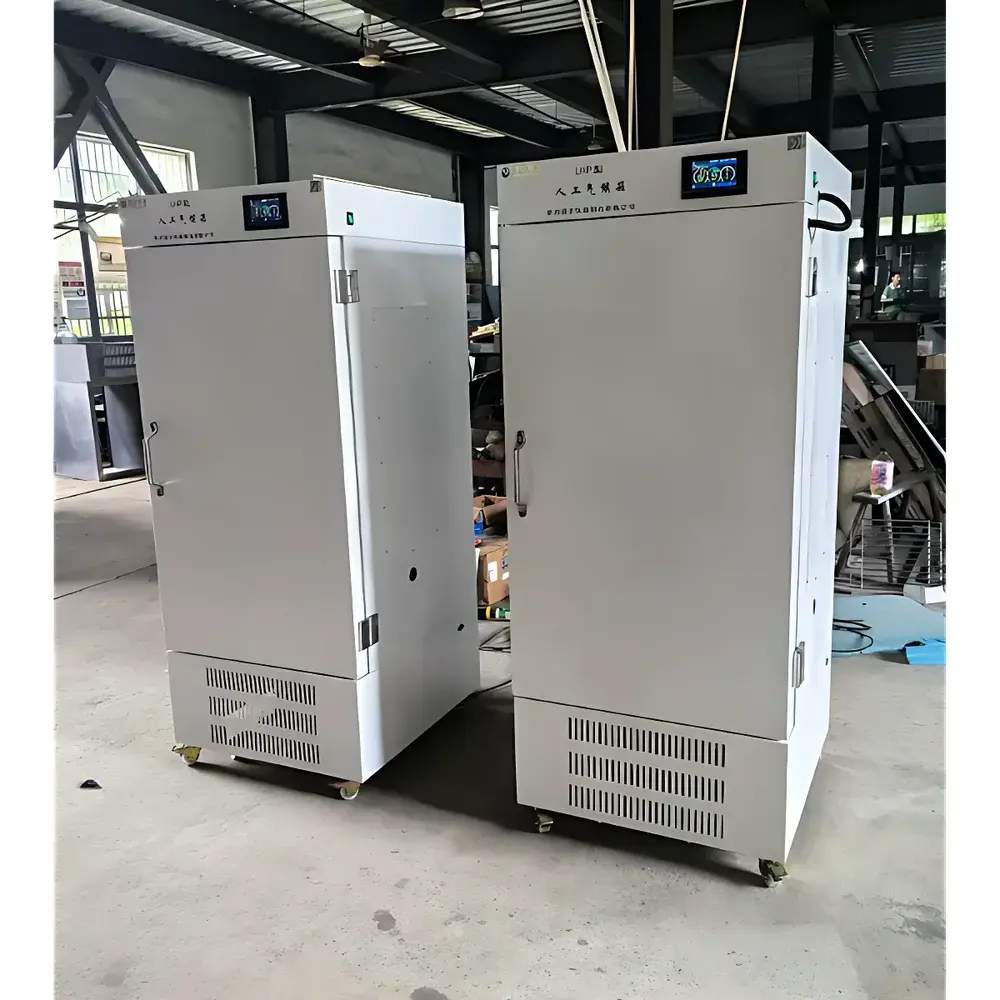
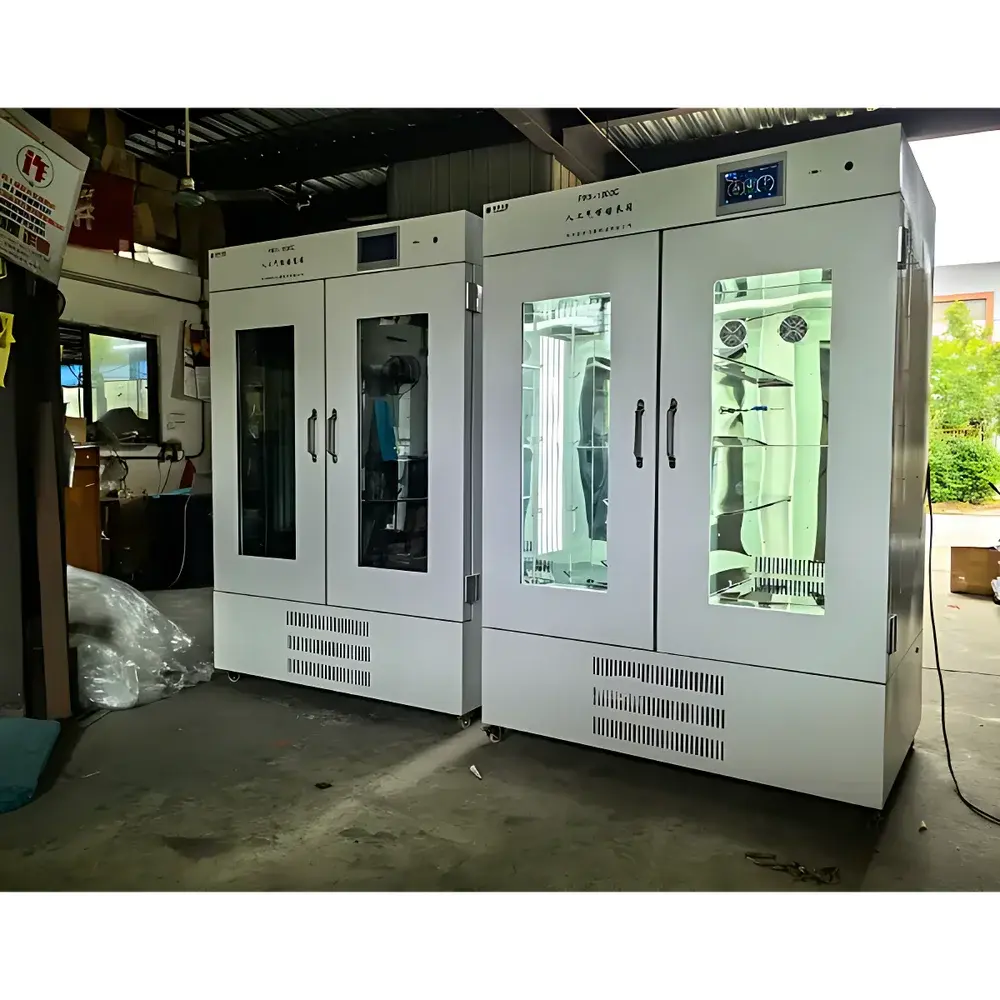
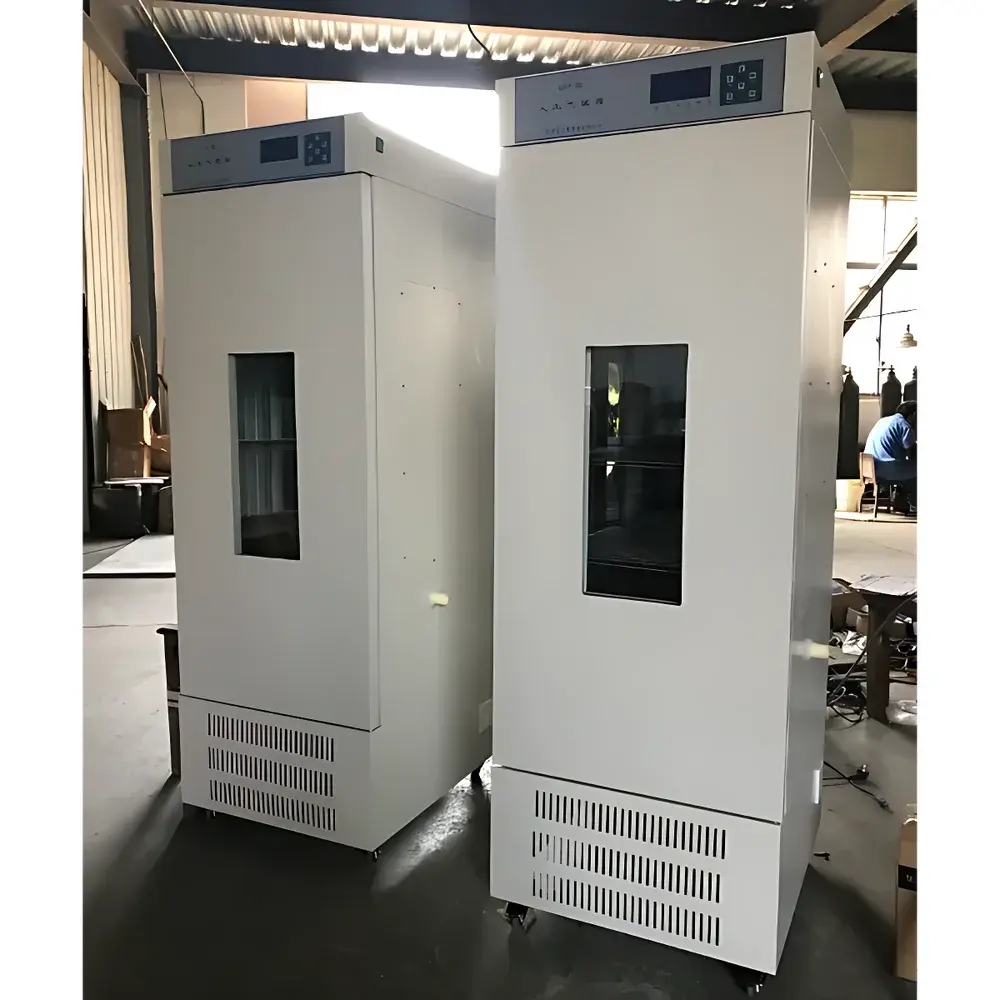
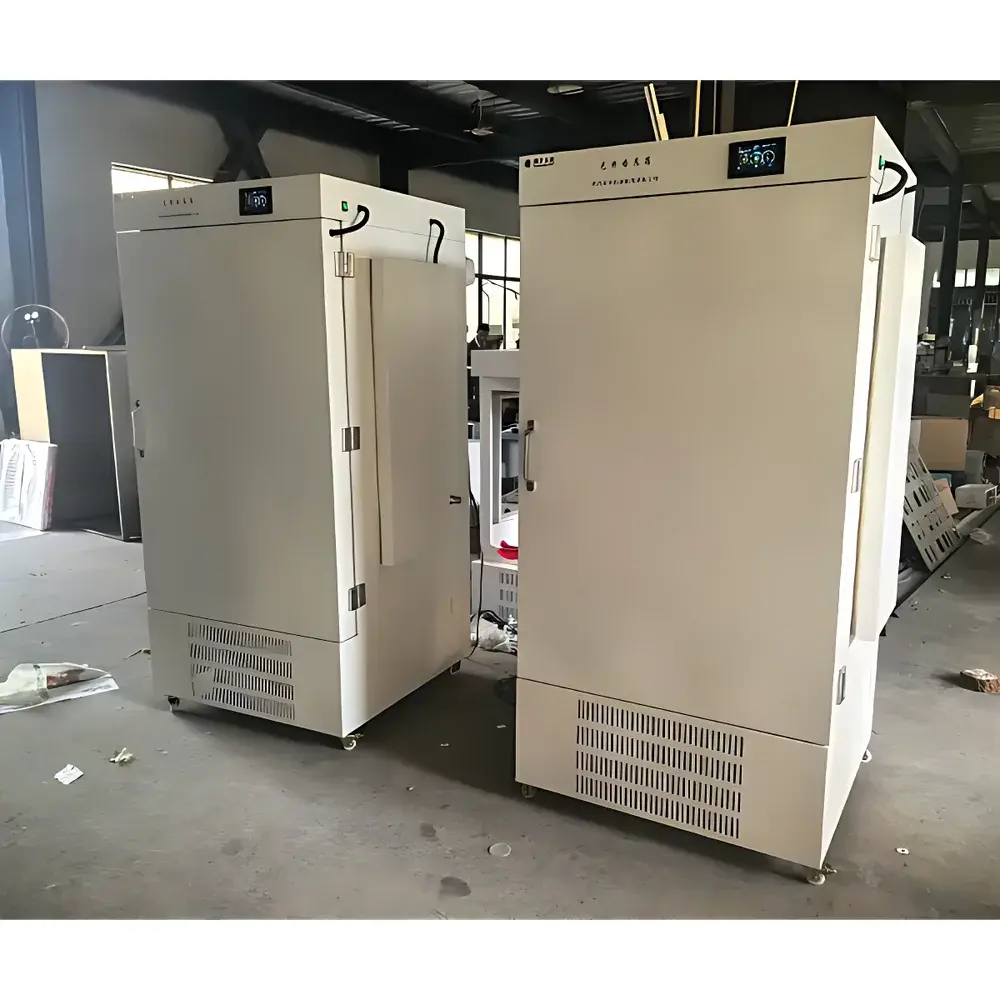
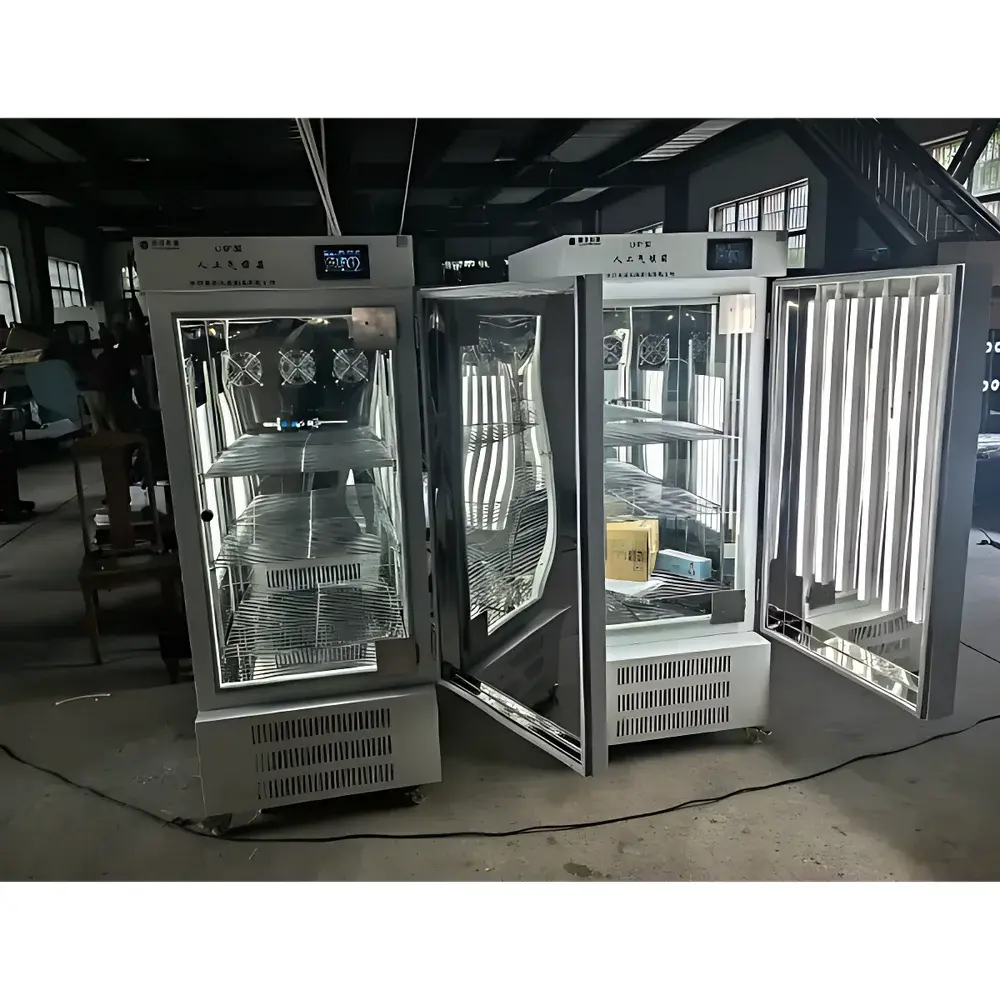
CZGY LHP-250HE Artificial Climate Incubator
| Brand | CZGY |
|---|---|
| Origin | Jiangsu, China |
| Manufacturer Type | Direct Manufacturer |
| Instrument Type | Fully Automated (Programmable) |
| Capacity | 250 L |
| Temperature Range | 5–60 °C (dark), 10–60 °C (with illumination) |
| Temperature Uniformity | ±0.5 °C |
| Humidity Range | 50–95 %RH |
| Humidity Uniformity | ±5 %RH |
| Illumination Intensity | ≤6000 lx (dual-side, 6-level adjustable) |
Overview
The CZGY LHP-250HE Artificial Climate Incubator is a precision-engineered environmental simulation system designed for reproducible, long-term stability testing and biological cultivation under tightly controlled temperature, humidity, and photoperiod conditions. Based on dual-loop PID control architecture with independent regulation of thermal, hygral, and optical parameters, the incubator employs a high-efficiency hermetic compressor, stainless-steel interior chamber, and industrial-grade capacitive humidity sensors to ensure metrological reliability across extended operational cycles. Its modular thermal management system integrates balanced heating/cooling and dew-point-based humidification—enabling stable setpoint maintenance even during frequent door openings or ambient load fluctuations. The LHP-250HE complies with core requirements for stability-indicating environments per ICH Q1A(R3), USP , and ISO 14644-1 Class 8 cleanroom-compatible operation when installed in controlled laboratory spaces.
Key Features
- Fully programmable control system with dual interface options: 4.3-inch true-color touchscreen (5 user-defined programs, up to 100 segments per program, segment duration configurable from 1 minute to 999 hours 59 minutes) or LCD panel (30-segment programming with day/night cycle mapping)
- Independent parameter control: temperature, relative humidity, and illumination intensity are adjusted separately without cross-coupling interference
- Dual-side LED illumination system (≤6000 lx, 6-level stepwise adjustment); optional triple-side high-intensity configuration (up to 15000 lx) supports photobiological assays including photomorphogenesis and circadian rhythm studies
- Integrated 4 L ultrasonic humidifier with auto-refill function and dry-run protection; optional 15 L capacity humidifier available for extended unattended operation
- Stainless-steel inner chamber (600 × 500 × 850 mm W×D×H) with seamless welding, corrosion-resistant cold-rolled steel exterior, and thermal insulation using low-conductivity polyurethane foam (≥50 mm thickness)
- Comprehensive safety architecture: independent over-temperature cutoff (adjustable limit), real-time fault logging, power-failure memory with automatic recovery, and three-tier user permission management (Operator / Technician / Administrator)
Sample Compatibility & Compliance
The LHP-250HE accommodates standard microbiological culture vessels (e.g., Petri dishes, multi-well plates, Erlenmeyer flasks), botanical growth trays, pharmaceutical stability test packages (blister packs, HDPE bottles), and textile/film specimens. Its internal geometry permits uniform airflow distribution via rear-mounted centrifugal fans with laminar flow optimization—ensuring minimal thermal/hygrometric gradients across the entire 250 L working volume. The unit meets mechanical and electrical safety standards per GB 4793.1–2019 (equivalent to IEC 61010-1), and its data integrity framework supports audit-ready operation under GLP and GMP environments through optional timestamped U-disk data export and encrypted event logging. Optional GPRS-based SMS alerting enables remote notification of critical deviations (e.g., temperature excursion >±1.0 °C for >5 min).
Software & Data Management
The embedded firmware provides native support for CSV-formatted data export via USB flash drive, capturing time-stamped records of setpoints, actual values, alarm events, and system status at user-defined intervals (1–60 min). The touchscreen interface includes built-in trend visualization for temperature, humidity, and light intensity over 72-hour rolling windows. When paired with optional CZGY LabLink™ desktop software (Windows/macOS), users gain access to advanced analytics—including deviation heatmaps, statistical process control charts (X̄/R), and automated report generation compliant with FDA 21 CFR Part 11 requirements (electronic signatures, audit trails, role-based access control). All firmware updates are delivered via signed binary packages to prevent unauthorized modification.
Applications
- Pharmaceutical stability testing per ICH Q5C guidelines (long-term, accelerated, and intermediate conditions)
- Seed germination and plant phenotyping under defined photoperiods and moisture regimes
- Microbial growth kinetics studies for QC/QA of raw materials and finished products
- Textile and polymer aging assessments (e.g., colorfastness, tensile strength degradation)
- Food packaging shelf-life validation under simulated distribution environments
- Biological reagent storage qualification and excipient compatibility screening
FAQ
What is the maximum allowable ambient operating temperature for the LHP-250HE?
The unit is rated for continuous operation in ambient environments between 10 °C and 30 °C with ≤80 % non-condensing relative humidity.
Can the incubator maintain 5 °C with active illumination?
No—illumination mode requires a minimum setpoint of 10 °C to prevent condensation on lamp assemblies and ensure thermal stability.
Is third-party calibration certification available?
Yes—factory-calibrated units include NIST-traceable certificates for temperature (±0.3 °C at 25 °C) and humidity (±3 %RH at 60 %RH); on-site verification services are offered globally.
Does the system support MODBUS RTU or Ethernet/IP protocols?
Standard configuration includes RS-485 MODBUS RTU interface; Ethernet/IP and BACnet MS/TP are available as OEM add-ons.
What is the mean time between failures (MTBF) for the compressor and humidifier subsystems?
Based on accelerated life testing, MTBF exceeds 25,000 hours for the Secop BL35 compressor and 12,000 hours for the ultrasonic humidifier module under nominal load conditions.





