
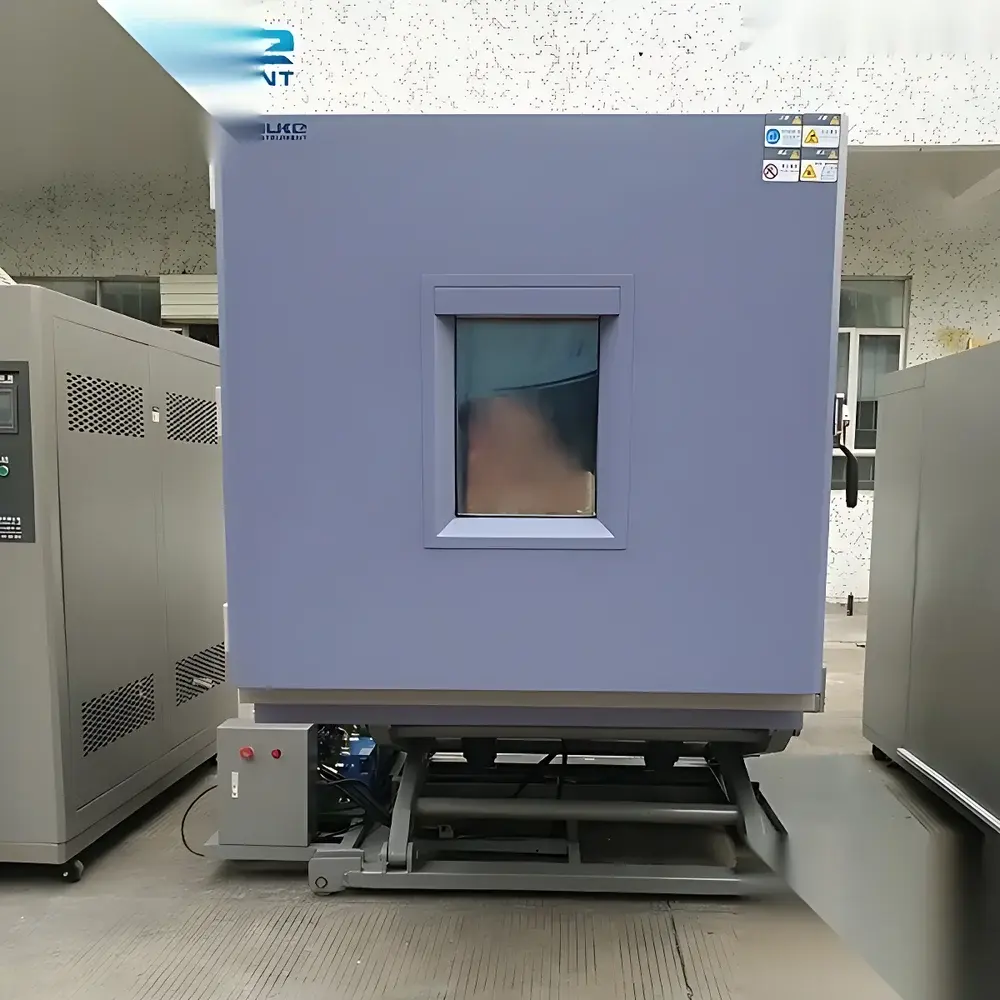
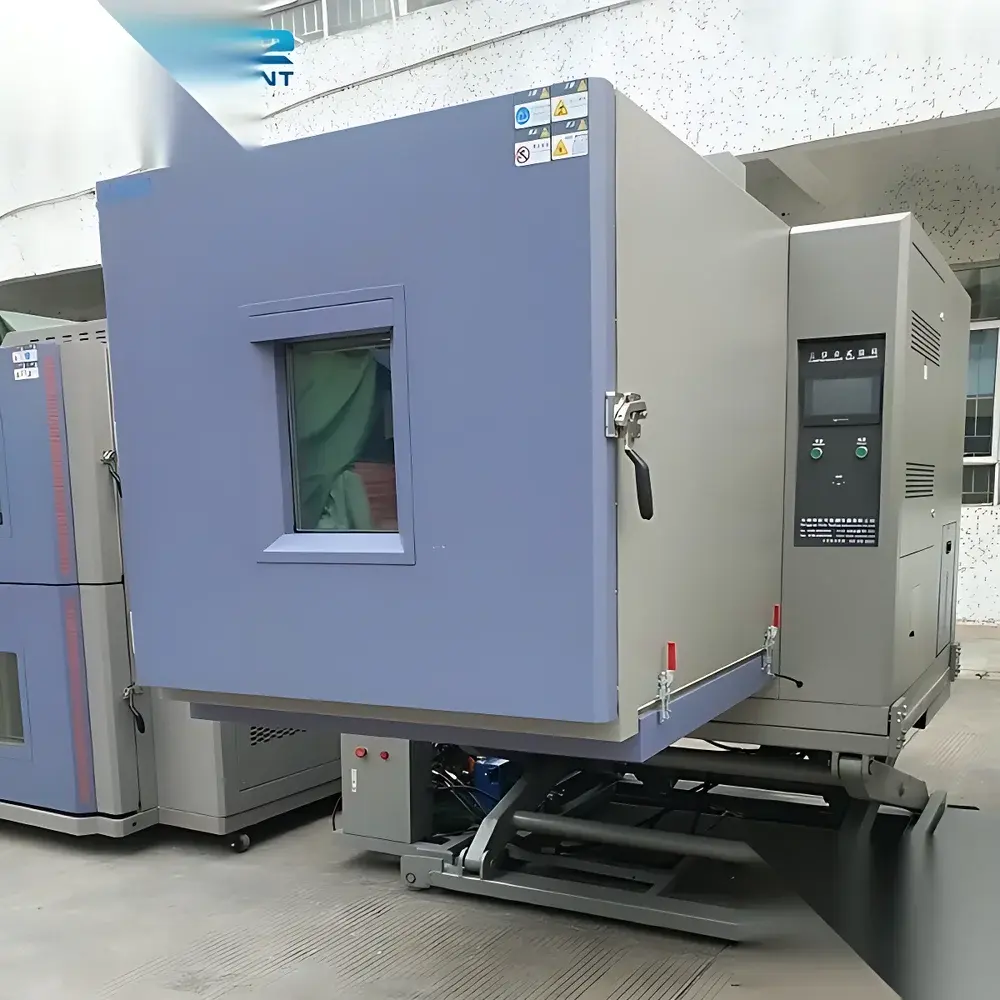
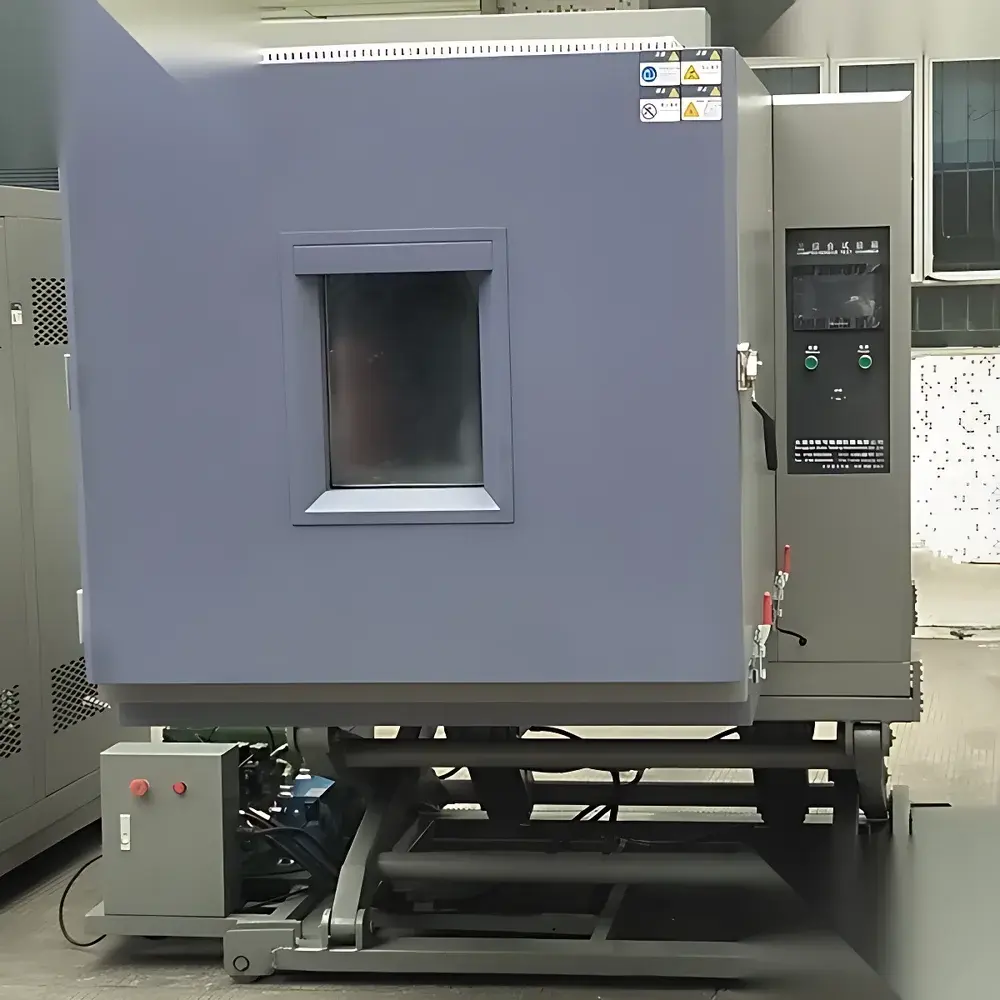
CZ+SP Series Tri-Axial Vibration Test System (Vertical + Horizontal, 1–5000 Hz)
| Brand | OEM / Custom Brand |
|---|---|
| Origin | Imported |
| Manufacturer Type | Authorized Distributor |
| Price | USD 21,500 (FOB) |
| Frequency Range | 1–5000 Hz |
| Max. Acceleration | <20 g |
| Max. Displacement (p-p) | 0–5 mm |
| Load Capacity | 100 kg |
| Vibration Waveform | Sine (Half- or Full-Cycle) |
| Axis Configuration | Vertical + Horizontal (Dual-Axis Simultaneous or Independent Control) |
| Control Resolution | Frequency ±0.1 Hz, Display Resolution: 0.01 Hz |
| Power Supply | AC 220 V ±10% / 50 Hz or AC 380 V ±10% / 50 Hz |
| Operating Temperature | 5–40 °C (24-hr avg ≤25 °C) |
| Relative Humidity | ≤85% RH |
Overview
The CZ+SP Series Tri-Axial Vibration Test System is an electromechanical shaker platform engineered for rigorous mechanical stress screening of components and assemblies under controlled sinusoidal vibration conditions. Designed to replicate real-world transport, handling, and operational shock-and-vibration environments, it operates on electromagnetic excitation principles with dual-axis (vertical + horizontal) actuation capability—enabling independent or synchronized motion profiles across two orthogonal axes. Unlike single-axis shakers, this system supports concurrent vertical (Z-axis) and horizontal (X- or Y-axis) excitation, allowing accelerated fatigue assessment of mounting interfaces, solder joints, connectors, and structural subassemblies. Its frequency range spans 1–5000 Hz, supporting both low-frequency resonance scanning (e.g., 5–200 Hz for structural modal analysis) and high-frequency component-level testing (e.g., 500–5000 Hz for microelectromechanical systems or sensor housing integrity). The system complies with fundamental test method frameworks defined in ASTM D999, IEC 60068-2-6, and MIL-STD-810H Method 514.7 for sinusoidal vibration, and serves as a foundational tool for pre-compliance screening prior to formal environmental qualification.
Key Features
- Dual-axis electromagnetic shaker architecture with independent drive amplifiers for vertical and horizontal axes—enabling phase-synchronized or asynchronous excitation.
- Programmable sine vibration control with five operational modes: fixed-frequency, linear sweep, logarithmic sweep, programmable step sequence (up to 15 segments), and octave-based frequency multiplication (1–15 steps).
- High-fidelity displacement and acceleration boundary enforcement via real-time closed-loop monitoring—ensuring compliance with the physical constraint equation: amax = 0.002 × f² × D, where amax ≤ 20 g and D ≤ 5 mm peak-to-peak.
- Integrated digital controller with LCD interface, offering frequency resolution of 0.01 Hz and accuracy of ±0.1 Hz; time and cycle counters configurable from 1 s to 65,000 s and 1 to 65,000 cycles respectively.
- Robust mechanical design: vertical shaker table (500 × 500 × 150 mm) and horizontal sliding table (500 × 500 × 250 mm), both rated for 100 kg payload with center-of-gravity alignment tolerance ≤ ±25 mm.
- Standard RS-485 communication port for external PC integration; optional interface card and software suite available for automated test sequencing, data logging, and report generation (PDF/CSV export).
Sample Compatibility & Compliance
The CZ+SP system accommodates rigidly mounted specimens up to 100 kg, including printed circuit board assemblies (PCBAs), automotive ECUs, optical encoders, medical device housings, and consumer electronics modules. Mounting fixtures must maintain mechanical rigidity within the 1–5000 Hz bandwidth and avoid resonant coupling that distorts input spectra. The system meets ambient operating requirements per ISO 16750-3 (road vehicle vibration) and supports test profile development aligned with ISO 10326-1 (laboratory vibration testing of packaged products). While not inherently compliant with FDA 21 CFR Part 11 or GLP audit trails, the optional PC-based software package includes user access control, electronic signatures, and immutable audit logs—enabling deployment in regulated quality assurance environments requiring traceability.
Software & Data Management
A Windows-based control application (sold separately) provides full remote operation via RS-485. It enables creation and storage of multi-segment vibration profiles, real-time waveform visualization (displacement, velocity, acceleration), and post-test spectral analysis (FFT-derived frequency-domain plots). All test parameters—including start/stop timestamps, setpoints, actual measured values (when paired with optional accelerometer/eddy-current displacement sensors), and system status flags—are timestamped and stored in structured SQLite databases. Export formats include CSV for statistical process control (SPC) integration and PDF reports compliant with internal QA documentation standards. Audit trail functionality records operator ID, parameter changes, and calibration events—supporting ISO/IEC 17025 laboratory accreditation requirements.
Applications
- Pre-shipment durability validation of automotive infotainment modules subjected to road-induced broadband vibration.
- Resonance detection and mode shape correlation for aerospace avionics chassis using swept-sine excitation between 10–2000 Hz.
- Accelerated life testing of MEMS accelerometers under high-frequency (2–5 kHz), low-displacement (<0.5 mm p-p) harmonic loading.
- Quality gate screening for solder joint integrity in high-reliability PCBAs using 5–500 Hz dwell-and-sweep protocols.
- Package integrity evaluation per ISTA 3A and ASTM D4728 for logistics simulation of fragile instrumentation shipments.
FAQ
Does the base unit include real-time acceleration or displacement measurement?
No. The standard CZ+SP controller displays setpoint values only. Accurate in-situ measurement of acceleration (m/s²) or displacement (mm p-p) requires optional calibrated sensors (e.g., IEPE accelerometers or non-contact eddy-current probes) and corresponding signal conditioning hardware.
Can the vertical and horizontal axes operate simultaneously at different frequencies?
Yes—dual-axis independent control allows asynchronous excitation. However, simultaneous multi-tone or random vibration synthesis is not supported; the system is optimized for deterministic sinusoidal waveforms.
What electrical infrastructure is required for the 380 V configuration?
A dedicated three-phase, four-wire (L1/L2/L3/N) supply with earth grounding and circuit protection rated ≥32 A is mandatory. Voltage stability must remain within ±10% during operation.
Is thermal management integrated into the shaker design?
Yes. Forced-air cooling with thermostatically monitored fans prevents coil overheating during extended high-g tests; ambient temperature must not exceed 40 °C with ≥50 cm clearance around all sides for airflow.
How is system calibration maintained over time?
Annual verification against NIST-traceable reference shakers is recommended. The controller supports user-initiated gain calibration routines using known reference transducers, documented in accordance with ISO 17025 Clause 6.5.



