
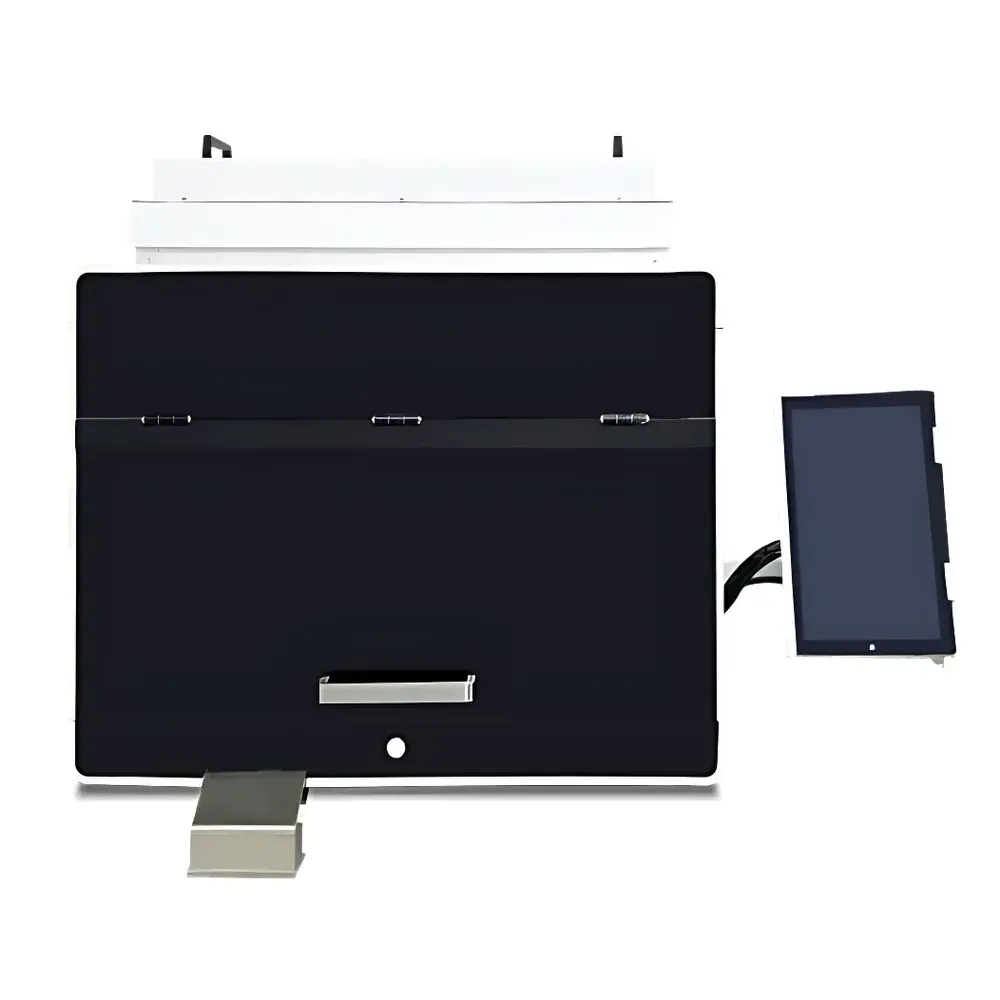
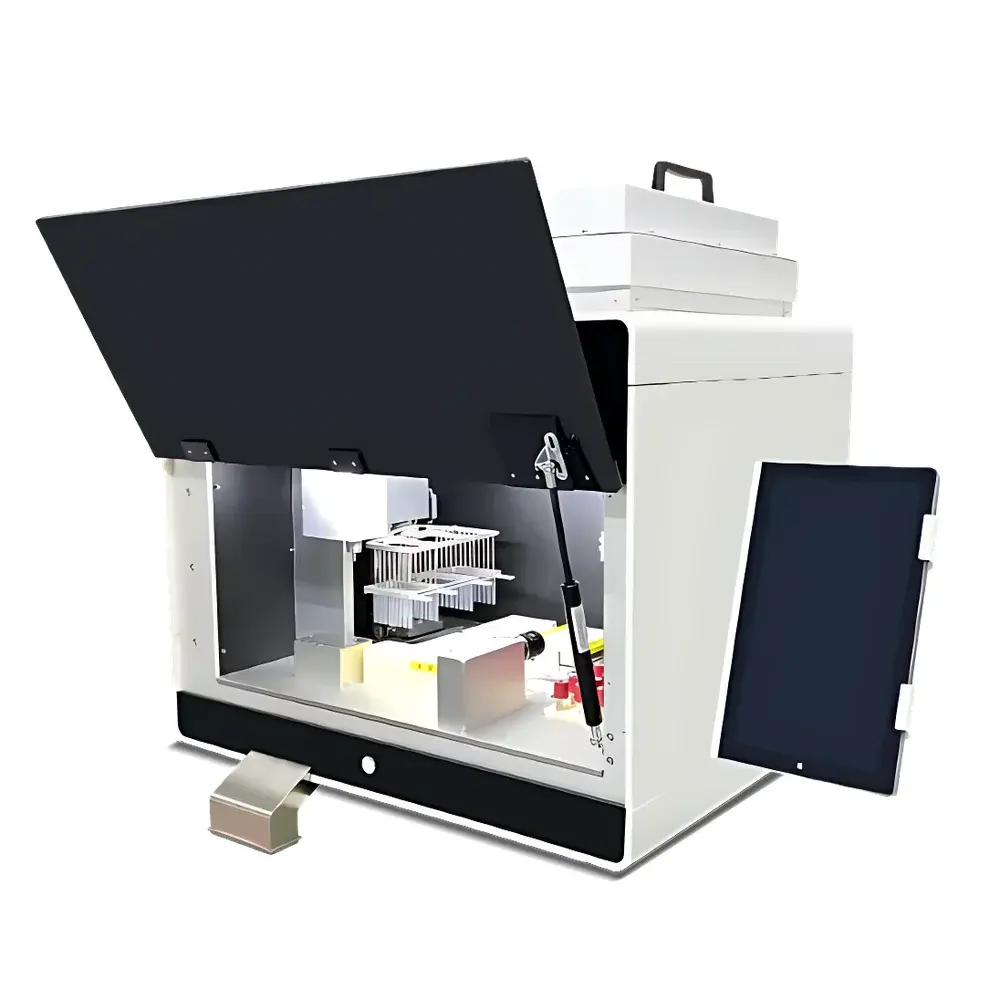
D.C. Labware ZY-B1 Fully Automated Single-Channel Serum Aliquoting Workstation
| Brand | D.C. Labware |
|---|---|
| Origin | Guangdong, China |
| Manufacturer Type | Authorized Distributor |
| Regional Classification | Domestic (PRC) |
| Model | ZY-B1 |
| Instrument Form Factor | Benchtop |
| Functional Modules | Automatic Tube Cap Opening |
| Sample Throughput | 1–96 tubes per run |
| Sample Types | Whole Blood, Serum, Buffy Coat |
| Pipetting Volume Range | 20–1000 µL |
| Pipetting Speed | ≤20 seconds per tube |
| Pipetting Accuracy | <5% CV at 20 µL |
Overview
The D.C. Labware ZY-B1 Fully Automated Single-Channel Serum Aliquoting Workstation is an engineered solution for high-integrity, traceable sample partitioning in clinical diagnostics, biobanking, and translational research laboratories. Designed around a precision single-channel positive-displacement pipetting architecture, the system executes volumetric aliquoting based on calibrated air displacement principles under controlled environmental conditions. It integrates real-time CCD-based optical recognition to identify tube barcodes or QR codes—whether pre-printed on cryovials, microtubes, or 96-well plates—enabling unambiguous sample tracking from primary collection tube to destination container. The workstation operates within a defined ISO Class 7 (10,000) clean-air envelope when used inside laminar flow hoods or biosafety cabinets, supporting GLP-compliant workflows where chain-of-custody integrity is mandatory. Unlike multi-channel platforms optimized for homogeneous plate-to-plate transfers, the ZY-B1 prioritizes flexibility and traceability in heterogeneous sample routing—making it especially suited for serum banking, longitudinal cohort studies, and IVD assay development requiring stratified aliquoting across multiple downstream assays.
Key Features
- Single-channel positive-displacement pipetting with integrated cap-piercing and auto-opening mechanism for sealed primary blood tubes (e.g., BD Vacutainer®, Sarstedt Monovette®)
- CCD vision system with configurable focus and contrast optimization for reliable barcode/QR code reading—even on frost-covered or low-contrast labels
- Benchtop footprint (W × D × H: 580 × 520 × 420 mm) compatible with standard laboratory bench layouts and modular automation integration
- Onboard calibration verification protocol compliant with ISO 8655-6 and CLSI EP10-A3 guidelines for volumetric accuracy assessment
- Modular software architecture supporting user-defined aliquot schemes—including volume-splitting logic (e.g., 200 µL × 3 destinations per source tube) and conditional routing rules
- Non-contact UV-C decontamination cycle between runs (optional add-on module), reducing cross-contamination risk during high-turnover operations
Sample Compatibility & Compliance
The ZY-B1 accommodates standard clinical specimen containers: 13 mm × 75 mm and 16 mm × 100 mm round-bottom polypropylene tubes, as well as 96-well PCR plates (full-skirted or semi-skirted). It supports common anticoagulants (EDTA, heparin, citrate) and serum separator gel tubes without compromising phase integrity during aspiration. All fluidic pathways are constructed from medical-grade PTFE and chemically inert stainless-steel components rated for repeated exposure to human biofluids. The system meets IEC 61000-6-2 (immunity) and IEC 61000-6-3 (emissions) electromagnetic compatibility standards. Its audit trail functionality satisfies FDA 21 CFR Part 11 requirements for electronic records and signatures when paired with validated LIMS interfaces (e.g., LabVantage, STARLIMS, or custom HL7/FHIR endpoints).
Software & Data Management
Controlled via Windows-based D.C. AliquotSuite™ v3.2, the workstation provides role-based access control (RBAC), timestamped event logging, and full export of raw operation logs in CSV/JSON formats. Each aliquoting event captures: source tube ID, destination container ID, aspirated volume, dispense volume, time stamp, operator ID, and system error flags (if any). The software includes built-in validation templates aligned with ISO/IEC 17025 Annex A.5 for method verification and supports automated generation of ALCOA+ compliant reports (Attributable, Legible, Contemporaneous, Original, Accurate). Integration with enterprise LIMS is achieved through RESTful API or ODBC drivers, enabling bidirectional synchronization of sample metadata and processing status.
Applications
- Clinical biobanking: Stratified aliquoting of serum/plasma into storage tubes for long-term cryopreservation at –80°C or liquid nitrogen
- Diagnostic assay preparation: Pre-aliquoting of patient sera into ELISA, multiplex immunoassay, or mass spectrometry-ready plates
- Reference material distribution: Reproducible partitioning of certified reference sera across proficiency testing panels
- Regulatory submission support: Generation of auditable, timestamped records required for FDA BLA/MAA dossiers and EMA scientific advice meetings
- Research cohort management: Automated assignment of aliquots to specific study arms, timepoints, or analytical platforms using rule-based logic
FAQ
Does the ZY-B1 support direct integration with hospital LIS systems?
Yes—via HL7 v2.x messaging or FHIR R4 interface adapters, subject to site-specific validation protocols.
Can the system handle frozen or refrigerated samples without thawing?
It accepts tubes stored at 2–8°C; however, samples must be equilibrated to room temperature prior to cap opening and aspiration to prevent condensation-induced misreads.
Is the pipetting accuracy verified per ISO 8655, and how often is recalibration required?
Accuracy verification is performed during IQ/OQ qualification and annually thereafter; field recalibration is supported using gravimetric methods traceable to NIST SRM 3120a.
What safety certifications does the unit hold for use in clinical labs?
It carries CE marking under Directive 2014/30/EU (EMC) and 2014/35/EU (LVD); additional UL/cUL listing is available upon request for North American deployment.
Can the CCD system read damaged or partially obscured barcodes?
The algorithm includes adaptive thresholding and morphological reconstruction filters, achieving >99.2% read success rate on ISO/IEC 15416 Grade C or higher symbols—even with up to 30% surface abrasion.




