
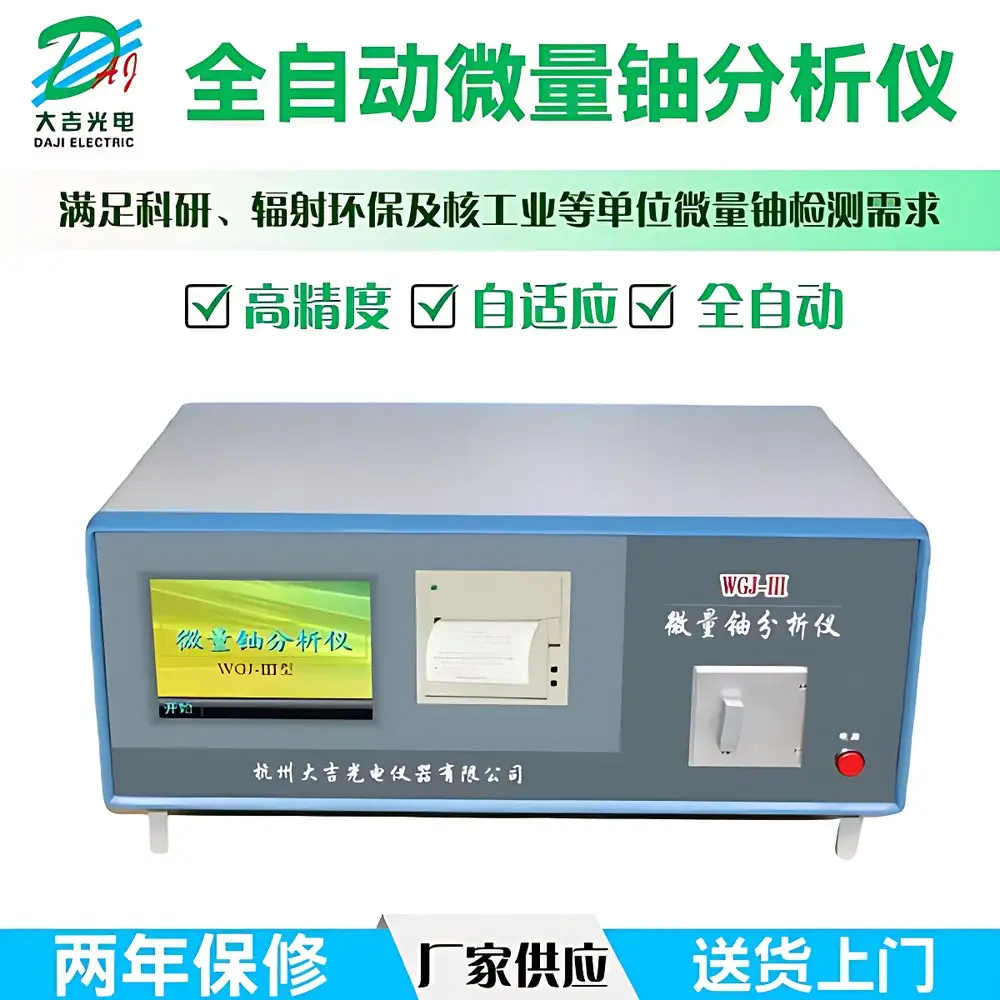
DAJ WGJ-III Uranium Trace Analyzer
| Brand | DAJ |
|---|---|
| Origin | Zhejiang, China |
| Manufacturer Type | OEM Manufacturer |
| Country of Origin | China |
| Model | WGJ-III |
| Price Range | USD 14,000 – 21,000 |
| Excitation Source | Imported Pulsed UV Lamp (254 nm nominal) |
| Detection Limit (D.L.) | ≤0.01 ng/mL (3σ definition) |
| Uranium Quantification Range | 0–100.0 ng/mL |
| Precision (RSD) | ≤3% |
| Linearity Correlation Coefficient | r ≥ 0.9998 |
| Accuracy | ≤8% |
| Data Storage Capacity | ≥500,000 data points with retained calibration curves |
| Warm-up Stability | ≤±7% RSD over 8 h (2 ng/mL U standard, post 1-h warm-up) |
| Operating Environment | 10–40 °C, <85% RH (at 30 °C) |
| Dimensions | 491 × 364 × 208 mm |
| Net Weight | 10 kg |
| Power Supply | AC 220 V ±10%, 50 Hz |
| Compliance | EJ/T 823–2017, HJ 840–2017, GB 23727–2020, HJ 61–2021, HJ 1009–2019, GB/T 5750–2023 |
Overview
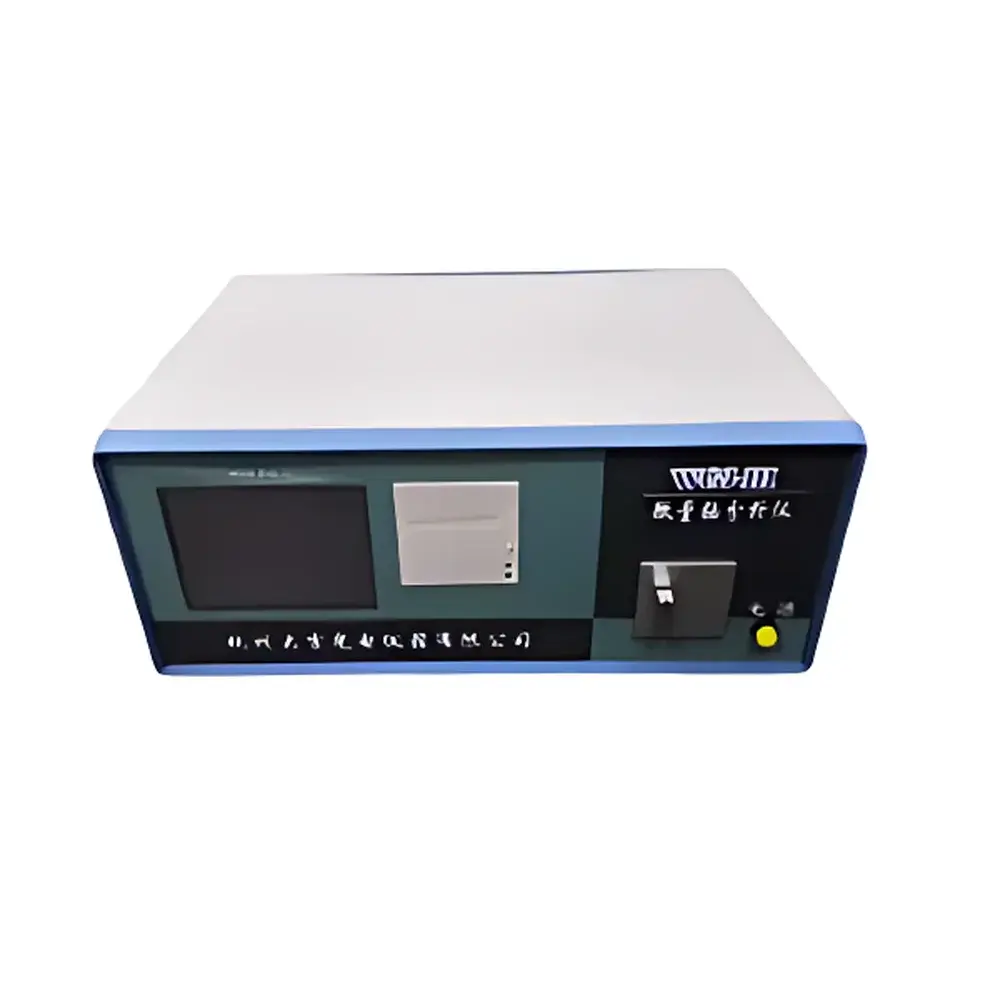
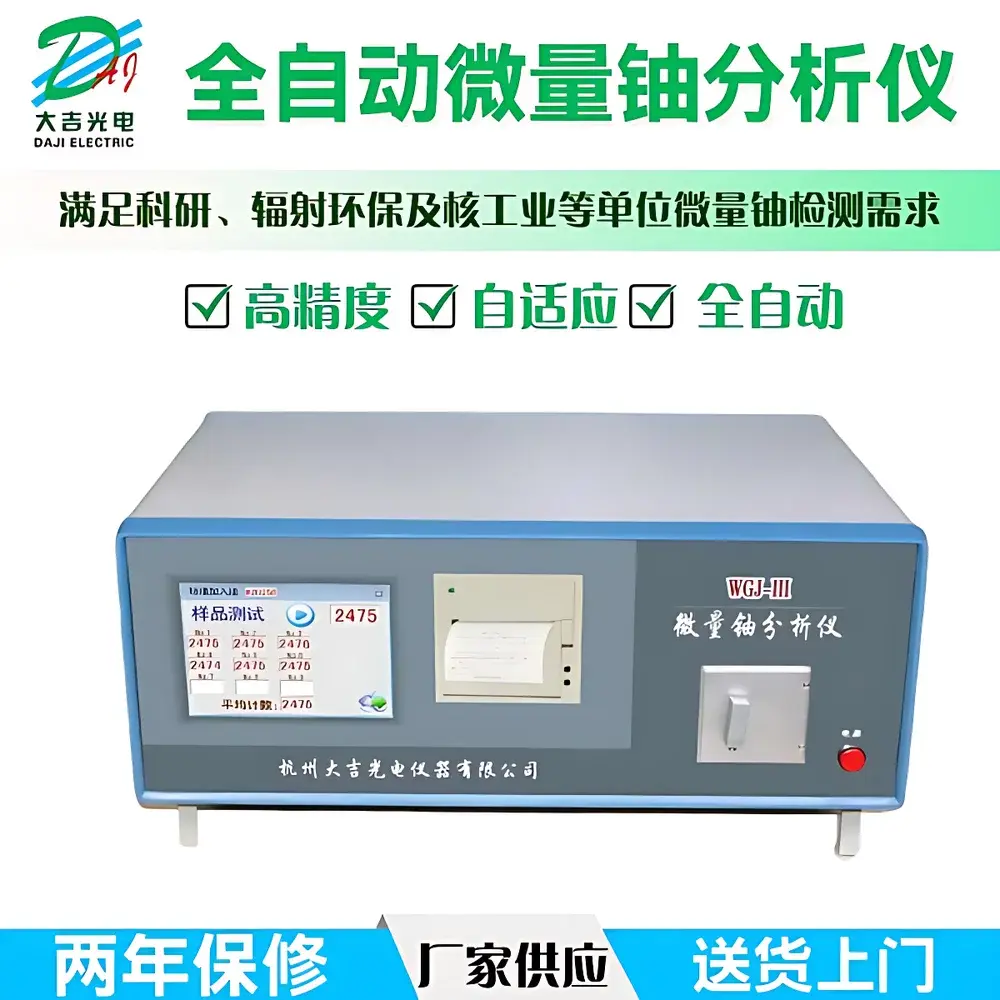
The DAJ WGJ-III Uranium Trace Analyzer is a benchtop fluorometric instrument engineered for the quantitative determination of ultra-trace uranium concentrations in aqueous environmental and nuclear industry samples. It operates on the principle of uranium-specific fluorescence enhancement—where uranyl ions (UO22+) form highly fluorescent ternary complexes with aromatic ligands (e.g., sodium salicylate or proprietary enhancers) under pulsed ultraviolet excitation at ~254 nm. Unlike legacy laser-based systems, the WGJ-III employs a solid-state, imported pulsed UV lamp with proven operational longevity (>8 years, >100,000 sample measurements), eliminating high-voltage arc instability and thermal drift associated with He-Cd or Ar-ion lasers. This design delivers superior long-term photometric stability, reduced maintenance intervals, and compliance with EJ/T 823–2017—the Chinese national standard governing performance validation, linearity verification, detection limit assessment, and inter-laboratory reproducibility for uranium fluorometers.
Key Features
- Stable pulsed UV excitation source with >100,000-cycle operational lifetime—no lamp replacement required during typical service life
- Integrated microprocessor-controlled sample agitation: built-in mechanical oscillator eliminates external shakers and ensures uniform complex formation prior to measurement
- 7-inch capacitive touch LCD interface with step-by-step Chinese/English bilingual prompts—fully guided workflow from reagent addition to report generation
- Dual quantification modes: standard addition and multi-point calibration curve fitting with automatic linear regression (y = ax + b) and real-time correlation coefficient (r) display
- Onboard thermal printer (front-accessible) for immediate hard-copy reporting; RS232 serial port and 100Base-T4 Ethernet interface for secure, audit-ready data export to LIMS or laboratory PCs
- Non-volatile memory stores ≥500,000 measurement records—including full calibration history, timestamps, operator IDs, and raw fluorescence intensities
- Self-optimizing gain and integration time selection based on sample fluorescence intensity—enabling dynamic range adaptation from sub-0.01 ng/mL to 100 ng/mL without manual range switching
Sample Compatibility & Compliance
The WGJ-III accepts directly measured liquid-phase samples—including groundwater, surface water, leachates, process effluents, and acid-digested soil/sediment extracts—without pre-concentration or matrix separation. Solid samples require only dissolution in dilute nitric acid followed by pH adjustment and enhancer addition. The system meets all metrological requirements specified in EJ/T 823–2017 (fluorescence quantum yield validation, blank correction protocols, spike recovery criteria) and supports regulatory alignment with HJ 840–2017 (environmental uranium speciation), GB 23727–2020 (uranium release limits in uranium mining), and GB/T 5750–2023 (drinking water uranium MCL verification). Its documented accuracy (≤8%), precision (RSD ≤3%), and detection limit (0.01 ng/mL, 3σ) satisfy QA/QC thresholds for Class II environmental monitoring laboratories under CNAS-CL01:2018 accreditation frameworks.
Software & Data Management
Firmware implements embedded deterministic real-time control with timestamped event logging. All analytical sessions are tagged with operator ID, sample ID, calibration status, and environmental sensor readings (ambient temperature/humidity if externally interfaced). Data export via Ethernet conforms to TCP/IP socket protocol with optional CSV or XML formatting—compatible with ELN platforms and FDA 21 CFR Part 11-compliant audit trail modules when deployed behind institutional firewalls. Internal storage retains calibration curves across power cycles; no battery-backed RAM is required. Firmware updates are performed via USB flash drive with cryptographic signature verification to prevent unauthorized modification.
Applications
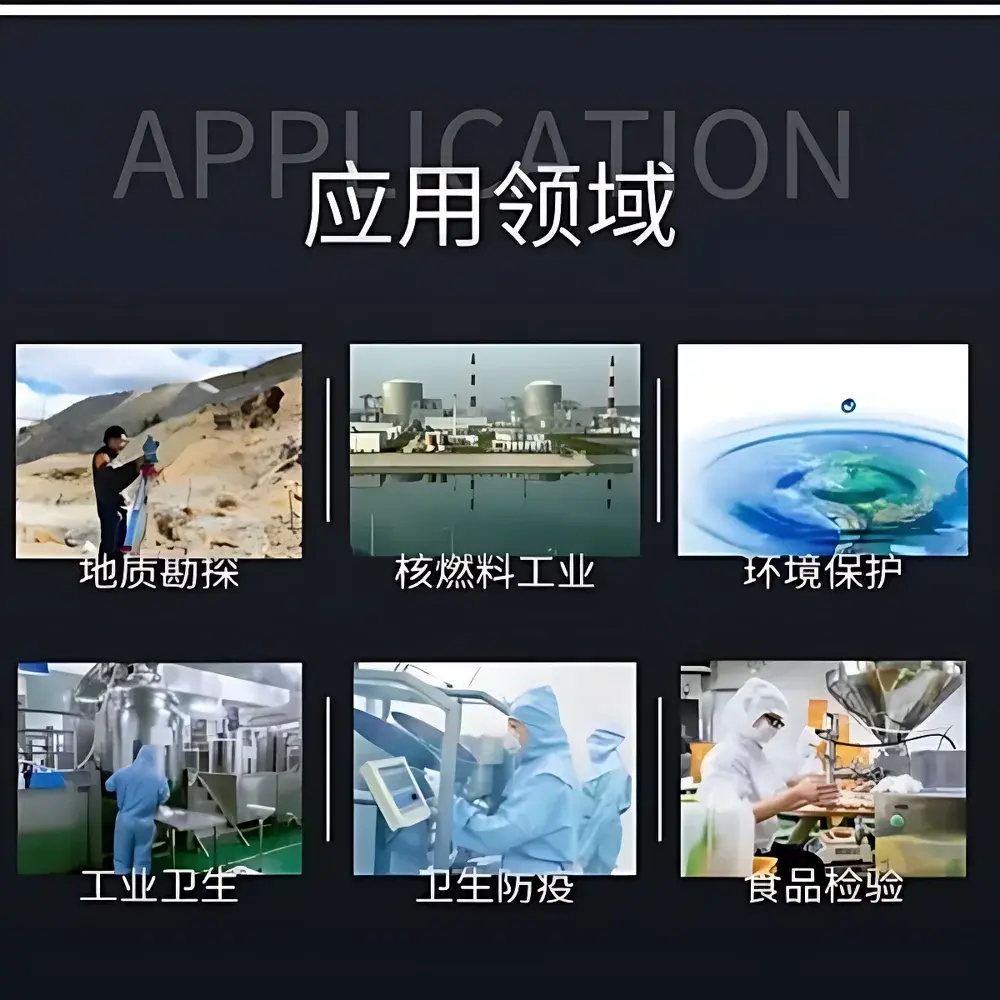
- Environmental surveillance of uranium contamination near mining sites, mill tailings, and decommissioned nuclear facilities
- Regulatory compliance testing for drinking water (GB/T 5750–2023), wastewater discharge (HJ 61–2021), and air filter leachates (HJ 1009–2019)
- Process control in uranium enrichment facilities and fuel fabrication plants
- Geochemical prospecting and hydrogeochemical mapping of uranium-bearing aquifers
- Research applications in actinide speciation, colloid-facilitated transport, and redox-dependent uranium mobility studies
FAQ
What is the certified detection limit per EJ/T 823–2017?
The instrument achieves a method detection limit (MDL) of ≤0.01 ng/mL, determined statistically as three times the standard deviation of ten consecutive blank measurements.
Does the system support GLP/GMP data integrity requirements?
Yes—audit trails, electronic signatures (via optional network authentication), and immutable data logs meet core ALCOA+ principles when integrated into validated IT infrastructure.
Can solid samples be analyzed without digestion?
No—solid matrices require acid dissolution (typically 2–4 M HNO₃) and filtration prior to analysis; direct solid measurement is not supported.
Is the UV lamp user-replaceable?
Yes—the lamp module is field-swappable using standard Torx tools; replacement kits include optical alignment fixtures and factory recalibration certificates.
What is the warranty coverage and service response time?
DAJ provides a 24-month parts-and-labor warranty covering manufacturing defects; on-site installation and commissioning are included; remote diagnostics and firmware support are available globally via secure VPN.
Related Products







