
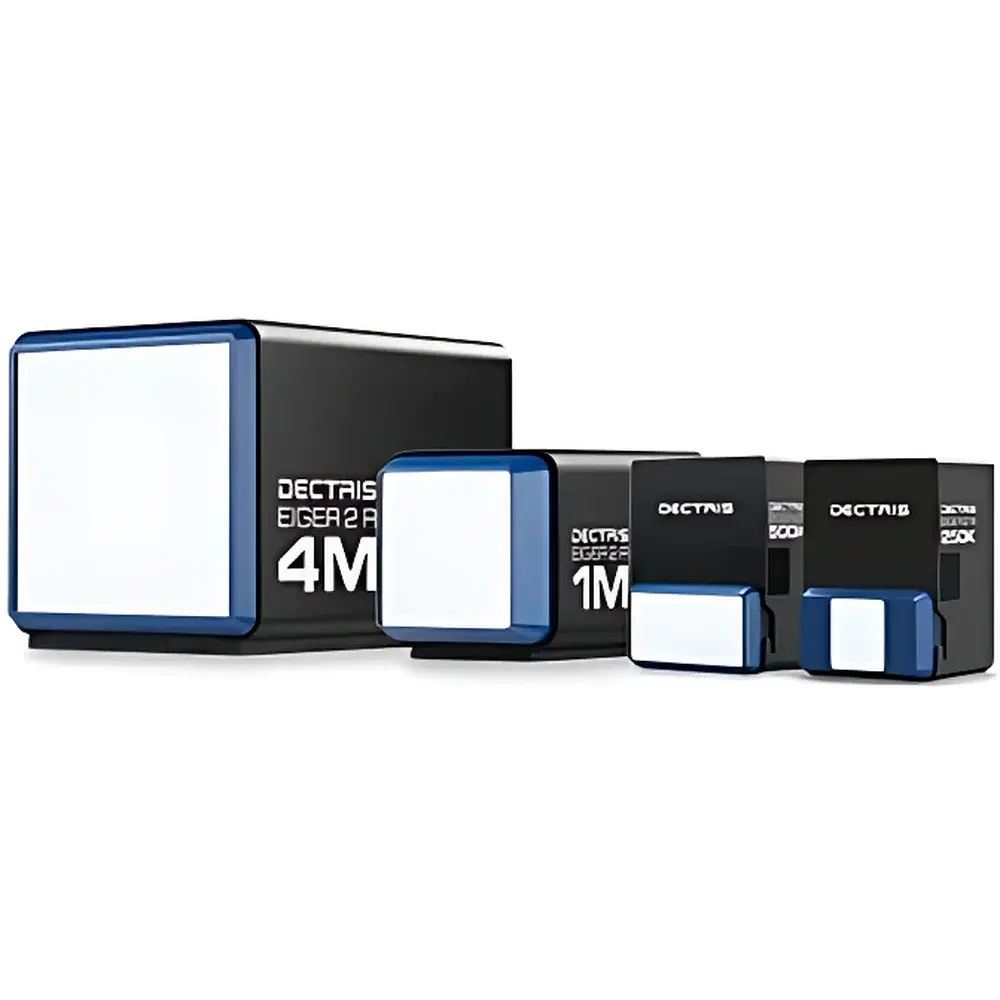
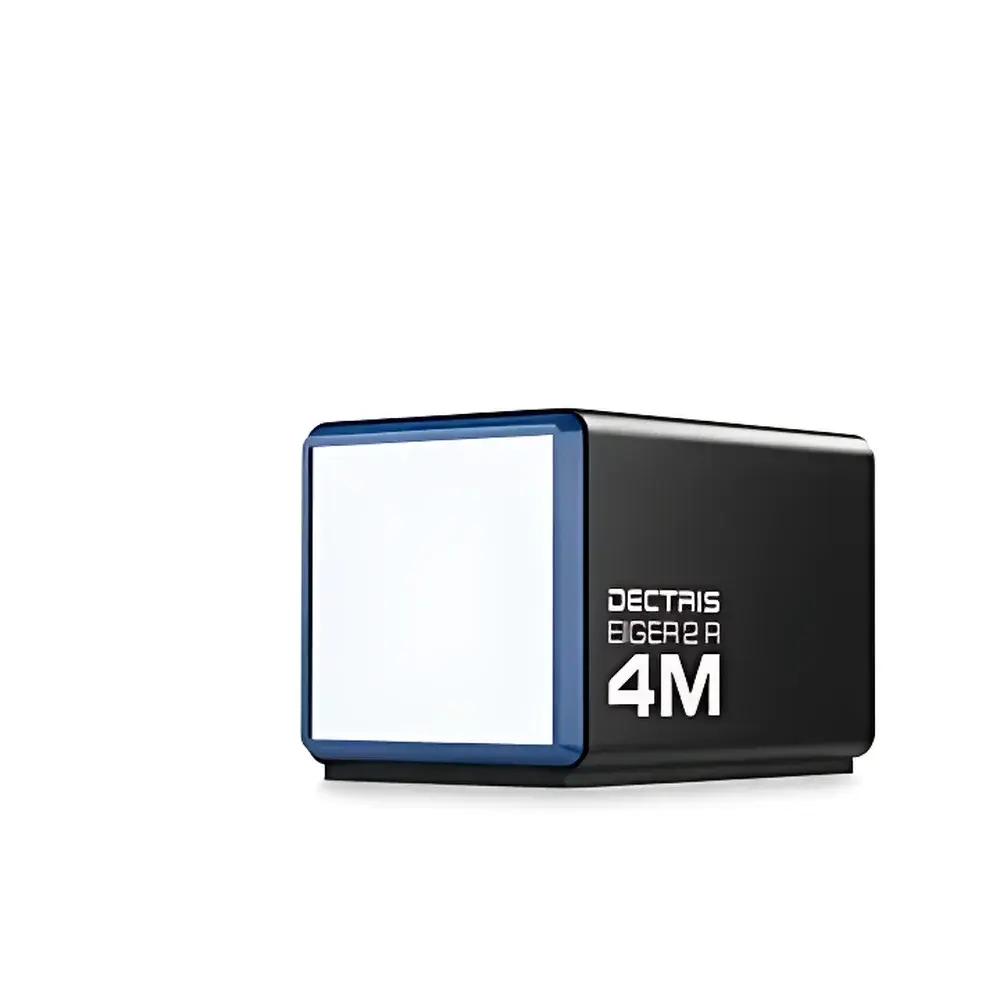
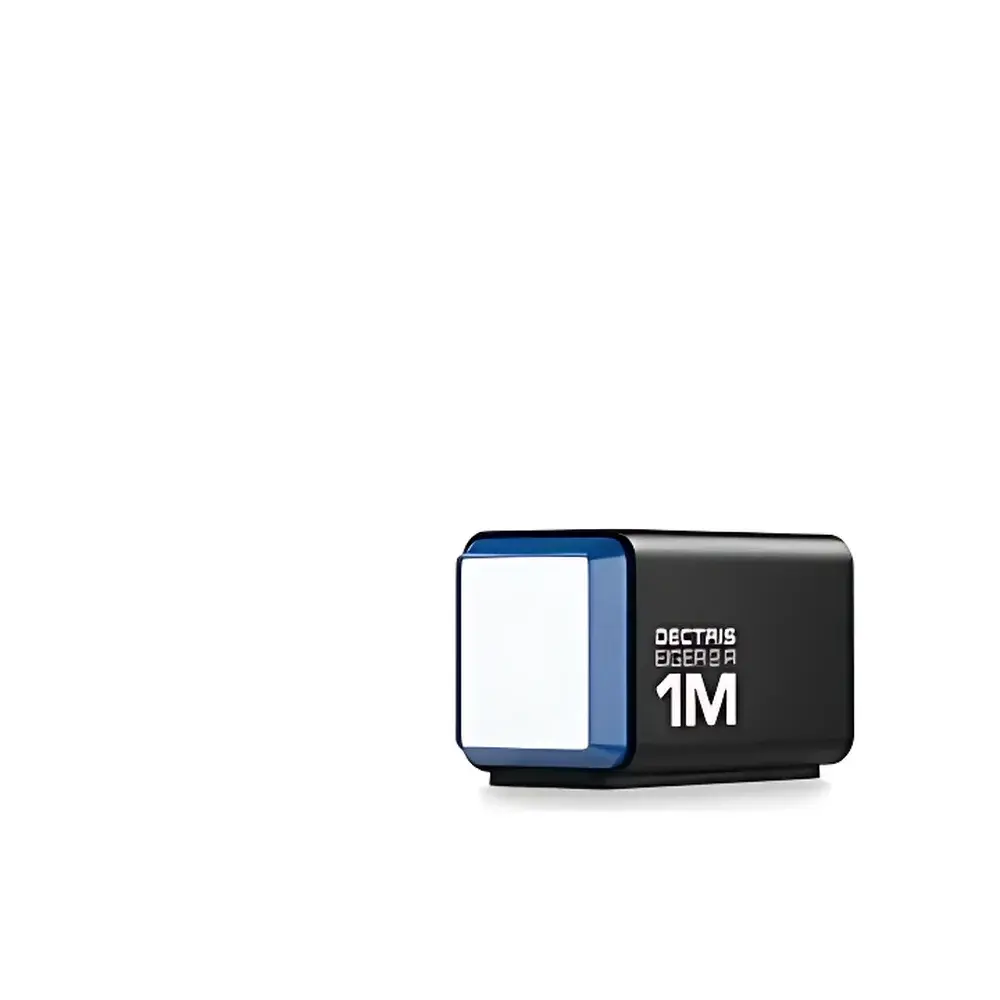
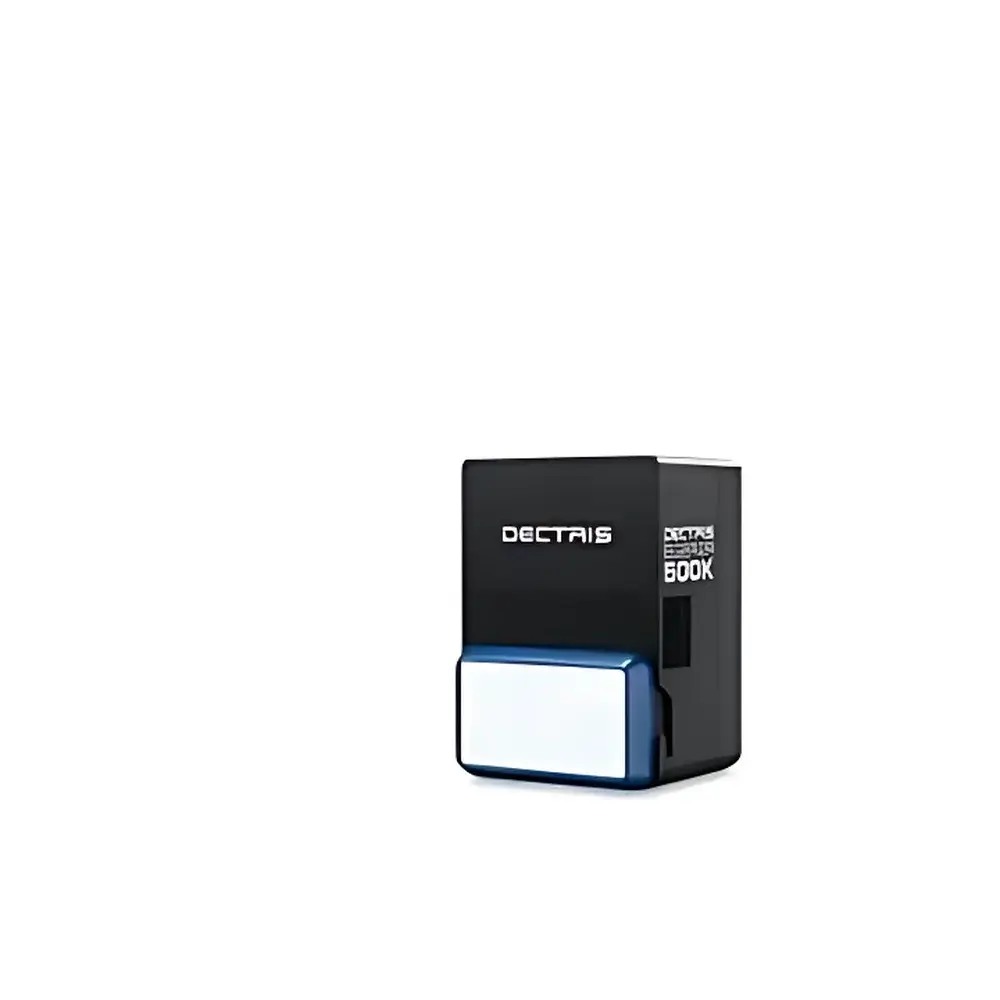
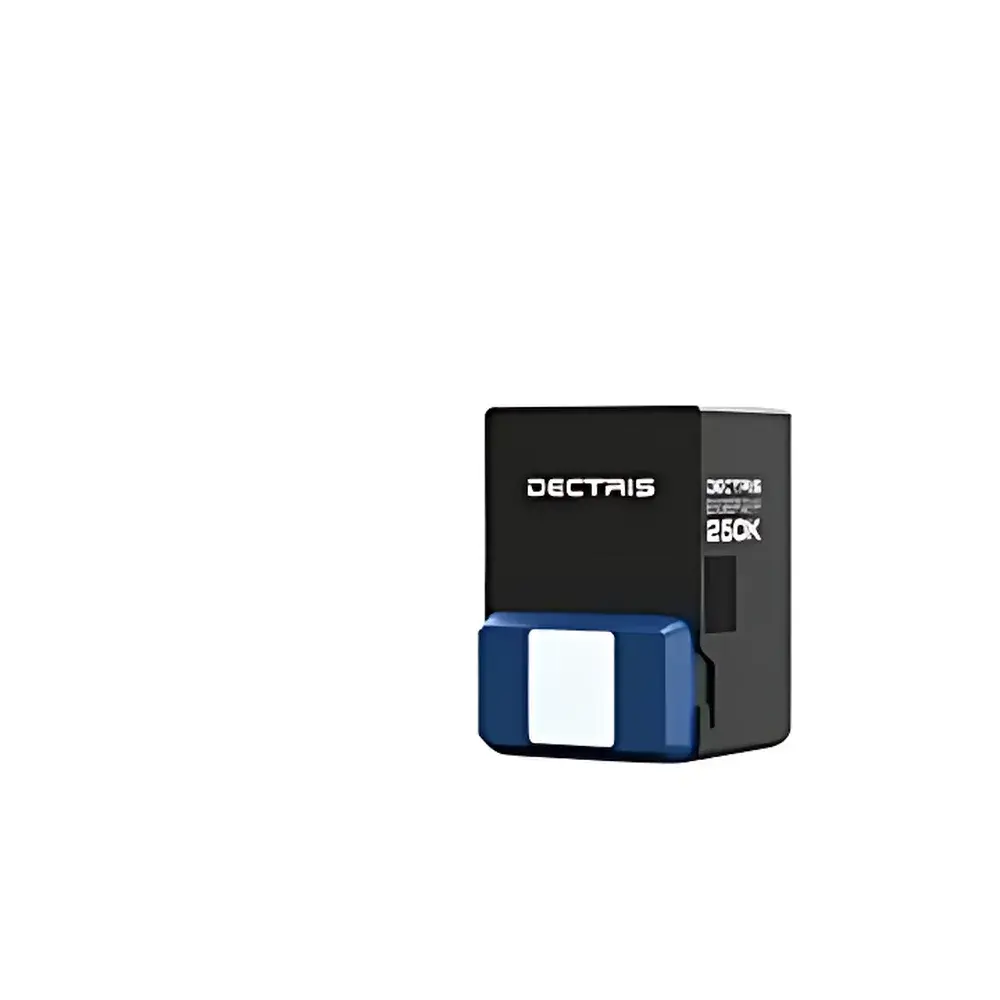
DECTRIS EIGER2 R Hybrid Pixel Photon-Counting X-ray Detector
| Brand | DECTRIS |
|---|---|
| Origin | Switzerland |
| Model | EIGER2 R |
| Detector Module Count | 1 / 2 / 4 |
| Active Area (W×H) | 77.2×38.6 mm² / 77.1×79.7 mm² / 155.1×162.2 mm² |
| Pixel Size | 75×75 µm² |
| Point Spread Function | 1 pixel |
| Energy Thresholds | 2 |
| Threshold Range | 3.5–30 keV |
| Maximum Count Rate | 6.9×10⁸ cps/mm² |
| Counter Depth | 2×16 bit per threshold |
| Frame Rate | 50 / 100 / 20 Hz |
| Readout Mode | Simultaneous read/write, zero dead time |
| Image Bit Depth | 32 bit |
| Vacuum Compatibility | Optional |
| Cooling | Air / Water / Water |
| Dimensions (W×H×D) | 100×140×93 mm³ / 114×133×240 mm³ / 235×235×372 mm³ |
| Weight | 1.8 / 4.7 / 15 kg |
Overview
The DECTRIS EIGER2 R is a high-performance hybrid pixel photon-counting X-ray detector engineered for synchrotron and laboratory-based diffraction and scattering applications. Built upon DECTRIS’ proprietary direct-conversion silicon sensor technology, the EIGER2 R operates on the principle of single-photon counting with energy discrimination—enabling noise-free detection down to the single X-ray photon level. Unlike integrating detectors, it eliminates readout noise and dark current, delivering quantitative intensity data with intrinsic linearity and exceptional dynamic range. Its small 75 µm pixel pitch and direct detection architecture maximize spatial and angular resolution—critical for precise reciprocal-space mapping in macromolecular crystallography (MX), chemical crystallography, and surface-sensitive techniques such as X-ray reflectivity (XRR). The dual-threshold capability allows real-time background suppression by rejecting low-energy scatter and fluorescence, while maintaining high-fidelity signal retention across extended exposure times.
Key Features
- Zero-dead-time operation: Simultaneous readout and acquisition eliminate frame loss, enabling continuous, uninterrupted data collection even at high flux conditions.
- Two independent energy thresholds: Configurable between 3.5 keV and 30 keV, supporting advanced background rejection, fluorescence filtering, and multi-energy contrast imaging.
- High count-rate capability: Sustained performance up to 6.9×10⁸ counts per second per mm² ensures fidelity under intense beam conditions typical of undulator-fed beamlines.
- Vacuum-compatible variants: Optional vacuum-rated housings reduce air absorption and window-induced scattering—essential for soft X-ray applications and ultra-high-resolution SAXS/WAXS experiments.
- Modular scalability: Available in three configurations (R500K, R1M, R4M) with 1, 2, or 4 detector modules, supporting flexible integration into goniometers, diffractometers, and custom beamline endstations.
- Maintenance-free operation: Solid-state design with no moving parts or consumables; air-, water-, or recirculating-water cooling options ensure stable thermal management across duty cycles.
Sample Compatibility & Compliance
The EIGER2 R is compatible with a broad spectrum of sample environments—including cryo-cooled MX loops, capillary-mounted powders, thin-film substrates, and liquid-phase SAXS cells. Its robust mechanical design meets ISO 14644-1 Class 5 cleanroom handling requirements for installation in protected hutch enclosures. All firmware and control software comply with IEC 62443-3-3 for industrial cybersecurity and support audit-ready metadata logging aligned with GLP and GMP workflows. While not FDA-cleared as a medical device, its data integrity features—including timestamped frame headers, checksummed image buffers, and non-volatile configuration storage—meet essential criteria for regulated research environments governed by 21 CFR Part 11 when deployed with validated acquisition software stacks.
Software & Data Management
The detector integrates natively with DECTRIS’ dcu (detector control unit) firmware and the open-source pyFAI, CrystFEL, and DIALS ecosystems via standardized area detector protocols (ADSC, Pilatus, CBF). Real-time data streaming supports HDF5/NeXus format output with embedded experimental metadata (wavelength, distance, beam center, motor positions), ensuring full traceability for FAIR data principles. The included EIGER Control Software provides intuitive GUI-based threshold calibration, gain matching, and geometry refinement tools—all exportable as JSON or YAML configuration files for reproducible setup replication. Remote operation over GigE Vision or Camera Link HS enables centralized monitoring across multi-detector facilities without compromising latency-sensitive shutter synchronization.
Applications
- Macromolecular crystallography (MX): High-resolution structure determination from microcrystals and radiation-sensitive samples, leveraging low-noise counting and dose-efficient exposure strategies.
- Chemical crystallography: Accurate charge-density analysis and absolute structure determination requiring precise intensity quantification and minimal background interference.
- SAXS/WAXS: Time-resolved studies of polymer dynamics, protein folding, and nanoparticle assembly, benefiting from high frame rates and dual-energy scatter discrimination.
- Powder X-ray diffraction (PXRD): Quantitative phase analysis and Rietveld refinement enabled by linear response over seven orders of magnitude intensity range.
- X-ray reflectivity (XRR) and grazing-incidence scattering: Sub-angstrom interfacial resolution supported by high spatial uniformity and low point-spread function.
FAQ
What cooling options are available for the EIGER2 R series?
Air cooling is standard for the R500K model; water cooling is required for R1M and R4M configurations to maintain thermal stability during sustained high-frame-rate acquisition.
Is vacuum compatibility mandatory for soft X-ray work?
Vacuum-rated versions are optional but strongly recommended below 5 keV to minimize photoelectric absorption in air and beryllium windows, thereby preserving quantum efficiency and angular resolution.
Can the EIGER2 R be synchronized with external shutters or laser pulses?
Yes—the detector supports TTL-triggered acquisition with sub-microsecond jitter and hardware-level gating, fully compatible with pump-probe and time-resolved diffraction setups.
How is energy calibration performed?
Energy thresholds are calibrated using monochromatic X-ray sources or fluorescence lines (e.g., Cu Kα, Ag Kα); DECTRIS provides reference scripts and uncertainty propagation guidelines in the technical documentation package.
Does the EIGER2 R support on-the-fly flat-field correction?
Flat-field normalization is applied in real time via FPGA-based gain correction; pixel-wise gain maps are generated during factory calibration and updated via user-supplied reference scans if needed.






