
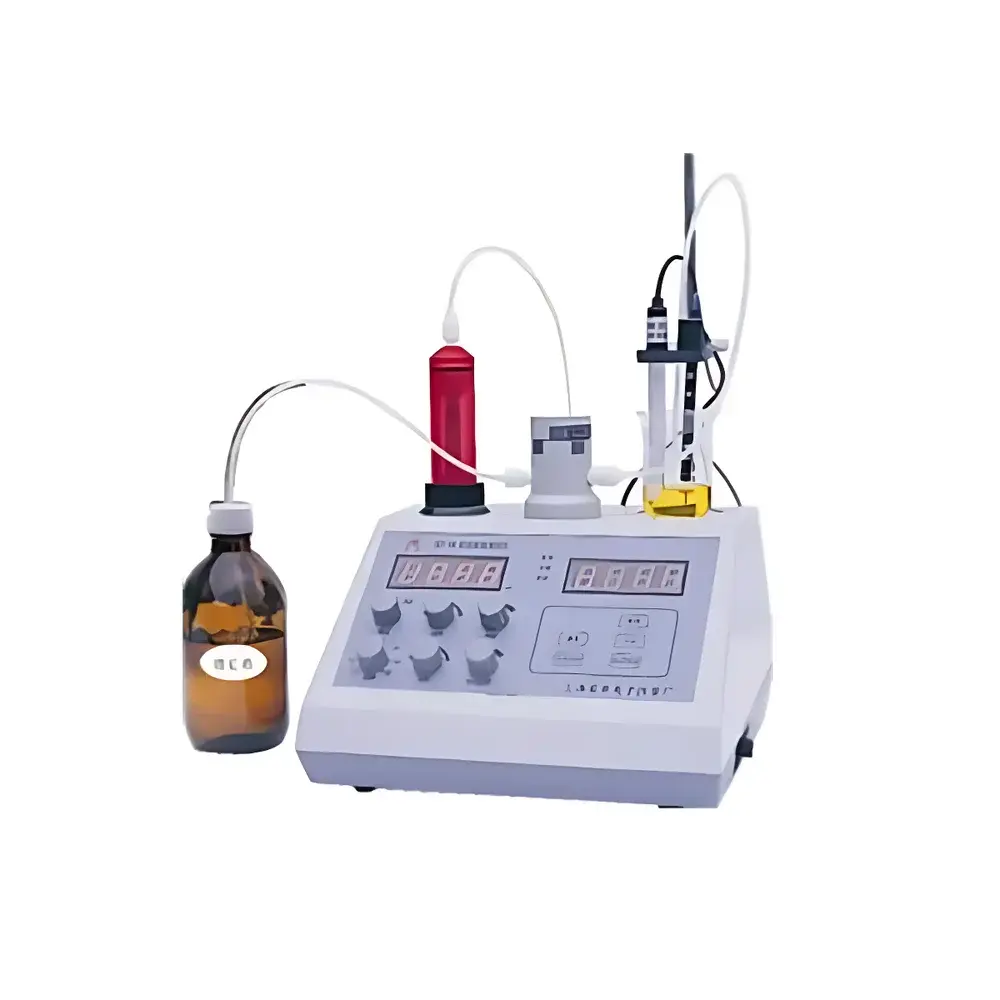
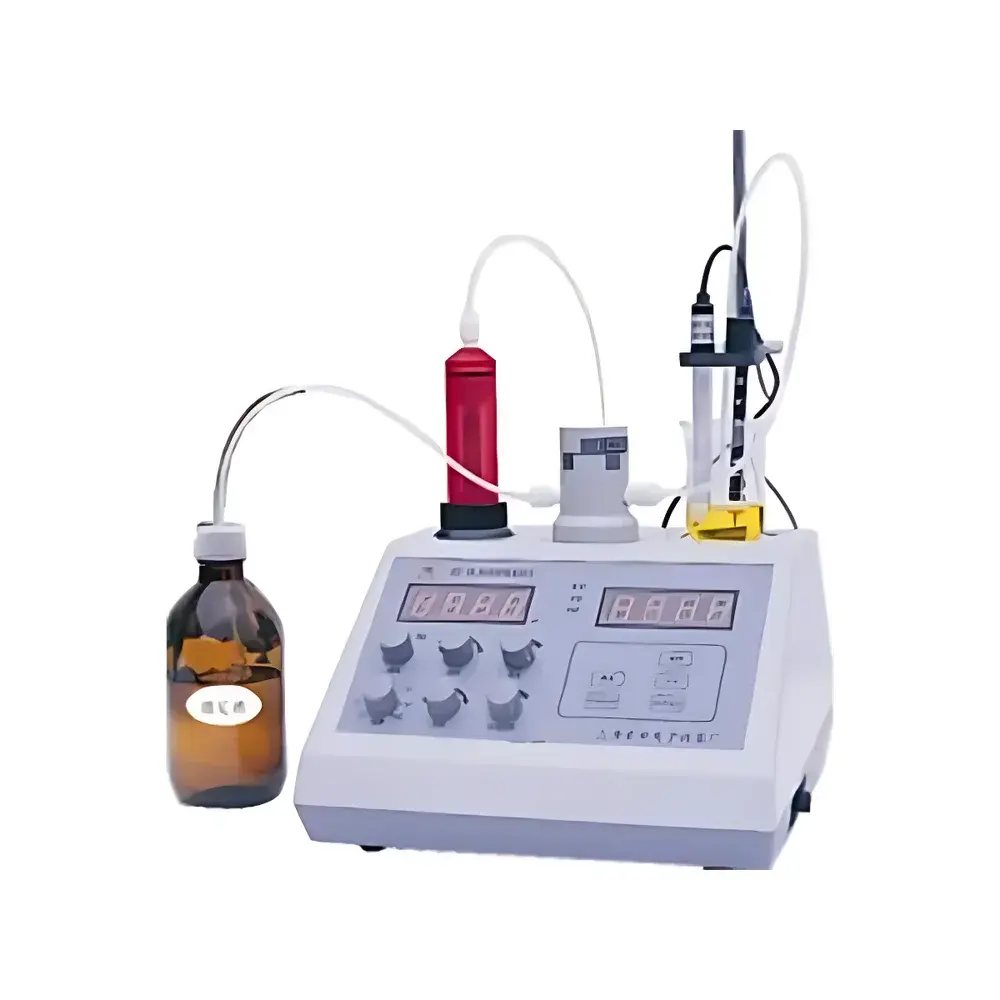
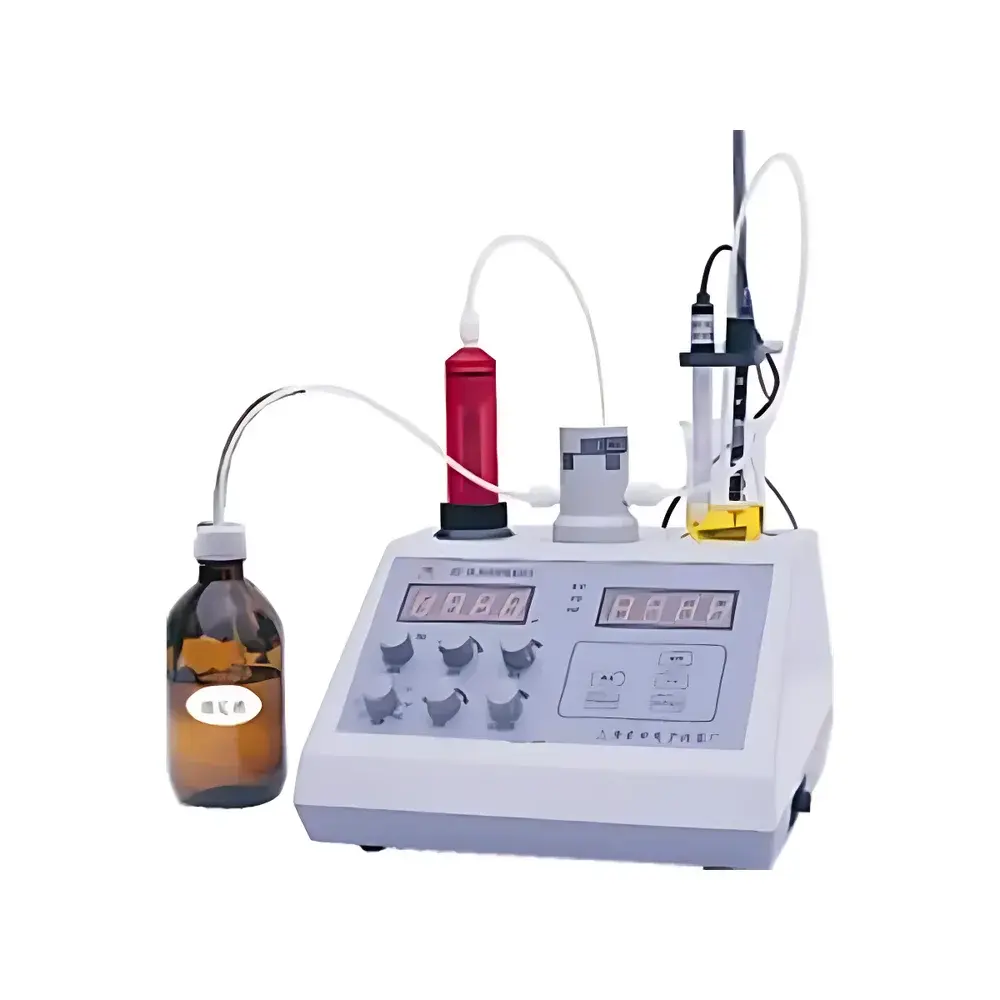
DELEITE APT300 Automatic Potentiometric Titrator
| Brand | DELEITE |
|---|---|
| Origin | Shanghai, China |
| Model | APT300 |
| Instrument Type | General-Purpose Potentiometric Titrator |
| Measurement Range | 0 to ±1999 mV, 0 to 14.00 pH |
| Accuracy | 0.1% F.S. (mV), ±0.01 pH |
| Control Precision | ±0.03 pH, ±3 mV |
| Input Impedance | >10¹² Ω |
| Operating Temperature | 5–40 °C |
| Relative Humidity | <85% RH |
| Power Supply | AC 220 V ±10%, 50 Hz |
| Power Consumption | 20 W |
| Weight | 6 kg |
Overview
The DELEITE APT300 Automatic Potentiometric Titrator is a microprocessor-controlled analytical instrument engineered for precision potentiometric and amperometric titrations—including dead-stop (biamperometric) titration as specified in the Chinese Pharmacopoeia 2005 edition. It operates on the fundamental electrochemical principle of monitoring potential or current changes at a working electrode pair during titrant addition, enabling endpoint detection based on inflection points in the titration curve or zero-current transitions in biamperometric mode. Designed for routine quality control, pharmaceutical assay validation, and academic research labs, the APT300 delivers reproducible endpoint determination across acid-base, redox, precipitation, and complexometric titrations. Its architecture integrates real-time signal acquisition, adaptive dosing control, and on-screen visualization—ensuring traceable, operator-independent results compliant with GLP-aligned workflows.
Key Features
- High-resolution 7-inch color TFT touchscreen interface with full Chinese-language GUI—enabling intuitive parameter configuration, method setup, and live titration monitoring without external software.
- Dual-mode detection capability: potentiometric (voltage-based) and biamperometric (current-null) endpoints, supporting pharmacopoeial dead-stop titration protocols per ChP 2005.
- Real-time graphical display of titration curves (E vs. V or I vs. V), with dynamic overlay of user-defined threshold lines and automatic endpoint marking.
- Programmable titration parameters including initial volume, incremental step size, endpoint sensitivity, delay time, and stop criteria—adjustable via interactive prompts.
- Input impedance exceeding 10¹² Ω ensures minimal loading error with high-impedance reference and indicator electrodes (e.g., Ag/AgCl, glass, platinum).
- Integrated RS-232 and USB interfaces support direct connection to PCs for data export, remote control via terminal emulation, or optional thermal printer output.
Sample Compatibility & Compliance
The APT300 accommodates standard 100–250 mL titration vessels and is compatible with commercially available combination electrodes, double-junction reference electrodes, and inert indicator electrodes (e.g., Pt wire, redox electrodes). It supports aqueous and moderately polar non-aqueous media (e.g., glacial acetic acid, methanol–water mixtures) within its operational pH and mV range. While not pre-certified for FDA 21 CFR Part 11, the system supports audit-trail-ready operation when paired with validated PC-based data acquisition software—facilitating alignment with ISO/IEC 17025, USP , and ChP general chapters on volumetric analysis. Its design adheres to IEC 61010-1 safety standards for laboratory electrical equipment.
Software & Data Management
Data acquisition and visualization occur natively on the embedded system; no proprietary PC software is required for basic operation. Titration curves, endpoint volumes, calculated concentrations, and metadata (date/time, operator ID, method name) are stored internally and exportable as CSV files via USB flash drive. When connected to a Windows PC, the device emulates a virtual COM port—allowing integration with third-party LIMS or custom Python/Matlab scripts for automated reporting. All displayed curves retain raw sensor readings at ≥1 Hz sampling rate, preserving fidelity for retrospective re-evaluation of endpoint algorithms.
Applications
- Pharmaceutical assay of active ingredients (e.g., sulfonamides, iodine, ascorbic acid) using amperometric endpoint detection per ChP and EP monographs.
- Quantification of chloride in water samples via argentometric titration with potentiometric endpoint.
- Determination of free acidity in edible oils and biodiesel feedstocks.
- Standardization of sodium hydroxide and hydrochloric acid solutions against certified primary standards (e.g., potassium hydrogen phthalate, sodium carbonate).
- Educational use in undergraduate analytical chemistry laboratories for teaching titration theory, electrode kinetics, and instrumental error analysis.
FAQ
Does the APT300 comply with USP or EP requirements for potentiometric titration?
It meets functional specifications outlined in USP and EP 2.2.20 for manual and automated potentiometric titration systems, though formal compliance documentation requires lab-specific validation per your SOPs.
Can the instrument perform back-titrations or multi-step titrations?
Yes—user-defined methods support conditional logic (e.g., “add titrant until ΔE/dV < X, then pause for 30 s, then resume”), enabling sequential additions and intermediate dilutions when integrated with auxiliary pumps or manual intervention.
Is electrode calibration performed automatically?
No—calibration is manual and follows standard two-point pH or single-point mV procedures; however, calibration data (slope, offset, asymmetry potential) is stored per electrode ID and applied to subsequent measurements.
What maintenance is required for long-term stability?
Routine cleaning of electrode junctions, periodic verification of stirrer speed consistency, and annual verification of mV/pH linearity using NIST-traceable buffer and redox standards are recommended.
Is firmware upgradable in the field?
Yes—firmware updates are delivered as .bin files via USB; upgrade procedure is guided by on-screen prompts and preserves all user methods and calibration records.





