
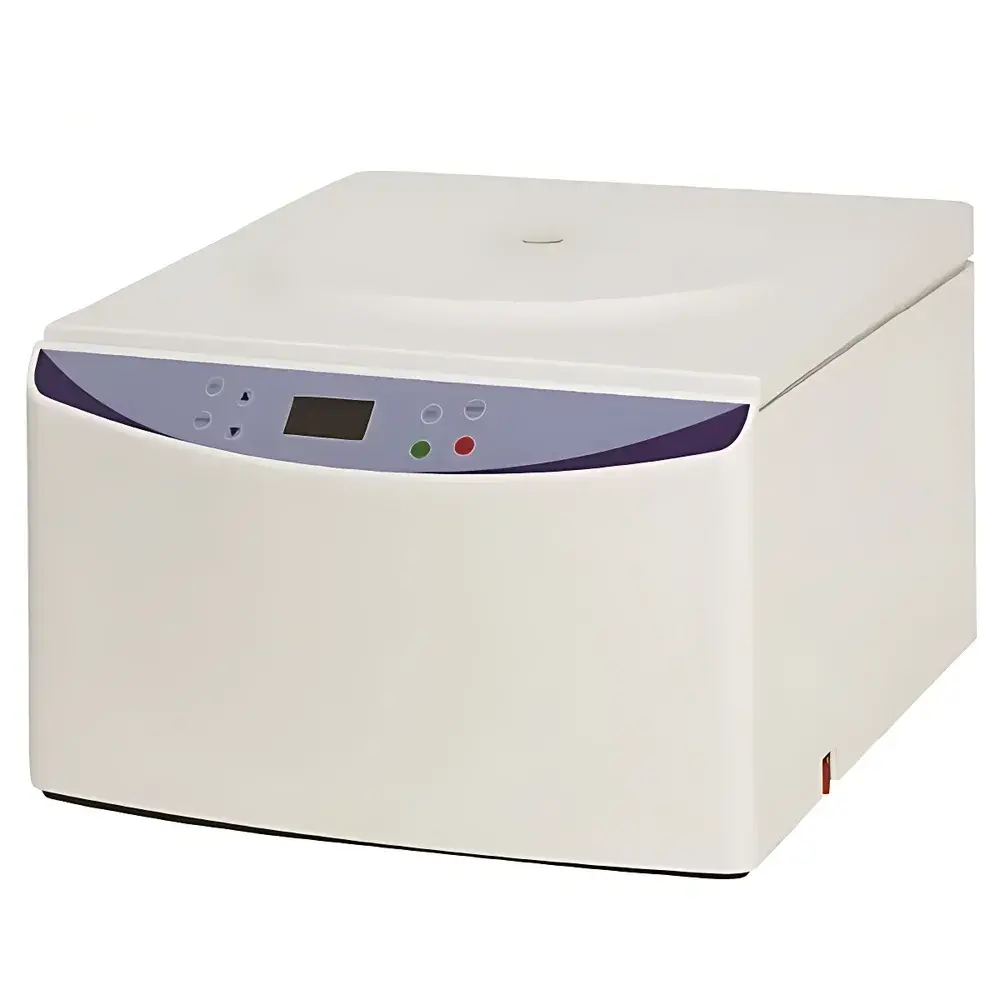
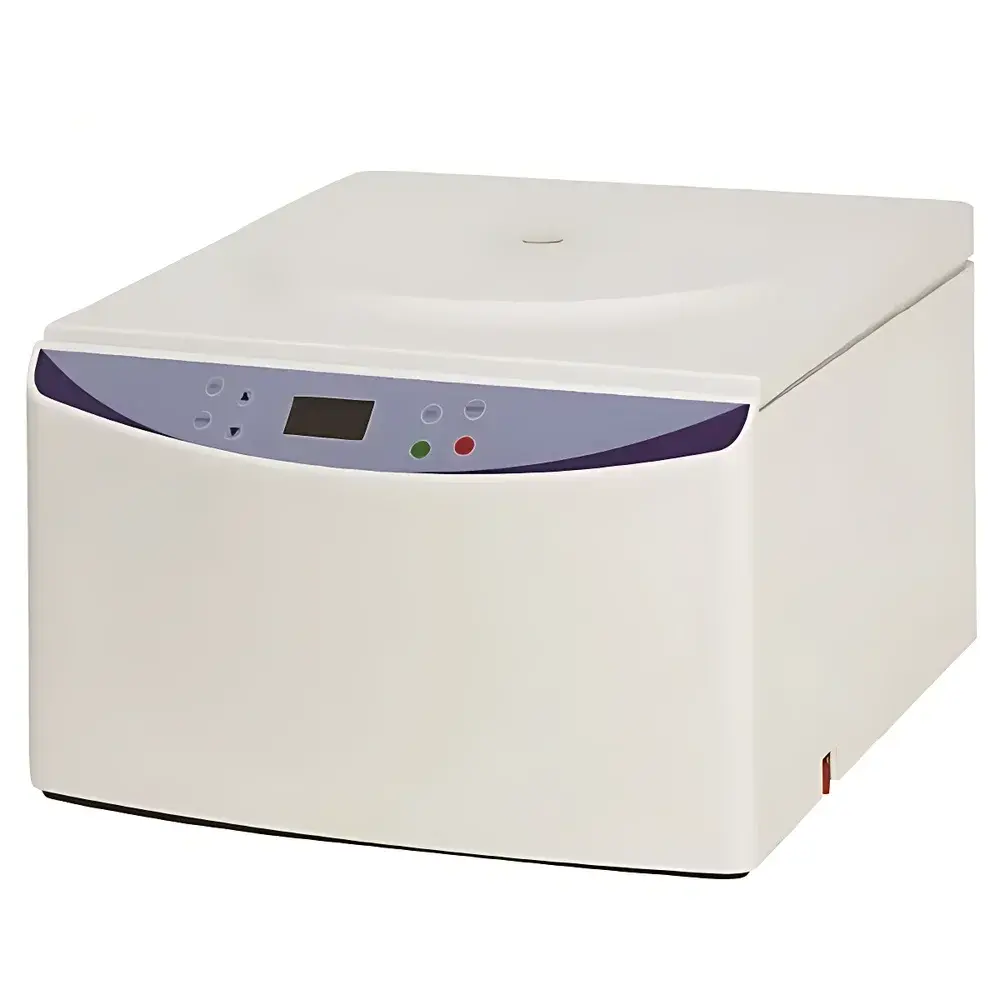
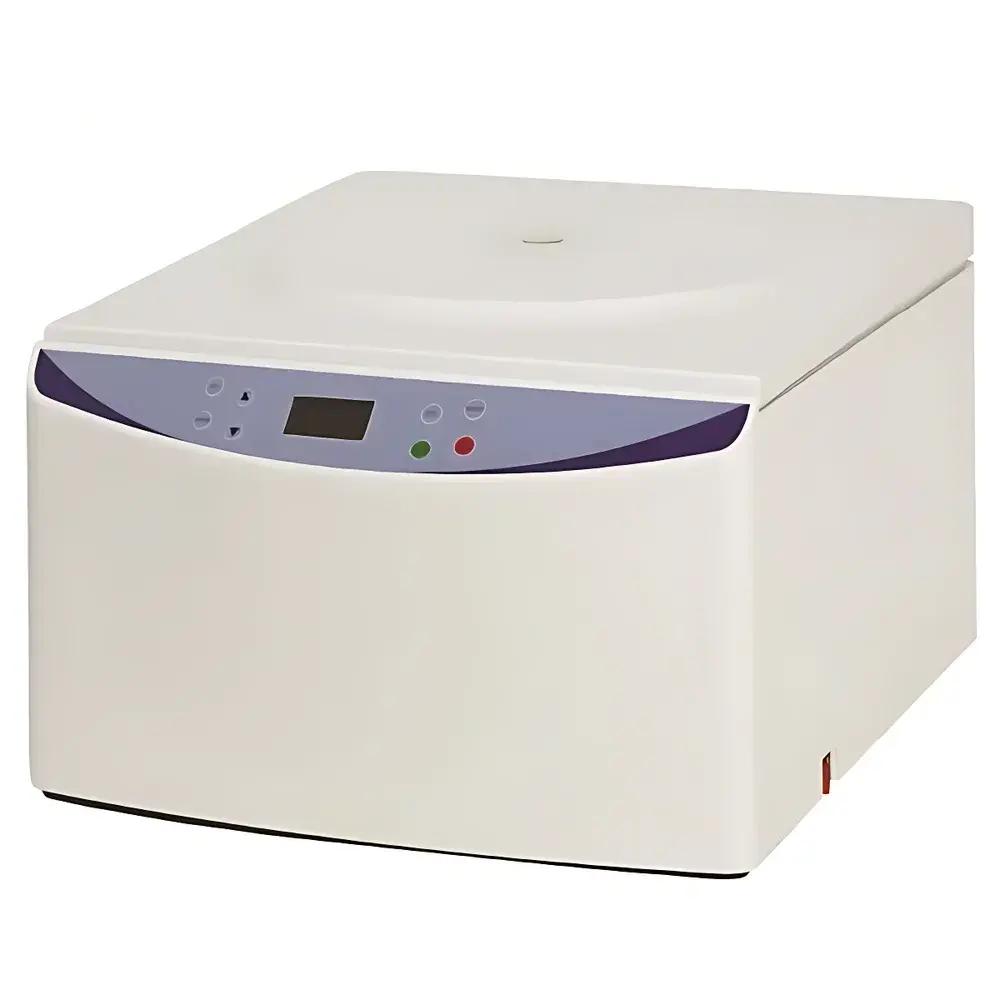
DELEITE DLT-LS55 Benchtop Low-Speed Centrifuge
| Brand | DELEITE |
|---|---|
| Origin | Shanghai, China |
| Model | DLT-LS55 |
| Instrument Type | Benchtop Centrifuge |
| Speed Range | 0–5500 rpm |
| Max RCF | 5310 × g |
| Max Capacity | 4 × 500 mL |
| Dimensions (L×W×H) | 460 mm × 540 mm × 340 mm |
| Noise Level | <65 dB(A) |
| Power Supply | AC 220 V, 50 Hz, 20 A |
| Net Weight | 31 kg |
| Speed Accuracy | ±30 rpm |
| Time Setting Range | 1 min – 99 h 59 min |
| Drive System | Microprocessor-Controlled AC Frequency Conversion Motor |
| Safety Features | Electronic Door Lock, Lid Interlock, Overspeed Protection, Automatic Fault Alarm |
| Acceleration/Deceleration Profiles | 10 Programmable Ramp Curves |
Overview
The DELEITE DLT-LS55 Benchtop Low-Speed Centrifuge is an engineered solution for routine and high-throughput sedimentation-based separations in clinical diagnostics, environmental monitoring, and life science laboratories. Designed according to the mechanical and operational principles of fixed-angle and horizontal rotor centrifugation, it delivers reproducible separation performance under controlled gravitational forces up to 5310 × g. Unlike ultracentrifuges (≥20,000 rpm), the DLT-LS55 operates within the low-speed centrifugation regime—optimized for pelleting cells, precipitating macromolecules, clarifying suspensions, and processing large-volume aqueous samples such as surface water matrices. Its compliance with HJ 91.2–2022, China’s national standard for on-site pretreatment of total phosphorus in surface water, underscores its suitability for environmental field-lab workflows where standardized centrifugation parameters (≥2000 rpm, ≥1 min duration, ≥1 L batch volume per run) are mandated for analyte recovery consistency.
Key Features
- Microprocessor-controlled AC frequency conversion drive ensures stable rotational dynamics, minimal vibration, and high-speed accuracy (±30 rpm) across the full 0–5500 rpm range.
- Intuitive 5.7-inch LCD touchscreen interface supports programmable method storage—up to 10 user-defined protocols with independent acceleration/deceleration ramp profiles (10 selectable curves).
- Real-time dual-display of rotational speed (rpm) and relative centrifugal force (RCF) enables immediate parameter correlation without manual calculation or external reference tables.
- Integrated electronic door lock with automatic lid interlock prevents operation unless fully sealed; combined with overspeed detection and fault-triggered audible/visual alarms, it satisfies IEC 61010-2-020 safety requirements for laboratory centrifuges.
- Low-noise design (<65 dB[A] at maximum load) allows installation in shared lab spaces without acoustic interference to adjacent instrumentation or personnel.
- Rugged steel chassis and balanced rotor mounting system contribute to long-term mechanical stability and reduced maintenance intervals.
Sample Compatibility & Compliance
The DLT-LS55 accommodates a broad spectrum of sample containers via interchangeable rotors and adapters—including conical tubes (1.5–250 mL), vacuum blood collection tubes (5–10 mL), round-bottom and conical 500 mL bottles, and standard 96-well microplates (via optional enzyme-linked immunosorbent assay [ELISA] carriers). Its 4 × 500 mL horizontal rotor configuration meets volumetric throughput requirements specified in HJ 91.2–2022 for total phosphorus analysis in surface water monitoring programs. All rotor assemblies undergo ISO 15858-compliant dynamic balancing certification and are rated for continuous operation at their maximum rated speeds and loads. The instrument’s firmware architecture supports audit-ready event logging, aligning with GLP-aligned documentation practices for regulated environmental testing laboratories.
Software & Data Management
While the DLT-LS55 operates as a standalone unit without network connectivity, its embedded control system maintains non-volatile memory for all executed runs—including timestamp, rotor ID, speed, RCF, duration, and ramp profile selection. Each program stores metadata compliant with ISO/IEC 17025 clause 7.7 (result reporting) and supports traceability during internal quality audits. Optional RS-232 serial output enables integration with laboratory information management systems (LIMS) for automated run log export. No proprietary software installation is required; exported logs are ASCII-formatted CSV files readable in Excel or validated statistical platforms.
Applications
- Clinical specimen processing: serum/plasma separation from whole blood using 5–10 mL vacuum tubes (4000 rpm, 10 min, 3220 × g).
- Environmental water analysis: solid-phase removal prior to spectrophotometric or ICP-MS determination of total phosphorus, suspended solids, or heavy metals (5500 rpm, 15 min, 5310 × g).
- Cell culture harvest: gentle pelleting of adherent or suspension mammalian cells (e.g., HEK293, CHO) at 3000–4000 rpm to preserve membrane integrity.
- Biopolymer purification: precipitation and recovery of nucleic acids, polysaccharides, or extracellular vesicles from clarified lysates.
- Quality control in biomanufacturing: routine particulate clearance verification in buffer solutions and final product formulations.
FAQ
What regulatory standards does the DLT-LS55 comply with?
It conforms to IEC 61010-2-020 for electrical safety and mechanical stability of centrifuges. Its operational parameters satisfy HJ 91.2–2022 for environmental water testing and support GLP documentation workflows.
Can the DLT-LS55 be used for blood bank applications?
Yes—it supports standard blood bag and tube configurations via compatible horizontal rotors and is routinely deployed in hospital transfusion services for platelet-rich plasma (PRP) and buffy coat preparation.
Is rotor imbalance detection built into the system?
Yes—the microprocessor continuously monitors motor current draw and vibration signatures during acceleration; unbalanced loads trigger immediate deceleration and error code display.
Does the centrifuge support temperature control?
No—the DLT-LS55 is a non-refrigerated model. For temperature-sensitive samples, users should pre-chill specimens and rotors prior to loading.
How often does calibration verification need to be performed?
Annual speed and timer verification against NIST-traceable standards is recommended. Rotor lifetime tracking is managed manually via usage logs stored in the device’s internal memory.



