
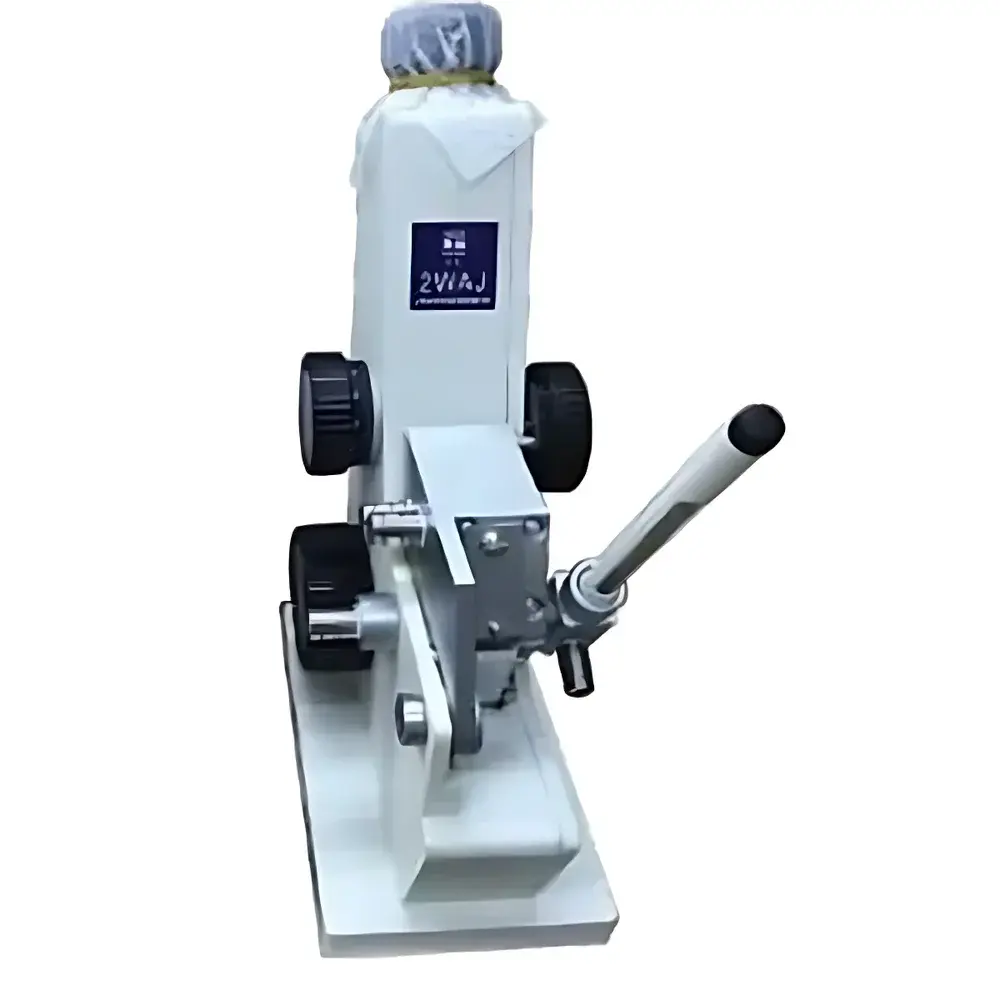
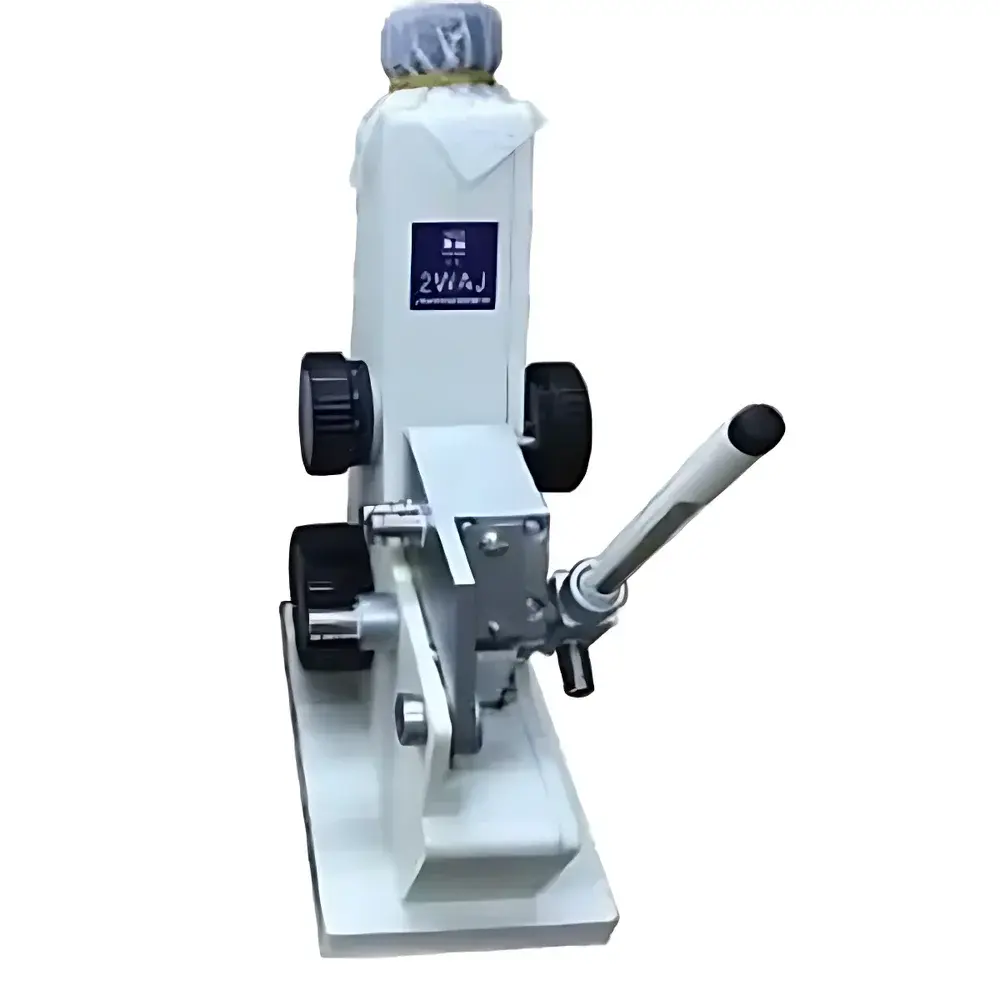
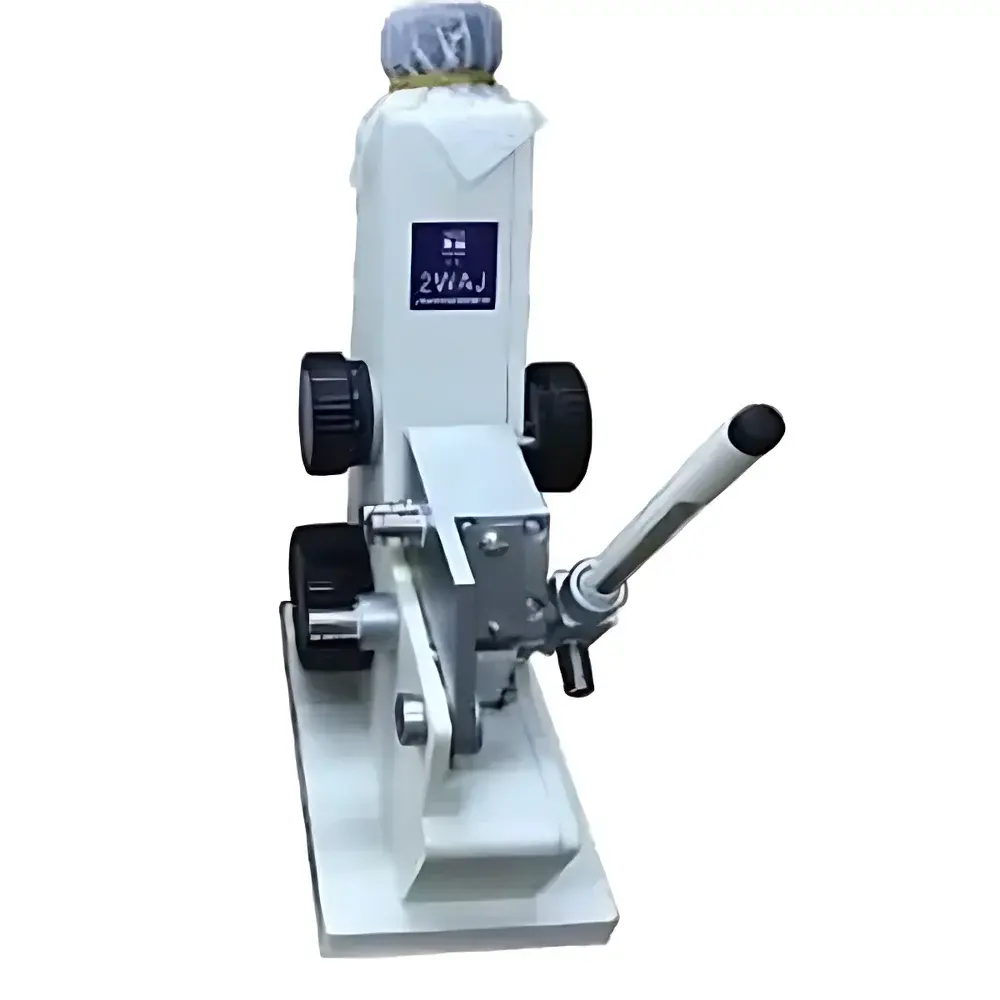
Deleite DR-AR200 Desktop Abbe Refractometer
| Brand | Deleite |
|---|---|
| Origin | Shanghai, China |
| Model | DR-AR200 |
| Type | Benchtop Abbe Refractometer |
| Refractive Index Range (nD) | 1.3000–1.7000 |
| Brix Range | 0–95% |
| Accuracy (nD) | ±0.0003 (estimated reading) |
| Magnification | Telescope 2×, Scale Reading 22× |
| Dimensions | 200 × 100 × 240 mm |
| Weight | 2.6 kg |
Overview
The Deleite DR-AR200 is a precision benchtop Abbe refractometer engineered for reliable, manual measurement of refractive index (nD) and Brix concentration in liquid and solid transparent or semi-transparent samples. Based on the critical angle principle of total internal reflection, the instrument employs a high-stability glass prism assembly and collimated sodium D-line illumination (589.3 nm) to determine optical density with traceable repeatability. Its mechanical Abbe design eliminates electronic drift and thermal sensor dependency—making it especially suitable for environments where electromagnetic interference, power instability, or regulatory audit trails require passive, analog measurement integrity. The DR-AR200 complies with foundational metrological standards referenced in ISO 21147:2022 (Refractometers — Vocabulary and general principles) and ASTM D1218–21 (Standard Test Method for Refractive Index of Hydrocarbon Liquids), serving as a primary reference tool in QC laboratories where method validation and long-term calibration stability are prioritized over automated throughput.
Key Features
- Optical Abbe configuration with adjustable sodium-D spectral filter and precision-ground measuring prism (BK7 glass)
- Manual dual-scale readout: direct nD scale (1.3000–1.7000) and calibrated Brix scale (0–95%) with parallax-free vernier alignment
- 2× telescope magnification for precise crosshair targeting and 22× scale magnification for sub-milliradian angular resolution
- Robust aluminum alloy chassis with anti-vibration base plate and ergonomic focusing knob for extended operator use
- No external power supply required—fully mechanical operation ensures zero electronic failure risk and intrinsic safety in solvent-rich environments
- Integrated temperature-compensated calibration adjustment (via built-in water/standard glass reference blocks) supporting ambient compensation from 10–35 °C
Sample Compatibility & Compliance
The DR-AR200 accommodates homogeneous liquids (e.g., sucrose solutions, glycerol, ethanol/water mixtures, essential oils), molten polymers, and polished solid specimens (glass, crystals, optical resins) with flat, optically smooth surfaces ≥10 mm². Sample volume requirement is ≤0.5 mL for liquids; solids must be >1 mm thick with parallel faces. The instrument supports routine verification per USP (Refractometry) and EP 2.2.2 (Refractive Index), and its fixed-wavelength optical path satisfies GLP documentation requirements for manual analytical instruments. While not electronically audit-trail enabled, its mechanical design inherently meets FDA 21 CFR Part 11 “excluded systems” criteria for non-computerized equipment used in regulated manufacturing (e.g., pharmaceutical excipient release testing, syrup formulation control).
Software & Data Management
The DR-AR200 operates without embedded firmware or digital interfaces. All measurements are recorded manually into laboratory notebooks or LIMS-compatible spreadsheets. Users may digitize readings via optional third-party USB microscopes (e.g., Dino-Lite AM4113X) coupled with image-capture software for archiving scale images with timestamped metadata. Calibration logs—including date, standard used (e.g., distilled water nD = 1.3330 at 20 °C), and technician ID—are maintained externally per ISO/IEC 17025:2017 clause 7.7. No proprietary drivers, cloud sync, or remote access capabilities are present—ensuring full data sovereignty and compatibility with air-gapped QA networks.
Applications
- Quality control of sucrose-based syrups, fruit juices, and soft drinks (Brix validation per AOAC 932.12)
- Concentration monitoring of antifreeze glycol blends and transformer oil purity screening (ASTM D924)
- Pharmaceutical excipient identity testing (e.g., propylene glycol, polyethylene glycols) per USP monographs
- Research-grade dispersion analysis (nF – nC) using interchangeable filter sets (optional accessory)
- Educational demonstration of Snell’s law, Cauchy dispersion modeling, and optical material classification
- Field-deployable verification in pilot-scale food processing lines where electrical infrastructure is limited
FAQ
Does the DR-AR200 support automatic temperature correction?
No—it relies on manual ambient temperature recording and user-applied correction tables (e.g., CRC Handbook values). For automated Peltier-controlled models, consider the DR-AR300 series.
Can it measure opaque or turbid samples?
No. The Abbe principle requires optical transmission; suspended particles or high absorption will prevent clear critical angle detection.
Is calibration traceable to NIST standards?
Yes—when verified using NIST-traceable reference fluids (e.g., Cargille Labs refractive index standards) or certified BK7 glass blocks, calibration uncertainty can be reported to ≤±0.0002 nD.
What maintenance does the prism require?
Daily cleaning with lens tissue and reagent-grade xylene or isopropanol; avoid abrasive solvents. Prism surface inspection under 10× magnification recommended quarterly.
Is the DR-AR200 compliant with GMP documentation requirements?
Yes—as a Class I non-electronic measuring device, it qualifies for inclusion in Equipment Qualification protocols (IQ/OQ) with defined calibration frequency, reference standards, and operator training records.





