
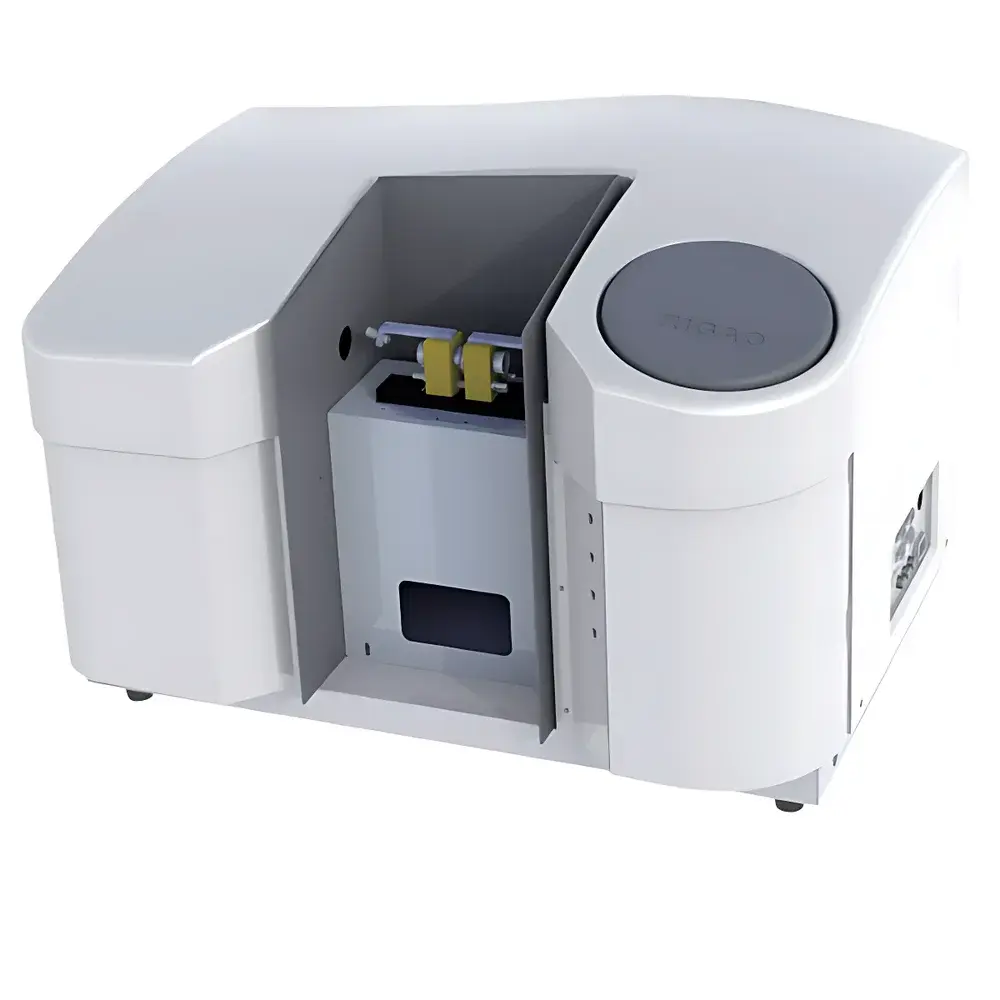
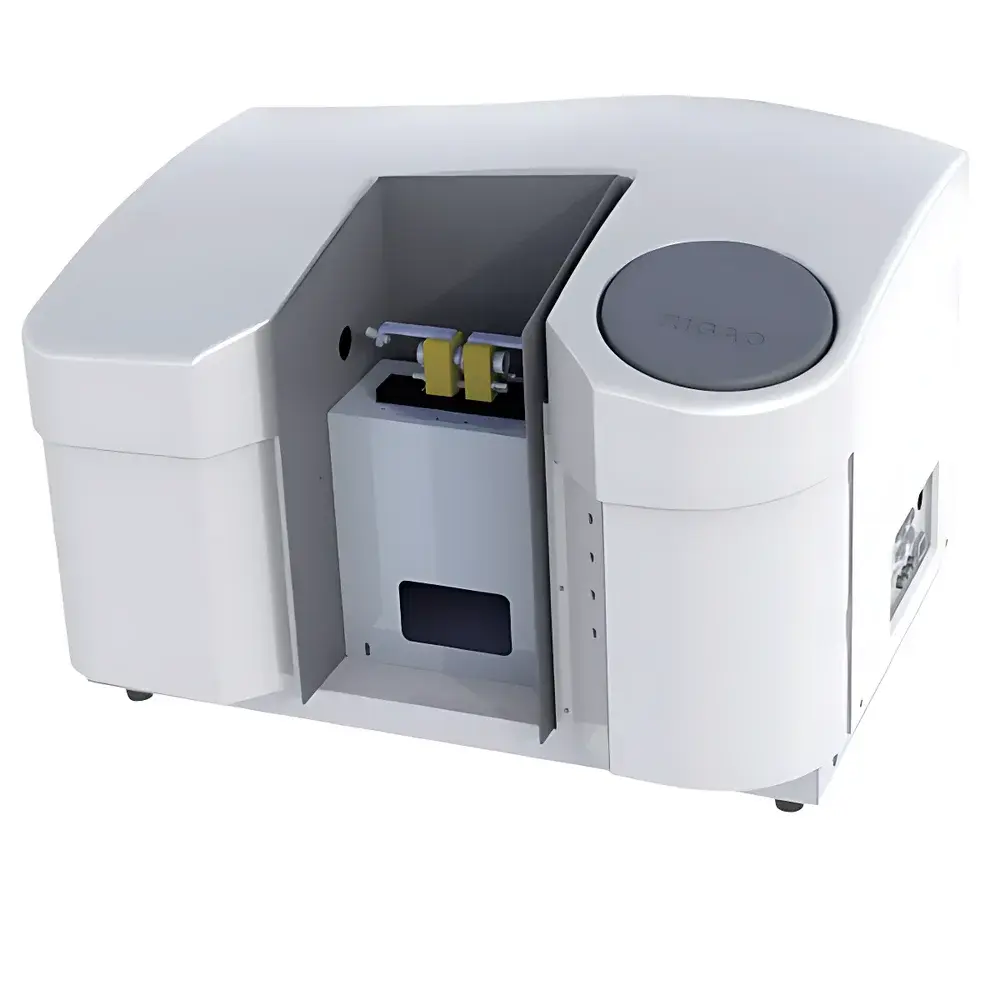
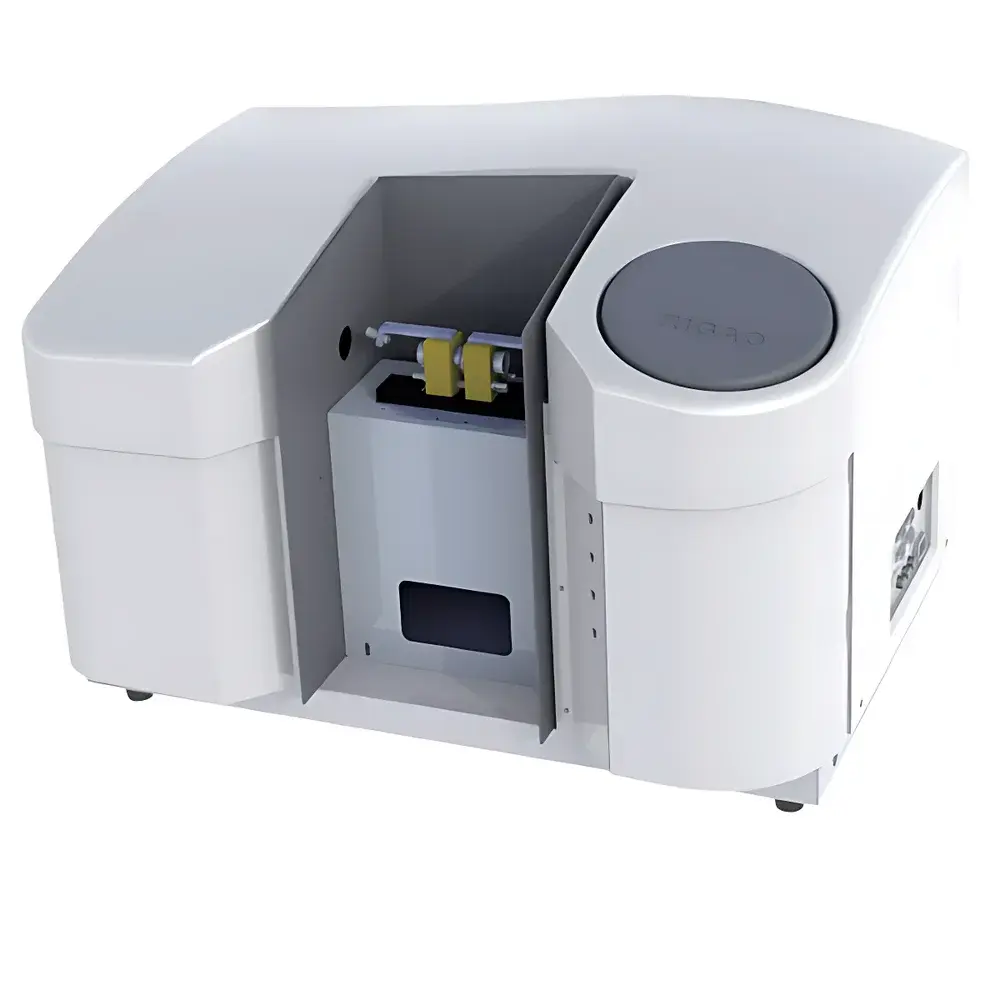
DELEITE SmartSens-400 Atomic Absorption Spectrophotometer
| Brand | DELEITE |
|---|---|
| Origin | Shanghai, China |
| Model | SmartSens-400 |
| Spectral Bandwidth | 0.1, 0.2, 0.4, 0.7, 1.4, 2 nm (6-step automatic switching) |
| Wavelength Accuracy | ±0.3 nm |
| Wavelength Range | 185–900 nm |
| Baseline Drift (Static, Cu) | ±0.004 A/30 min |
| Baseline Drift (Dynamic, Cu) | ±0.006 A/15 min |
| Detection Limit (Cd) | ≤1.5 pg |
| Detection Limit (Cu) | ≤20 pg |
| Characteristic Mass (Cd) | ≤1.0 pg |
| Characteristic Mass (Cu) | ≤22 pg |
| Graphite Furnace Temperature Range | Ambient to 3000 °C |
| Maximum Ramp Rate | 2000 °C/s |
| Background Correction | D₂-lamp, ≥30× correction at 1 A |
Overview
The DELEITE SmartSens-400 Atomic Absorption Spectrophotometer is a high-performance, single-beam flame/graphite furnace AAS system engineered for trace elemental analysis in environmental, clinical, pharmaceutical, and industrial laboratories. Based on the fundamental principle of atomic absorption spectroscopy—where ground-state free atoms in the gaseous phase absorb light at element-specific wavelengths—the SmartSens-400 employs a Czerny-Turner monochromator with a 350 mm focal length and an 1800 lines/mm holographic grating (blazed at 250 nm) to deliver high spectral resolution and low stray light. Its wavelength range spans 185–900 nm, covering the resonance lines of over 70 metallic and semi-metallic elements. The instrument supports both flame and electrothermal atomization modes, with the graphite furnace module enabling sub-picogram detection limits and precise thermal program control for complex matrix samples.
Key Features
- Automated six-step spectral bandwidth selection (0.1–2.0 nm), optimized for signal-to-noise ratio and spectral resolution across diverse analytes.
- High-precision wavelength drive mechanism ensuring ±0.3 nm accuracy and ≤0.1 nm repeatability—critical for compliance with ASTM E1997, ISO 8288, and USP .
- D₂-lamp background correction with ≥30× compensation capability at 1 A, enabling accurate quantification in high-background matrices such as biological digests or geological extracts.
- Graphite furnace with programmable ramp-and-hold heating (1–255 s), maximum ramp rate of 2000 °C/s, and multi-stage temperature control (including pyrolysis, atomization, and cleaning steps).
- Four-lamp turret with auto-alignment and pre-heating capability; compatible with standard hollow cathode lamps (HCLs) and electrodeless discharge lamps (EDLs).
- Integrated safety interlocks monitoring cooling water flow, argon pressure (both internal and external), furnace temperature, power supply thermal load, and graphite tube seating status.
Sample Compatibility & Compliance
The SmartSens-400 accommodates aqueous solutions, acid-digested environmental samples (e.g., EPA Method 200.9), tissue homogenates, and petroleum distillates following ASTM D5185 or ISO 8288 protocols. Its graphite furnace configuration meets the sensitivity and precision requirements for regulatory testing under CLIA, ISO/IEC 17025, and FDA 21 CFR Part 11 when paired with compliant data acquisition software. All optical and electronic subsystems are calibrated per NIST-traceable standards, and baseline stability metrics (≤0.006 A dynamic drift over 15 min) satisfy long-duration sequence validation criteria in GLP environments.
Software & Data Management
Controlled via external PC running Windows-based analytical software, the SmartSens-400 supports full audit trail logging—including user ID, method parameters, calibration history, raw absorbance traces, and thermal program logs—in accordance with FDA 21 CFR Part 11 requirements. Quantitative workflows include linear and non-linear (quadratic, cubic, log-log, 4PL, 5PL) calibration curve fitting, standard addition, and internal standard interpolation. Up to 30 replicate measurements per sample are processed automatically, reporting mean absorbance/concentration, standard deviation (SD), and relative standard deviation (RSD). Export formats include CSV, PDF, and XML for LIMS integration.
Applications
- Environmental monitoring: Pb, Cd, As, and Hg quantification in drinking water (EPA 200.9), soil leachates (TCLP), and airborne particulates.
- Clinical toxicology: Trace metal profiling (e.g., Se, Zn, Cu) in serum and whole blood using graphite furnace mode.
- Pharmaceutical quality control: Catalyst residue testing (Pd, Pt, Ni) in active pharmaceutical ingredients per ICH Q2(R2).
- Food safety: Monitoring Al, Cr, and Sn migration from packaging materials into food simulants (EU Regulation 10/2011).
- Geochemical analysis: Rare earth element (REE) determination in rock digests with matrix-matched calibration.
FAQ
What atomization methods does the SmartSens-400 support?
It supports both air-acetylene flame atomization and electrothermal (graphite furnace) atomization, with optional nitrous oxide-acetylene capability via accessory upgrade.
Is the instrument compliant with 21 CFR Part 11 for electronic records?
Yes—when operated with validated software and appropriate user access controls, audit trail configuration, and electronic signature implementation.
Can the SmartSens-400 perform simultaneous multi-element analysis?
No—it is a sequential AAS system; multi-element analysis requires scanning across wavelengths. For true simultaneous detection, ICP-OES or ICP-MS instrumentation is recommended.
What maintenance routines are required for optimal performance?
Daily: Lamp warm-up verification, burner head cleaning, and graphite tube inspection. Quarterly: Monochromator alignment check, D₂ lamp energy calibration, and gas flow calibration per manufacturer SOPs.
Does the system include factory calibration certificates?
Yes—each delivered unit includes NIST-traceable wavelength and photometric calibration certificates, valid for 12 months from date of shipment.
Related Products






