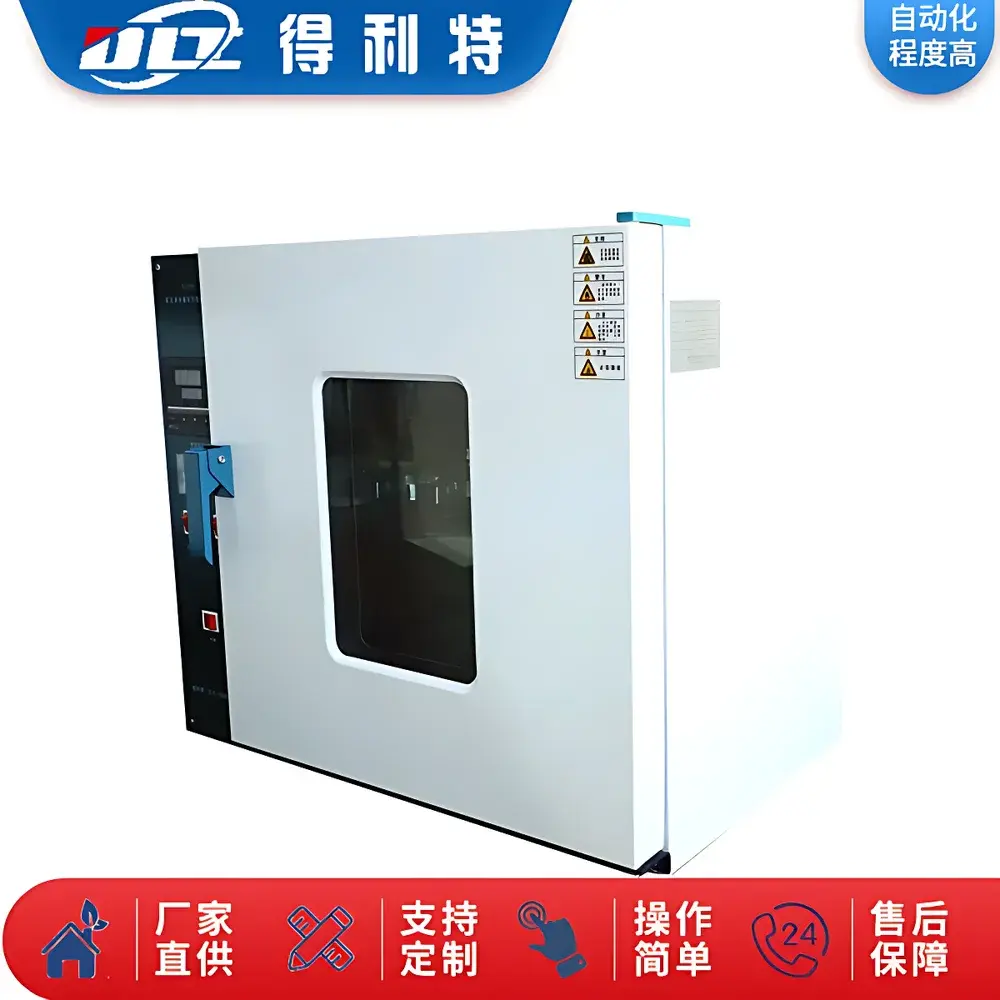
Delite A1104 Hydraulic Fluid Hydrolytic Stability Tester
| Brand | Delite |
|---|---|
| Origin | Beijing, China |
| Manufacturer Type | Direct Manufacturer |
| Country of Origin | China |
| Model | A1104 |
| Power Supply | AC 220 V, 50 Hz |
| Temperature Control Range | RT+10 °C to 300 °C (minimum setpoint 50 °C) |
| Temperature Stability | ±1 °C |
| Temperature Resolution | 0.1 °C |
| Rated Power | 1220 W |
| Test Stations | 4 glass vials |
| Rotation Speed | 5 rpm |
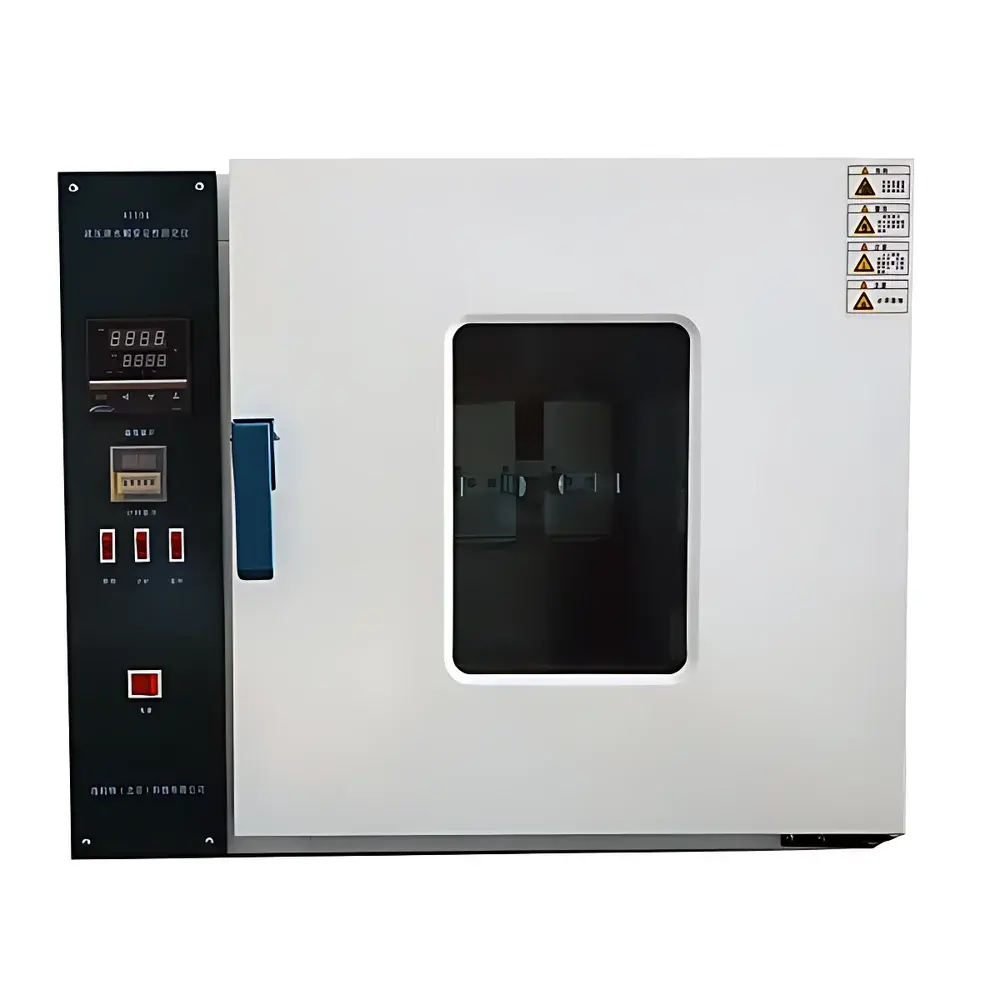
| Interior Chamber Dimensions | 425 × 400 × 345 mm |
| Overall Dimensions | 705 × 580 × 530 mm |
| Applicable Standards | SH/T 0301, ASTM D2619 |
Overview
The Delite A1104 Hydraulic Fluid Hydrolytic Stability Tester is a precision-engineered benchtop instrument designed to evaluate the hydrolytic stability of hydraulic fluids under controlled thermal and mechanical stress conditions. It operates on the standardized glass bottle method—where test samples are sealed in borosilicate glass vials with defined water content, subjected to elevated temperature and slow rotational agitation—to accelerate hydrolysis reactions that occur during long-term service exposure to moisture. This methodology directly simulates real-world degradation pathways in hydraulic systems where trace water ingress leads to acid formation, additive depletion, and sludge generation. The A1104 complies with two internationally recognized test protocols: SH/T 0301 (Chinese national standard for mineral and synthetic hydraulic fluids) and ASTM D2619 (Standard Test Method for Hydrolytic Stability of Hydraulic Fluids). Its design prioritizes thermal uniformity, mechanical reproducibility, and operator safety—features essential for laboratories conducting routine quality control, formulation development, or regulatory compliance testing in lubricant manufacturing, OEM fluid approval programs, and third-party certification facilities.
Key Features
- Four independent, thermally isolated test stations enabling parallel evaluation of up to four samples under identical conditions—critical for statistical reliability and throughput efficiency.
- Precise digital PID temperature control with 0.1 °C resolution and ±1 °C stability across the full operating range (50–300 °C), ensuring strict adherence to SH/T 0301 and ASTM D2619 thermal profiles.
- Low-speed orbital rotation mechanism delivering consistent 5 rpm motion—mimicking gentle agitation encountered in reservoirs without inducing shear-induced artifacts.
- Robust stainless-steel interior chamber (425 × 400 × 345 mm) resistant to thermal cycling and chemical exposure from degraded fluid residues.
- Integrated safety interlocks including overtemperature cutoff, door-open shutdown, and grounded heating elements compliant with IEC 61010-1 for laboratory electrical safety.
- Compact footprint (705 × 580 × 530 mm) optimized for space-constrained QC labs while maintaining full compliance with standard test vial geometry and loading requirements.
Sample Compatibility & Compliance
The A1104 accommodates both mineral-oil-based and synthetic hydraulic fluids—including polyalphaolefins (PAO), phosphate esters, and polyol esters—as specified in SH/T 0301. It also supports evaluation of water-containing formulations such as water-glycol and oil-in-water emulsions; however, per ASTM D2619 Section 6.2, these must be tested in their as-received state using a 100 g sample mass. All test vials conform to ASTM D2619 dimensional and material specifications (Type I borosilicate glass, 125 mL capacity). The instrument’s thermal and mechanical parameters are validated against the repeatability and reproducibility criteria outlined in both standards, supporting data integrity requirements for ISO/IEC 17025-accredited laboratories. No modifications to hardware or firmware are required to meet GLP documentation expectations when paired with standardized SOPs.
Software & Data Management
The A1104 operates via embedded microcontroller logic with local digital display and manual setpoint input—intentionally omitting proprietary software to ensure long-term maintainability, reduce cybersecurity exposure, and align with industrial lab preferences for deterministic, non-networked operation. Temperature setpoints, runtime duration, and rotation status are logged internally with timestamped entries retained for ≥30 days. Data export is achieved via RS-232 serial interface (optional USB-to-serial adapter) for integration into LIMS or ELN platforms. Audit trails comply with FDA 21 CFR Part 11 principles when configured with external electronic record systems—supporting signature verification, change tracking, and retention policies required for GMP-regulated environments.
Applications
- Quality assurance screening of incoming base stocks and finished hydraulic fluids prior to batch release.
- Formulation optimization studies assessing hydrolytic resistance of new anti-wear additives (e.g., ZDDP alternatives) and base oil blends.
- OEM qualification testing for equipment-specific fluid approvals (e.g., Eaton, Parker Hannifin, Bosch Rexroth specifications).
- Troubleshooting field failures linked to acid number rise, viscosity loss, or copper corrosion in hydraulic circuits.
- Regulatory submission support for REACH, TSCA, or China GB standards requiring documented hydrolytic stability performance.
FAQ
What sample volume is required per test vial?
A nominal 100 g sample is used for all fluid types, including water-containing formulations tested per ASTM D2619 Section 6.2.
Can the A1104 be used for non-hydraulic lubricants such as turbine oils or gear oils?
No—the instrument is calibrated and validated exclusively for hydraulic fluid test methods SH/T 0301 and ASTM D2619; alternative applications require method validation per ISO 17025.
Is calibration traceable to national standards?
Yes—temperature sensors are factory-calibrated against NIST-traceable references, with certificate provided; users may perform periodic verification using Class A platinum RTDs.
Does the unit include test vials and accessories?
Standard delivery includes four borosilicate glass vials, stainless-steel clamps, and a user manual; vial caps, desiccants, and analytical reagents are supplied separately per ASTM D2619 Annex A1.
What maintenance is required to sustain measurement accuracy?
Biannual verification of temperature uniformity across all four stations using calibrated thermocouples is recommended; heater element resistance checks should accompany annual preventive maintenance.