
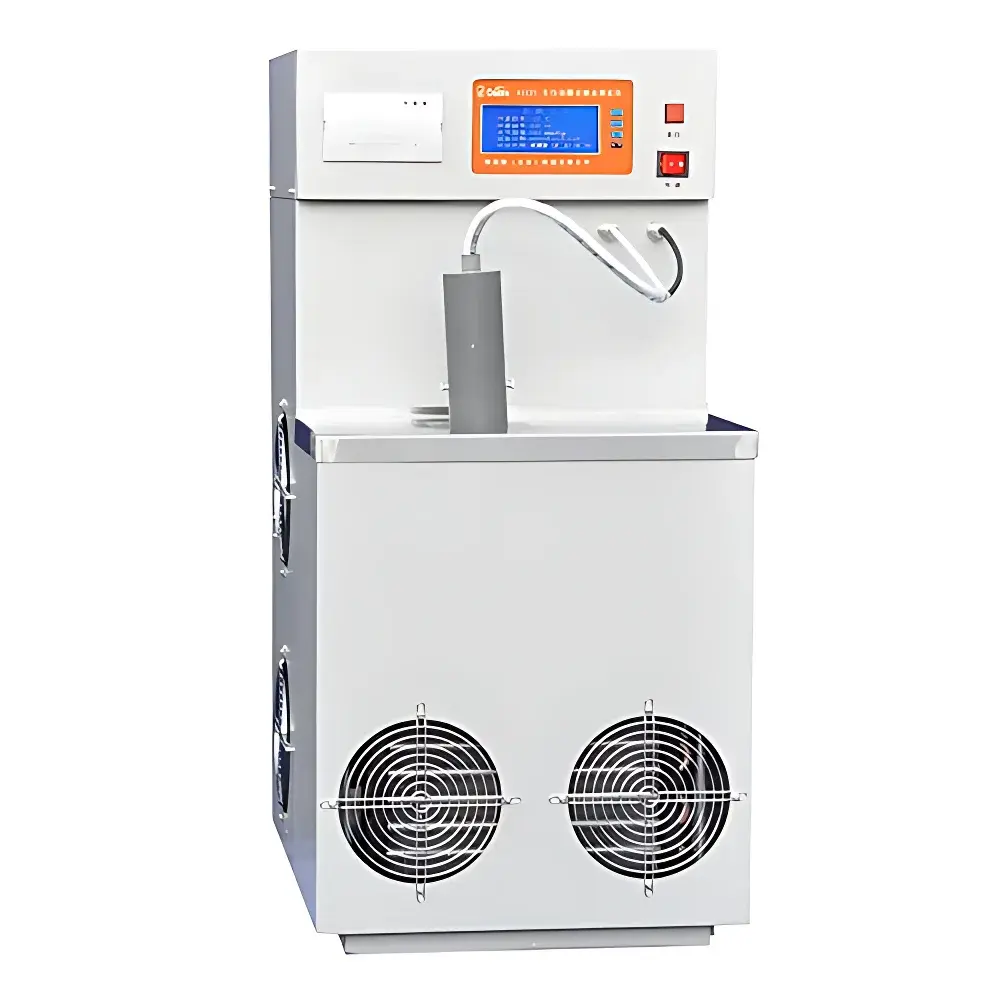
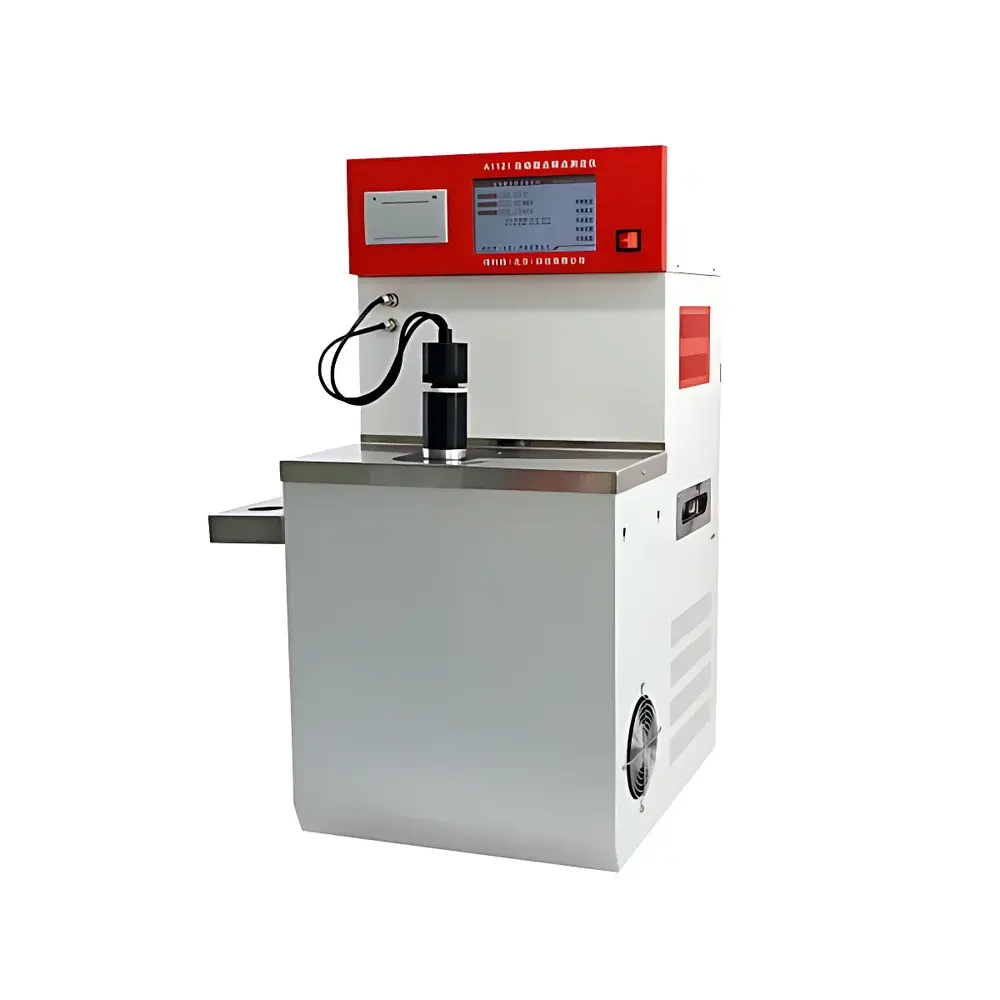
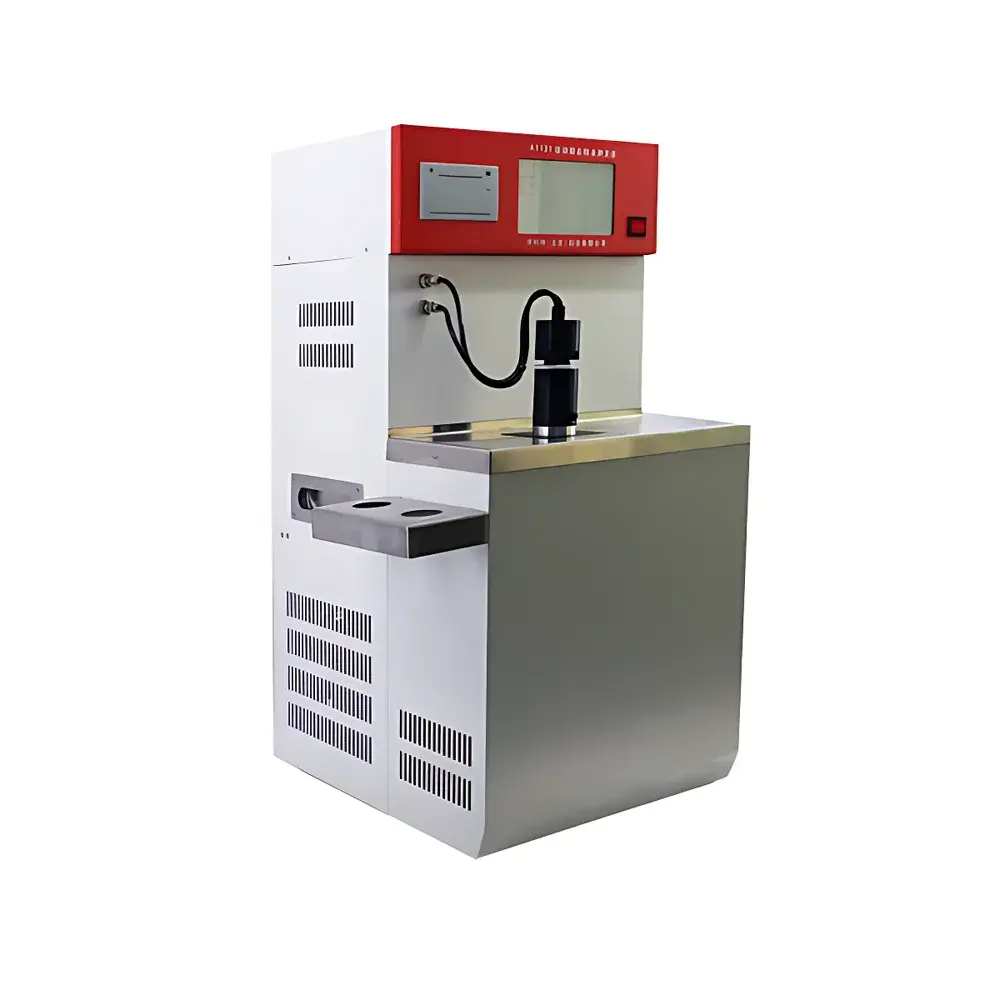
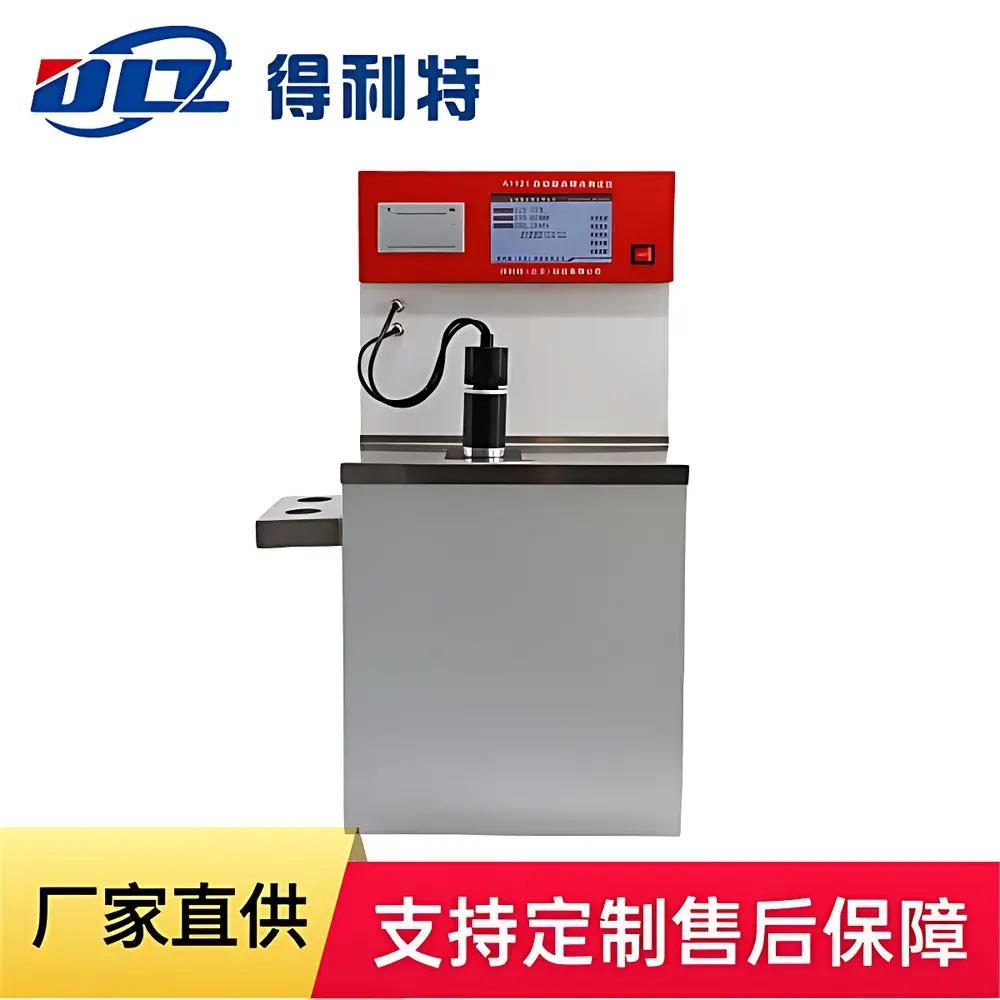
Delite A1121 Automatic Cloud Point and Pour Point Tester
| Brand | Delite |
|---|---|
| Origin | Beijing, China |
| Manufacturer Type | OEM Manufacturer |
| Country of Origin | China |
| Model | A1121 |
| Price Range | USD 7,000 – 14,000 |
| Measurement Range | Ambient to –70 °C |
| Accuracy | ±1 °C |
| Resolution | 0.1 °C |
| Display | LCD Touchscreen |
| Printer | Thermal, 36-character Chinese/English output |
| Ambient Operating Conditions | 5–40 °C, ≤85% RH |
| Power Supply | AC 220 V ±10%, 50 Hz ±10% |
| Power Consumption | <300 W |
| Dimensions (W×D×H) | 460 × 310 × 480 mm |
| Weight | 21.3 kg |
Overview
The Delite A1121 Automatic Cloud Point and Pour Point Tester is a fully automated, dual-function analytical instrument engineered for precise determination of cloud point (CP) and pour point (PP) in petroleum-based liquids—including lubricating oils, fuel oils, diesel, residual fuels, and dark-colored hydrocarbon products. It operates on standardized thermodynamic phase transition principles: cloud point is identified as the temperature at which wax crystals first become visible upon controlled cooling, while pour point is defined as the lowest temperature at which the sample remains fluid enough to flow under specified gravity-driven conditions (ASTM D2386, ASTM D97, GB/T 3535, GB 510). Unlike manual or semi-automated systems, the A1121 integrates real-time optical detection, programmable thermal ramping, and dynamic tilt-based flow assessment—ensuring strict compliance with international test protocols without operator intervention.
Key Features
- Integrated dual-mode thermal control system featuring high-efficiency compressor-based refrigeration (down to –70 °C) and resistive heating (up to +50 °C), enabling full-range testing across low-temperature petroleum product specifications.
- Automated tilt mechanism synchronized with temperature descent—precisely replicating the 45° inclination and 3-second hold required by ASTM D97 and GB 510 for pour point verification.
- Optical crystal detection module with ambient-light compensation, eliminating subjectivity in cloud point identification and supporting reproducible endpoint determination across viscous and opaque samples.
- Intuitive 7-inch capacitive touchscreen interface with multilingual (English/Chinese) menu navigation, preloaded method templates, and user-defined protocol editing—including customizable cooling rates, dwell times, and pass/fail criteria.
- Onboard thermal printer with 36-character dot-matrix thermal output, capable of printing test ID, date/time stamp, final CP/PP values, operator ID, and compliance flags per run.
- Self-diagnostic firmware that monitors refrigerant pressure, sensor calibration drift, bath uniformity, and mechanical actuator performance—generating actionable alerts and logging fault codes for traceability.
- Modular hardware architecture supporting field-upgradable firmware and optional RS-232/USB data export for integration into LIMS or centralized QA/QC workflows.
Sample Compatibility & Compliance
The A1121 accommodates standard ASTM D2386 and D97 sample tubes (15–18 mL capacity), including those used for highly viscous or asphaltene-rich materials where conventional capillary-based instruments fail. Its wide dynamic viscosity tolerance eliminates pre-dilution requirements for heavy feedstocks. The system meets essential regulatory and quality framework expectations: it supports audit-ready operation under GLP environments; its digital records comply with FDA 21 CFR Part 11 principles when paired with validated networked data capture; and all thermal profiles are traceable to NIST-traceable reference thermometers calibrated per ISO/IEC 17025 requirements. Test reports include embedded metadata—such as ambient lab conditions, calibration status, and operator credentials—to satisfy internal SOPs and third-party accreditation audits (e.g., CNAS, UKAS).
Software & Data Management
The embedded firmware provides non-volatile storage for ≥1,000 test records, each timestamped and tagged with method version, sample ID, and environmental parameters. Data export is supported via USB flash drive in CSV format—structured for direct import into Excel, MATLAB, or statistical process control (SPC) platforms. Optional PC software (Delite LabLink v3.2) enables remote monitoring, batch report generation, trend analysis across shifts or batches, and automated deviation alerts based on historical control limits. All changes to test parameters or system settings are logged with user ID and timestamp—fulfilling ALCOA+ data integrity principles (Attributable, Legible, Contemporaneous, Original, Accurate, Complete, Consistent, Enduring, Available).
Applications
The A1121 serves critical roles across upstream, midstream, and downstream petroleum operations: evaluating cold-flow properties of jet fuels (Jet A-1, JP-8) per DEF STAN 91-91; verifying winter-grade diesel compliance (EN 590, ASTM D97); assessing base oil stability during formulation; screening crude assay fractions for pipeline transport feasibility; and supporting R&D of pour point depressants (PPDs). It is routinely deployed in power plant lubricant labs (per IEC 60296), petrochemical QC departments (ISO 8217 marine fuel testing), customs inspection agencies (GB/T 3535 for import/export clearance), and academic research groups studying wax crystallization kinetics.
FAQ
Does the A1121 support both cloud point and pour point testing in a single run?
Yes—the instrument automatically sequences cooling, optical cloud detection, continued descent, and tilt-based pour assessment within one uninterrupted cycle, minimizing operator involvement and inter-test variability.
Can cooling rate be adjusted to match specific method variants (e.g., ASTM D5853 vs. D97)?
Absolutely. Users may define custom ramp profiles—including linear, stepwise, or adaptive cooling algorithms—via the touchscreen editor or PC software, ensuring alignment with proprietary or regional specifications.
Is external calibration required before first use?
The unit ships with factory calibration verified against NIST-traceable standards; however, periodic verification using certified reference oils (e.g., NIST SRM 2721a) is recommended every 6 months or per internal QA schedule.
What maintenance intervals are advised for the refrigeration system?
Compressor oil and filter replacement is recommended every 36 months under continuous operation; annual inspection of condenser coils and refrigerant charge is included in standard service contracts.
How does the system handle samples with suspended solids or high asphaltene content?
The optical detection algorithm incorporates adaptive contrast thresholding and multi-frame averaging to distinguish true wax nucleation from particulate interference—validated across API Group III and IV base stocks with >500 ppm solids loading.






