
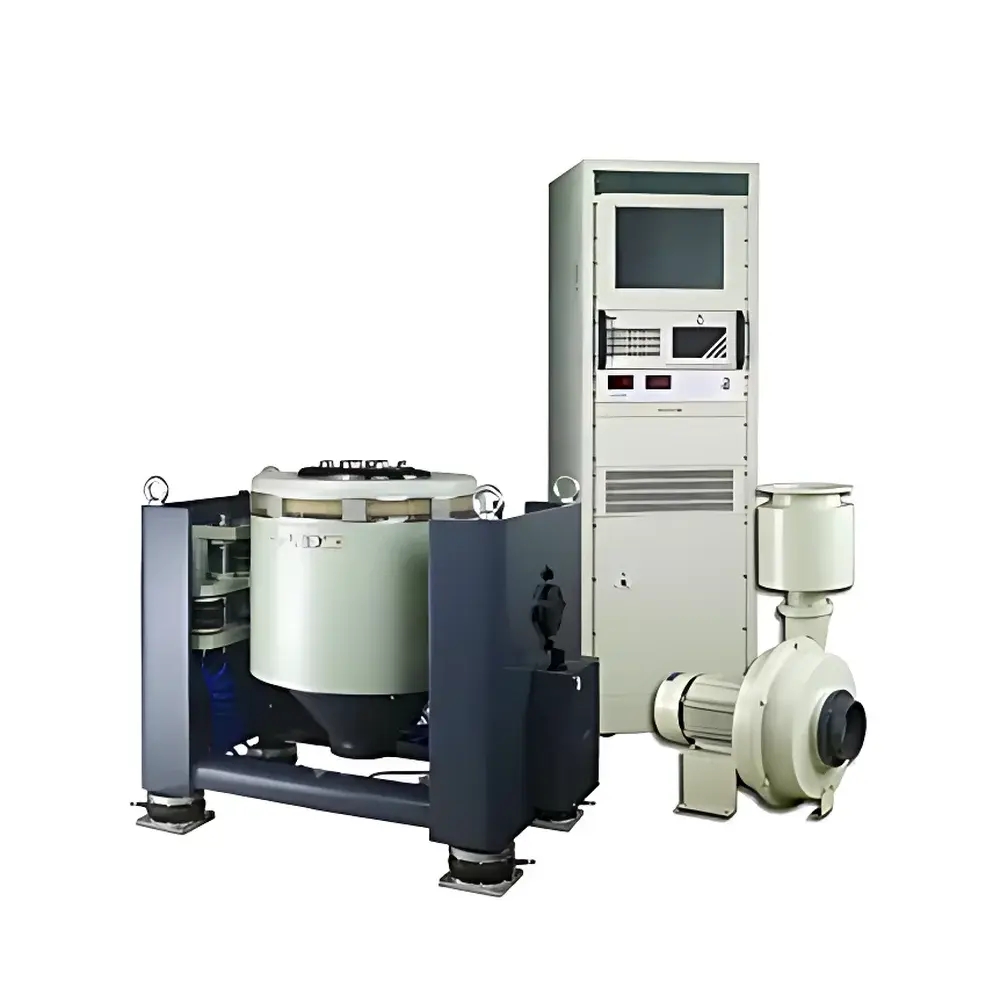
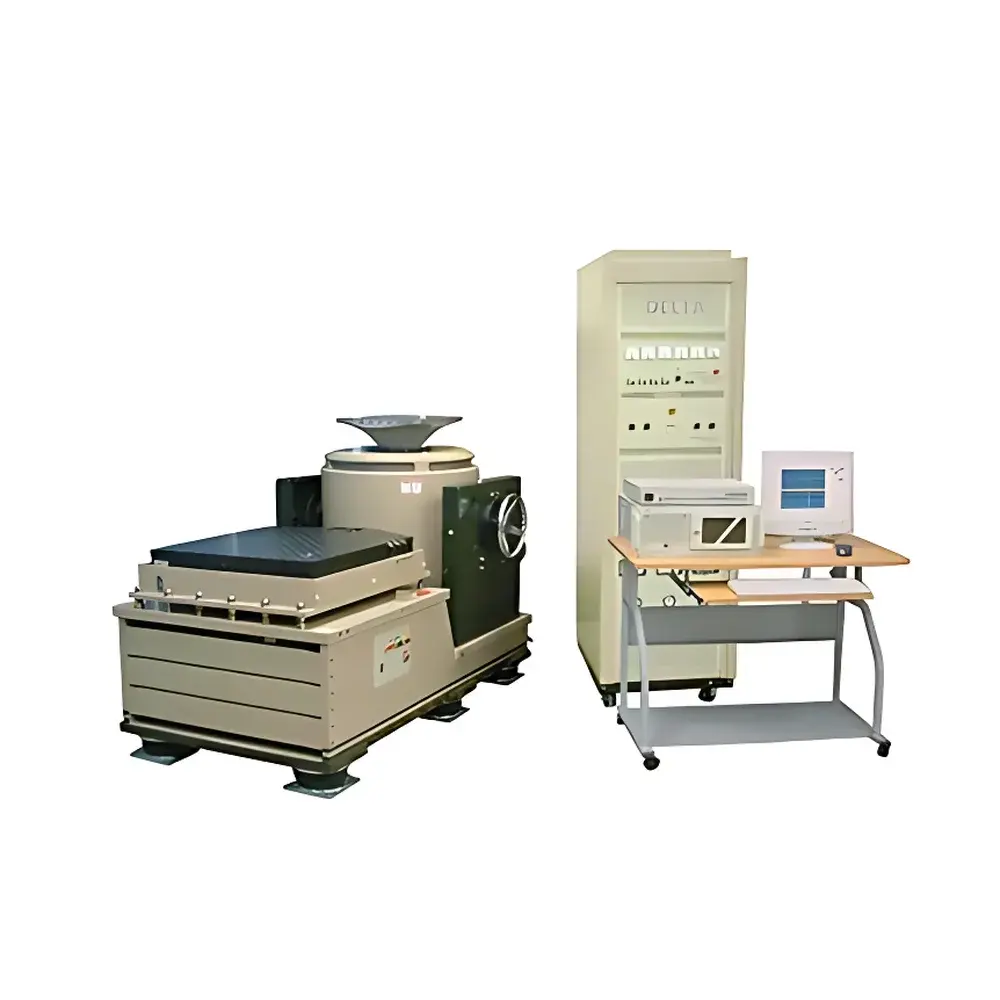
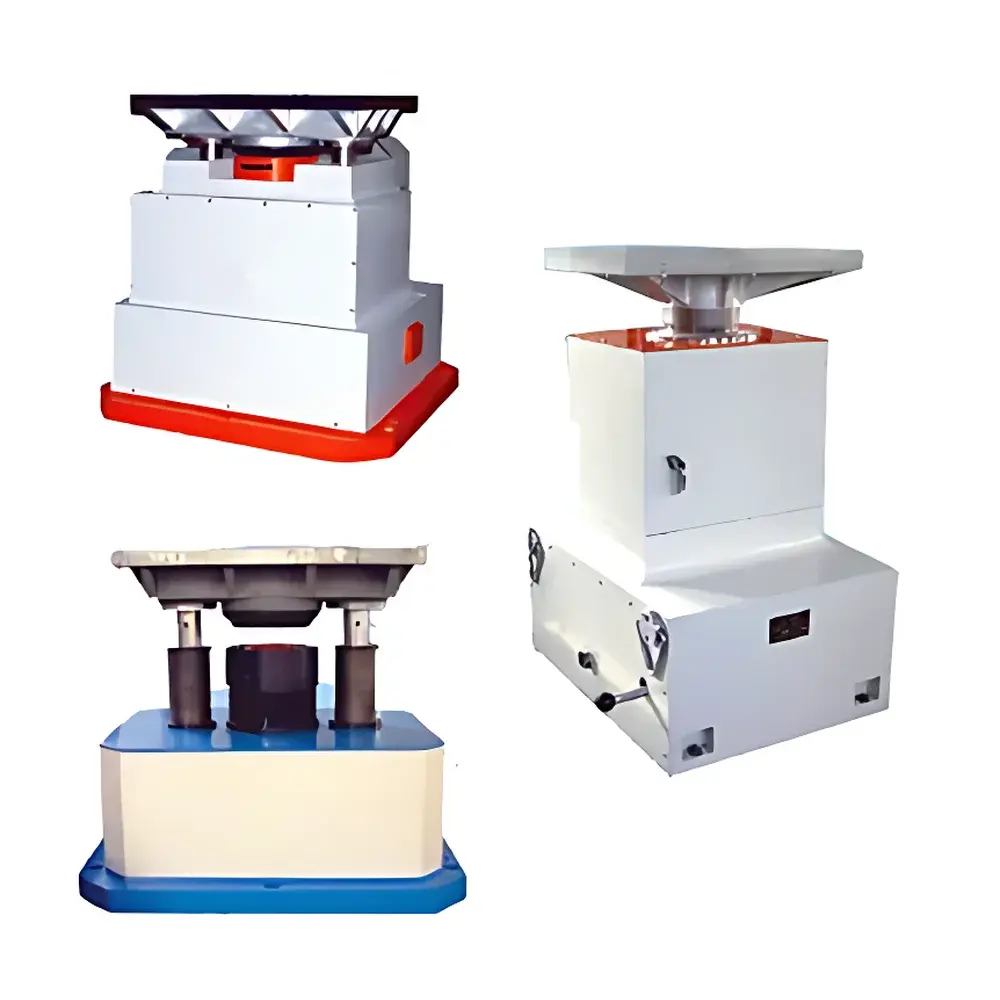
DELTA Instruments DELTA-SBT50 Shock & Impact Test Table
| Brand | DELTA Instruments |
|---|---|
| Model | DELTA-SBT50 |
| Type | Electro-Mechanical Shock Test Table |
| Max Load Capacity | 50–500 kg |
| Standard Waveform | Half-Sine Pulse |
| Compliance | GB/T 2423.5, GB/T 2423.6, IEC 60068-2-29, GB/T 31467.3, JJG 497 |
| Control System | PC-Based Closed-Loop Digital Control with Real-Time Acceleration Feedback |
| Pulse Duration Adjustment | Via Interchangeable Anvil Pads |
| Peak Acceleration Adjustment | Via Adjustable Drop Height |
| Automated Stop | After Predefined Impact Count or Time Duration |
| Data Acquisition | Integrated Accelerometer, Velocity Change (Δv), Pulse Width, and G-Value Normalization |
| Safety | Mechanical Locking Mechanism for Anvil Pad Replacement |
| Dual-Mode Operation | Shock (Single-Impact) and Bump/Collision (Repetitive Impact) Modes |
| Software Features | Real-Time Waveform Display, Tolerance Band Overlay, Exportable CSV/PDF Reports, Audit-Trail-Ready Logging (GLP-Compatible) |
Overview
The DELTA Instruments DELTA-SBT50 Shock & Impact Test Table is an electro-mechanical test system engineered to replicate non-repetitive mechanical shock environments encountered during transportation, handling, and operational deployment of industrial equipment, electronic enclosures, automotive components, and energy storage systems. It operates on the principle of controlled free-fall impact: a rigid platform—carrying the test specimen—is elevated to a defined height and released onto a replaceable anvil pad, generating a calibrated half-sine acceleration pulse per impact event. In collision mode, the platform undergoes repeated impacts at programmable frequencies, enabling fatigue-level assessment of structural integrity and functional degradation under cumulative shock loading. Unlike hydraulic or pneumatic shock machines, the DELTA-SBT50 delivers high reproducibility through deterministic mechanical actuation and closed-loop digital control—making it suitable for qualification testing, design validation, and production-line consistency monitoring in accordance with international environmental stress standards.
Key Features
- Integrated dual-mode functionality: configurable as either a single-event shock tester (per IEC 60068-2-27) or a repetitive bump/collision table (per IEC 60068-2-29), eliminating the need for separate dedicated systems.
- Programmable impact parameters: peak acceleration (g), pulse duration (ms), velocity change (Δv), and total impact count are independently set via intuitive PC-based software interface with real-time preview and validation.
- Interchangeable anvil pads—fabricated from aluminum, rubber, or composite elastomers—allow precise tuning of pulse shape and duration without hardware modification.
- Digital accelerometer feedback loop ensures consistent g-level delivery across load variations (50–500 kg); automatic compensation adjusts drop height in real time to maintain target acceleration within ±3% tolerance.
- Comprehensive data acquisition suite records time-acceleration profiles, computes derived metrics (e.g., shock response spectrum, damage potential index), and overlays user-defined tolerance bands for pass/fail evaluation.
- Mechanically interlocked platform locking system prevents unintended motion during anvil pad replacement—meeting ISO 13857 safety clearance requirements and supporting GLP-compliant lab workflows.
- Export-ready reporting engine generates timestamped, digitally signed PDF reports and CSV datasets compliant with FDA 21 CFR Part 11 audit-trail requirements when deployed in regulated manufacturing environments.
Sample Compatibility & Compliance
The DELTA-SBT50 accommodates specimens ranging from compact consumer electronics modules to large-scale battery packs and control cabinets, supported by standardized mounting interfaces (M8/M10 threaded inserts, T-slot rails). Its mechanical architecture meets static load safety factor ≥3 and dynamic resonance suppression up to 2 kHz. The system satisfies mandatory test requirements specified in GB/T 2423.5 (Shock), GB/T 2423.6 (Bump), IEC 60068-2-29 (Repetitive Shock), GB/T 31467.3 (Electric Vehicle Battery Safety), and JJG 497 (Calibration Verification of Shock Test Equipment). Optional calibration certificates traceable to NIM (National Institute of Metrology, China) are available upon request.
Software & Data Management
DELTA ControlSuite v3.2 provides full instrument orchestration—including waveform generation, real-time signal normalization, spectral analysis, and automated compliance checking against selected standard profiles. All measurement sessions are logged with operator ID, timestamp, environmental conditions (optional external sensor input), and configuration metadata. Data files adhere to ASTM E2911-22 structured format conventions and support integration into LIMS or MES platforms via OPC UA or RESTful API. Audit trails record all parameter changes, report exports, and user authentication events—enabling full traceability for ISO/IEC 17025 accredited laboratories.
Applications
- Structural robustness verification of EV battery enclosures subjected to road-induced bump loads.
- Functional continuity testing of avionics boxes after simulated cargo-handling shocks.
- Design validation of medical device housings per IEC 60601-1 mechanical stress clauses.
- Production line screening for solder joint integrity in PCB assemblies.
- Comparative fatigue analysis of polymer-based structural brackets under cyclic impact.
- Calibration reference setup for field-deployable shock data loggers.
FAQ
What standards does the DELTA-SBT50 directly support out-of-the-box?
It includes preloaded test templates for GB/T 2423.5, GB/T 2423.6, IEC 60068-2-29, and GB/T 31467.3—with editable waveform parameters to accommodate custom specifications.
Can the system be integrated into an existing test automation framework?
Yes—via Ethernet-connected TCP/IP command interface and documented SCPI-like protocol; Python and LabVIEW drivers are provided.
Is third-party calibration certification available?
NIM-traceable calibration certificates (acceleration, timing, displacement) are offered as an optional service with annual recalibration reminders.
Does the system meet electromagnetic compatibility (EMC) requirements for laboratory use?
It complies with GB/T 18268.1 (IEC 61326-1) Class A emission limits and immunity thresholds for industrial environments.
What maintenance intervals are recommended?
Visual inspection and mechanical fastener torque verification every 200 operating hours; full metrological verification annually or after 10,000 impacts—whichever occurs first.



