
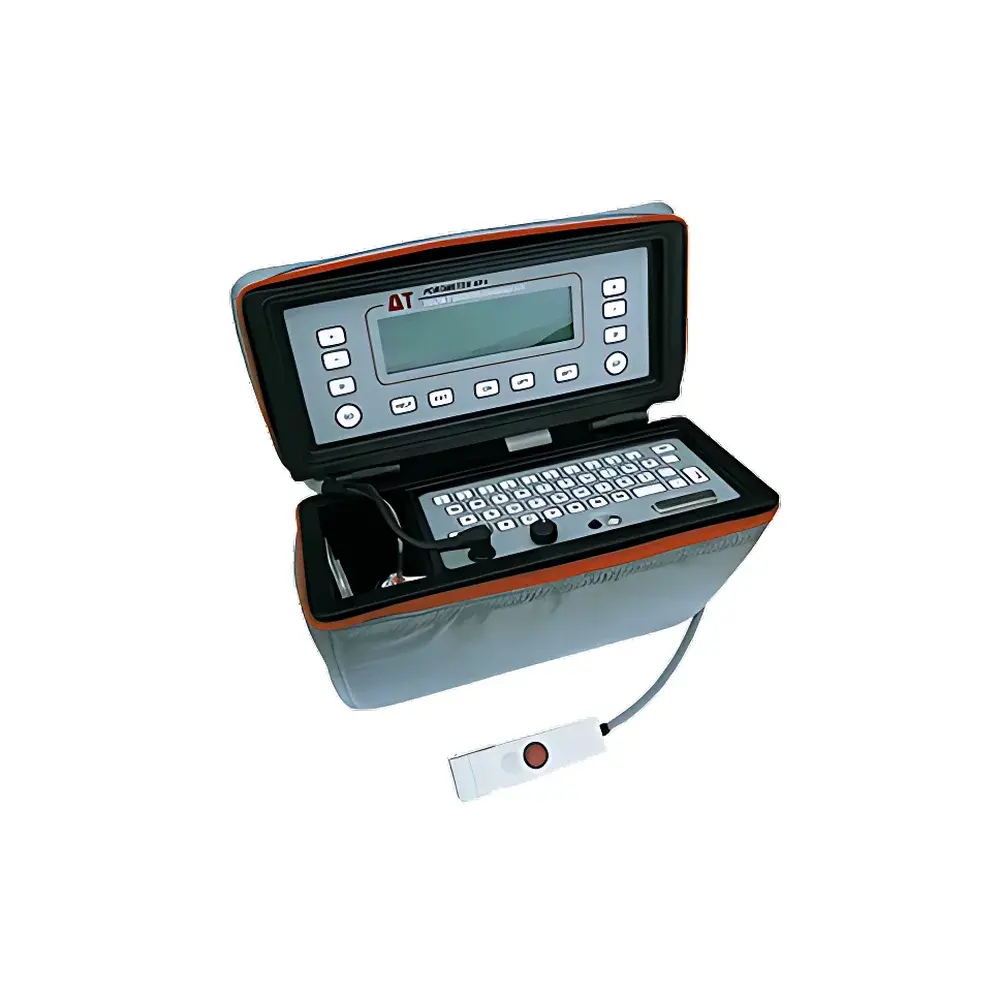
Delta-T Devices AP4 Portable Leaf Porometer
| Brand | Delta-T Devices |
|---|---|
| Origin | United Kingdom |
| Model | AP4 |
| Measurement Principle | Steady-state diffusion-based porometry |
| Weight | 3.0 kg (main unit), 130 g (sensor head) |
| Operating Time | Up to 20 h on internal rechargeable battery |
| Data Storage | 1500 readings |
| Interface | RS232 (9600 baud) |
| Compliance | Designed for GLP-aligned field and lab use |
| Software | Windows-compatible CSV export utility |
Overview
The Delta-T Devices AP4 Portable Leaf Porometer is an engineered field and laboratory instrument designed for the quantitative, non-destructive assessment of stomatal conductance (gs) and stomatal resistance (rs) in intact plant leaves. It operates on the principle of steady-state diffusion porometry: by maintaining a controlled, laminar air flow across a sealed leaf chamber and measuring the rate of water vapor diffusion from the leaf surface—coupled with concurrent measurements of leaf temperature, ambient relative humidity, and photosynthetically active radiation (PAR)—the AP4 calculates stomatal conductance using validated physical models rooted in Fick’s law of diffusion and thermodynamic vapor pressure relationships. This method ensures high reproducibility under variable environmental conditions and eliminates reliance on empirical calibration curves alone. The AP4 is purpose-built for ecophysiological research requiring rapid, repeatable, and traceable stomatal parameter acquisition—particularly where portability, battery autonomy, and multi-parameter synchrony are critical, such as in long-term field monitoring, gradient studies, or controlled-environment screening.
Key Features
- Modular architecture comprising a main control unit (3.0 kg), interchangeable sensor heads (slot-type: 2.5 × 17.5 mm; circular: Ø6 mm), and calibration accessories—including a precision-machined polypropylene calibration disc with six calibrated orifices covered by saturated filter paper to generate known vapor diffusion rates.
- Integrated microprocessor-controlled measurement cycle completing full stomatal conductance, resistance, leaf-to-air temperature differential (ΔT), relative humidity (RH), and PAR acquisition in <15 seconds per reading—with automatic temperature compensation applied in real time.
- Dual-unit stomatal conductance output: mmol·m−2·s−1 (physiologically standard) and mm·s−1 (for direct hydraulic analogy); stomatal resistance reported in s·cm−1, s·m−1, or m2·s·mol−1 to support modeling workflows.
- High-fidelity embedded sensors: Vaisala HUMICAP® 180R RH sensor (±4% RH, 0–100% range), 100 kΩ thermistor array (±0.7°C from 0–50°C), unfiltered GaAsP photodiode PAR sensor (0–2500 µmol·m−2·s−1, ±15% accuracy), and dual-temperature measurement capability (leaf surface and sample chamber).
- Field-rugged 8-line × 40-character LCD interface with intuitive menu navigation, context-sensitive help keys, and tactile 13-key keypad—enabling full operation without external computing devices.
Sample Compatibility & Compliance
The AP4 accommodates broad leaf morphologies via its dual-chamber design: the slot-shaped chamber suits narrow or linear leaves (e.g., grasses, cereals), while the circular chamber is optimized for broadleaf species (e.g., tomato, Arabidopsis, poplar). Each chamber features integrated Peltier-based thermal regulation to minimize boundary layer artifacts and stabilize leaf surface microclimate during measurement. All sensor components comply with CE marking requirements for electromagnetic compatibility (EMC Directive 2014/30/EU) and low-voltage safety (LVD Directive 2014/35/EU). While not certified to ISO/IEC 17025, the AP4 supports GLP-compliant data integrity through timestamped, non-editable internal storage and ASCII-formatted CSV export—facilitating audit-ready documentation for environmental monitoring programs aligned with EPA, FAO, or national agricultural research frameworks.
Software & Data Management
Data acquired by the AP4 is stored internally in non-volatile memory (capacity: ~1500 readings), each entry timestamped and tagged with full parameter sets (gs, rs, RH, Tleaf, Tair, ΔT, PAR). Export occurs via RS232 serial interface at 9600 baud to Windows-based host systems using Delta-T’s proprietary utility software—which generates comma-separated ASCII files (.CSV) directly importable into Excel, R, Python (pandas), or statistical platforms like JMP or SAS. No proprietary binary formats or locked databases are used; all metadata (unit definitions, sensor IDs, calibration dates) are embedded in file headers. The software does not enforce 21 CFR Part 11 electronic signature controls but supports manual audit trails when deployed within institutional SOPs governing field phenotyping or climate impact studies.
Applications
- Quantifying stomatal responses to abiotic gradients: soil water potential, vapor pressure deficit (VPD), diurnal light cycles, and elevated CO2 concentrations in open-top chambers or FACE experiments.
- Evaluating drought tolerance mechanisms—comparing gs kinetics across germplasm panels to identify early-closing or slow-recovering stomatal phenotypes.
- Urban air quality bio-monitoring: correlating reduced stomatal conductance in sentinel species (e.g., Platanus acerifolia, Ficus benjamina) with NOx, O3, or PM2.5 exposure levels.
- Validating stomatal conductance subroutines in land-surface models (e.g., CLM, ORCHIDEE) using empirically derived gs–Anet–Da response surfaces.
- Teaching plant ecophysiology: hands-on demonstration of coupling between transpiration, carbon assimilation, and environmental drivers in undergraduate and graduate laboratories.
FAQ
How does the AP4 ensure measurement accuracy across diverse leaf types and field conditions?
It employs real-time temperature-compensated diffusion modeling, dual-chamber geometry selection, and on-site recalibration using the certified porous disc—enabling traceable validation before and after sampling sessions.
Can the AP4 be used for long-term unattended monitoring?
No—it is a handheld, operator-triggered instrument; continuous logging requires integration with external dataloggers (e.g., Campbell Scientific CR1000X) via analog voltage outputs (optional accessory).
What is the recommended calibration frequency?
Calibration should be performed before each daily session and after significant ambient temperature shifts (>10°C); the included disc provides NIST-traceable verification of diffusion path integrity.
Does the AP4 measure net photosynthesis or intercellular CO2 concentration?
No—it measures only water vapor flux-derived stomatal parameters; coupling with infrared gas analyzers (IRGAs) is required for concurrent Anet or Ci determination.
Is firmware upgradeable in the field?
Yes—firmware updates are distributed by Delta-T Devices as .hex files and installed via RS232 using the provided utility software; version history and release notes are published in technical bulletins.





