
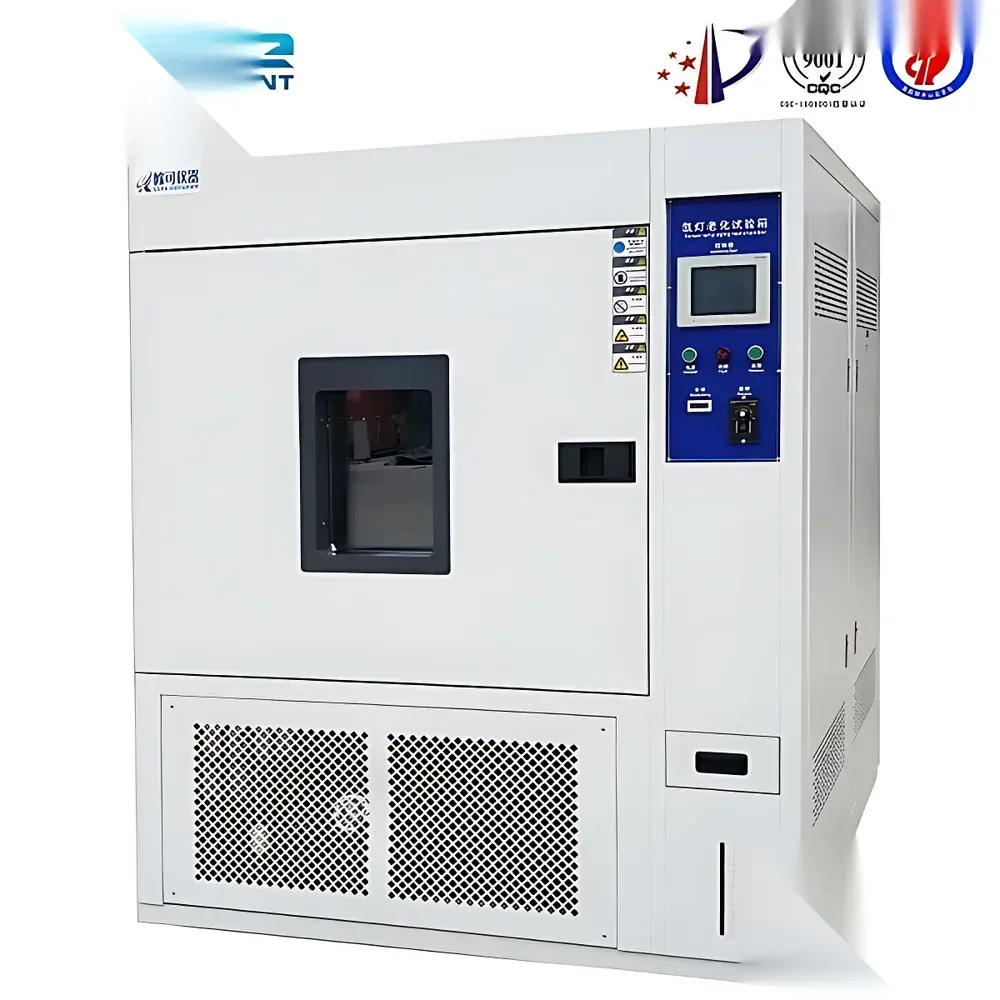
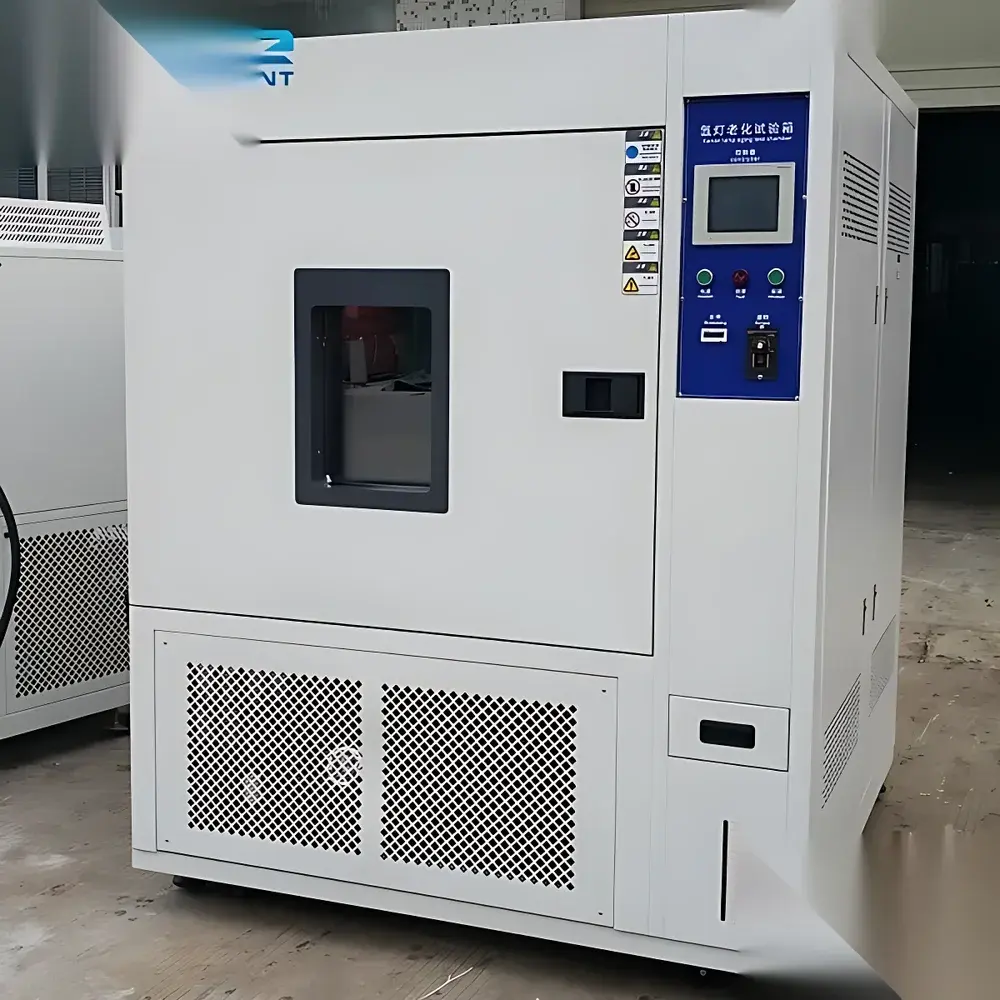
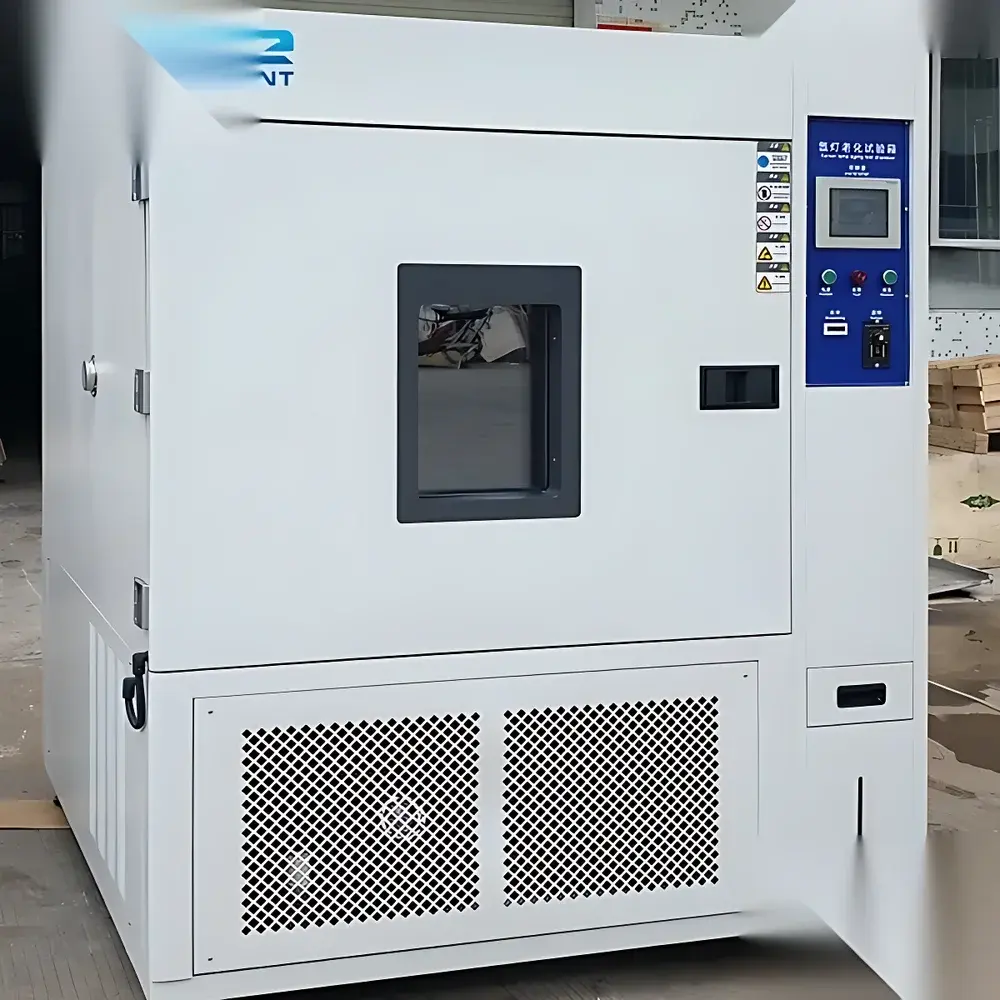
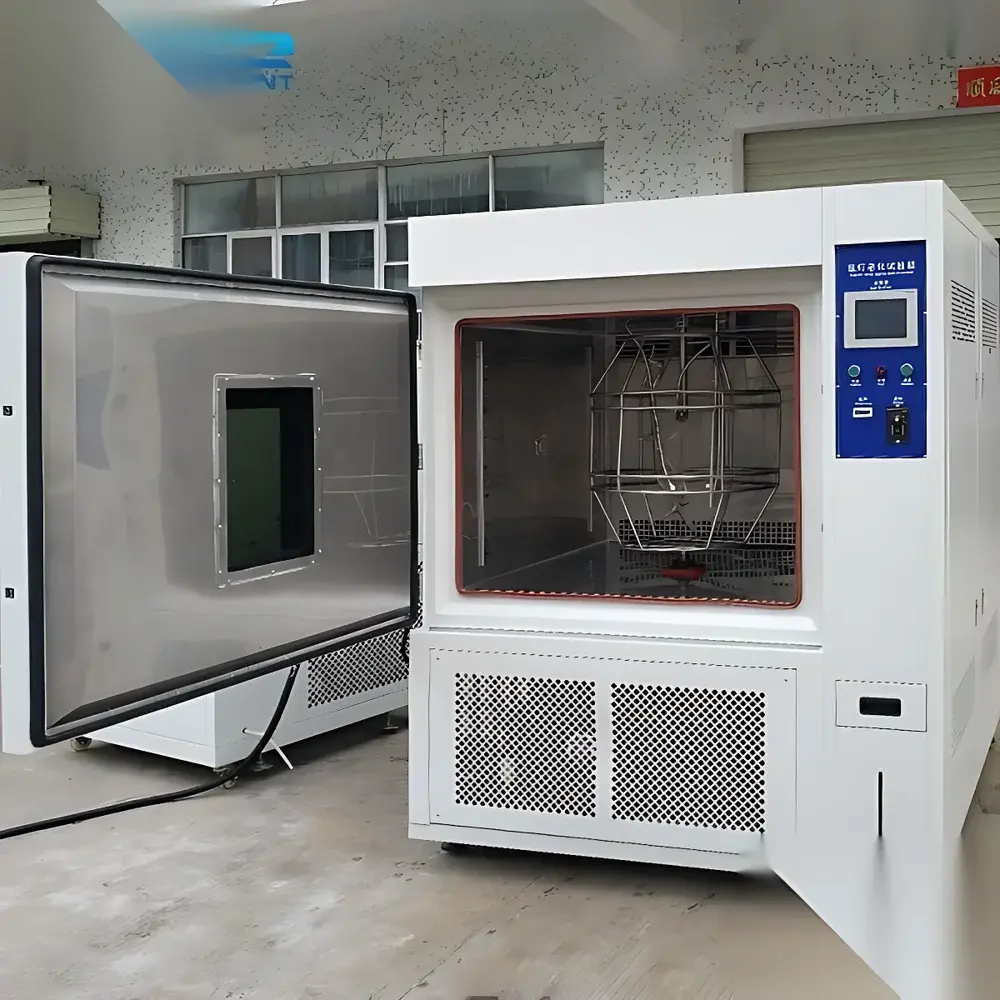
Desktop Xenon Arc Weathering Test Chamber OK-XD Series
| Key | Brand: OEM/Third-party Manufacturer |
|---|---|
| Origin | Imported |
| Supplier Type | Distributor |
| Price | USD 5,300–12,800 (FOB) |
| Chamber Volume | 100–1000 L |
| Spectral Range | 300–1200 nm |
| Irradiance Control | 550 W/m² (300–800 nm) ±10% |
| Black Panel Temperature Range | 40–85°C |
| Cabinet Temperature Range | 0–150°C |
| Humidity Range (Light Cycle) | 20–75% RH |
| Humidity Range (Dark Cycle) | 20–98% RH |
| Temperature Uniformity | ±2.0°C |
| Humidity Uniformity | ±3.0% RH |
| Temperature Accuracy | ±0.5°C |
| Humidity Accuracy | ±2.0% RH |
| Spray Duration | 1–999 min (intermittent/continuous) |
| Spray Pressure | 70–127 kPa |
| Sample Mounting | Dual-layer mesh tray or 500 mm diameter rotating turntable (0–3 rpm) |
| Lamp Power | 1.8 kW / 2.5 kW / 6 kW |
| Lamp Life | ≈1500 h at nominal irradiance |
| Filter System | Daylight- and Window-glass-type optical filters |
| Construction | Interior – SUS304 stainless steel |
| Power Supply | AC 380 V ±5%, 50 Hz ±0.5 Hz |
Overview
The Desktop Xenon Arc Weathering Test Chamber OK-XD Series is an engineered environmental simulation system designed to replicate the full spectrum of solar radiation—including UV, visible, and near-infrared wavelengths—under controlled temperature, humidity, and moisture conditions. Based on ASTM G155, ISO 4892-2, and GB/T 16422.2 standards, this chamber utilizes long-arc, air-cooled xenon arc lamps with precision spectral filtering to deliver photometrically stable irradiance across 300–1200 nm. Unlike UV fluorescent or metal halide sources, xenon arc technology provides a continuous solar spectrum closely matching terrestrial sunlight (AM1.5), enabling accurate assessment of photochemical degradation mechanisms such as polymer chain scission, pigment fading, and coating delamination. The chamber supports both light-dark cycles and simultaneous irradiation/humidity exposure, making it suitable for evaluating material performance under real-world climatic stressors including solar exposure, thermal cycling, condensation, and simulated rainfall.
Key Features
- Full-spectrum xenon arc lamp system with interchangeable daylight- and window-glass-type optical filters to simulate outdoor or through-glass exposure conditions;
- Integrated water spray subsystem with adjustable pressure (70–127 kPa) and programmable duration (1–999 min), supporting intermittent or continuous wetting protocols per ISO 4892-2 Annex A;
- Precise black panel temperature control (40–85°C) and cabinet air temperature regulation (0–150°C), compliant with ASTM D7869 requirements for thermal load fidelity;
- Dual-mode sample mounting: configurable dual-layer stainless steel mesh trays for flat specimens or a 500 mm diameter rotating turntable (0–3 rpm) to ensure uniform irradiance distribution across irregular geometries;
- High-stability humidity control system with separate light-cycle (20–75% RH) and dark-cycle (20–98% RH) ranges, enabling condensation simulation during non-irradiated phases;
- Robust chamber construction using interior SUS304 stainless steel for corrosion resistance and exterior options in either SUS304 or powder-coated carbon steel for lab integration;
- Modular lamp assembly with quick-release mechanism and standardized 1500-hour service life rating—lamp replacement requires no optical recalibration;
- Comprehensive irradiance monitoring via calibrated broadband radiometer (300–800 nm and 300–1200 nm bands), traceable to NIST standards;
- Front-accessible control interface with programmable test profiles, real-time data logging, and alarm-triggered shutdown for safety-critical deviations.
Sample Compatibility & Compliance
The OK-XD Series accommodates diverse specimen configurations—including textiles, automotive trim, architectural coatings, plastic housings, and composite laminates—without requiring custom fixtures. Its modular sample rack design accepts irregularly shaped parts up to 100 cm × 100 cm × 100 cm (OK-XD-1000 model). All models are certified for compliance with major international weathering standards: ISO 4892-2 (xenon arc methods), ASTM D2565 (plastics), ASTM D4329 (polymer coatings), GB/T 8427 (textile colorfastness to light), GB/T 14576 (photostability of pigments), and ISO 11341 (paints and varnishes). The chamber’s temperature and humidity control architecture meets GLP-relevant stability criteria per ISO/IEC 17025:2017 Clause 7.2.2, and its data acquisition supports audit-ready timestamped logs required for FDA 21 CFR Part 11-compliant environments when paired with validated software.
Software & Data Management
Standard configuration includes embedded microprocessor-based controller with USB export capability for irradiance, temperature, humidity, and spray event timestamps. Optional PC-based software enables advanced profile scripting (e.g., multi-step irradiance ramping, humidity hold sequences), statistical analysis of degradation kinetics, and automated report generation aligned with ISO/IEC 17025 documentation requirements. All logged parameters are stored with millisecond-level time stamps and include sensor calibration identifiers, ensuring full traceability for internal audits or regulatory submissions. Data integrity safeguards include write-protected memory buffers, cyclic redundancy checks (CRC), and user-level access controls with password-protected configuration changes.
Applications
- Accelerated weathering evaluation of automotive exterior materials (bumpers, grilles, headlamp lenses) per SAE J2527 and GMW14124;
- Colorfastness testing of dyed textiles and leather per ISO 105-B02 and AATCC TM16;
- UV stability screening of architectural sealants, roofing membranes, and façade cladding systems;
- Photodegradation kinetics studies of pharmaceutical packaging polymers under ICH Q1B photostability guidelines;
- Validation of protective coatings for aerospace composites exposed to tropical maritime environments;
- Correlation development between laboratory xenon exposure and real-time field aging for predictive lifetime modeling.
FAQ
What spectral filters are included with the standard configuration?
The base unit ships with two filter sets: Daylight-Q (simulating unfiltered terrestrial sunlight) and Window-Glass-Q (replicating indoor exposure through standard float glass). Additional filters—including extended UV and extended IR variants—are available as optional accessories.
Is the chamber compatible with ASTM G155 Cycle 1–4 protocols?
Yes. Predefined cycle templates for ASTM G155-22 Annex A (including irradiance setpoints, temperature ramps, and spray intervals) are embedded in firmware and fully editable via the controller interface.
Can black panel temperature be independently controlled from chamber air temperature?
Yes. The system employs dual PID loops—one for black panel thermocouple feedback and one for ambient air sensing—enabling independent stabilization within specified tolerances per ISO 4892-2 Section 7.3.
Does the spray system use deionized water only?
While not mandatory, use of deionized or distilled water is strongly recommended to prevent nozzle clogging and mineral deposition on samples and sensors. Integrated water level and conductivity monitoring is available in upgraded configurations.
What maintenance intervals are recommended for routine operation?
Filter replacement every 1,200 hours of lamp operation; lamp replacement at 1,500 hours; quarterly verification of humidity sensor calibration; annual radiometer recalibration traceable to NIST or equivalent national metrology institute.



