
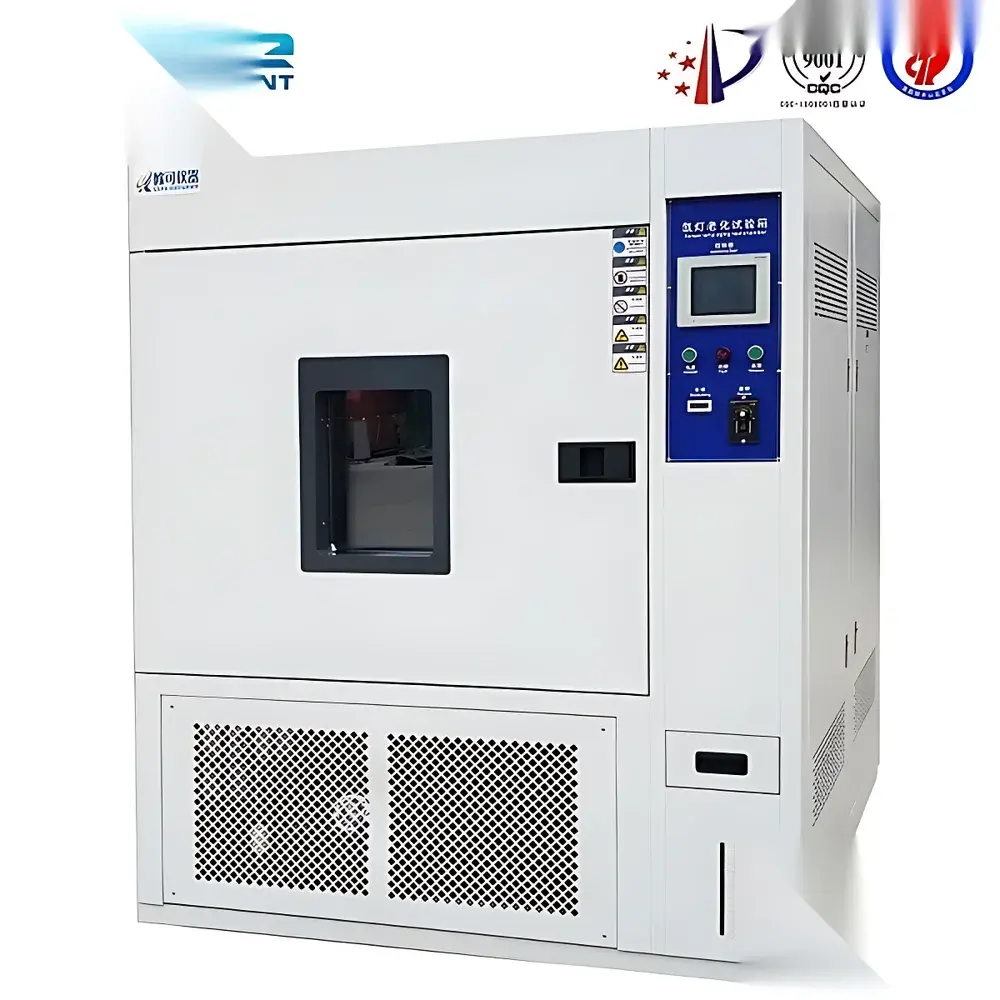
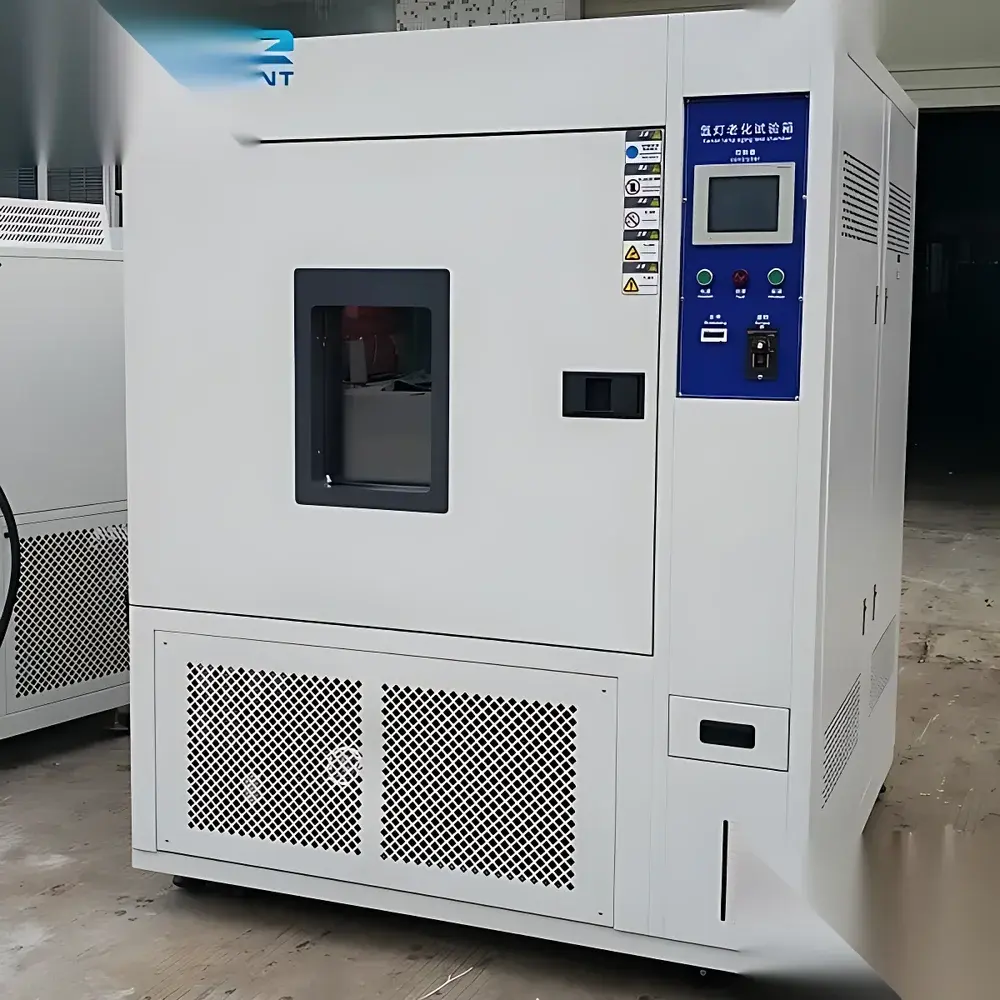
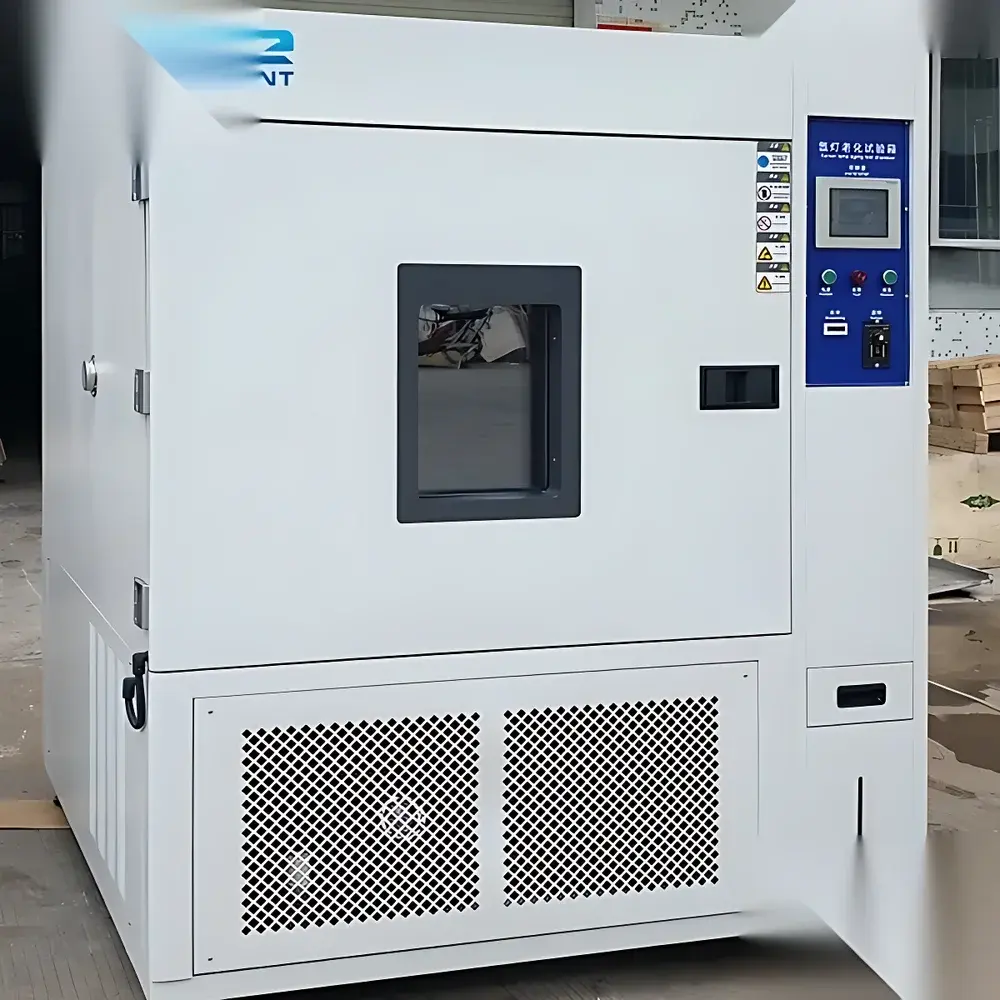
Desktop Xenon Arc Weathering Test Chamber OK-XD Series
| Brand | OK Instruments |
|---|---|
| Model | OK-XD-100 / OK-XD-225 / OK-XD-500 / OK-XD-1000 |
| Type | Benchtop Xenon Arc Environmental Test Chamber |
| Light Source | Long-Arc Air-Cooled Xenon Lamp (1.8–6 kW) |
| Spectral Range | 300–800 nm (550 W/m² ±10%) and 300–1200 nm (1000 W/m² ±10%) |
| Black Panel Temperature Range | 40–85°C |
| Chamber Temperature Range | 0–150°C |
| Humidity Control | 20–75% RH (light cycle), 20–98% RH (dark cycle) |
| Humidity Accuracy | ±2.0% RH |
| Temperature Accuracy | ±0.5°C |
| Uniformity | ±2.0°C (temp), ±3.0% RH (humidity) |
| Spray Duration | 1–999 min (intermittent/continuous) |
| Spray Pressure | 70–127 kPa |
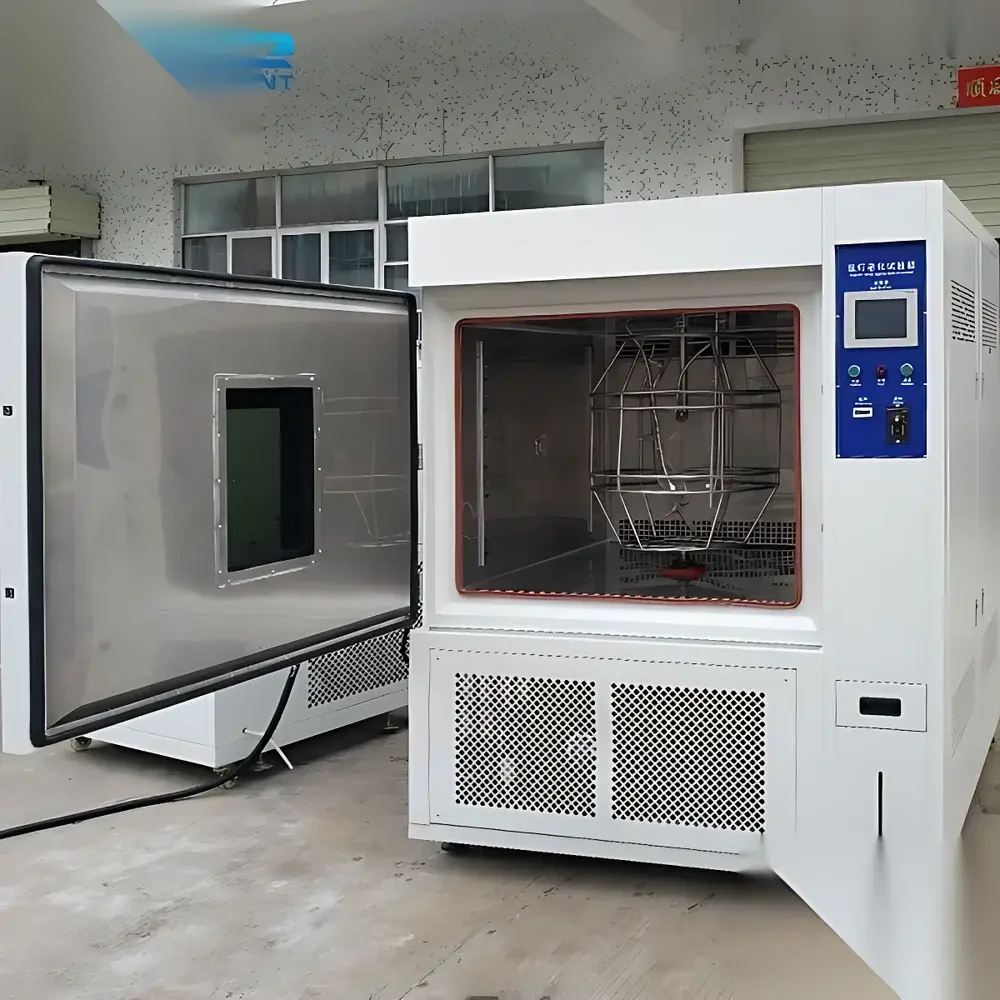
| Sample Mounting | Dual-layer flat mesh rack or 500 mm diameter rotating turntable (0–3 rpm) |
| Construction | Interior – SUS304 stainless steel |
| Power Supply | AC 380 V ±5%, 50 Hz ±0.5 Hz |
| Lamp Life | ~1500–1600 hours |
| Filter System | Precision broadband optical filters for solar-spectrum simulation |
| Compliance | Designed to support ASTM G155, ISO 4892-2, AATCC TM16, SAE J2527, and GB/T 16422.2 test protocols |
Overview
The OK-XD Series Desktop Xenon Arc Weathering Test Chamber is an engineered solution for accelerated material degradation testing under controlled solar-simulated irradiation. It employs a long-arc, air-cooled xenon lamp to replicate the full solar spectrum—spanning 300 nm to 1200 nm—with calibrated irradiance levels (550 W/m² in the 300–800 nm band and 1000 W/m² across 300–1200 nm). Unlike UV-only or fluorescent sources, xenon arc technology delivers photometric fidelity essential for evaluating photochemical stability, color fading, chalking, cracking, and gloss loss in polymeric, textile, coating, and automotive materials. The chamber integrates simultaneous control of temperature (chamber and black panel), relative humidity, water spray, and sample rotation—enabling precise emulation of diurnal cycles, tropical exposure, or desert conditions. Its compact benchtop footprint makes it suitable for QC labs, R&D facilities, and regulatory compliance testing where space and throughput are constrained.
Key Features
- Full-spectrum xenon arc illumination with spectral filtering to match terrestrial sunlight (CIE No. 85, ISO 4892-2 reference)
- Independent black panel temperature control (40–85°C) and chamber air temperature regulation (0–150°C) with ±0.5°C accuracy
- Dynamic humidity profiling: 20–75% RH during irradiation, 20–98% RH during dark cycles—programmable per test step
- Automated water spray system with adjustable duration (1–999 min), pressure (70–127 kPa), and intermittent/continuous modes
- Flexible sample mounting: dual-layer flat stainless-steel mesh racks or motorized 500 mm turntable (0–3 rpm) for uniform exposure
- Robust construction using interior SUS304 stainless steel and corrosion-resistant exterior (SUS304 or powder-coated steel)
- Modular lamp assembly with quick-release mechanism; standard lamp life ≥1500 h at nominal irradiance
- Integrated optical filter set ensuring long-term spectral stability and minimizing UV-B drift over time
Sample Compatibility & Compliance
The OK-XD chamber accommodates flat, curved, or irregularly shaped specimens—including fabric swatches, painted panels, plastic injection-molded parts, rubber seals, and LED housing assemblies—via its adaptable fixture design. It supports standardized specimen dimensions up to 100 × 100 × 100 cm (OK-XD-1000 model), with smaller variants optimized for high-throughput screening. The system is configured to meet core international weathering standards including ASTM G155 (Cycle A, B, C), ISO 4892-2 (Xenon-arc methods), AATCC TM16 (Lightfastness), SAE J2527 (Automotive exterior materials), and GB/T 16422.2 (Chinese national standard). While not pre-certified for FDA 21 CFR Part 11, its programmable logic controller (PLC) architecture permits integration with LIMS and audit-trail-enabled software for GLP/GMP-aligned validation workflows.
Software & Data Management
The chamber operates via an intuitive 7-inch touchscreen HMI with embedded test profile editor supporting multi-step irradiance/humidity/temperature/spray sequences. All operational parameters—including real-time irradiance (W/m²), black panel temperature, chamber humidity, spray status, and elapsed lamp hours—are logged at user-defined intervals (1–60 sec resolution) and exportable as CSV or Excel-compatible files. Optional Ethernet/RS485 interfaces enable remote monitoring, centralized fleet management, and synchronization with enterprise QA databases. Data integrity safeguards include password-protected parameter modification, timestamped event logging, and non-volatile memory retention during power interruption.
Applications
This instrument serves critical roles across multiple industrial sectors: textile laboratories assessing lightfastness and perspiration-light composite fastness per ISO 105-B02; paint & coatings R&D validating gloss retention and chalking resistance under simulated Florida exposure; automotive suppliers qualifying headlamp lenses and dashboard trims per SAE J2412; and polymer manufacturers evaluating UV stabilizer efficacy in PP, PE, and PC compounds. It also supports academic research on photodegradation kinetics, photocatalytic self-cleaning surface durability, and biodegradable packaging stability under climatic stress.
FAQ
What spectral range does the xenon lamp cover, and how is it filtered?
The lamp emits broadband radiation from 290 nm to 2500 nm; optical filters restrict output to 300–800 nm (for colorfastness) or 300–1200 nm (for broader material aging), aligned with CIE daylight reference spectra.
Can the chamber perform cyclic tests with alternating light/dark and wet/dry phases?
Yes—fully programmable cycles integrate irradiation, darkness, spray, and humidity modulation with independent timing and setpoint control for each phase.
Is calibration traceable to NIST or other national metrology institutes?
Radiant flux sensors are factory-calibrated against traceable reference detectors; users may perform field verification using ISO 17025-accredited irradiance meters.
What maintenance is required beyond lamp replacement?
Routine tasks include quarterly cleaning of quartz lamp housings and filter surfaces, biannual inspection of spray nozzles and humidity sensor wicks, and annual verification of temperature/humidity sensor accuracy.
Does the system support custom test profiles beyond standard methods?
Yes—the HMI allows creation of proprietary multi-parameter sequences, including ramped irradiance, variable rotation speed, and dynamic humidity ramps mimicking monsoon or coastal fog conditions.



