
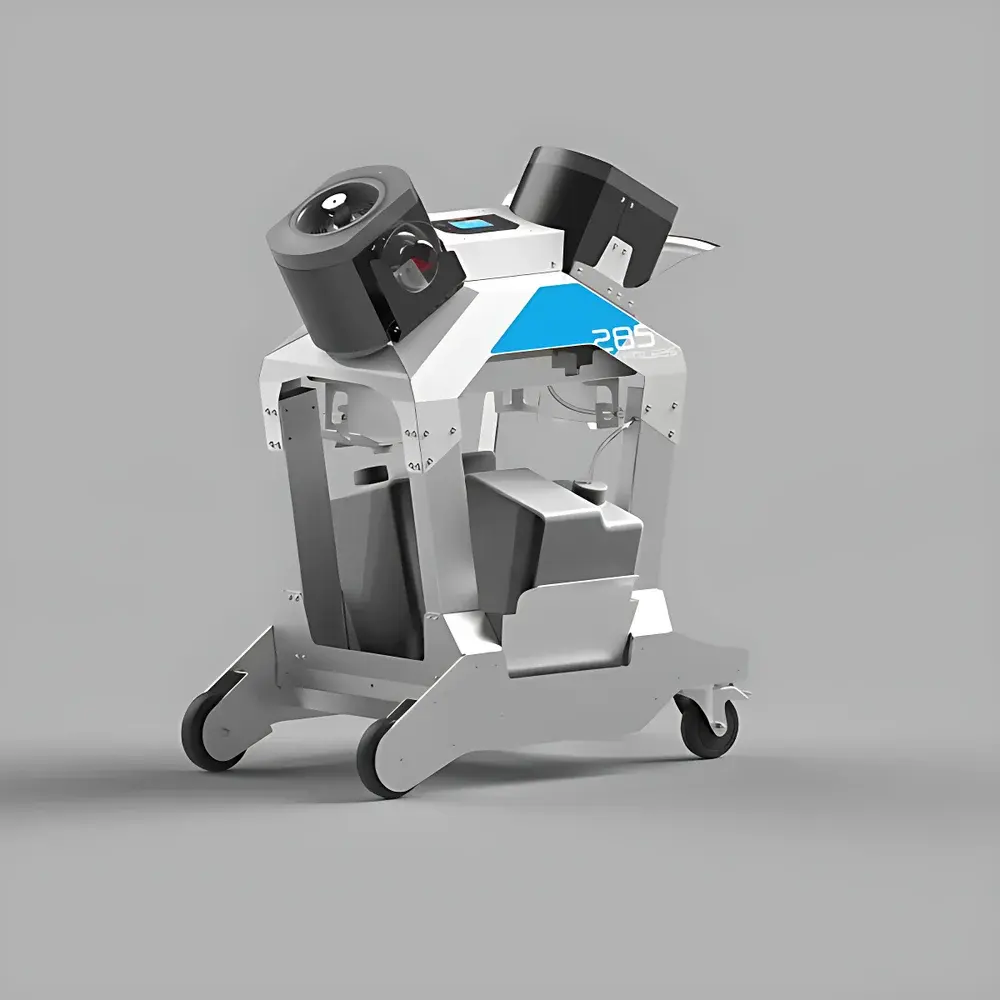
Devea Phileas® 285 Hydrogen Peroxide Vapor (HPV) Sterilization System
| Brand | Devea |
|---|---|
| Origin | France |
| Model | Phileas® 285 |
| Sterilization Volume Capacity | 50–1665 m³ |
| Hydrogen Peroxide Dose Capacity | 20 L (2 × 10 L tanks) |
| Air Flow Rate | 4.2 L/h |
| Power Consumption | 120 W |
| Dimensions (L×W×H) | 839 × 450 × 813 mm |
| Weight | 25 kg |
| Construction | Full Stainless Steel (AISI 316L-compatible surfaces) |
| Regulatory Compliance | EN 17272:2020, MA No. FR-2019-0071 (validated biocidal efficacy for HPV/machine combination) |
| Compatibility | O₂SAFE 7.4 & Phileasafe® bioindicator systems |
| Safety Features | Liquid inlet fault detection, automatic cycle termination on tank depletion |
| Max. Consecutive Cycles | 5 |
| Droplet Size Distribution | 5–10 µm |
| Typical Cycle Time for 400 m³ | 68 min @ 12 mL/m³ dosage |
Overview
The Devea Phileas® 285 is a portable, high-capacity hydrogen peroxide vapor (HPV) sterilization system engineered for terminal decontamination of large-volume enclosed environments—including cleanrooms, isolators, biosafety cabinets, pharmaceutical manufacturing suites, and microbiology laboratories. It operates on the validated principle of low-temperature, dry-fog HPV generation via controlled catalytic vaporization, ensuring uniform distribution and rapid microbial inactivation without condensation or material corrosion. Unlike liquid-spray or plasma-based alternatives, the Phileas® 285 delivers reproducible, residue-free sterilization across volumes ranging from 50 m³ to 1665 m³—making it suitable for both routine facility-wide decontamination and emergency response scenarios. Its design adheres strictly to the performance and validation requirements outlined in EN 17272:2020, which specifies test methods and efficacy criteria for chemical disinfectants and antiseptics used in fogging applications against spores, viruses, and vegetative bacteria.
Key Features
- Modular dual-tank architecture: Two independent 10 L stainless steel reservoirs enable uninterrupted operation during extended decontamination protocols and facilitate precise, programmable dosing up to 12 mL/m³.
- Intelligent diffusion control: Integrated airflow regulation (4.2 L/h nominal air carrier flow) ensures consistent vapor dispersion and optimal droplet size distribution (5–10 µm), maximizing surface contact time and penetration into complex geometries.
- Automated cycle optimization: Onboard microprocessor calculates and executes exposure duration based on real-time volume input, ambient temperature/humidity, and selected concentration—reducing operator dependency and improving inter-cycle reproducibility.
- Full stainless steel construction (AISI 316L-compatible surfaces): Corrosion-resistant chassis, sealed electronics, and chemically inert fluid pathways ensure long-term reliability in aggressive oxidizing environments.
- Mobility and ergonomics: Equipped with industrial-grade casters and an extendable telescopic handle, the unit weighs only 25 kg and fits through standard doorways—enabling rapid deployment between multiple treatment zones without disassembly.
- Safety-critical monitoring: Real-time liquid-level sensing triggers audible/visual alerts and automatic cycle suspension if either reservoir reaches depletion, preventing incomplete sterilization events.
Sample Compatibility & Compliance
The Phileas® 285 is validated for use with certified hydrogen peroxide solutions compliant with EN 14476 and EN 13624 standards. Its sterilization efficacy has been independently verified under MA No. FR-2019-0071 by the French Ministry of Health’s biocidal product assessment body, confirming log6 reduction of Bacillus atrophaeus spores and log4 reduction of murine norovirus within defined operational parameters. The system supports full traceability in regulated environments: cycle logs—including start/end timestamps, volume entered, total H2O2 consumed, ambient conditions, and fault codes—are stored internally and exportable via USB. When integrated with O₂SAFE 7.4 biological indicators and Phileasafe® chemical indicators, it satisfies documentation requirements for ISO 14644-3 cleanroom certification, EU GMP Annex 1 (2022), and FDA 21 CFR Part 11-compliant audit trails when paired with validated third-party data management software.
Software & Data Management
The Phileas® 285 features an embedded control interface with password-protected access levels (operator, technician, administrator). All sterilization cycles generate timestamped digital records containing volumetric input, actual vapor delivery rate, environmental sensor readings (temperature, relative humidity), and end-of-cycle status flags. Data export is supported via USB 2.0 port in CSV format for integration into laboratory information management systems (LIMS) or electronic batch records (EBR). Optional firmware upgrades maintain alignment with evolving regulatory expectations—including enhanced encryption for data-at-rest and configurable user authentication protocols compatible with enterprise Active Directory domains.
Applications
- Terminal sterilization of Grade A/B/C/D cleanrooms prior to aseptic processing
- Decontamination of isolators, RABS, and transfer hatches in pharmaceutical manufacturing
- Emergency response to contamination incidents in BSL-2/BSL-3 laboratories
- Pre-occupancy treatment of HVAC ductwork and air handling units
- Validation support for ISO 14644-1 particle testing and microbial recovery studies
- Reprocessing of reusable PPE storage cabinets and instrument pass-through chambers
FAQ
What is the maximum recommended treatment volume for a single cycle?
The Phileas® 285 is validated for volumes between 50 m³ and 1665 m³. For volumes exceeding 1000 m³, users must confirm ambient air exchange rates and thermal stability prior to initiation; cycle parameters are automatically adjusted to maintain minimum effective concentration (MEC) thresholds.
Does the system require external ventilation or exhaust ducting?
No. The Phileas® 285 employs catalytic decomposition post-cycle to convert residual hydrogen peroxide into water vapor and oxygen, eliminating the need for dedicated exhaust infrastructure. Ambient air sampling confirms safe re-entry within 30 minutes after cycle completion, per EN 17272-defined safety margins.
Can the unit be operated remotely or integrated into building management systems (BMS)?
Remote start/stop and status monitoring are available via optional RS-485 Modbus RTU interface. BMS integration requires configuration through a certified automation partner; native BACnet/IP support is not included but may be enabled via gateway devices.
How frequently does preventive maintenance need to be performed?
Devea recommends annual calibration of internal pressure and flow sensors, biannual inspection of catalytic converter integrity, and quarterly verification of tank seal integrity. No consumables beyond certified H2O2 solution are required under normal operating conditions.
Related Products



