
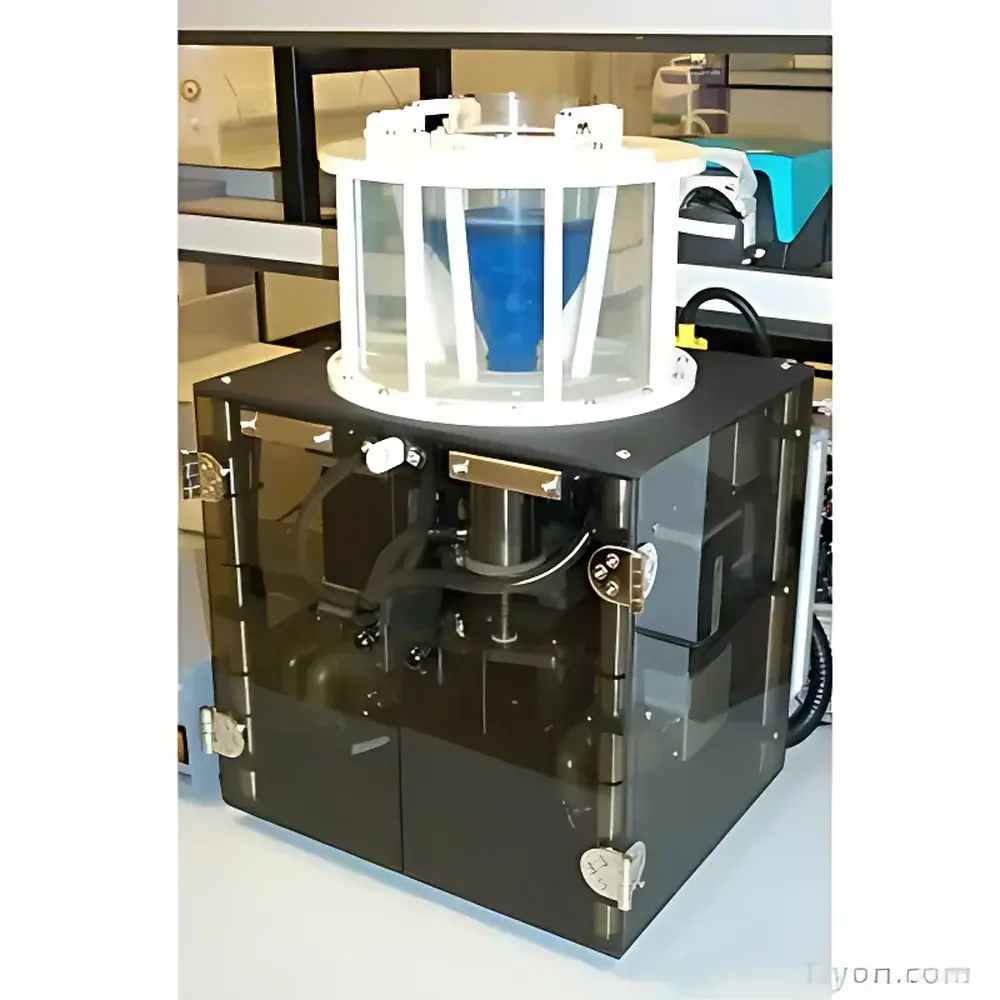
DGM Dynamic Gastric Digestion Model System
| Brand | DGM |
|---|---|
| Origin | United Kingdom |
| Manufacturer Type | Authorized Distributor |
| Origin Category | Imported |
| Model | DGM |
| Pricing | Upon Request |
Overview
The DGM Dynamic Gastric Digestion Model System is a computer-controlled, physiologically relevant in vitro gastrointestinal simulation platform engineered to replicate the complex biomechanical and biochemical environment of the human stomach. Unlike static or single-compartment digestion models, the DGM employs real-time feedback control to dynamically modulate gastric residence time, luminal pH, enzymatic secretion (pepsin, gastric lipase), acid titration rate, peristaltic frequency and amplitude, and shear stress profiles—parameters derived from validated human MRI and intragastric pressure studies. Its core operating principle integrates Couette-type mixing with programmable peristaltic actuation to emulate gastric churning and bolus propulsion, while maintaining precise control over fluid dynamics, temperature (37 °C ± 0.3 °C), and oxygen tension (for optional anaerobic/microaerophilic compartment extension). Designed for translational research in food science, nutraceutical development, and oral pharmaceutical formulation, the DGM enables high-fidelity prediction of nutrient release kinetics, API solubilization, and dosage form disintegration under biorelevant conditions—serving as a critical bridge between preclinical animal studies and human clinical trials.
Key Features
- Real-time adaptive control of gastric emptying kinetics based on meal composition (solid/liquid ratio, viscosity, particle size distribution)
- Physiologically accurate pH modulation (1.2–6.5) with automated HCl titration and bicarbonate buffering to simulate fed/fasted states
- Programmable peristaltic waveforms (frequency: 1–5 cpm; amplitude: 5–25 mmHg equivalent pressure differential)
- Shear-controlled homogenization mimicking gastric mixing forces (0.1–100 s⁻¹ shear rate range)
- Multi-compartment sampling ports enabling sequential, non-invasive retrieval from gastric lumen, pyloric channel, and duodenal outflow at defined timepoints
- Integrated sterilizable stainless-steel and medical-grade silicone architecture compliant with ISO 13485 material requirements
- Automated log generation of process parameters including gastric retention time distribution (GRTD), acid addition volume/time, enzyme dosing profile, and real-time pH gradient mapping
Sample Compatibility & Compliance
The DGM accommodates heterogeneous, multi-phase test matrices—including whole foods (e.g., mashed potatoes, yogurt, cereal suspensions), solid oral dosage forms (immediate-release tablets, enteric-coated capsules, chewables), semi-solids (gels, pastes), and liquid formulations (suspensions, emulsions, beverages). It supports both single-dose and repeated-meal protocols with variable gastric loading volumes (100–500 mL). The system conforms to OECD TG 407 and 408 guidance for in vitro digestibility assessment and aligns with FDA’s Bioequivalence Guidance for Modified-Release Dosage Forms (2018) regarding biorelevance of dissolution media. All fluid pathways are autoclavable (121 °C, 20 min), and surface materials meet USP Class VI biocompatibility standards. Data acquisition complies with ALCOA+ principles and supports 21 CFR Part 11-compliant audit trails when integrated with validated LIMS or ELN platforms.
Software & Data Management
The DGM operates via a Windows-based control interface featuring intuitive protocol scripting (predefined templates for fasted-state, fed-state, high-fat meal, and low-pH challenge simulations). Real-time sensor data—including pH, temperature, pressure, motor current (proxy for shear load), and peristaltic cycle count—is logged at 1 Hz resolution and exported in CSV or HDF5 format. Software includes built-in analytical modules for calculating gastric half-emptying time (T50), area-under-the-curve (AUC) for pH decay, cumulative enzyme activity, and kinetic modeling of API release using zero-order, first-order, or Weibull equations. Raw datasets are timestamped, digitally signed, and support metadata tagging per ISO/IEC 17025 requirements for method validation documentation.
Applications
- Evaluation of food matrix effects on nutrient bioaccessibility (e.g., carotenoid release from plant tissues, iron solubilization in fortified cereals)
- Biorelevant dissolution testing of oral solid dosage forms under dynamic gastric conditions—critical for BCS Class II/IV compounds
- Development and optimization of gastro-resistant delivery systems (e.g., pH-triggered polymers, mucoadhesive microspheres)
- Assessment of probiotic viability and prebiotic fermentation kinetics across gastric transit phases
- Reduction of animal use in regulatory toxicology and pharmacokinetic studies per EU Directive 2010/63/EU and NIH Animal Welfare Policy
- Validation of PBPK model inputs for gastric emptying rate and luminal drug stability
FAQ
What physiological parameters does the DGM replicate beyond standard static digestion models?
It replicates dynamic gastric motility (peristalsis, retropulsion), real-time pH adaptation, enzyme secretion kinetics, shear-dependent mixing, and composition-responsive gastric emptying—none of which are captured in conventional USP apparatus or batch digestion assays.
Can the DGM be coupled with downstream intestinal compartments?
Yes—it features standardized 1/4″ OD quick-connect ports compatible with commercially available duodenal and jejunal modules (e.g., TIM-1, SHIME-compatible interfaces) for full upper GI tract simulation.
Is method validation support provided for regulatory submissions?
DGM includes IQ/OQ documentation templates, reference standard protocols (e.g., using caffeine and paracetamol as model APIs), and peer-reviewed validation data published in European Journal of Pharmaceutics and Biopharmaceutics and Food Chemistry.
What maintenance is required for long-term operational reliability?
Routine calibration of pH and temperature sensors every 30 days; quarterly verification of peristaltic pump accuracy and acid titration volume delivery; annual mechanical inspection of actuator linkages and seal integrity.






