
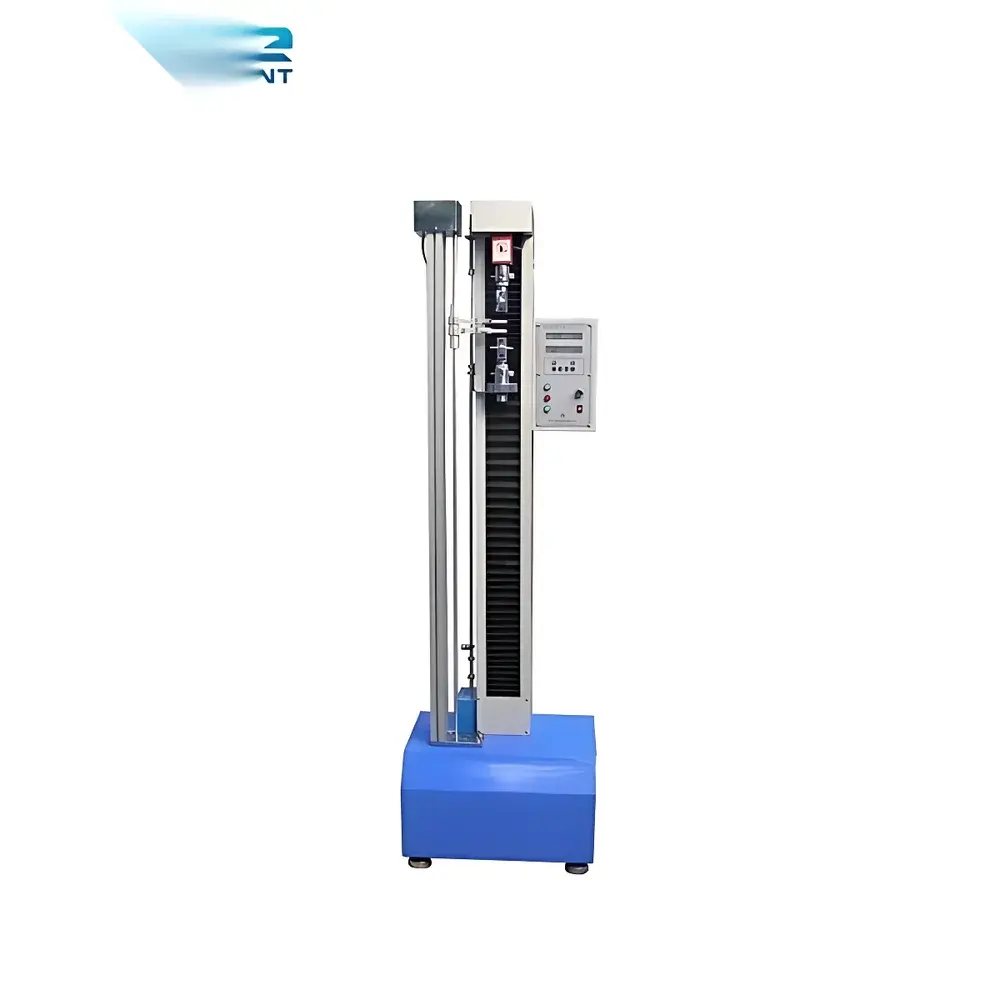
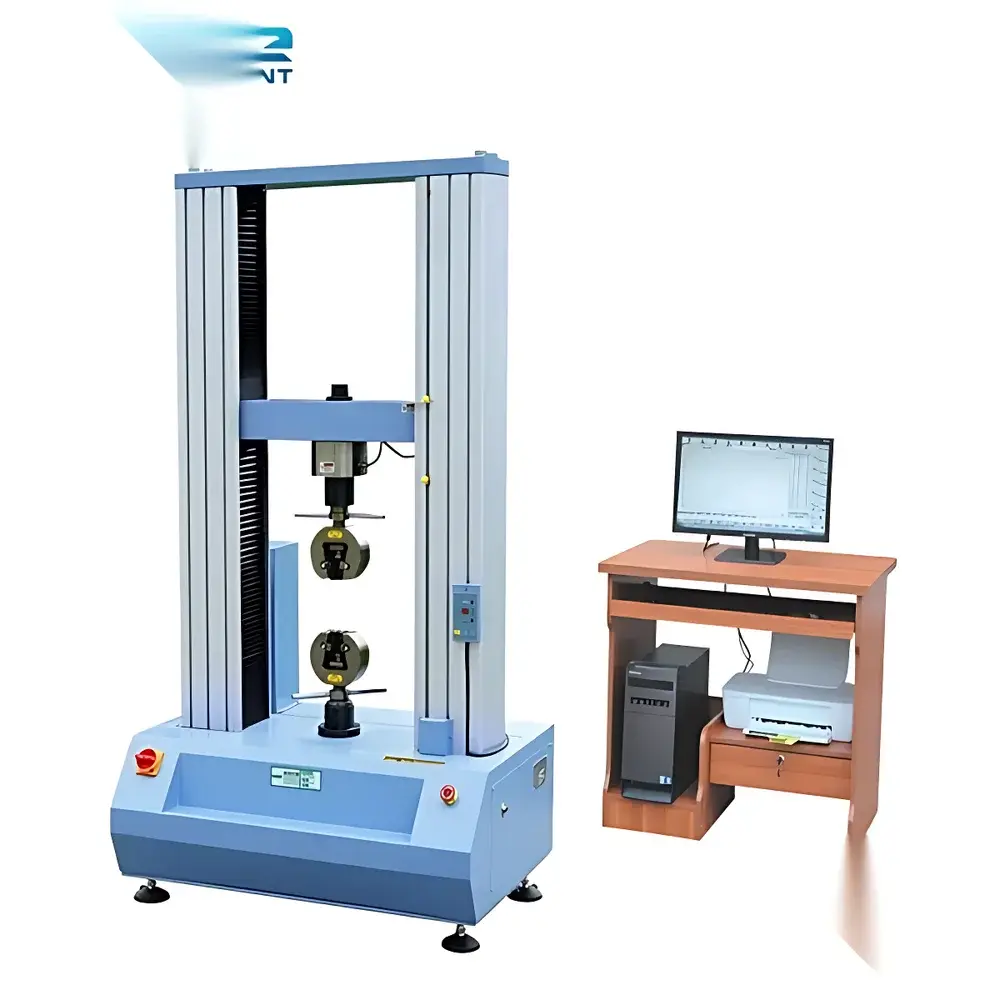
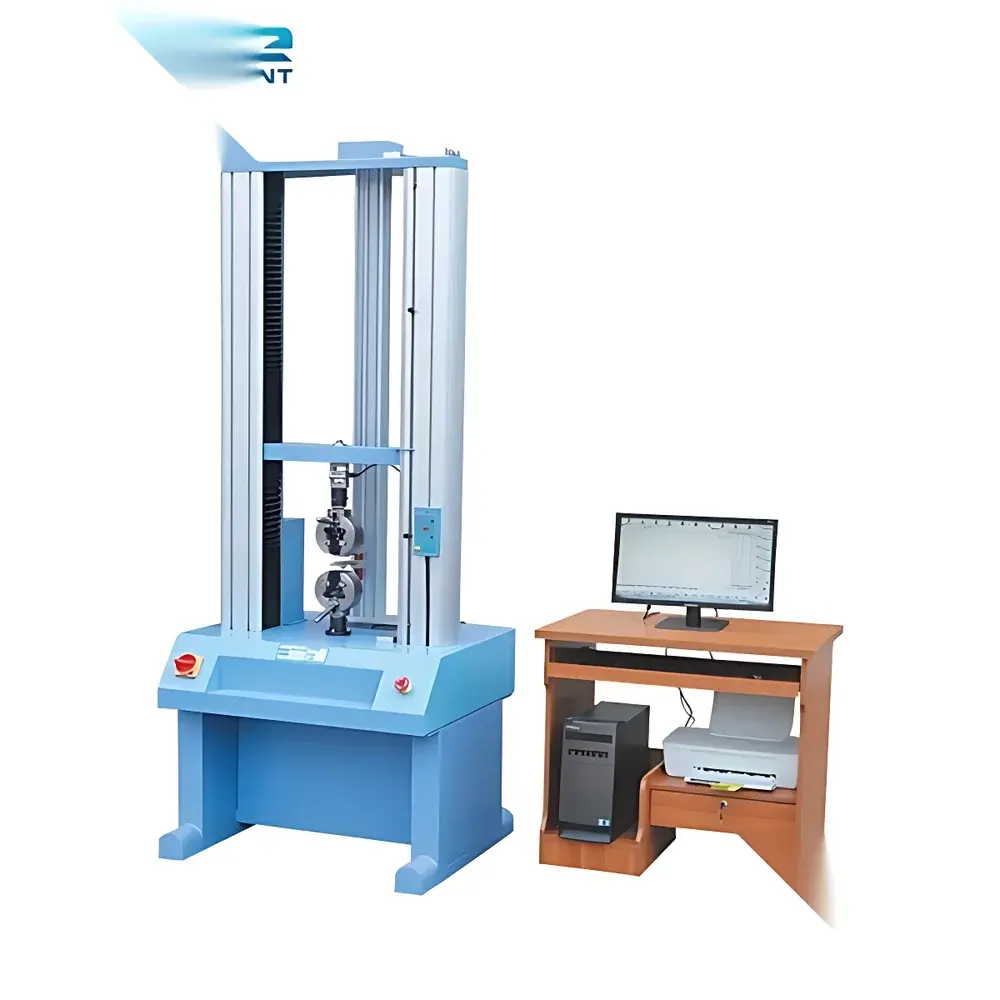
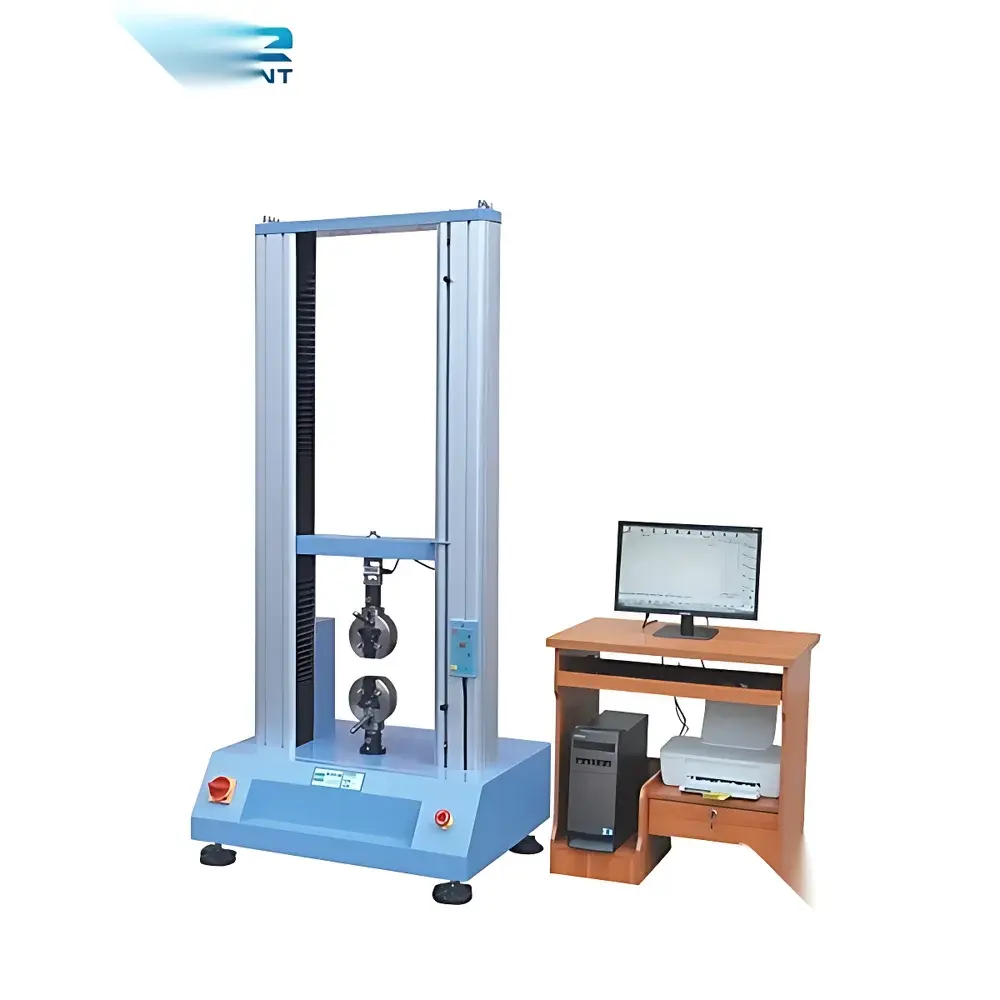
Digital Electronic Tensile Testing Machine
| Brand | OEM / Custom Brand |
|---|---|
| Origin | Imported |
| Manufacturer Type | Authorized Distributor |
| Price | USD 3,200 (FOB) |
Overview
The Digital Electronic Tensile Testing Machine is a microprocessor-controlled universal testing system engineered for precision mechanical property evaluation of solid materials under uniaxial tensile, compressive, flexural, peel, shear, and tear loading conditions. Based on the fundamental principles of Hooke’s law and standardized force–displacement transduction, this machine delivers traceable, repeatable mechanical data in compliance with international static mechanical testing methodologies. Its modular architecture integrates high-fidelity load measurement, closed-loop motion control, and real-time data acquisition—making it suitable for routine quality control (QC), research-grade material characterization, and regulatory-compliant validation protocols in laboratories operating under GLP or ISO/IEC 17025 frameworks.
Key Features
- Panasonic AC servo motor drive system coupled with a 2500-pulse-per-revolution optical encoder for smooth, low-noise, high-resolution crosshead speed control (typical range: 0.001–500 mm/min, programmable in 0.001 mm/min increments).
- High-precision preloaded ball screw transmission and hardened linear guide rails ensure axial alignment accuracy ≤ 0.02 mm over full stroke and minimal mechanical hysteresis.
- Explosion-proof precision load cell with automatic thermal drift compensation, offering repeatability of ±0.03% of full scale (F.S.), transient overload capacity up to 150% F.S., and zero drift < 0.01% F.S./°C.
- Dual-stage mechanical and electronic limit protection: hardware-based travel end-stop switches prevent over-travel; software-enforced load ceiling triggers immediate halt upon user-defined threshold exceedance.
- Real-time data acquisition at 10 kHz sampling rate, with 24-bit A/D resolution and effective force resolution of 1/100,000 of full scale—enabling accurate detection of yield points, necking onset, and fracture events.
- Integrated PC-based control and analysis software supporting ASTM D638, ISO 527, ISO 179, ISO 8510, ISO 11339, and GB/T standards—featuring automatic curve annotation, peak force retention, break detection with instantaneous stop, multi-unit conversion (N, kN, lbf, kgf, MPa, psi), and customizable report generation.
Sample Compatibility & Compliance
This tensile tester accommodates specimens ranging from ultra-thin polymer films (≥ 10 µm thickness) to high-strength metallic wires (up to Ø6 mm), textile yarns, elastomeric strips, composite laminates, adhesive bonds, and biomedical sutures. Gripping configurations include pneumatic, wedge, roller, and pin-type fixtures—each designed to minimize slippage and stress concentration. The system conforms to mechanical testing requirements specified in GB/T 16491 (Chinese equivalent of ISO 7500-1), GB/T 1040 (plastics tensile), GB/T 2792 (peel adhesion), GB/T 3923.1 (textile tensile), and ISO 527-2, ISO 179-1, ASTM D882, ASTM D3039, and ASTM D6252. All force calibration certificates are NIST-traceable and compliant with ISO/IEC 17025 documentation requirements.
Software & Data Management
The embedded Windows-compatible software provides full audit trail functionality per FDA 21 CFR Part 11 guidelines—including user-level access control, electronic signatures, time-stamped raw data logging, and immutable test record archiving. Raw force–extension data is saved in CSV and proprietary binary formats (.tdf), enabling post-test reanalysis, statistical process control (SPC) charting, and integration with LIMS platforms via ODBC or REST API. Calibration parameters are digitally locked and password-protected; each calibration event generates a timestamped log with operator ID, environmental conditions (temperature/humidity), and verification certificate reference. Data export supports PDF, Excel, and image (PNG/SVG) formats with configurable headers, footers, and corporate branding.
Applications
- Mechanical validation of thermoplastics, thermosets, and biodegradable polymers during formulation development.
- Quality assurance of medical device components (e.g., catheter tubing tensile strength, suture breaking load).
- Adhesion performance assessment of pressure-sensitive tapes, laminated packaging, and automotive interior bonding.
- Tensile modulus and elongation-at-break determination for nonwovens, geotextiles, and technical fabrics.
- Compliance testing of wire insulation, fiber optics jacketing, and aerospace composite prepregs per MIL-STD-401 or EN 60811.
- Research on nanocomposite reinforcement efficiency, hydrogel swelling mechanics, and viscoelastic relaxation behavior.
FAQ
What standards does this machine support out-of-the-box?
Preconfigured test methods include GB/T 1040, GB/T 2790–2792, ISO 527, ISO 8510, ASTM D638, ASTM D882, and ASTM D3330—with additional methods programmable via custom script templates.
Is the load cell factory-calibrated and certified?
Yes—each unit ships with a NIST-traceable calibration certificate valid for 12 months; recalibration intervals follow ISO 7500-1 Class 0.5 requirements.
Can the system interface with third-party LIMS or MES platforms?
Yes—via standard TCP/IP communication, CSV batch export, or optional OPC UA module for real-time data streaming and bidirectional control.
What is the maximum test speed and positioning accuracy?
Crosshead speed range: 0.001–500 mm/min; positional repeatability: ±0.005 mm over full 1000 mm stroke.
Does the software meet FDA 21 CFR Part 11 requirements for electronic records?
Yes—full audit trail, role-based permissions, electronic signature workflow, and data integrity safeguards are enabled by default.



