
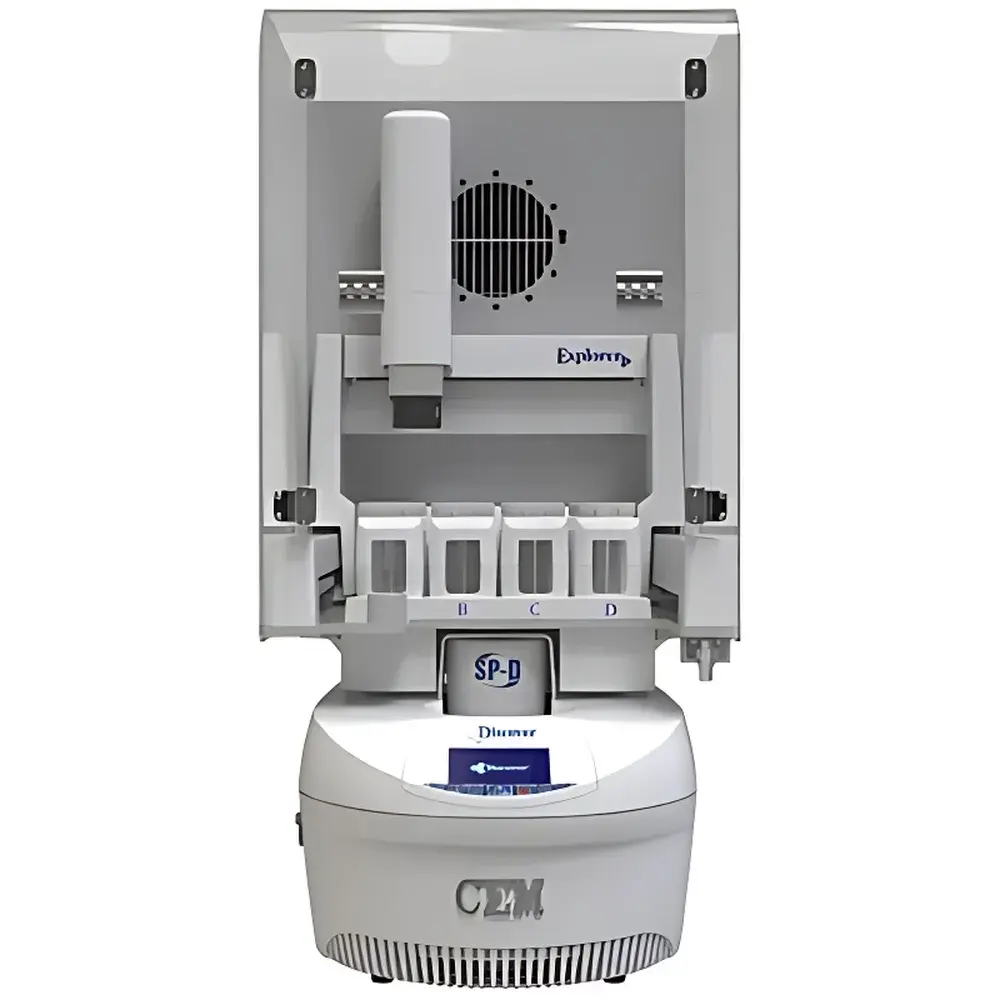
DISCOVER SP-D Clinical Automated Single-Mode Microwave Digestion System
| Brand | CEM |
|---|---|
| Origin | USA |
| Manufacturer Status | Authorized Distributor |
| Origin Category | Imported |
| Model | SP-D Clinical |
| Price Range | USD 55,000–68,000 (est.) |
| Cavity Class | Research/CLIA-Compliant |
| Sample Capacity | Auto-configurable 48/72/96 positions |
| Microwave Source | Dual Magnetron (Selectable Single/Dual Mode) |
| Max Temperature | 300 °C |
| Max Pressure | 100 bar |
Overview
The DISCOVER SP-D Clinical is an automated, single-mode microwave digestion system engineered for high-throughput, temperature-sensitive clinical and biomedical sample preparation. Unlike conventional multimode cavity systems, it employs a precisely focused annular standing-wave field—optimized via CEM’s proprietary cavity geometry—to deliver uniform, reproducible microwave energy directly into each individual reaction vessel. This single-mode architecture enables rapid, controlled heating with exceptional spatial and temporal resolution, minimizing thermal degradation of labile analytes such as proteins, nucleic acids, and trace metals in biological matrices. Designed specifically for CLIA-certified laboratories and ISO 15189-accredited clinical testing environments, the SP-D Clinical supports fully unattended operation from sample loading to cooled digestate recovery—eliminating manual handling, batch transfer, and post-digestion cooling delays. Its core mission aligns with green analytical chemistry principles: reduced reagent consumption (≤2 mL HNO₃ per 10 mL vial), minimal energy input per sample, and near-zero risk of elemental loss or contamination.
Key Features
- Automated robotic arm handling for 48-, 72-, or 96-position sample racks—compatible with both 10 mL and 35 mL disposable or reusable quartz/PFA vessels
- ActiVent™ intelligent pressure release technology: real-time, microsecond-responsive venting without elemental volatilization or cross-contamination
- PowerMAX™ synchronized airflow cooling: integrated forced-air heat exchange cools all vessels to <40 °C within ≤10 minutes post-digestion
- Independent real-time monitoring of temperature and pressure in every vessel via fiber-optic sensors and piezoresistive transducers
- Smart Rack Recognition: optical detection identifies rack configuration and vessel type (10 mL/35 mL/mixed), auto-loading appropriate method parameters
- Dual-magnetron source with dynamic power modulation (0–1600 W), enabling precise energy coupling across diverse sample loads and matrix types
- Robust stainless-steel monolithic cavity with non-planar waveguide design—resistant to corrosion, electromagnetic leakage, and thermal fatigue
Sample Compatibility & Compliance
The SP-D Clinical is validated for direct digestion of human-derived clinical specimens including whole blood, serum, plasma, urine, hair, nail clippings, soft tissue homogenates, bone ash, and formalin-fixed paraffin-embedded (FFPE) sections. It complies with ASTM D5685 (microwave-assisted acid digestion of biological tissues), ISO 17294-2 (water quality—elemental analysis by ICP-MS), and USP (elemental impurities—procedure 1). All digestion methods are fully traceable and audit-ready under FDA 21 CFR Part 11-compliant software architecture, supporting GLP/GMP documentation requirements for clinical laboratory accreditation (e.g., CAP, COLA, CLIA). Vessel materials meet USP Class VI biocompatibility standards; PFA liners ensure ultra-low background for trace metal analysis (detection limits <0.1 ng/g for As, Cd, Pb, Hg).
Software & Data Management
Controlled via CEM’s EASYCONTROL™ v5.2 software, the SP-D Clinical provides full method development, scheduling, and electronic recordkeeping. Each run logs timestamped temperature/pressure curves, power profiles, vent events, and cooling kinetics per vessel. Data export supports CSV, PDF, and XML formats compliant with LIMS integration (ASTM E1482, HL7). Audit trails capture user login, parameter changes, and calibration events with digital signature support. Remote monitoring is enabled via encrypted Wi-Fi or USB-C connection; no cloud storage—data remains on local workstation or network-attached storage per HIPAA and GDPR requirements.
Applications
- Routine trace element quantification (ICP-OES/ICP-MS) in clinical toxicology panels
- Preparation of digests for heavy metal screening in pediatric nutrition studies
- Analysis of essential elements (Zn, Cu, Se, Mg) in serum and erythrocyte lysates
- Digestion of calcified tissues (bone, teeth) for osteoporosis and metabolic bone disease research
- High-throughput sample prep for multi-element biomonitoring in epidemiological cohort studies
- Method development for novel biomarkers requiring preservation of redox-sensitive species (e.g., Cr³⁺/Cr⁶⁺ speciation)
FAQ
What safety certifications does the SP-D Clinical hold?
It is certified to IEC 61000-4 (EMC), UL 61010-1 (electrical safety), and carries CE marking for in vitro diagnostic use under IVDR Annex II. Full test reports available upon request.
Can the system digest samples containing high-fat or high-protein content without charring?
Yes—its single-mode field enables precise ramp-and-hold control, and PowerMAX™ cooling prevents thermal runaway. Pre-programmed “High-Lipid” and “High-Protein” methods include staged acid addition and dynamic power reduction.
Is method validation support provided for CLIA laboratories?
CEM offers on-site IQ/OQ/PQ protocol templates, blank assessment protocols, spike recovery data packages, and assistance with FDA 21 CFR Part 11 compliance documentation.
How is cross-contamination prevented between samples?
Each vessel operates independently with sealed ActiVent™ caps; the robotic arm uses inert-gas-purged grippers; cavity interior is passivated stainless steel with no porous insulation materials.
What maintenance is required beyond routine cleaning?
Annual magnetron output calibration and fiber-optic sensor verification are recommended. No consumable waveguide components—solid-state cavity design eliminates typical wear points found in multimode systems.
Related Products



